Pages
Recent Articles
Socials
Cedar Valley Tunnel No. 22
| By | Infra Decay.com |
|---|---|
| Rating | 3 / 5 |
| Topics | Coal , Mine , Underground |
| Region | Appalachia |
| Related entries | Cedar Valley Colliery |
| Last modified | 14 October 2026, 20:53 |
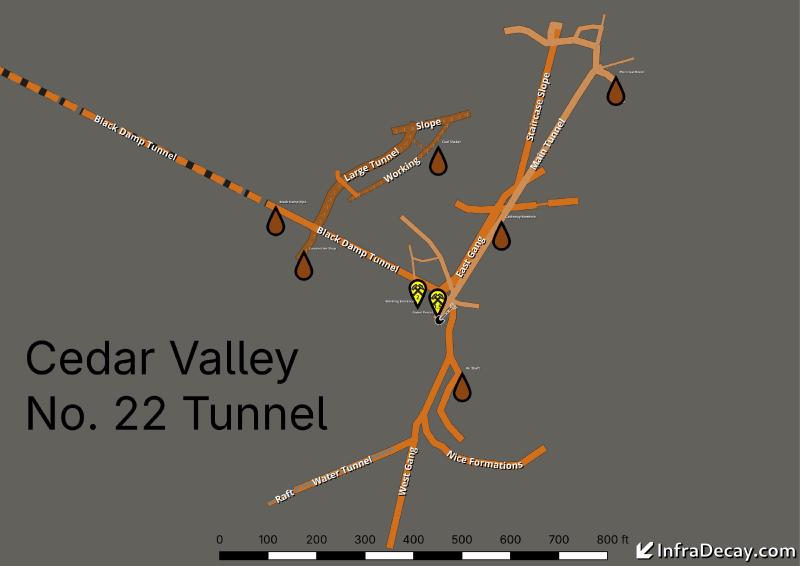
The Cedar Valley No. 22 Tunnel is a mine part of the larger Cedar Valley Colliery, most known for its (lethally) bad air in the lower levels.
Map
Entrance Level
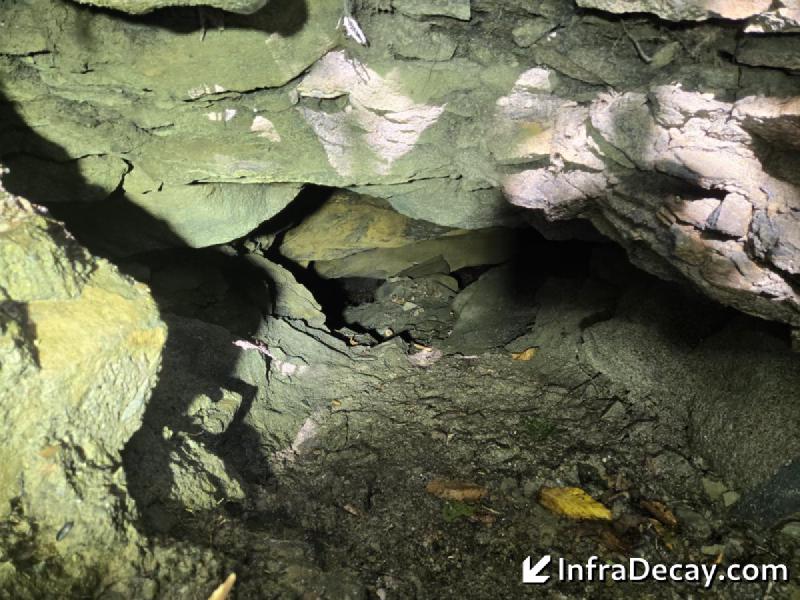
The original tunnel entrance was gated long ago. Now, we access the mine through an exposed working push.

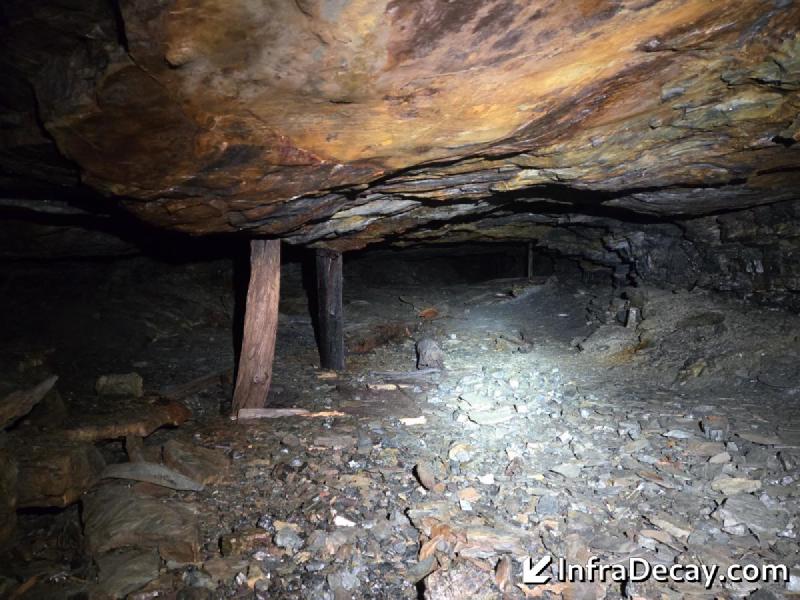
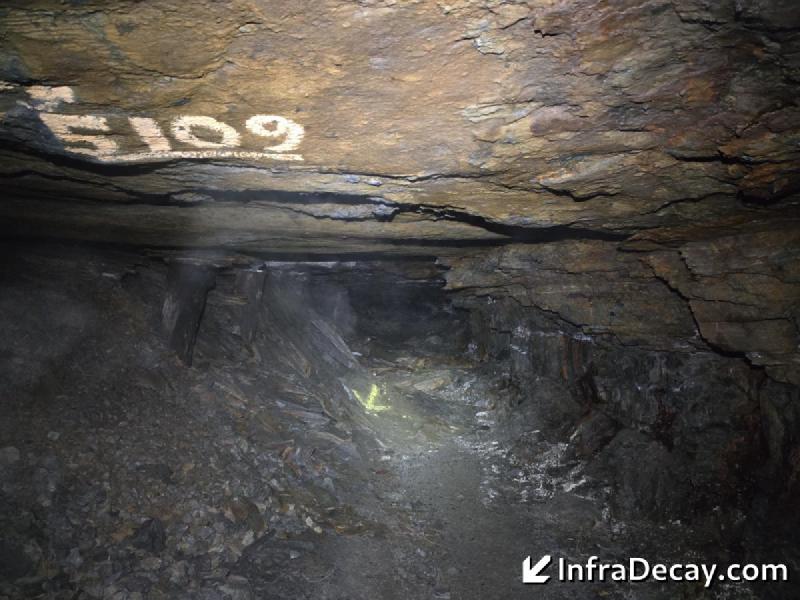
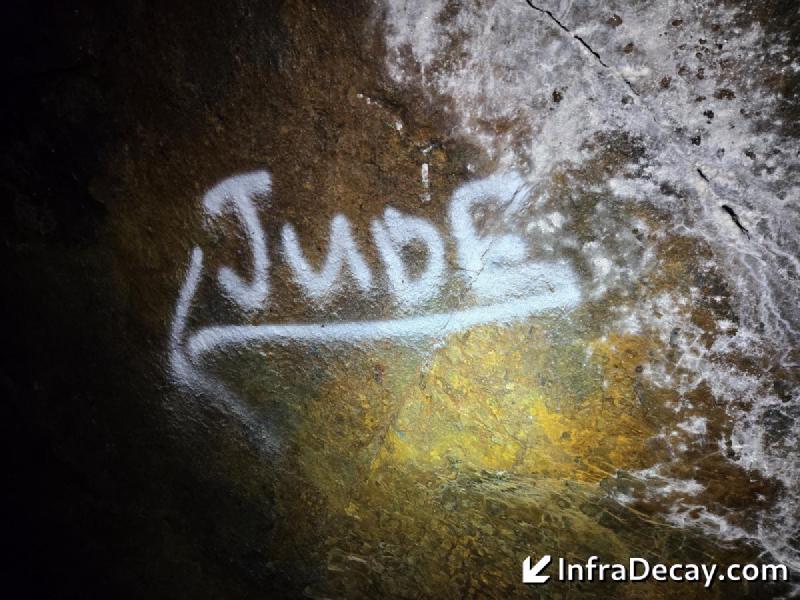
Shortly into the mine, we run into “Jude”, who apparently needs an arrow when they’re not 100 feet from the entrance.
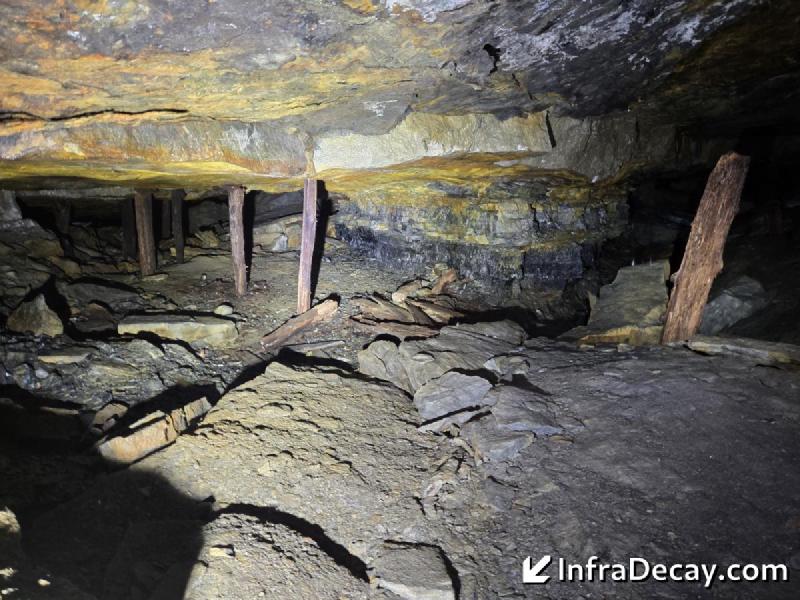
We crawl through some crap and end up in a tunnel back to the original entrance. In front of us, the main rock tunnel is pictured.
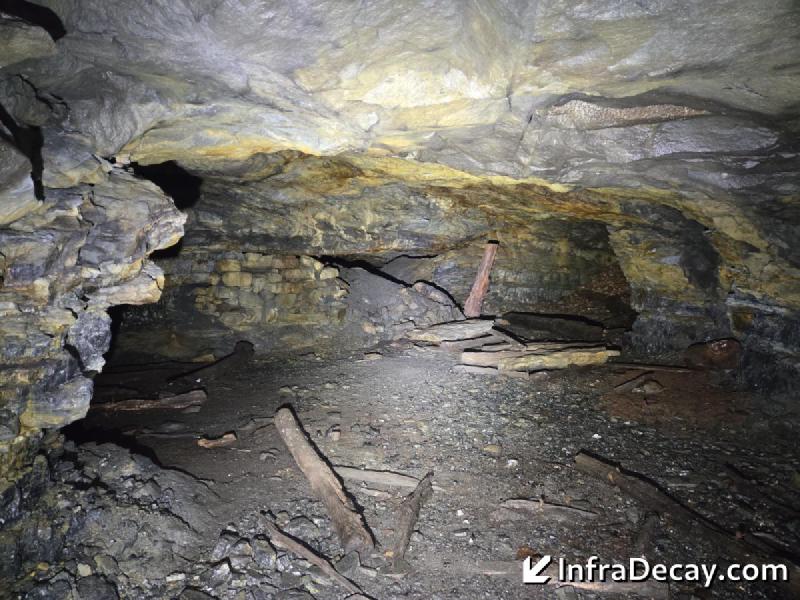
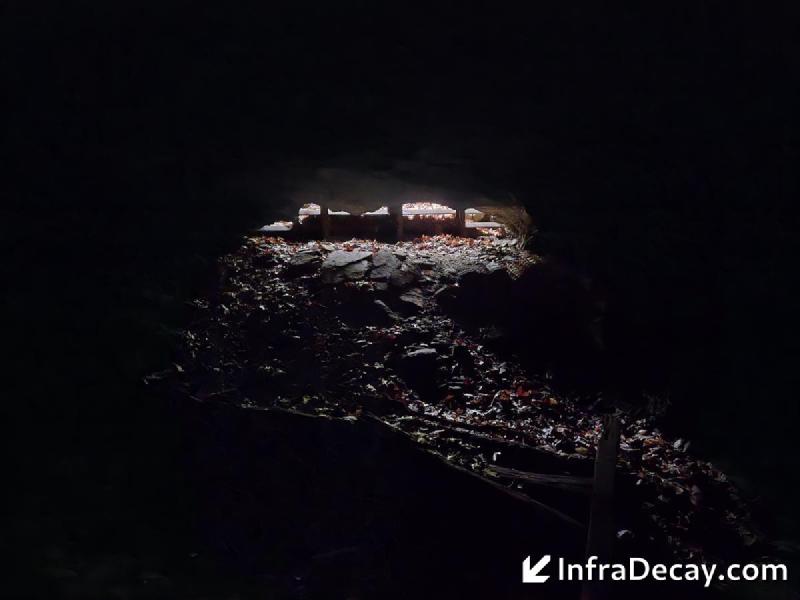
Looking back, we came from workings to the left of the left tunnel. We proceed down the center/right rock tunnel.
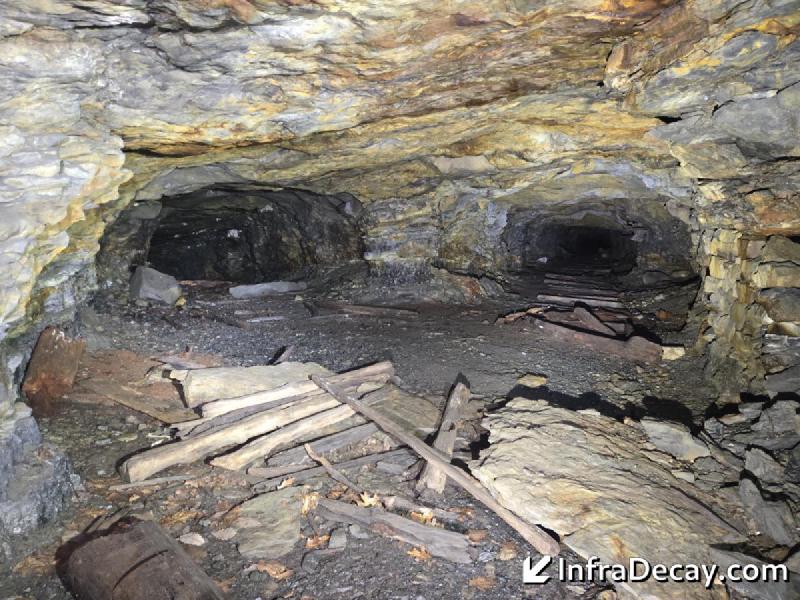
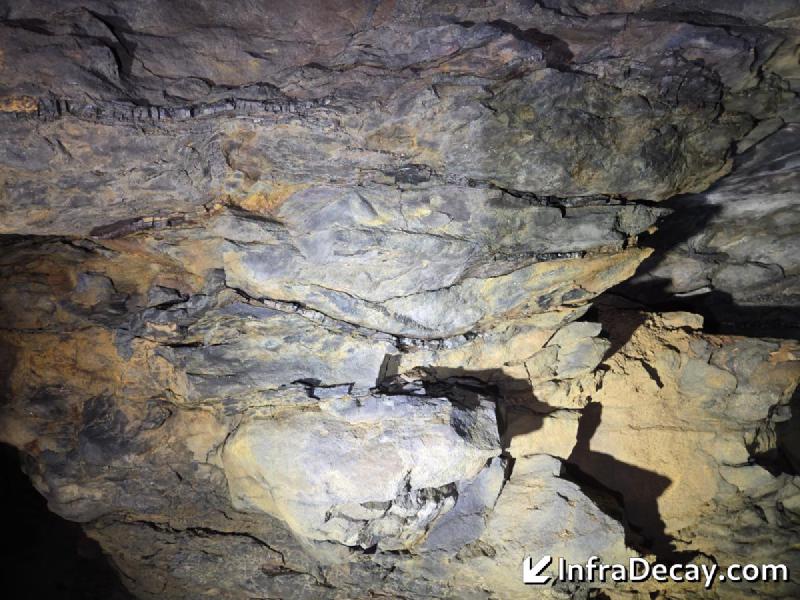
Interesting observation: extremely thin (~1 inch) coal veins!
Entrance Rock Tunnel
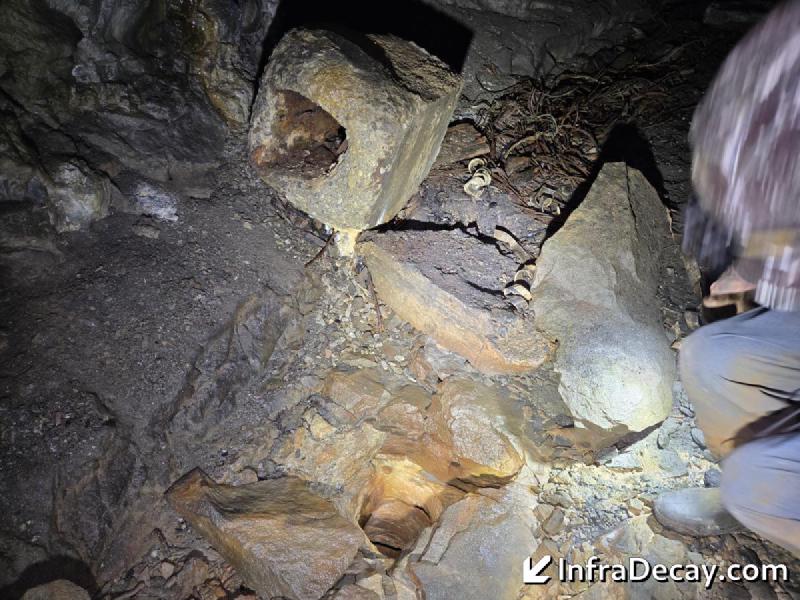
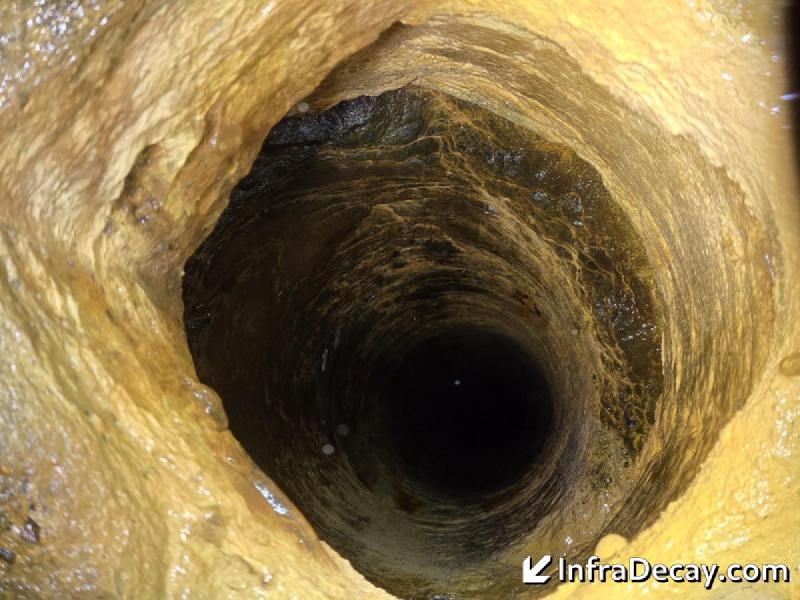
Proceeding down the rock tunnel, we see some random infrastructure items (cables, air hoses, etc…) The main attraction is a ~10 inch cableway borehole. It must be a few hundred feet deep; we spent minutes dropping rocks down and listening to the echoes.
We continue down the rock tunnel: at this point it was double tracked.
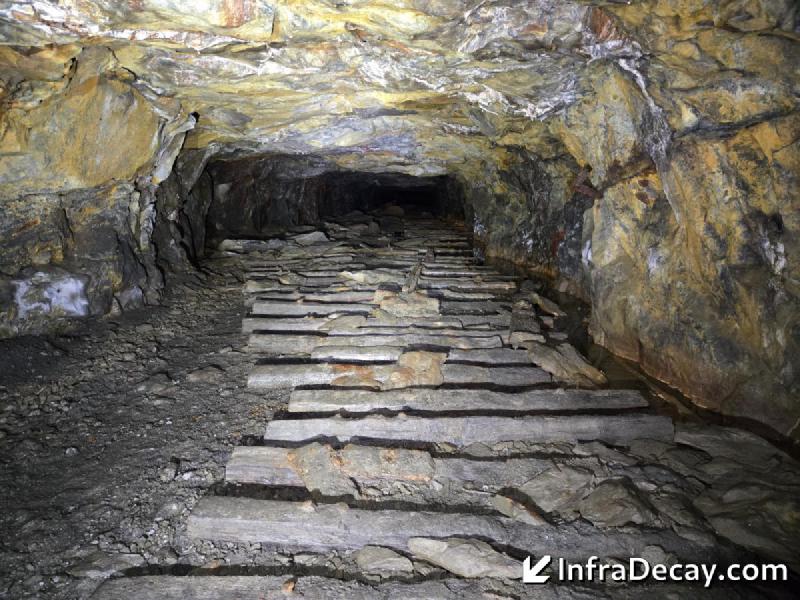
The rock tunnel ends at a junction and fans out into several passages. Most end quickly in collapse. To the right, a small concrete room.
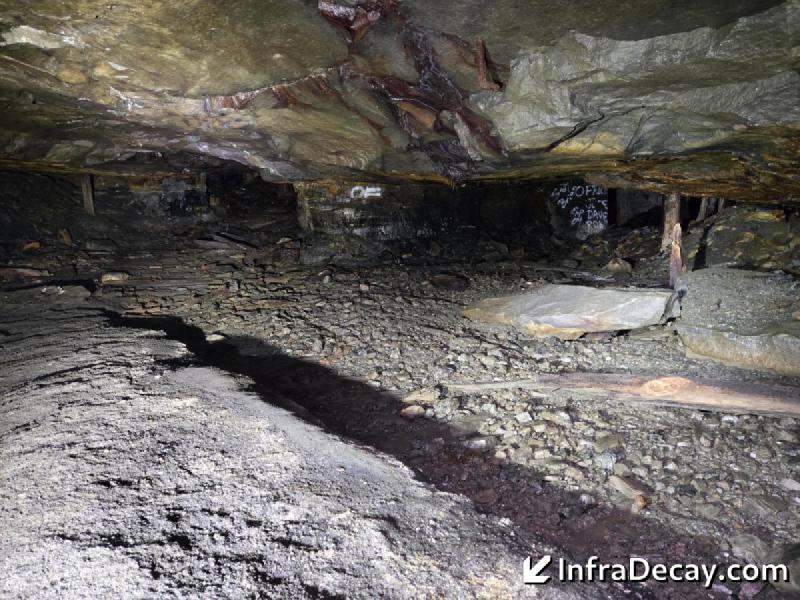
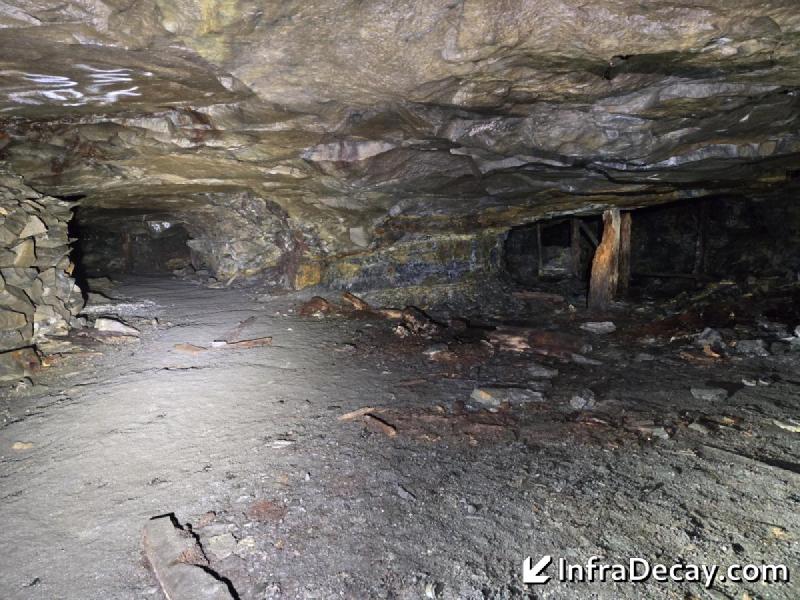
The original entrance is visible from the back of the tunnel:
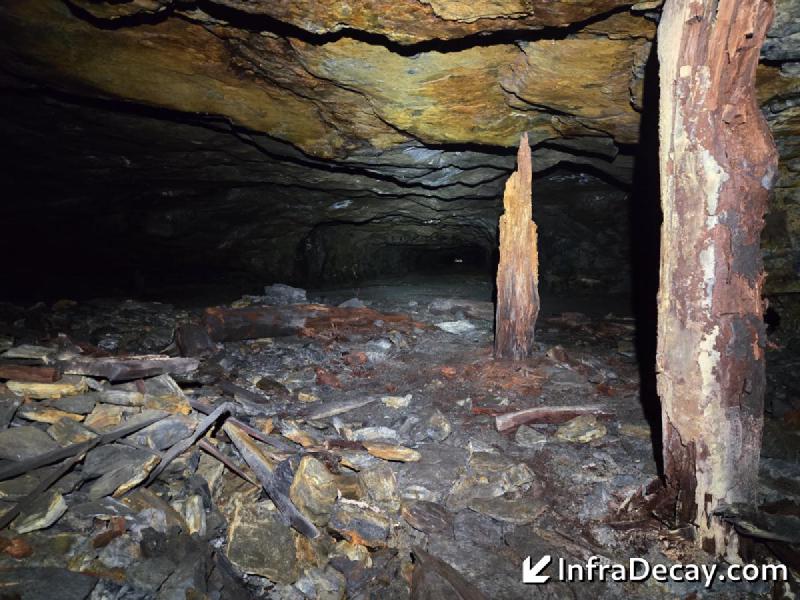
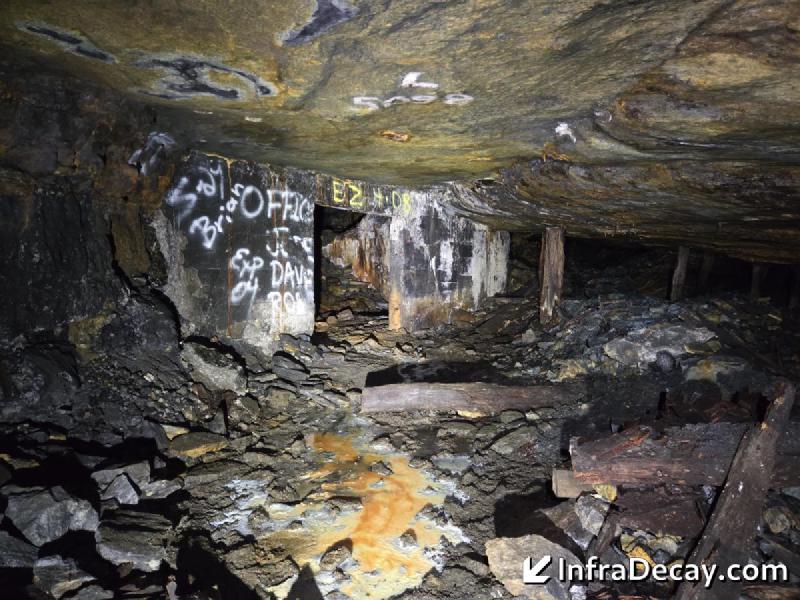
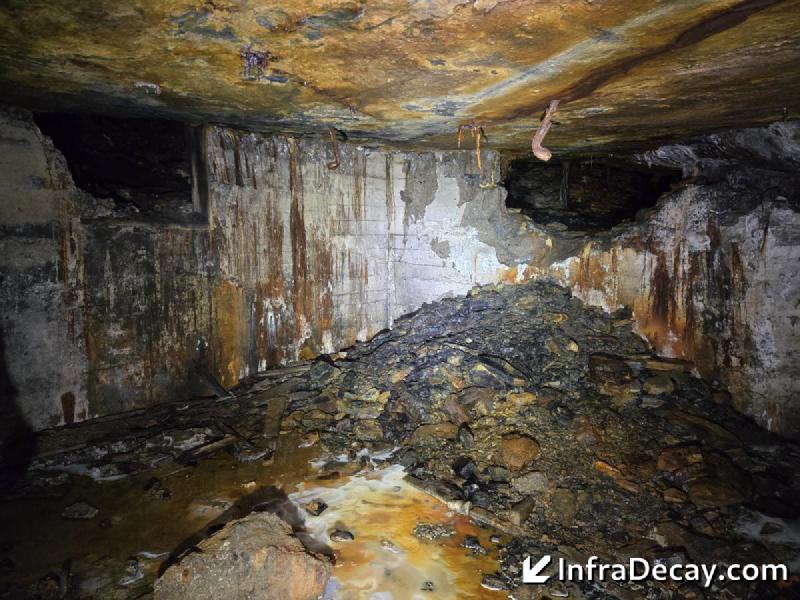
Some of the collapsed back passages:
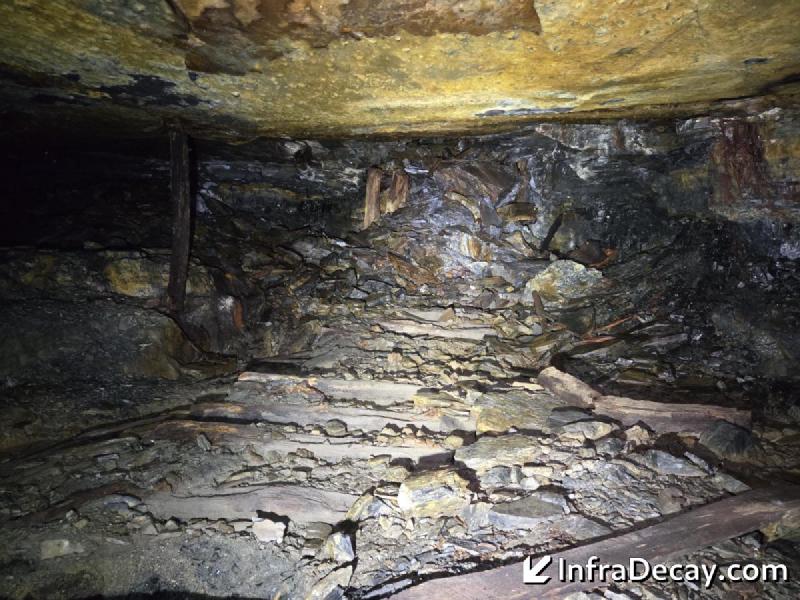
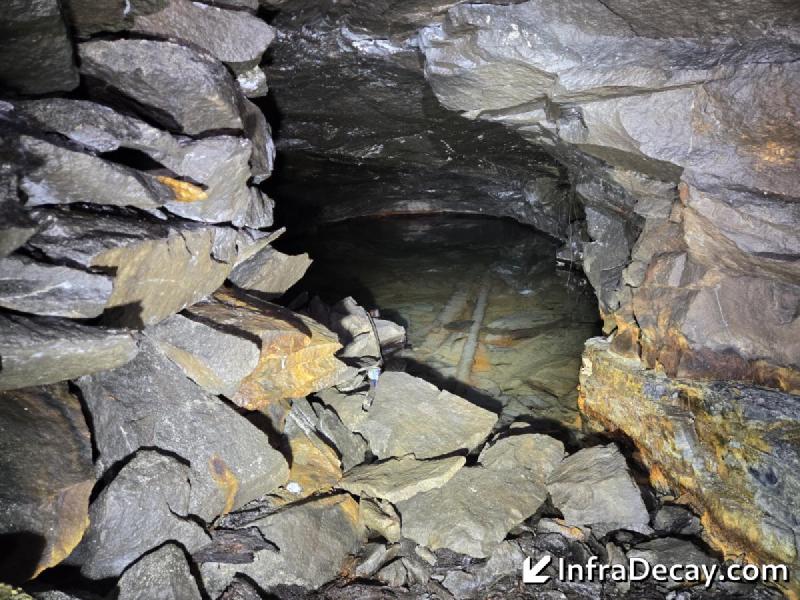
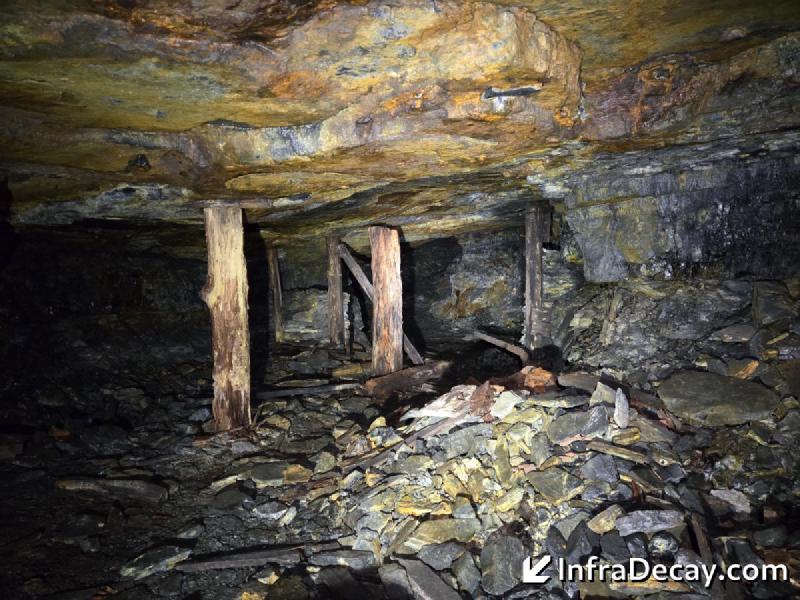
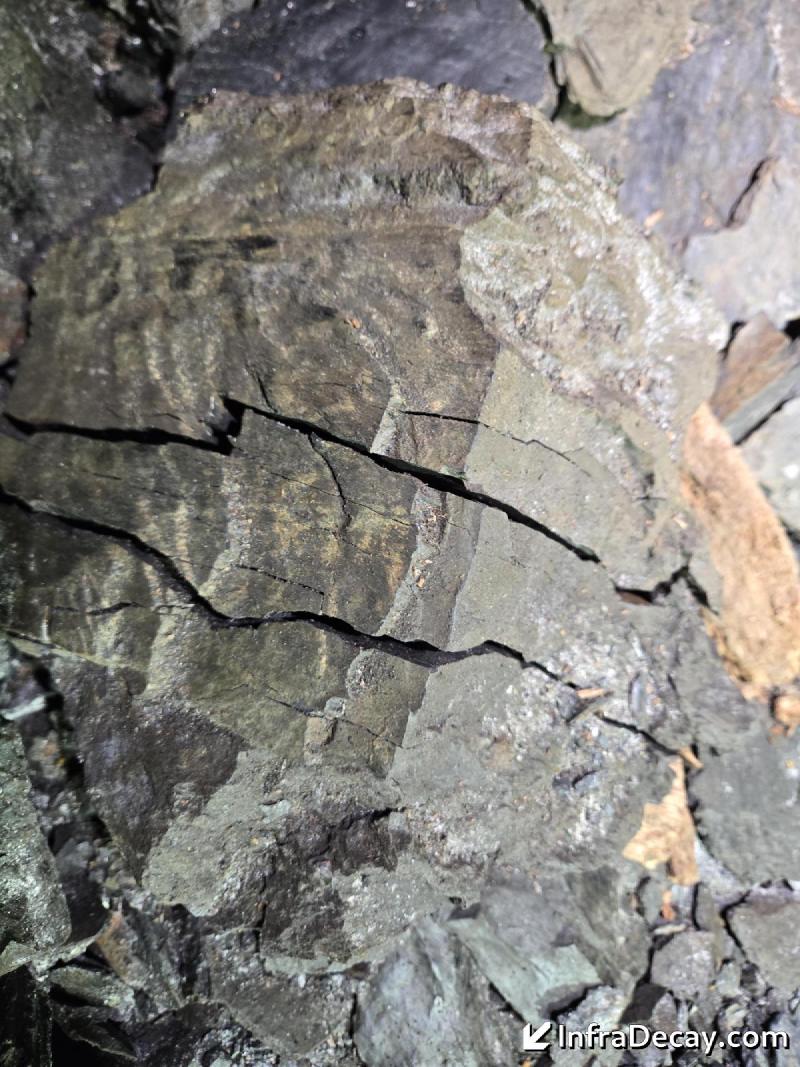
Note this delaminated boulder that fell but didn’t break apart. How cool!
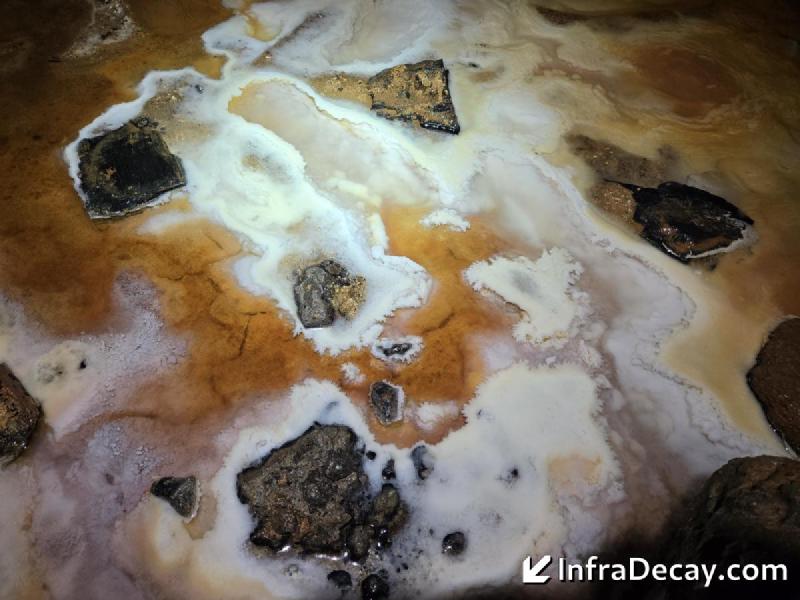
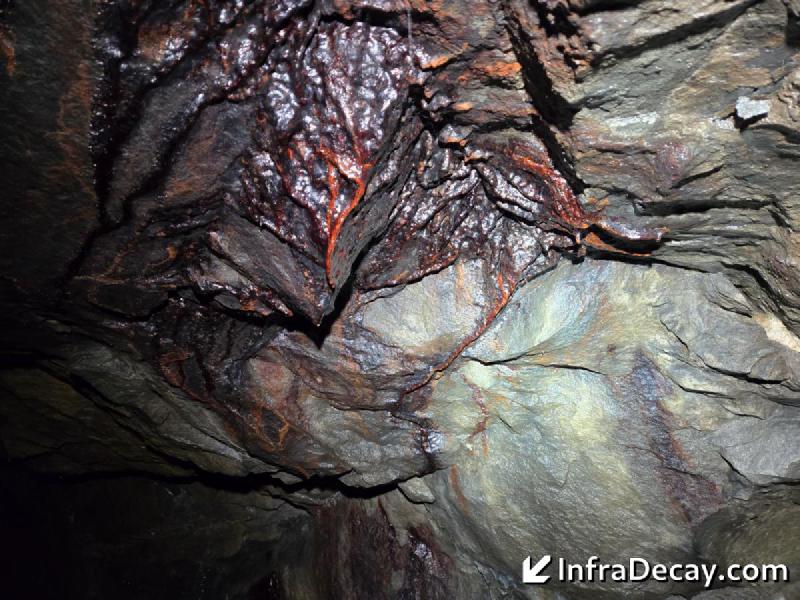
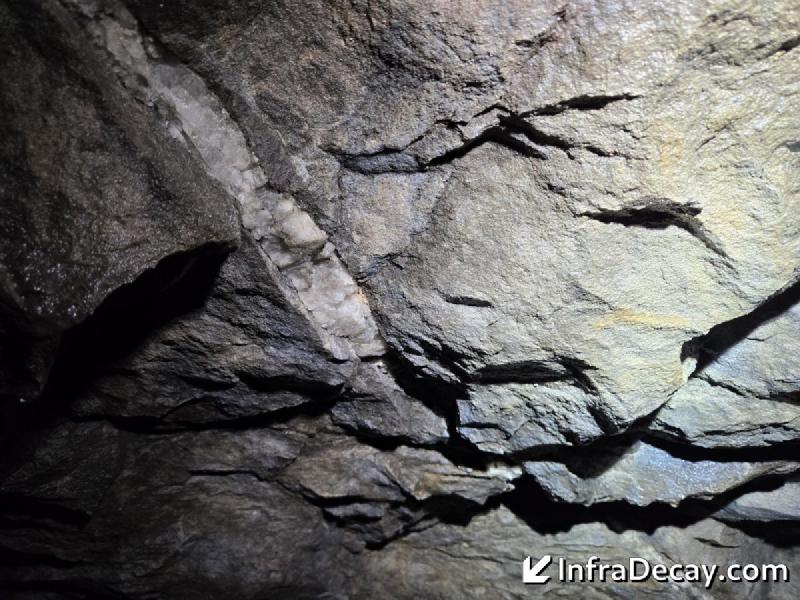
Some other formations in this mine: Rust bacon, quartz veins.
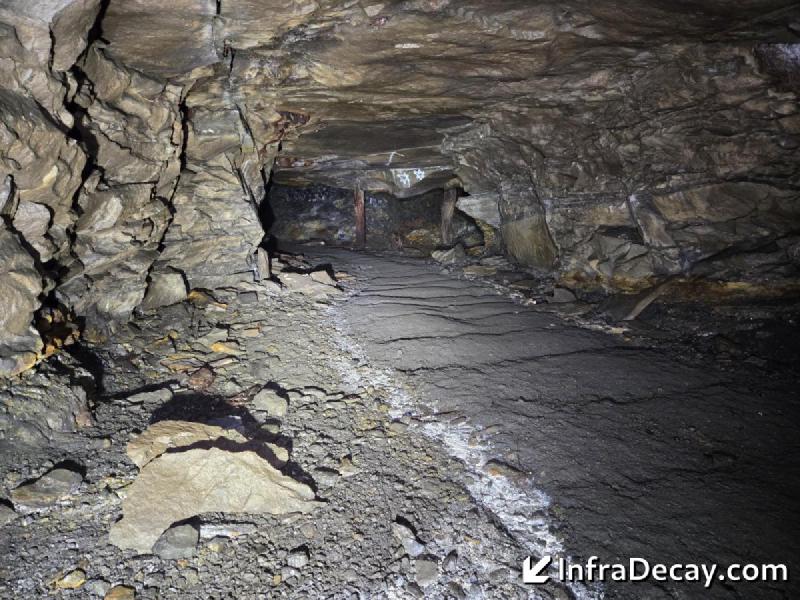
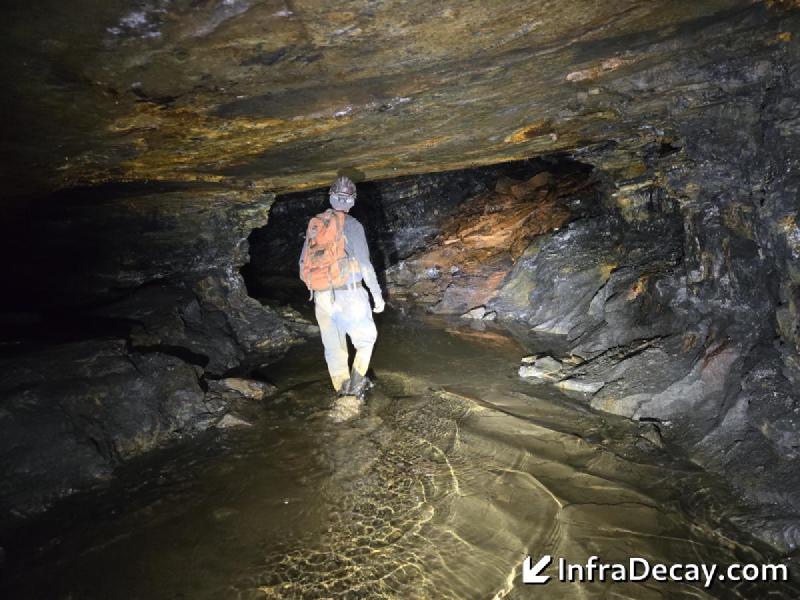
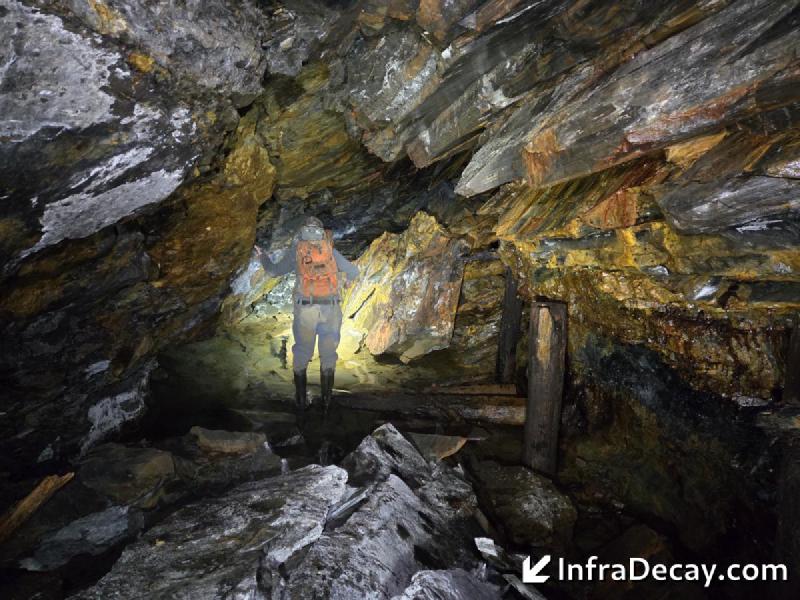
There’s one small passage to the right that leads to the next part of the mine.
Staircase Down
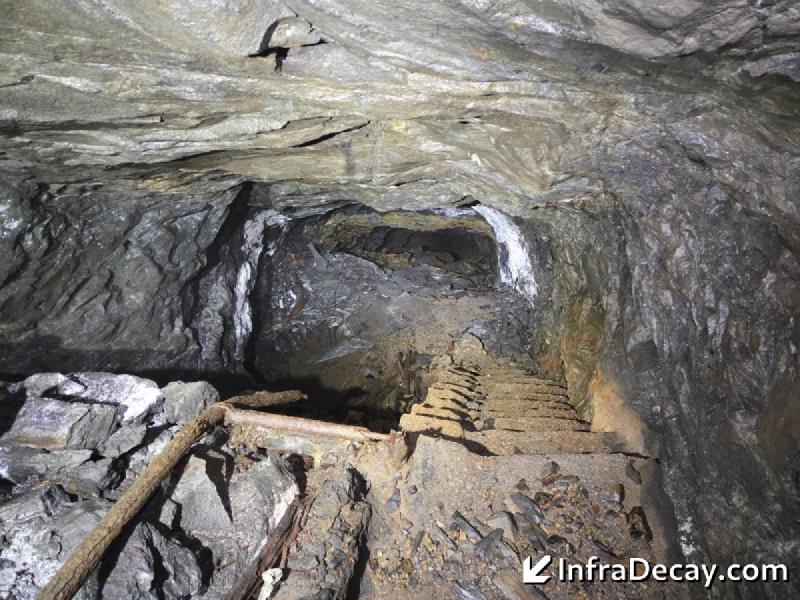
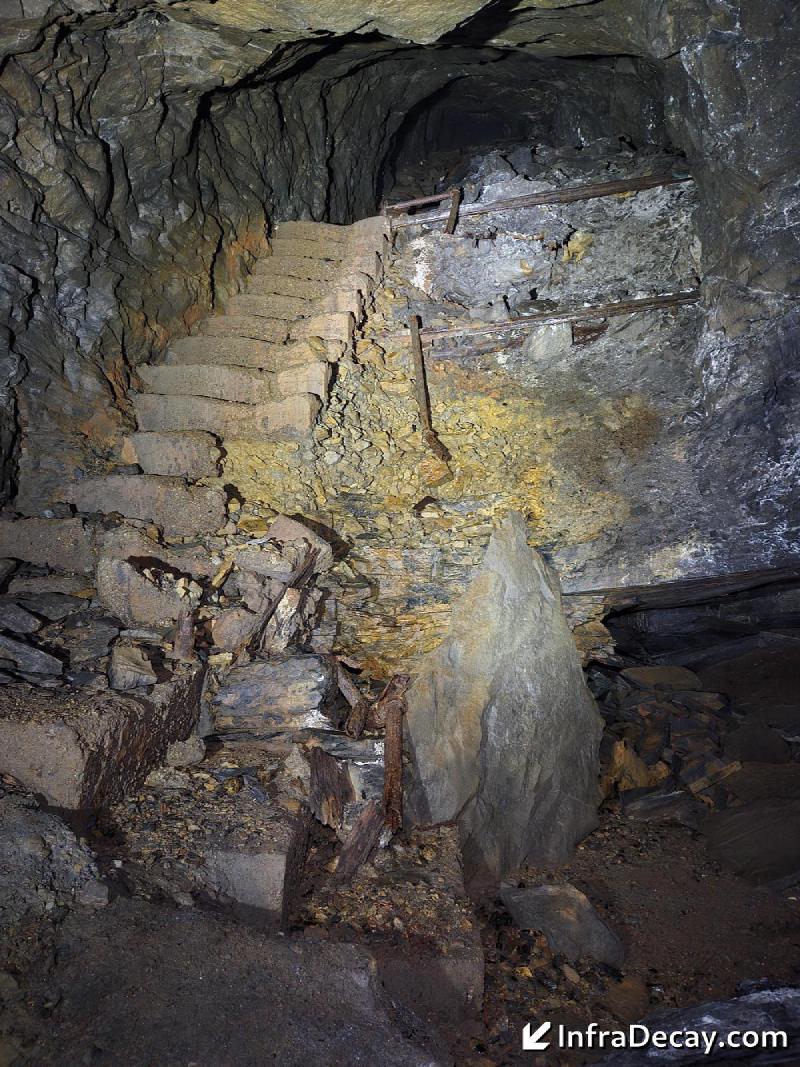
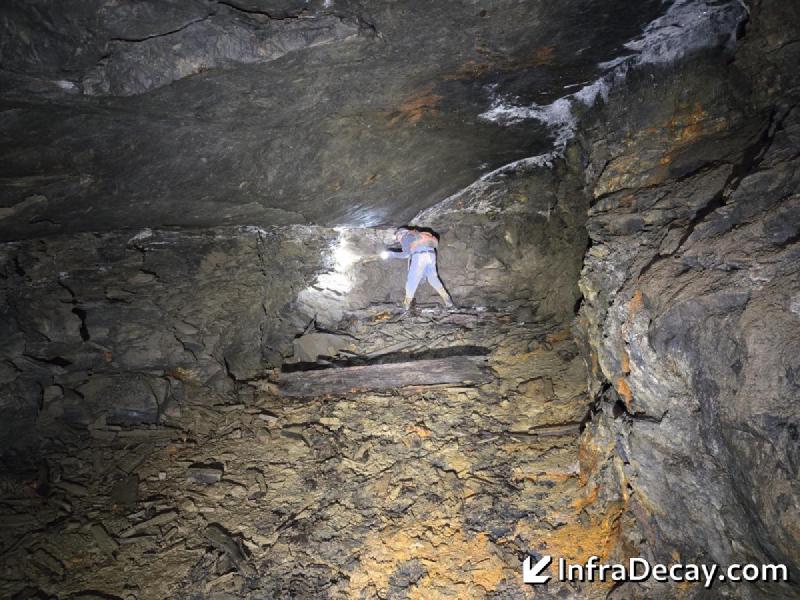
Off the back passage, we take a concrete staircase down a rock slope to the next level. This rock slope was sunk upwards from the main (lower) level; that’s why the top entrance is so awkward. It requires some crafty wader climbing to get down to the actual stairs. The wooden beam visible represents the original, rotted away staircase.
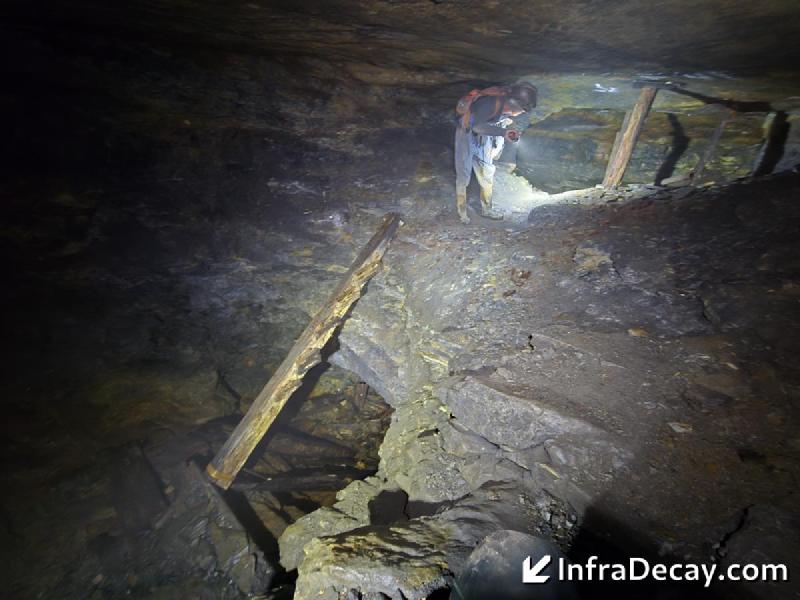
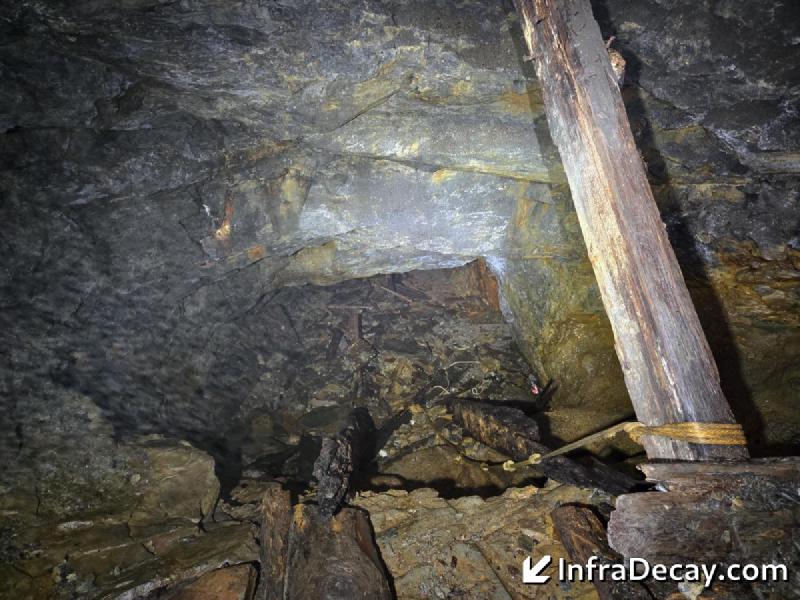
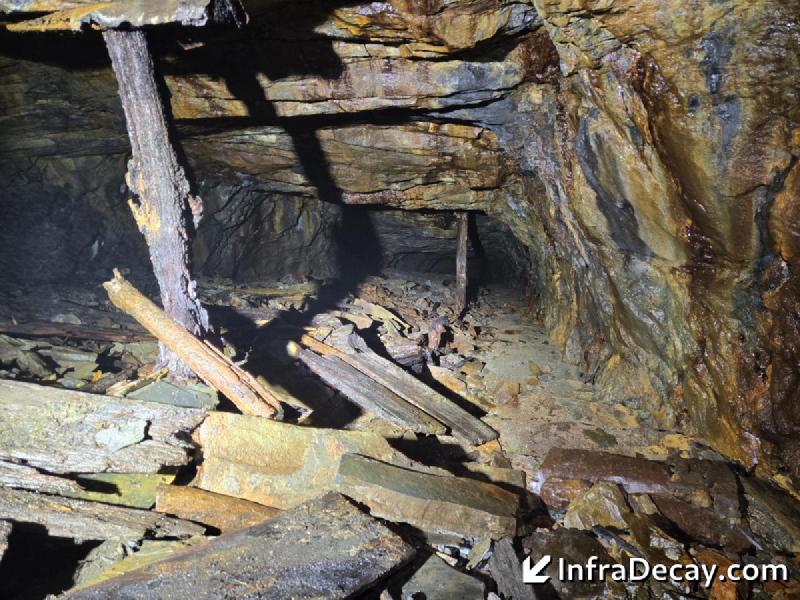
Some more rust bacon. This whole mine had pretty good formations.
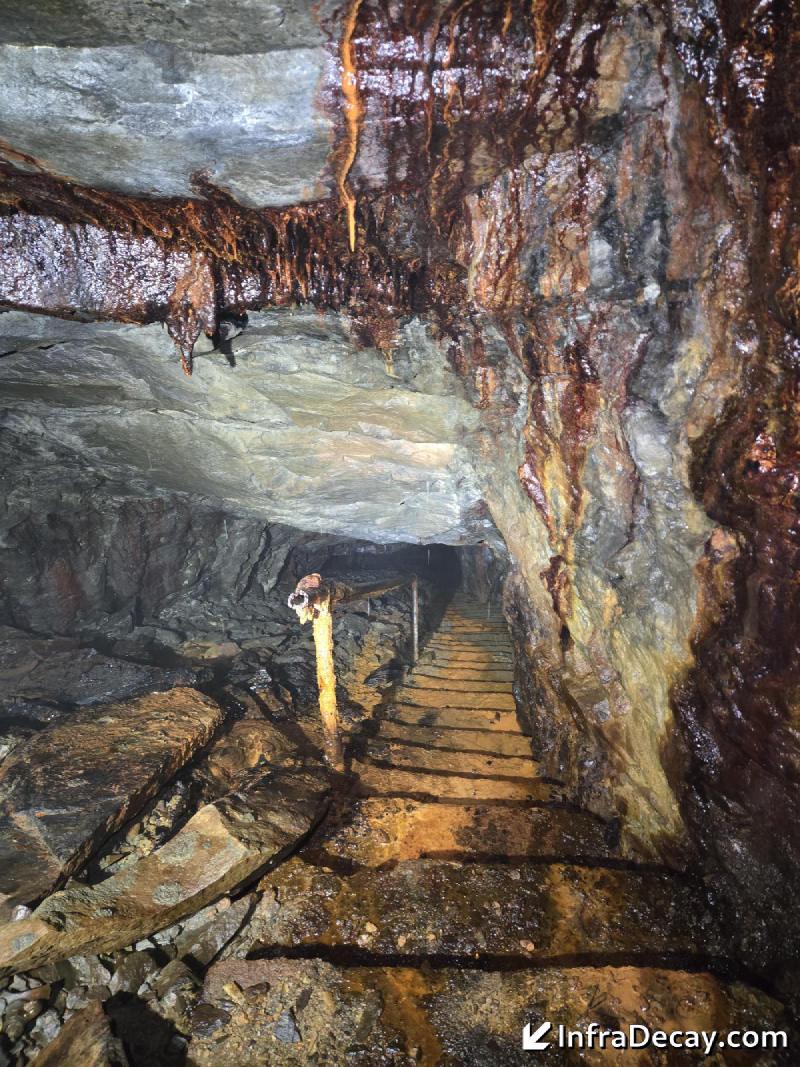
Right before the bottom of the slope, the stairs get even steeper.
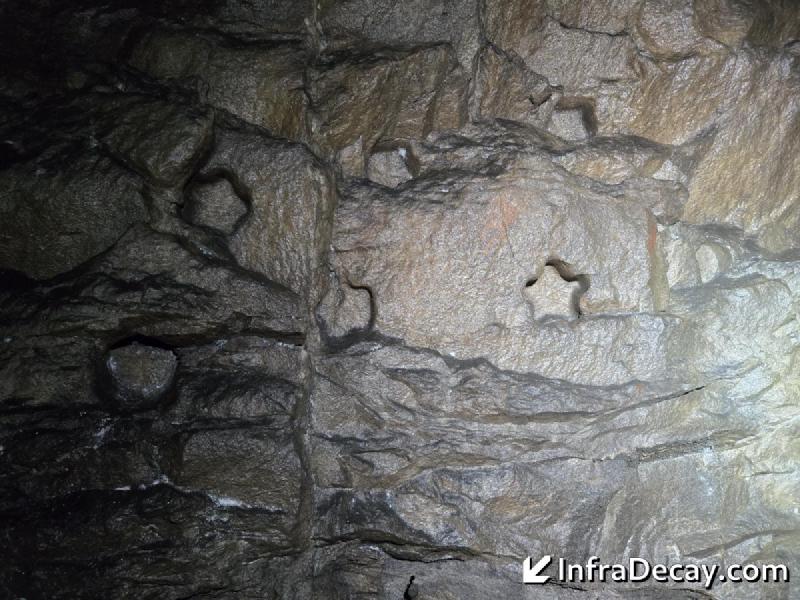
One interesting feature: star shaped drill holes! Were these created by a special drill bit type? Or were they hand chiseled? I don’t know.
Main Level
Down at the main level now, to the left we have a small storage rock drift.
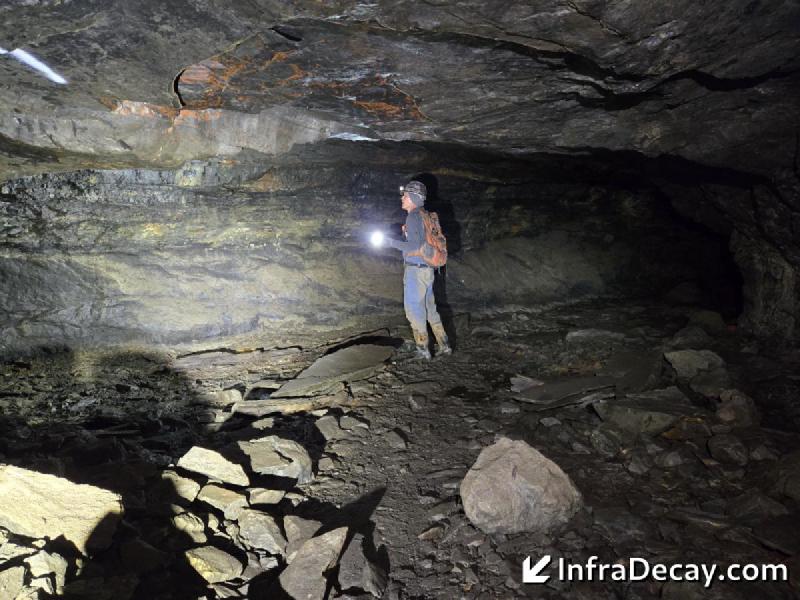
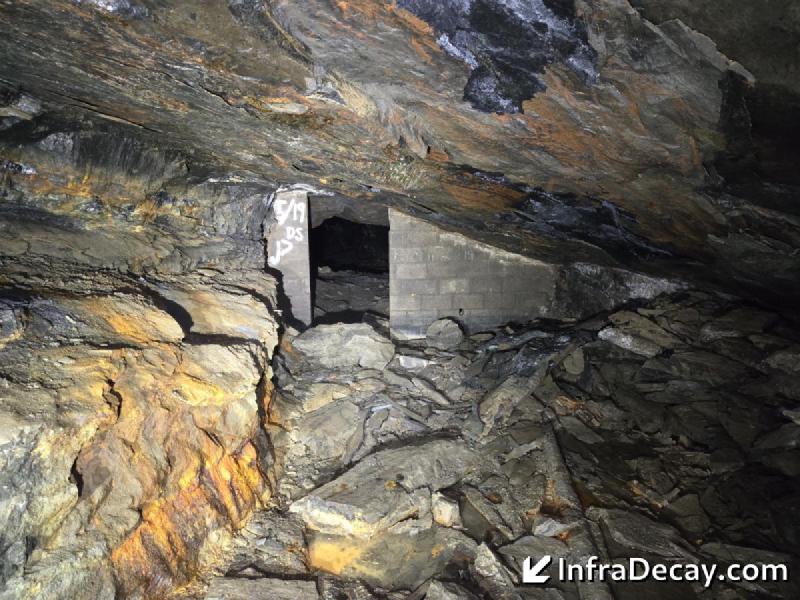
This cinder block doorway leads into the “main chamber”.
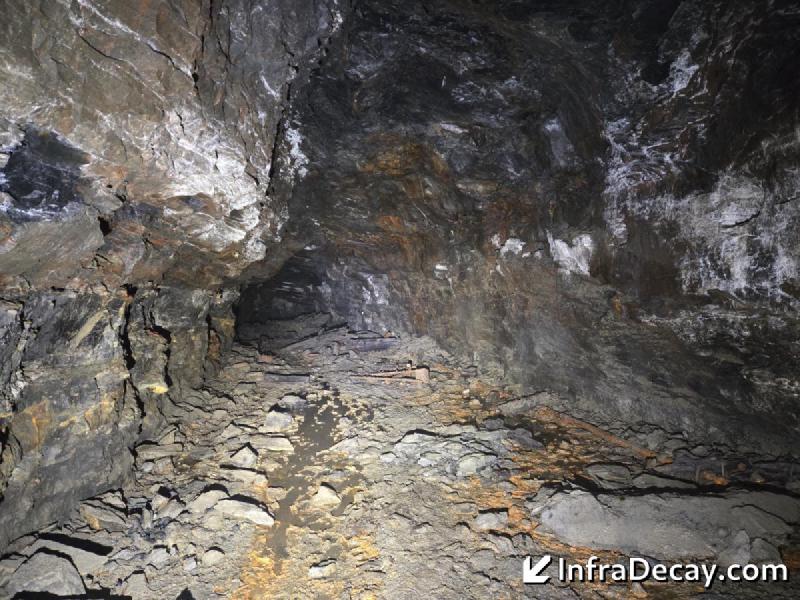
A plane (slope) immediately intersects the large chamber.
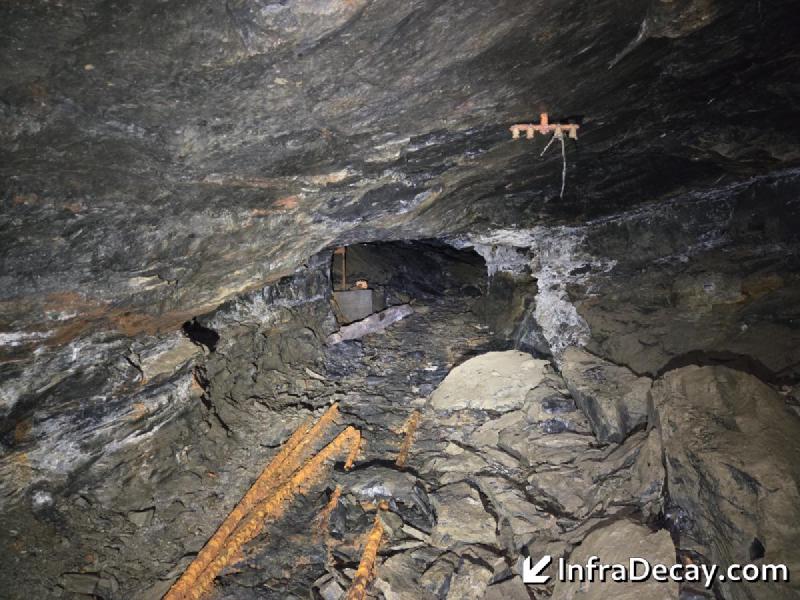
Going up and crawling some collapse we see an old electrical/transformer station as well as working puller infrastructure.
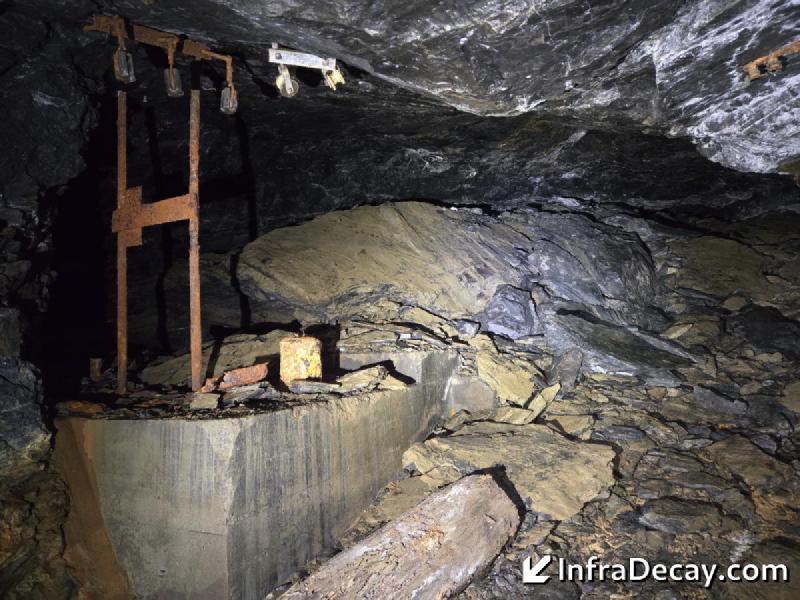
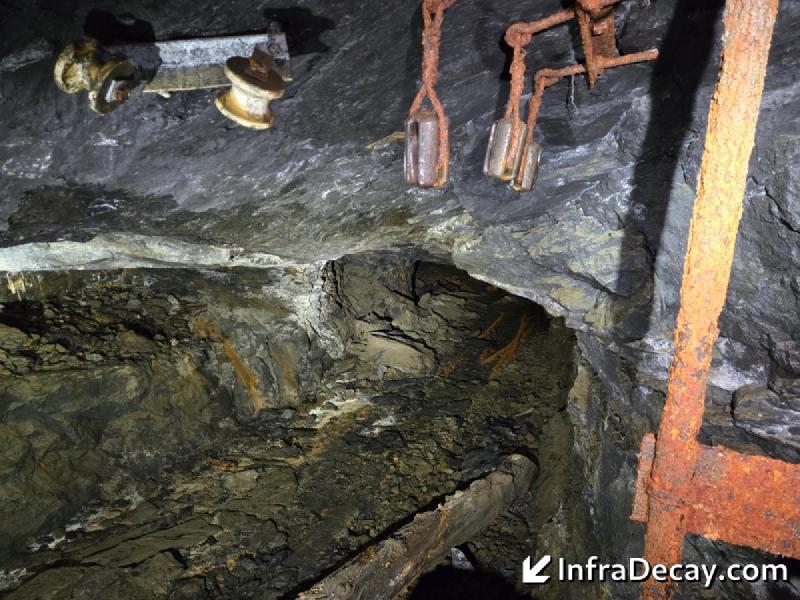
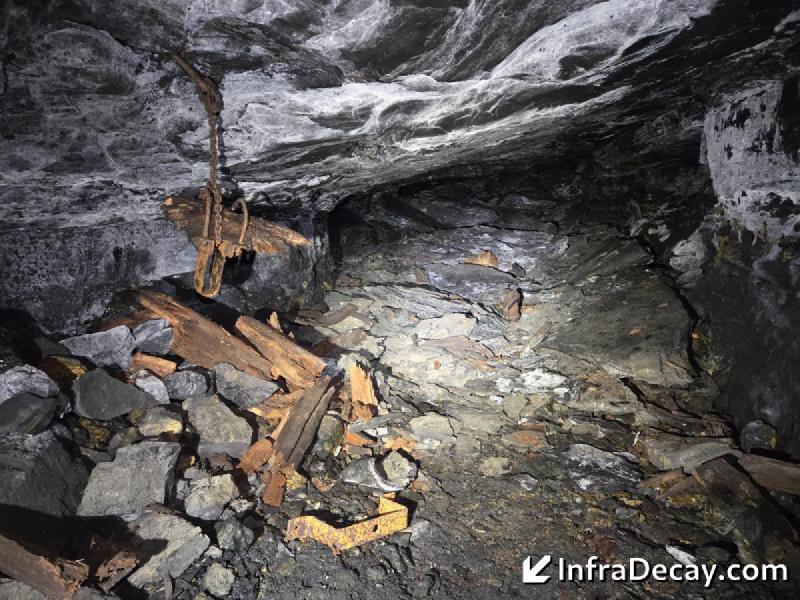
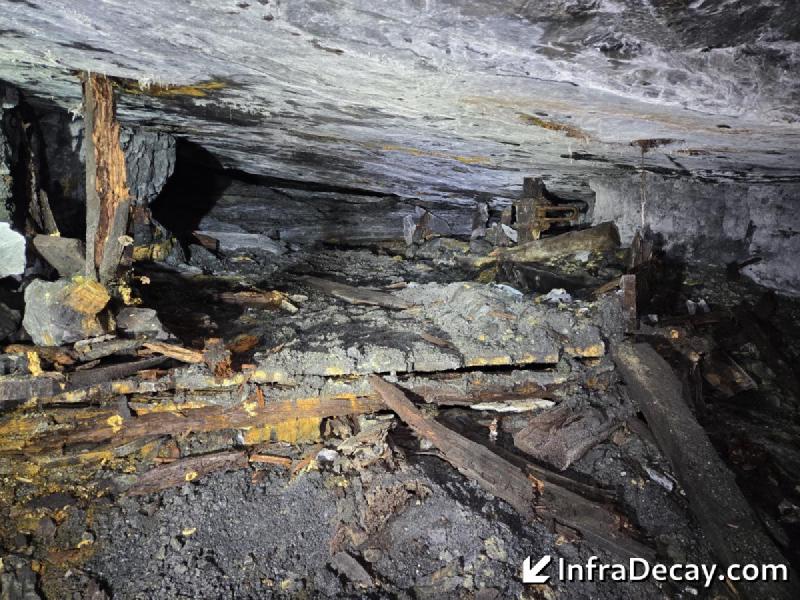
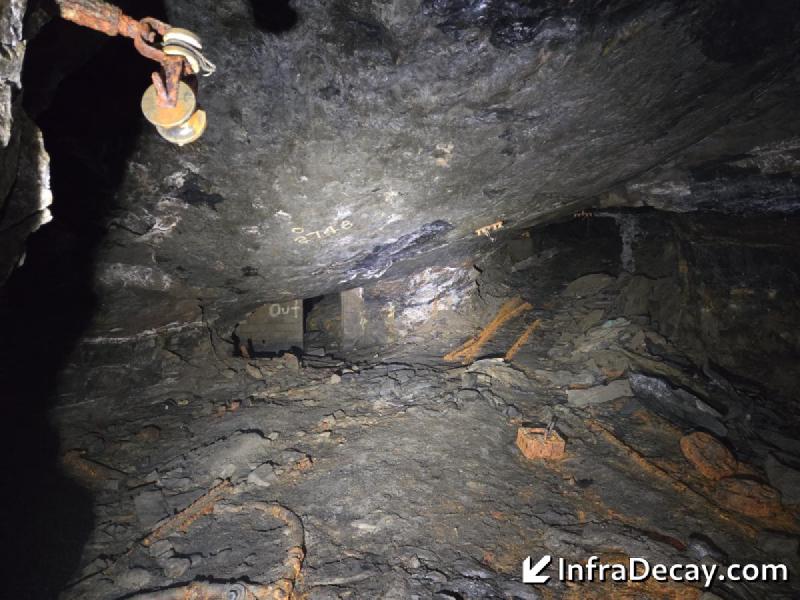
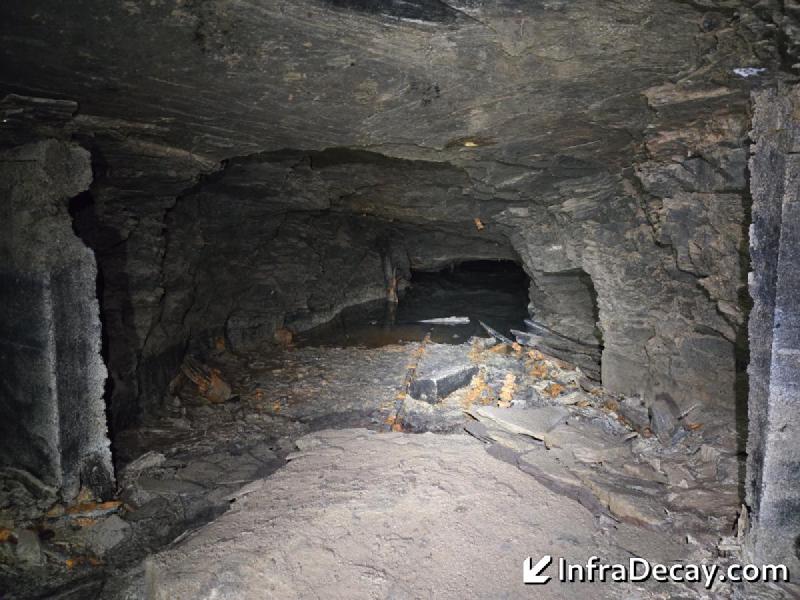
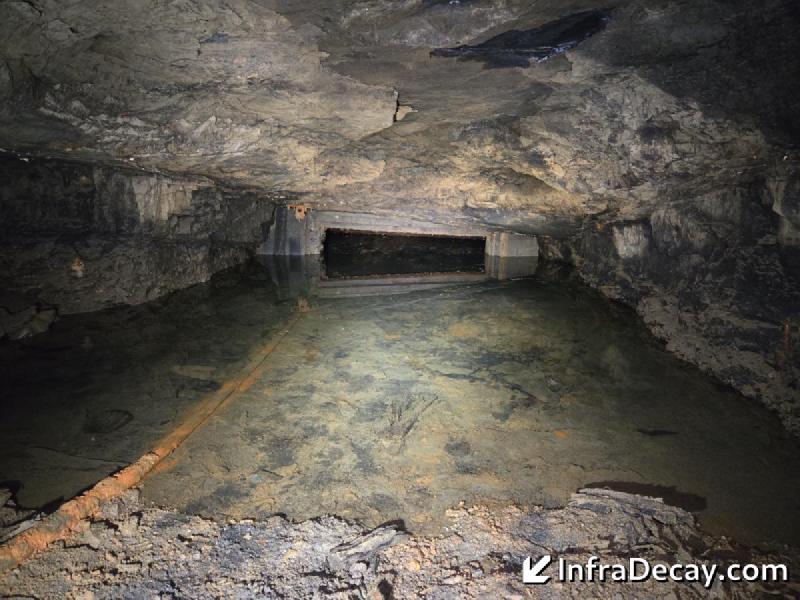
The same slope continues down from the main chamber, but it ends quickly in water.
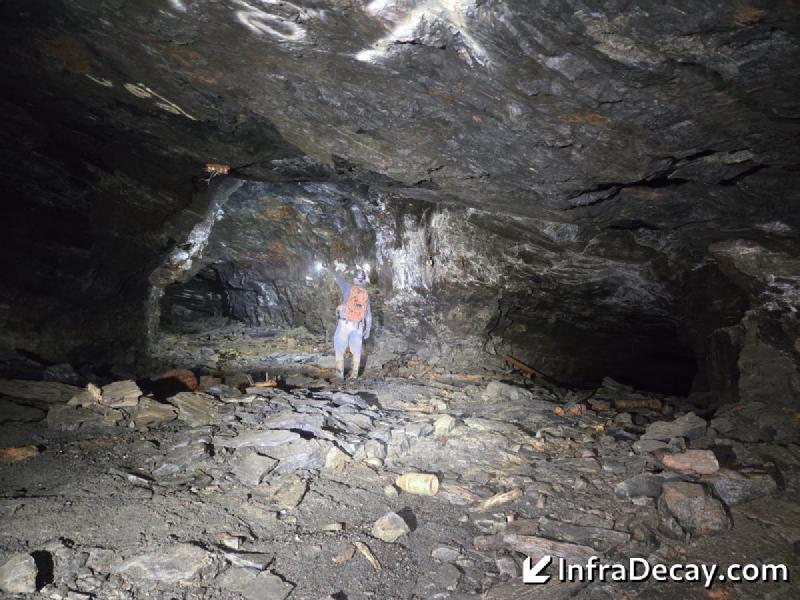
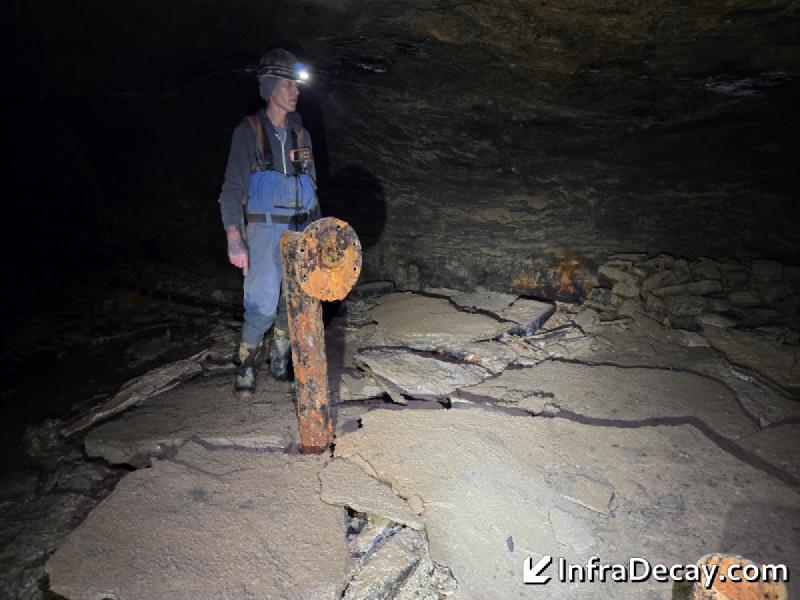
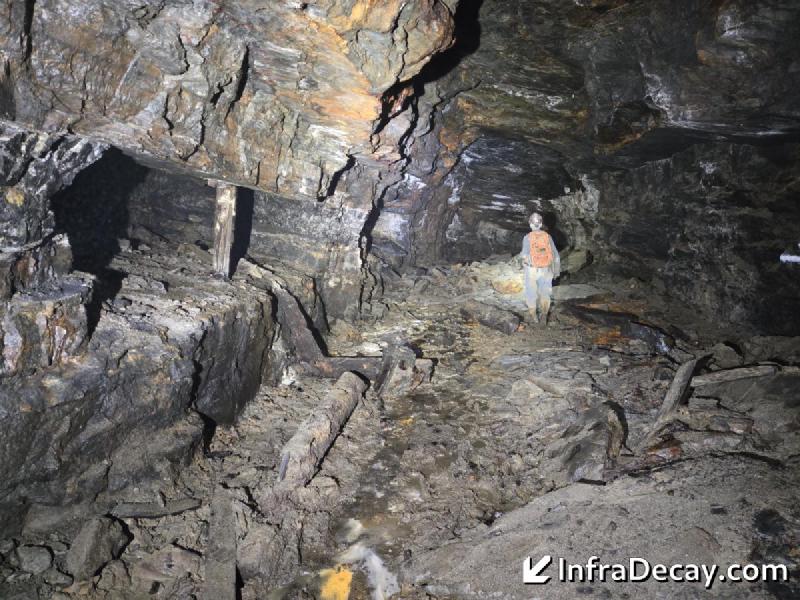
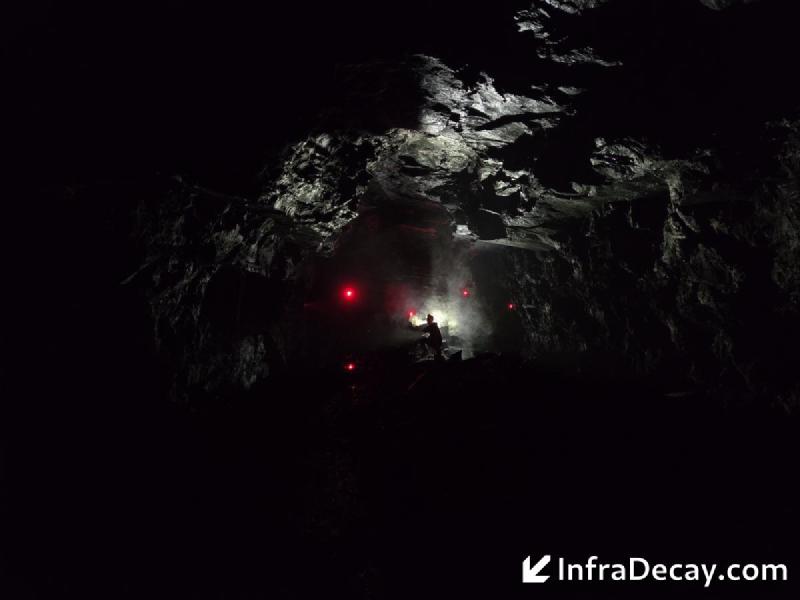
Some equipment remains on the floor of the main chamber.
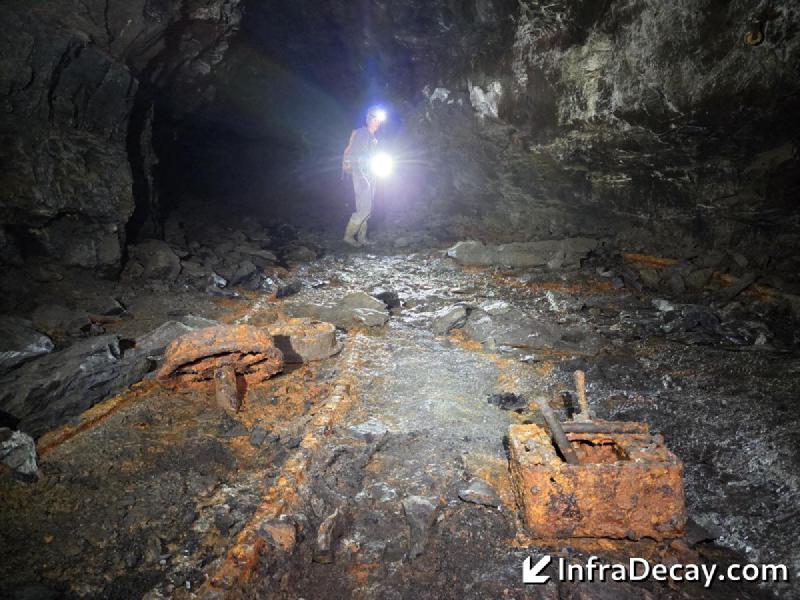
These workings shot right out into the large chamber. It’s possible that they represent the height of the coal cars used, so coal could have dropped right into cars.
Deep Rock Tunnel
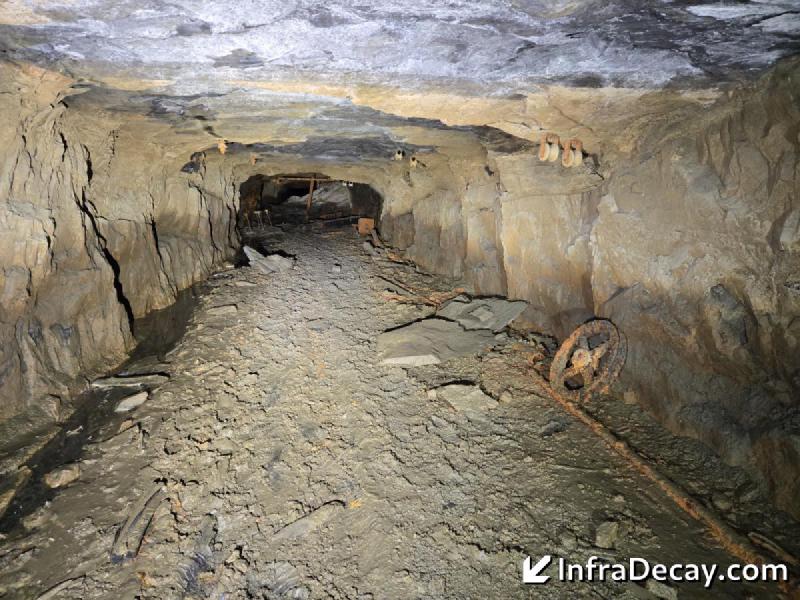
From the ends of the large chamber, we go through a blown out block wall and hook a right into the deep rock tunnel. This tunnel is extremely long, sometimes flooded, and always has dangerously bad air.
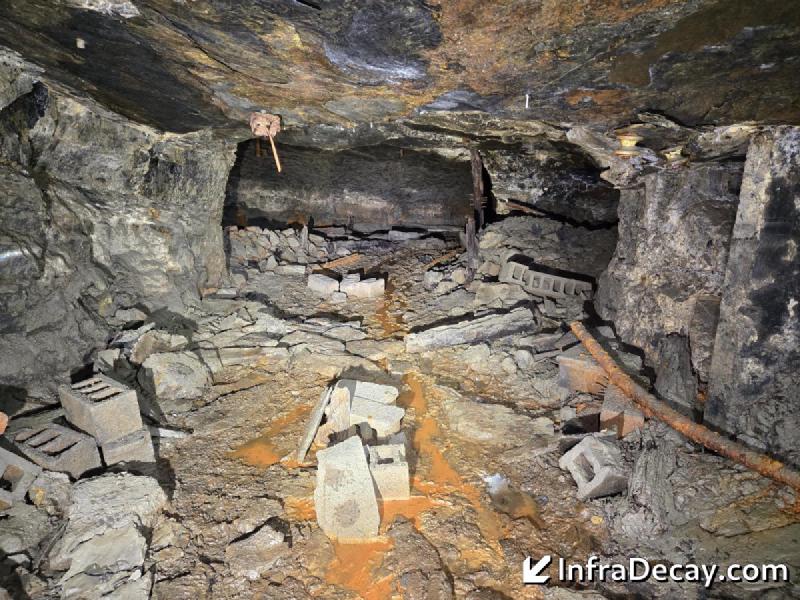
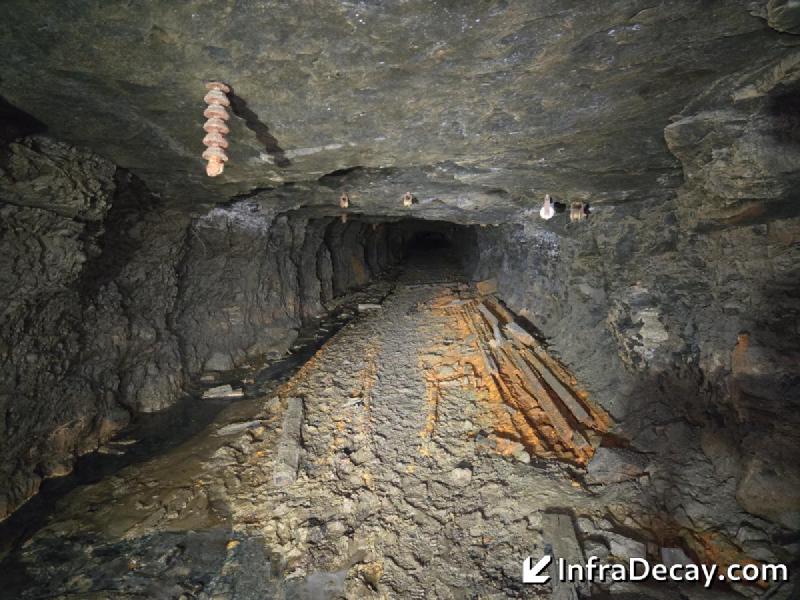
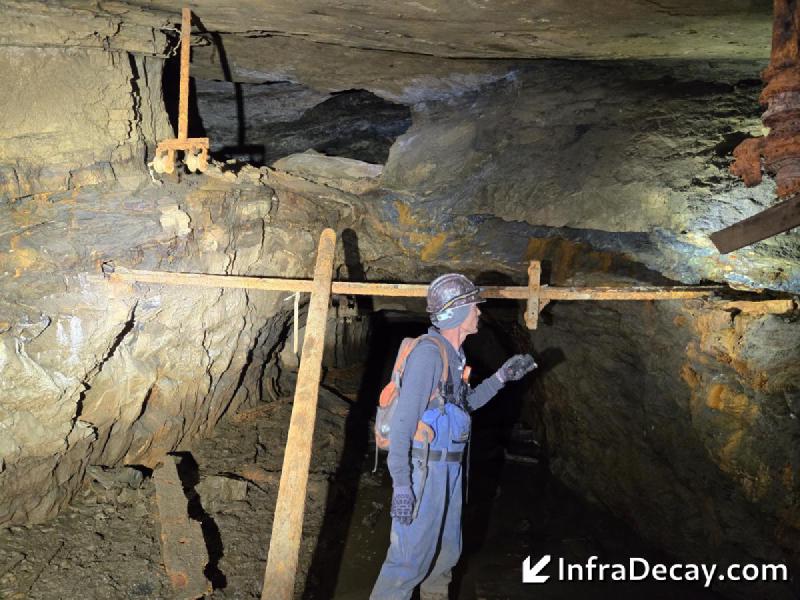
The tunnel leads to a 4-way intersection. It’s past this intersection that the air gets potentially lethal. This 4-way intersection also intercepts the next vein level, so there’s some passages and workings to explore.
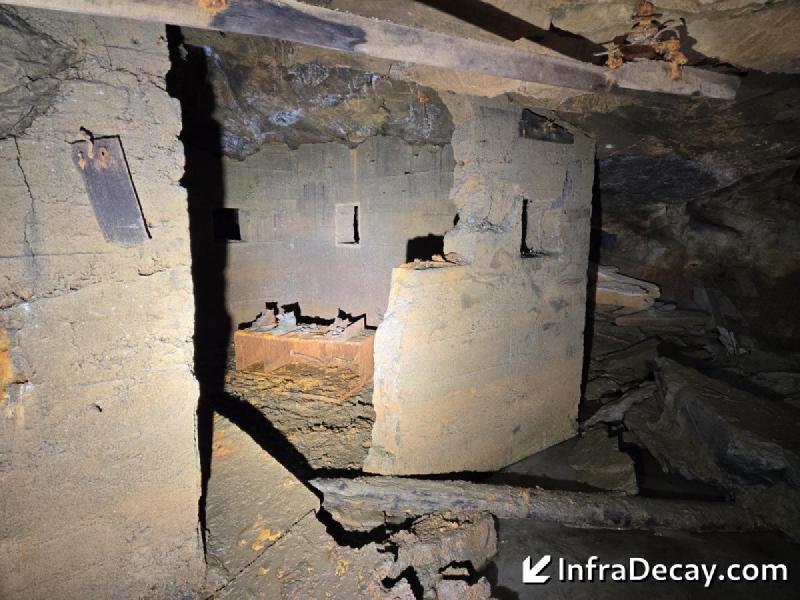
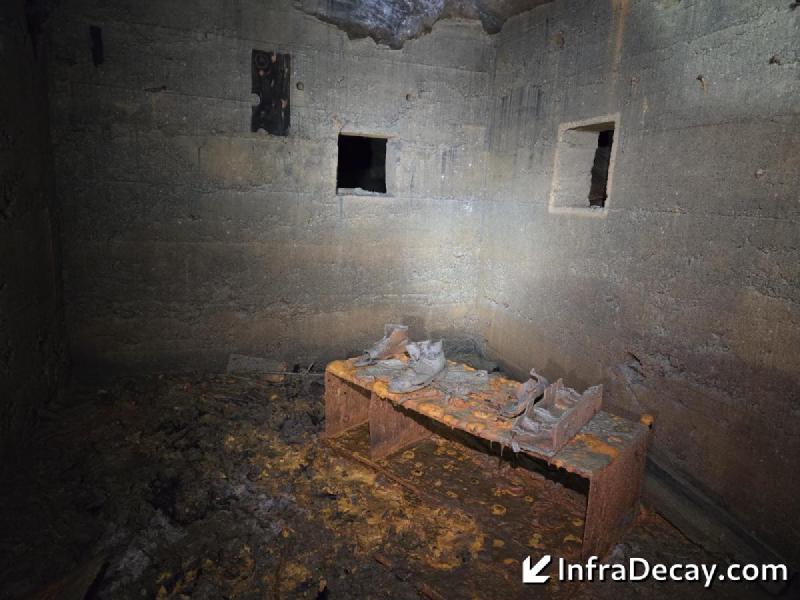
A small utility room sits right at the intersection.
Locomotive Shop
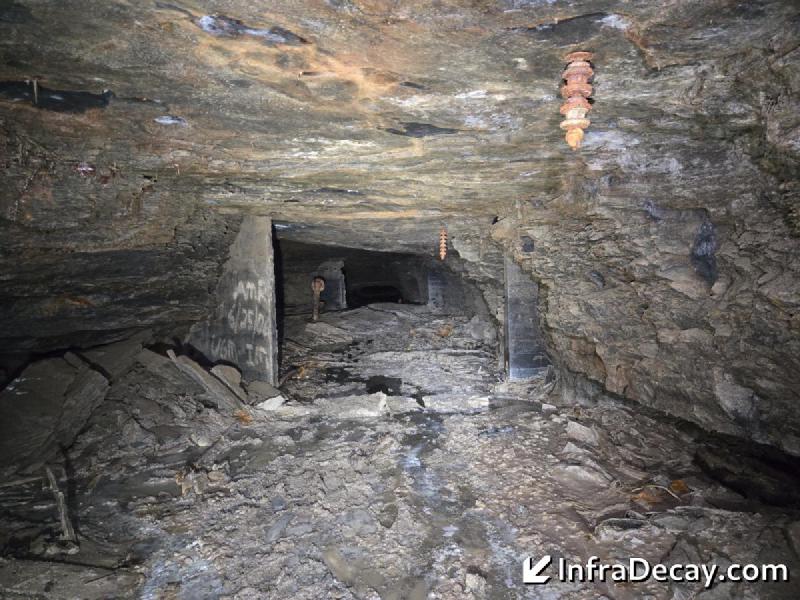
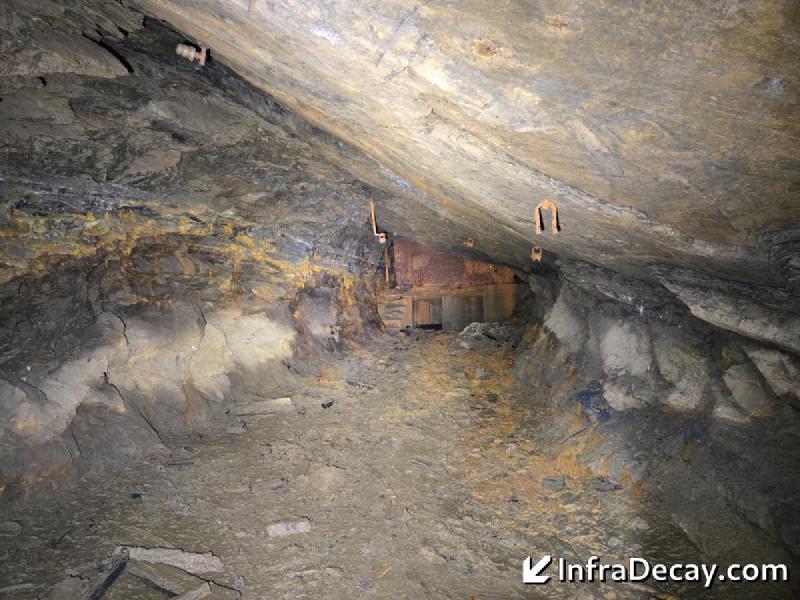
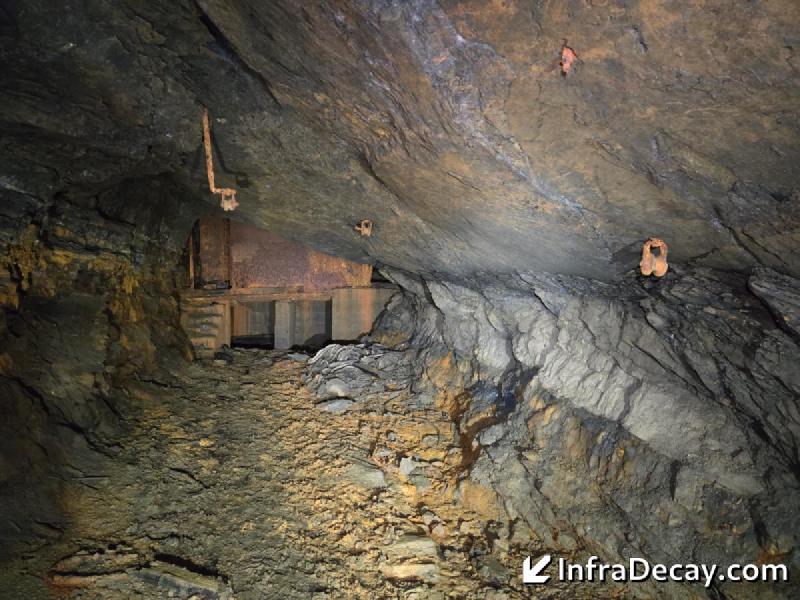
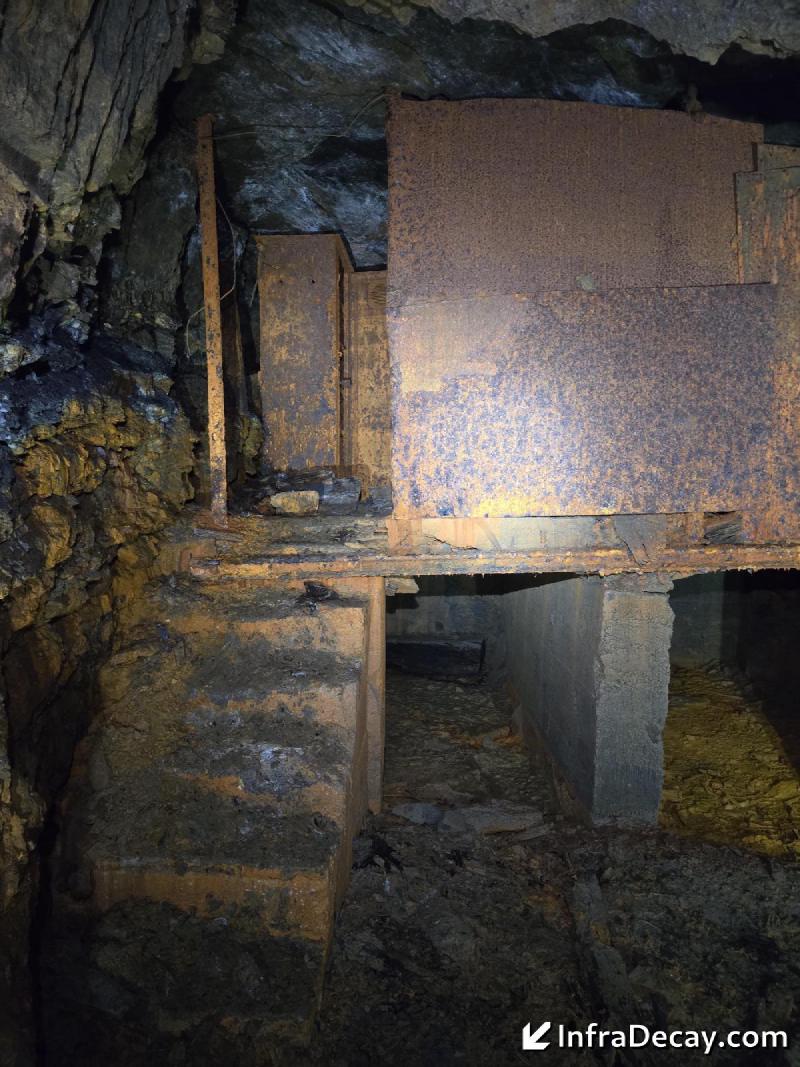
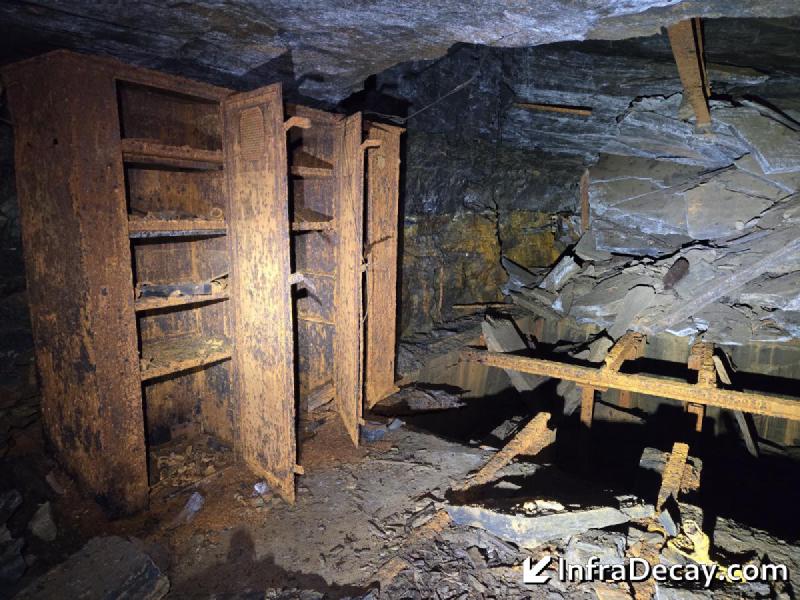
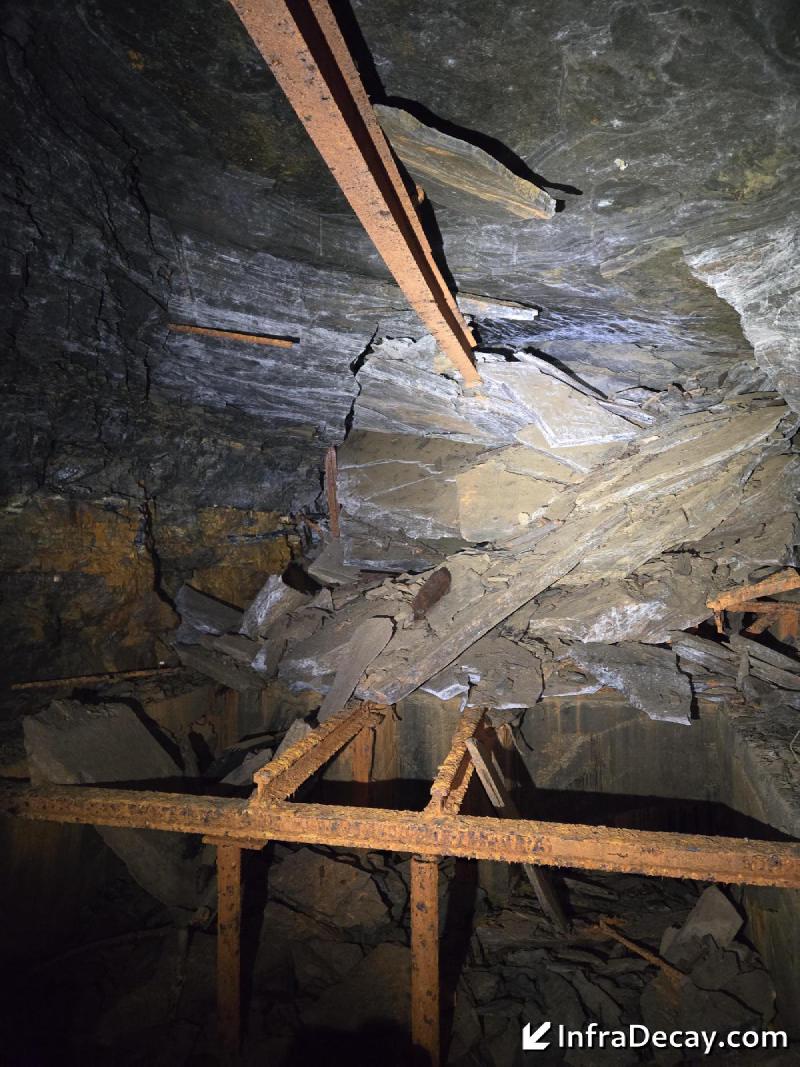
Left of the 4-way we have a locomotive shop. It’s in pretty bad condition and experiencing severe collapse. Once notable feature is the horizontal, ceiling-mounted screw-on insulators. I haven’t seen this in other mines.
Right Gangway
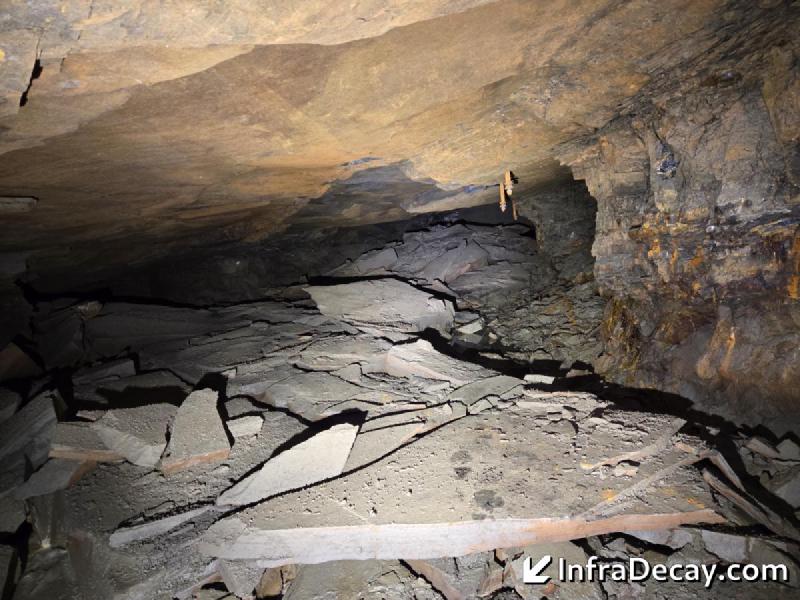
Then if we go right from the 4-way we get to the next vein level working area. This used to be much larger but is now sealed by collapse.
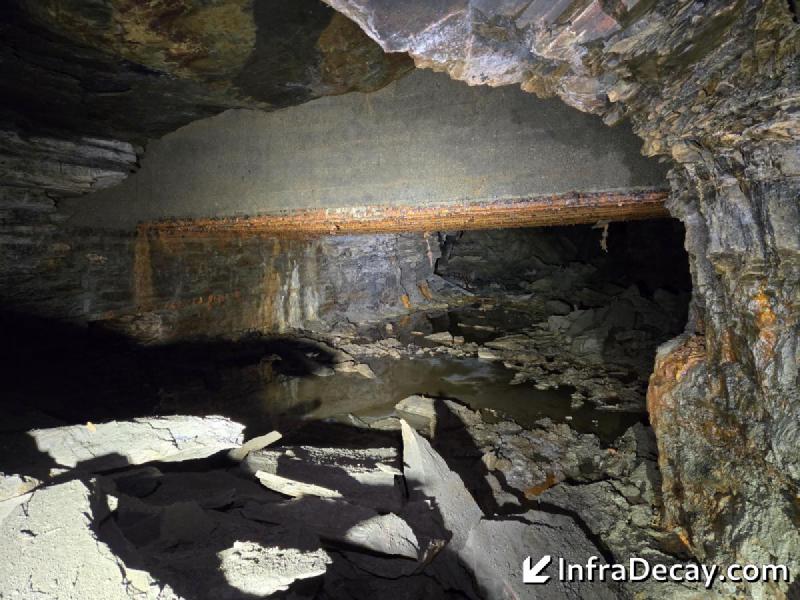
One notable feature is a concrete bridge in this gangway; it’s possible to get into it (from the upper side), but it’s instantly collapsed at the lower end.
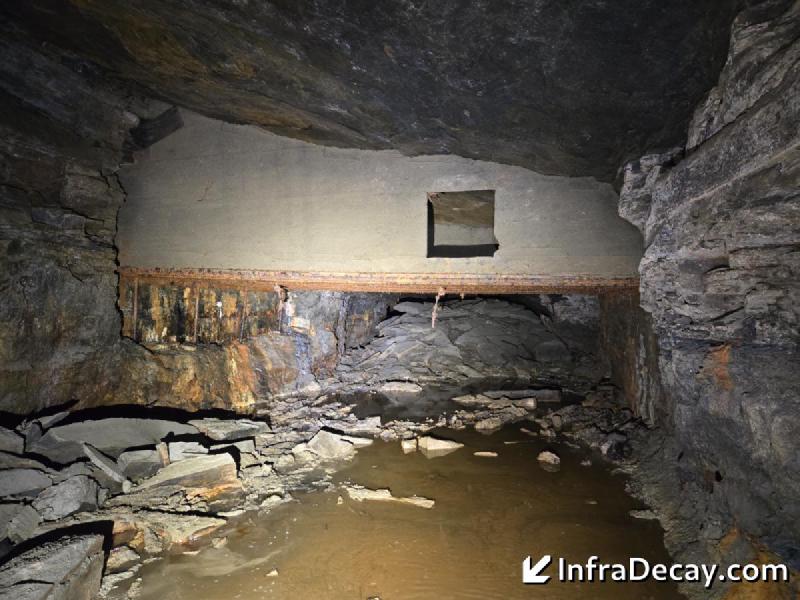
Some large collapse reveals a natural rock fold. The layer of shale probably separated from the bedrock. Neat!
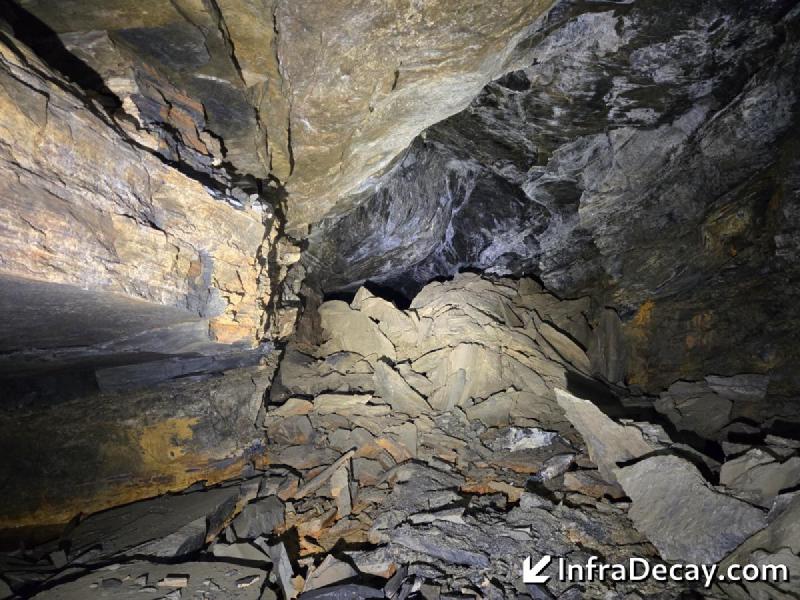
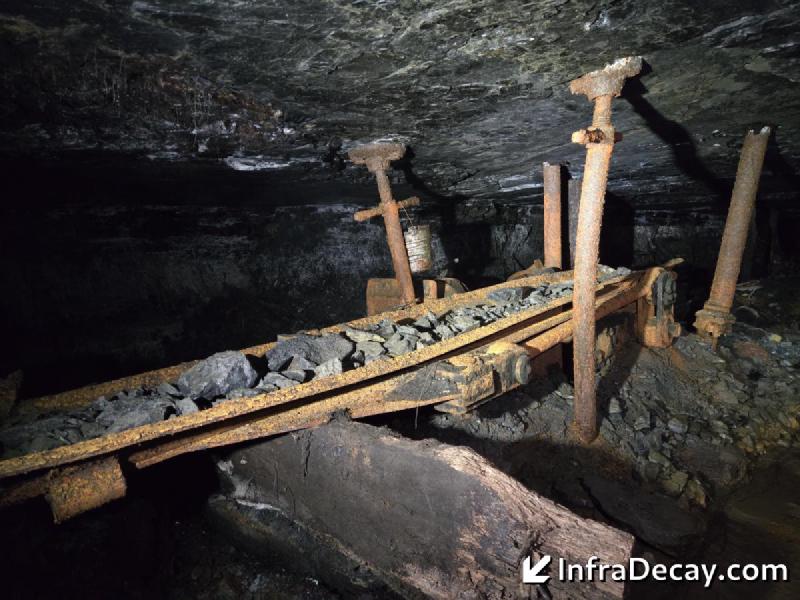
At the end of this gangway, another perpendicular slope. It’s collapsed immediately going down. Going up, we see a large sheave wheel indicating a possible hoist nearby as well as a working level with artifacts and a motorized coal shaker.
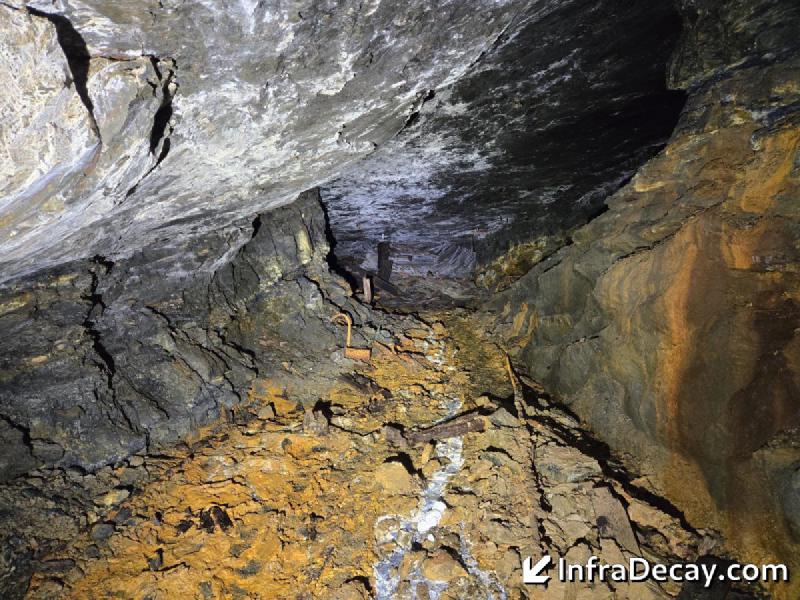
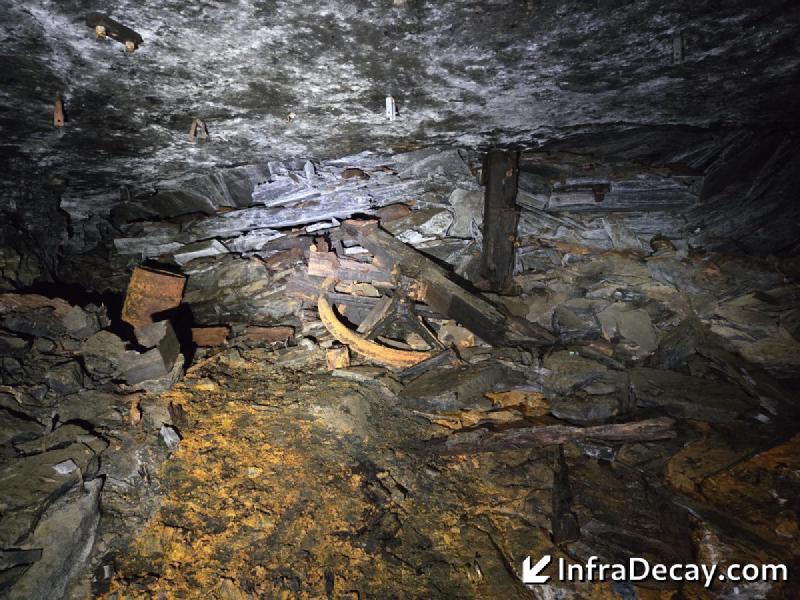
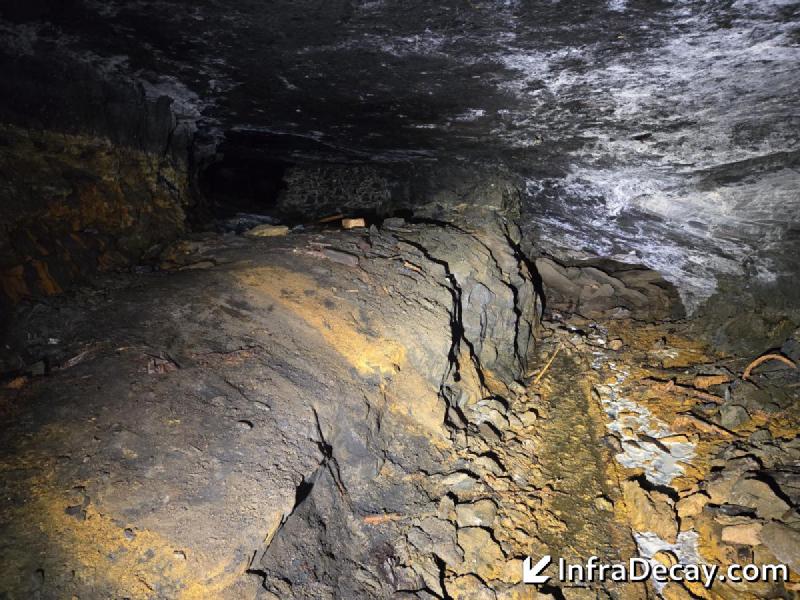
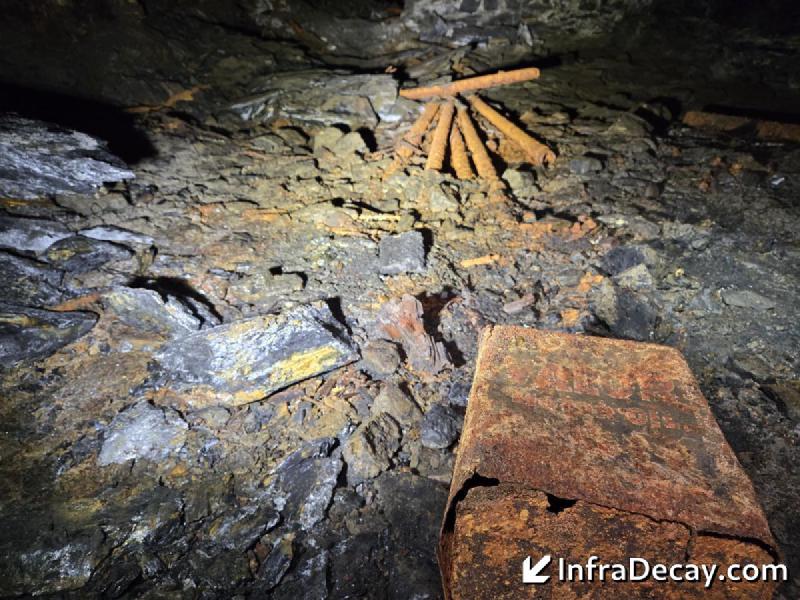
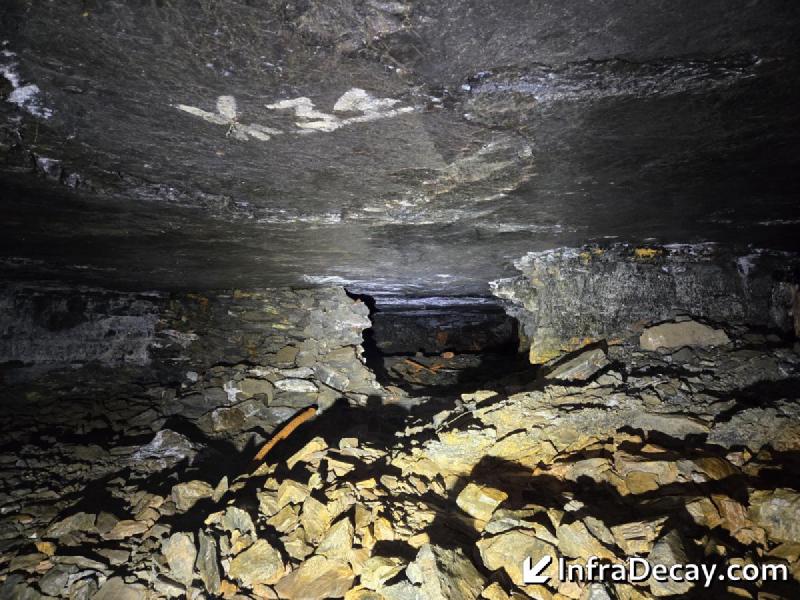
This shaker is cool because there’s still coal in it!
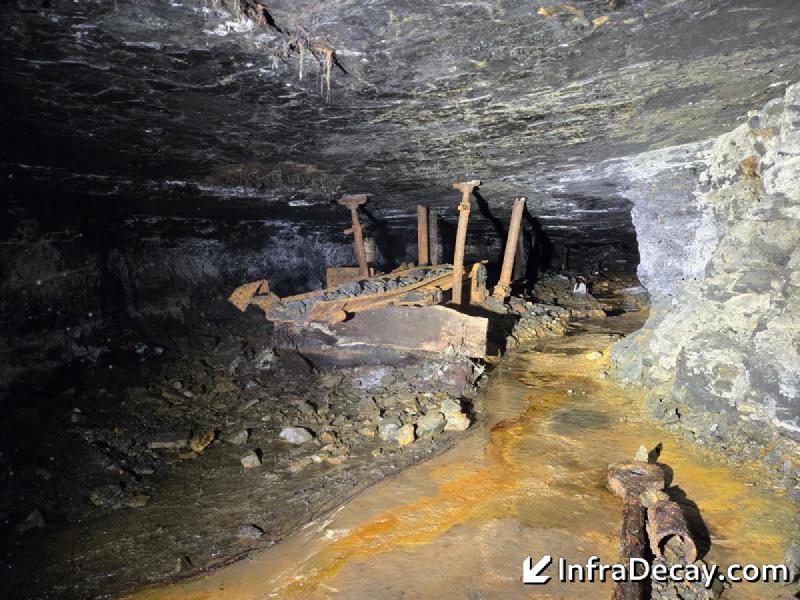
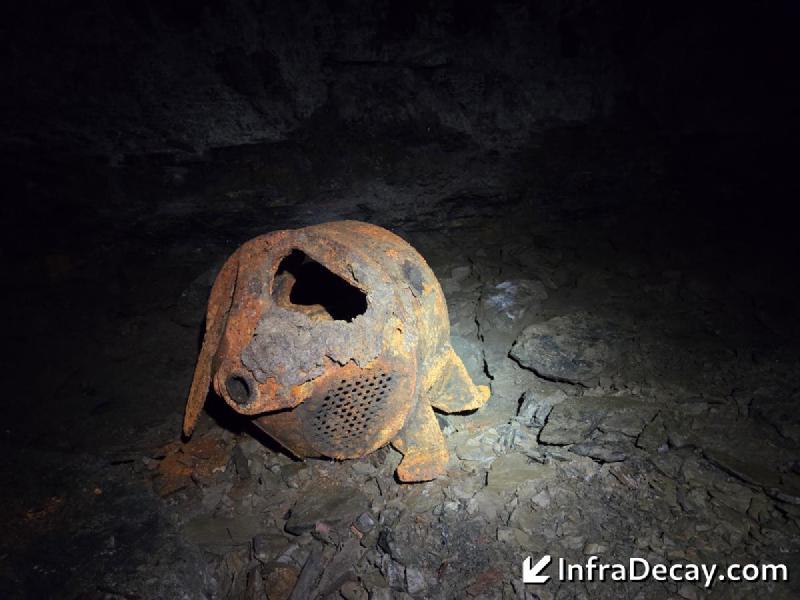
Following the workings down, we end at the same concrete bridge from earlier.
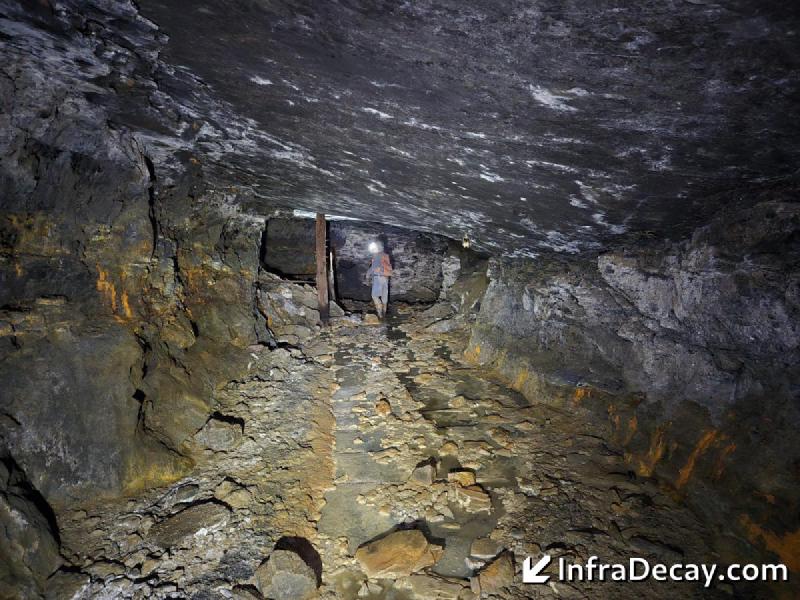
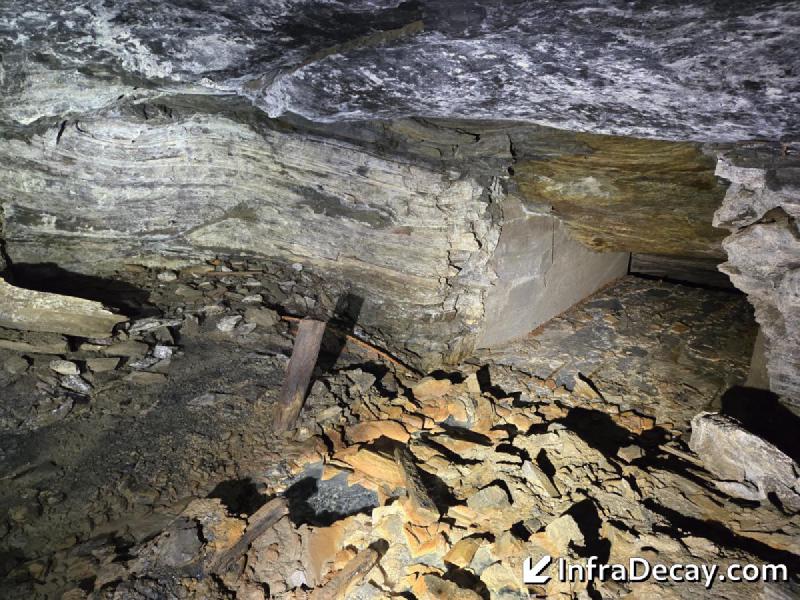
Black Damp Tunnel!
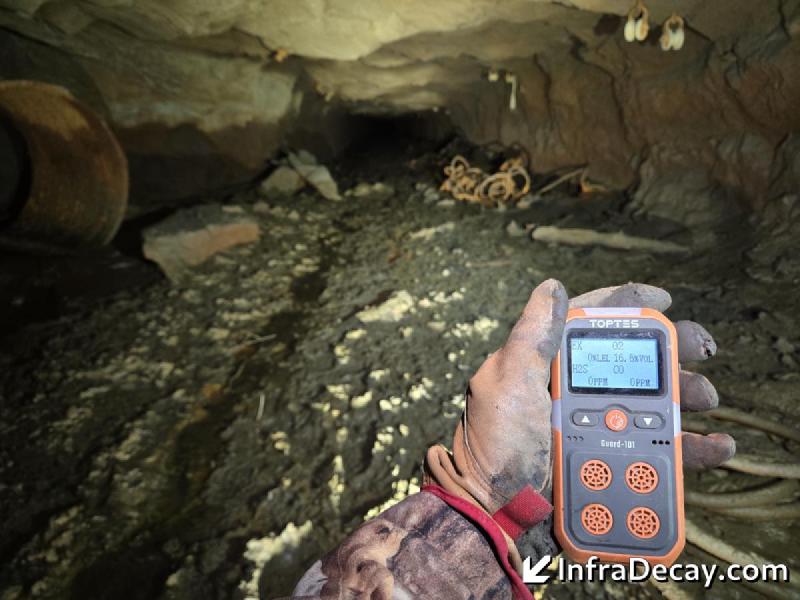
Finally, we go back to the 4-way and continue straight. Within 50 feet, the air dropped to dangerously low levels. Reports from more brazen explorers state the air gets to necessarily lethal levels.
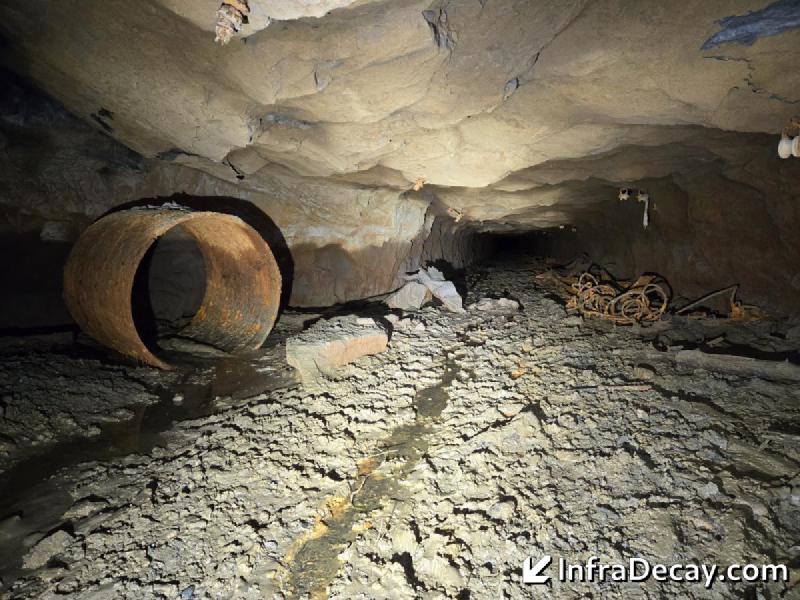
Southern Passages
Going all the way back to the large chamber but going left instead of right we can explore a series of small curving tunnels. None go too far.
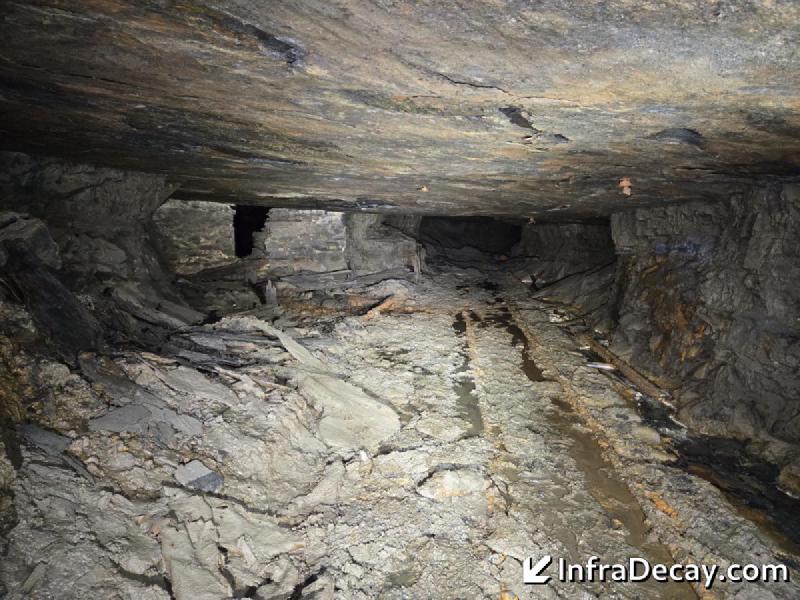
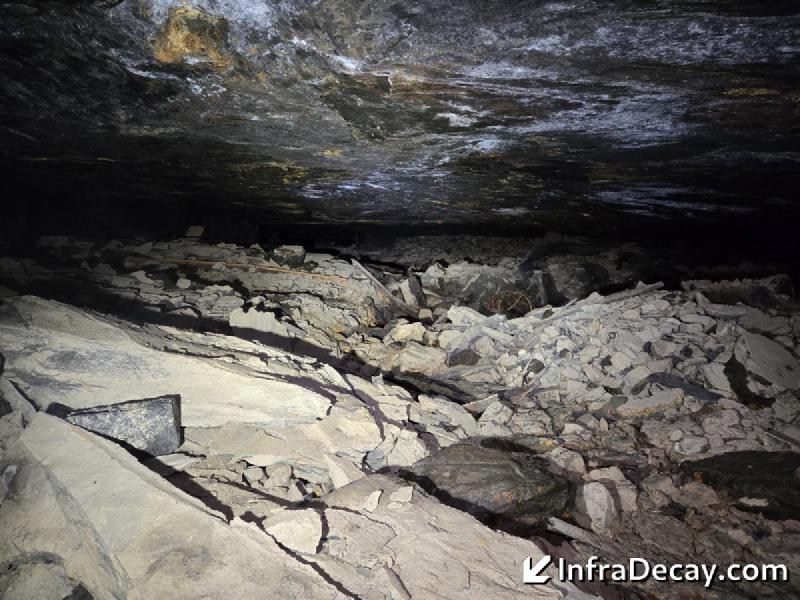
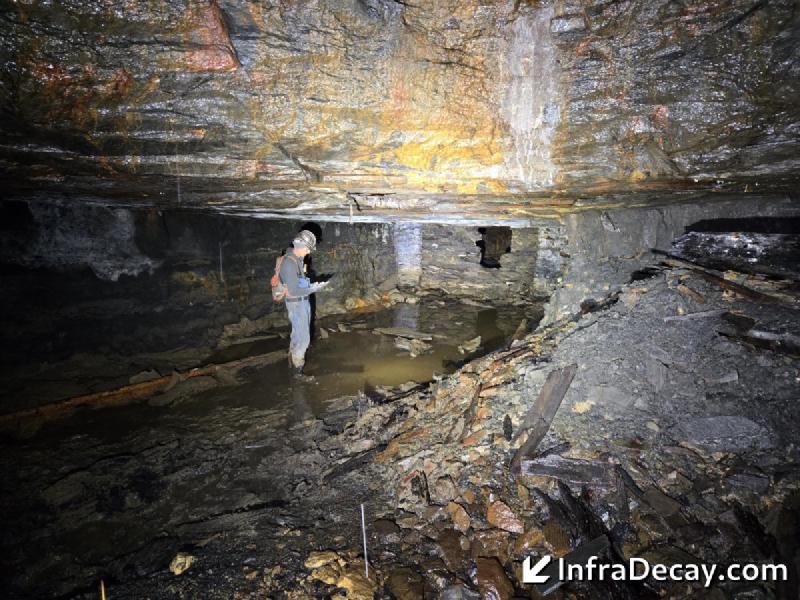
One of the tunnels has an air shaft to an upper level (pictured above and below; it only goes up).
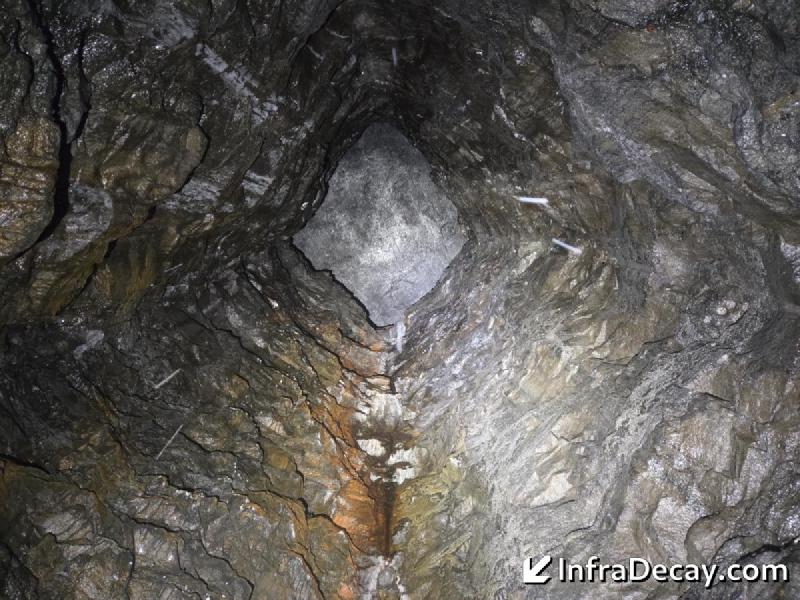
We continue…
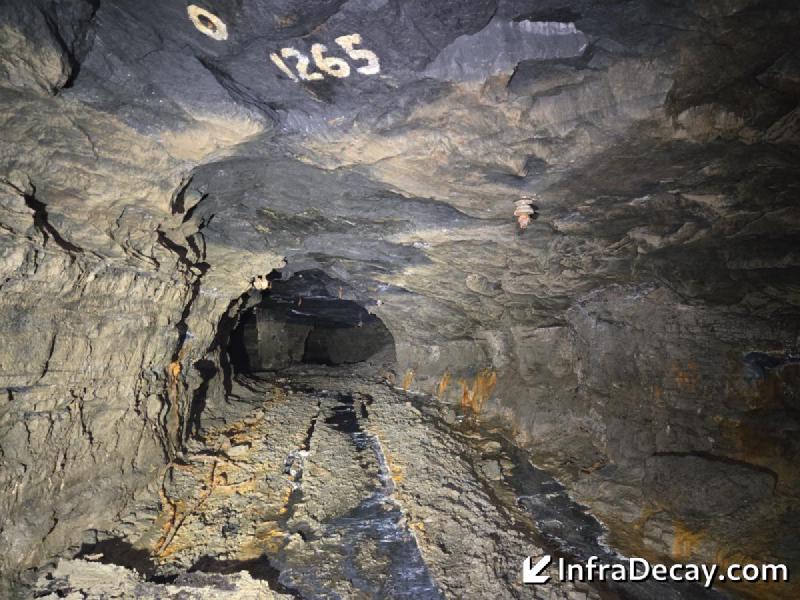
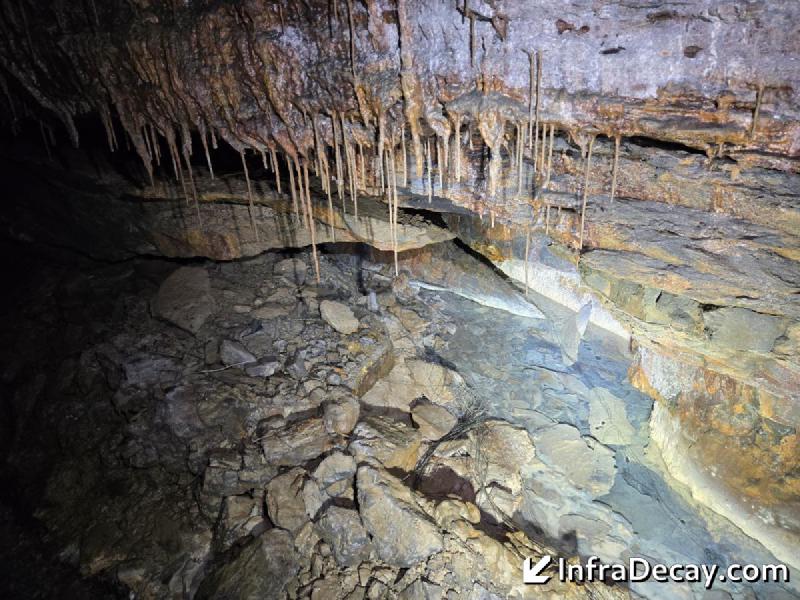
The left passage continues for 100-200 feet and has some neat blue-white-orange formations.
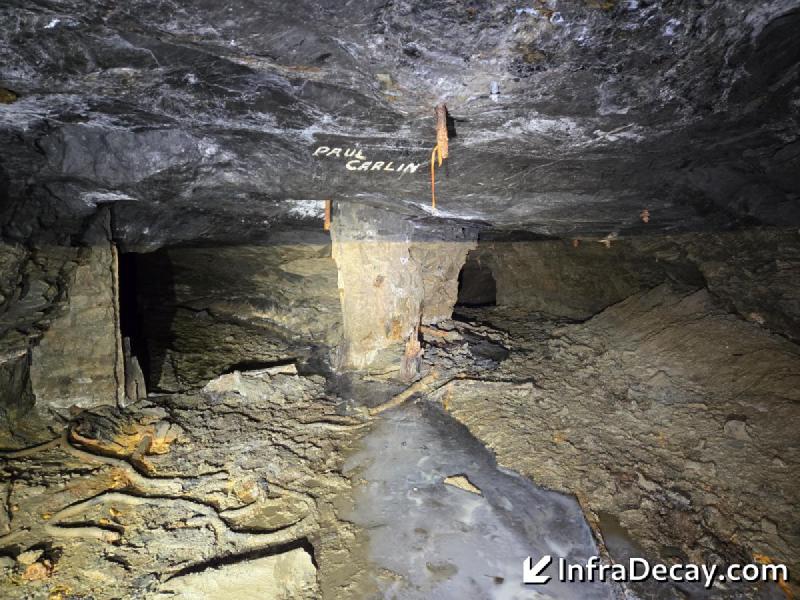
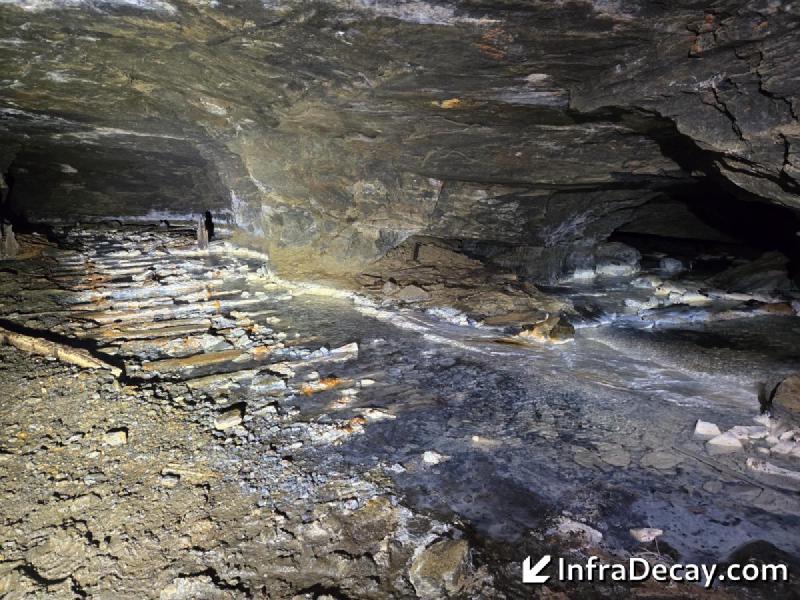
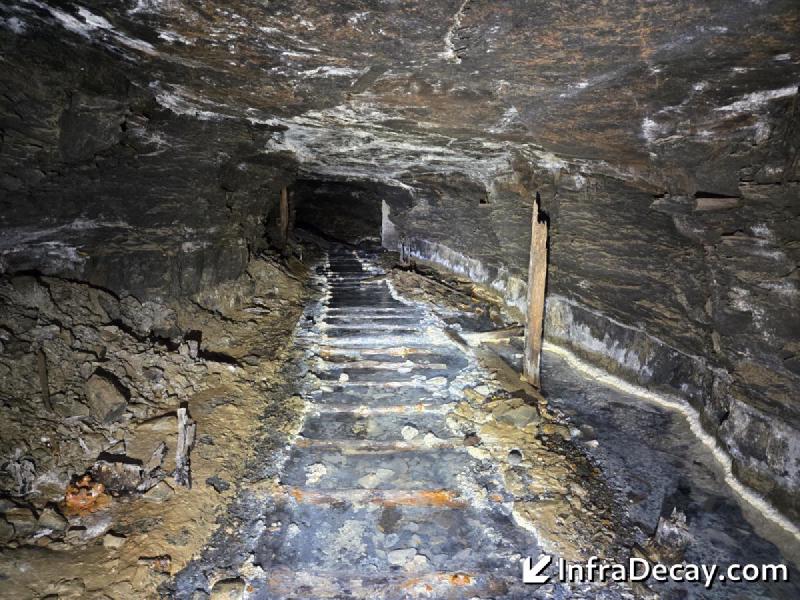
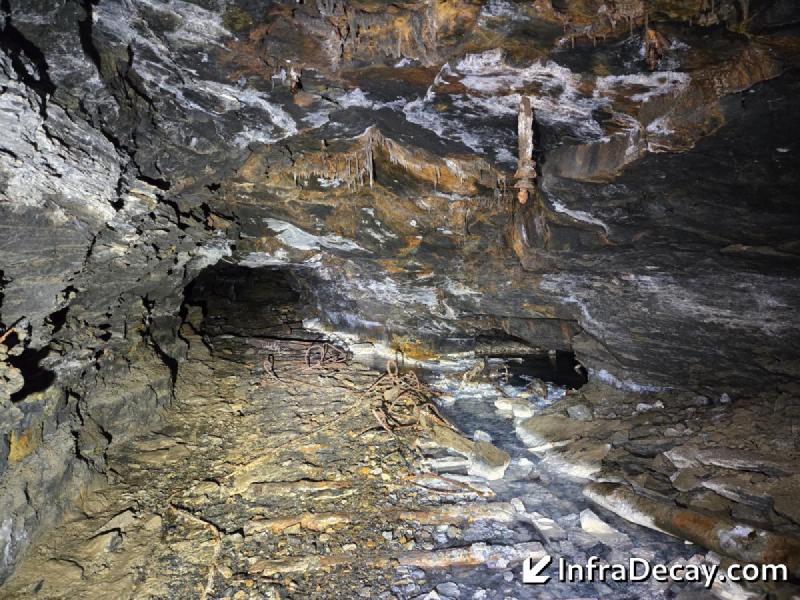
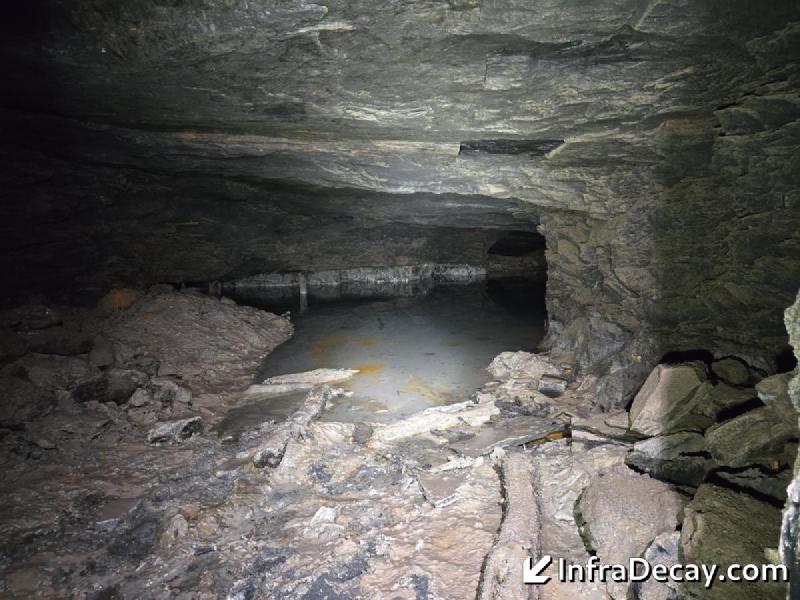
The right passage here leads immediately to a water tunnel. It was too deep to wade in.
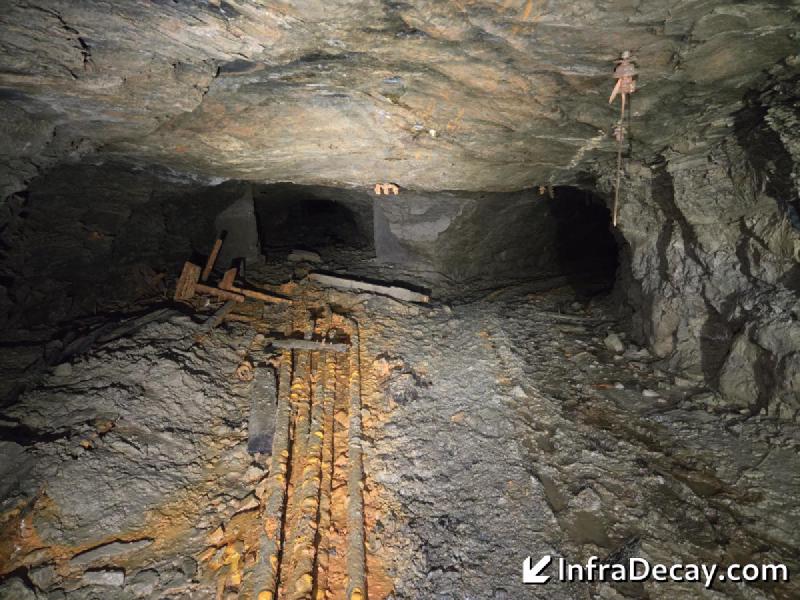
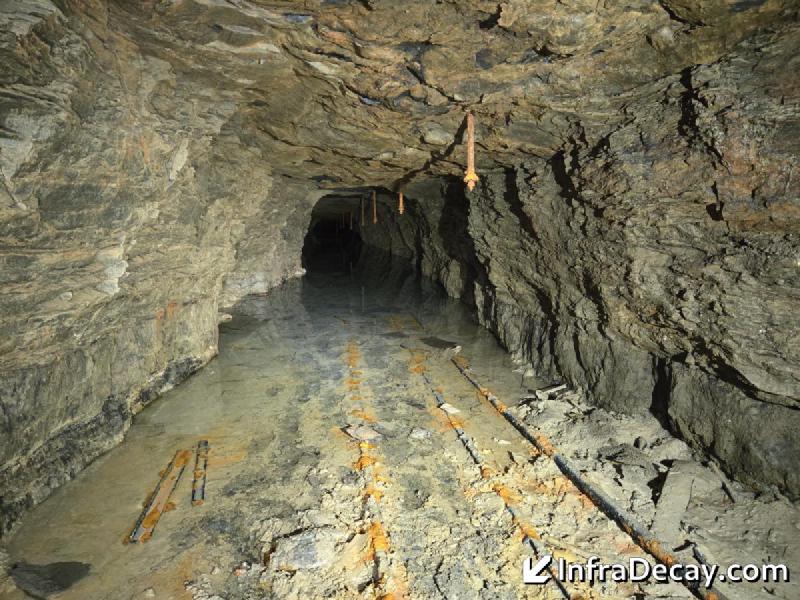
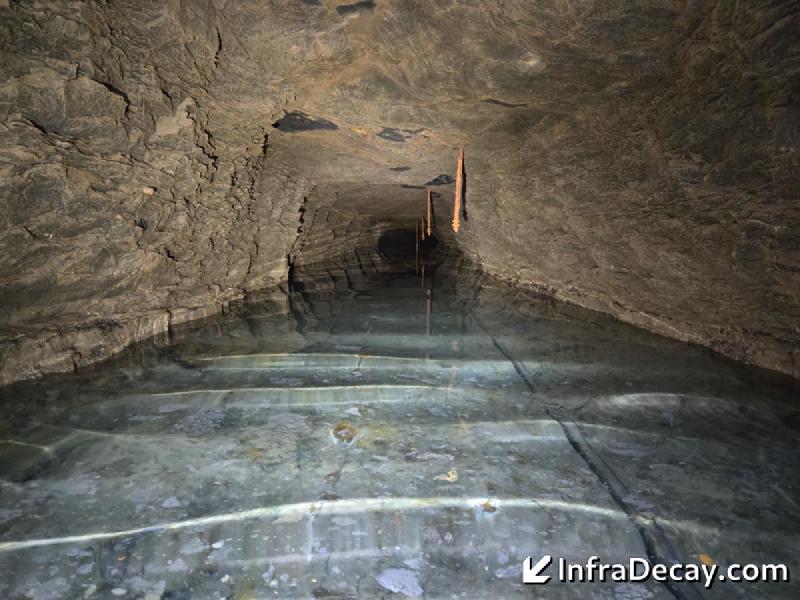
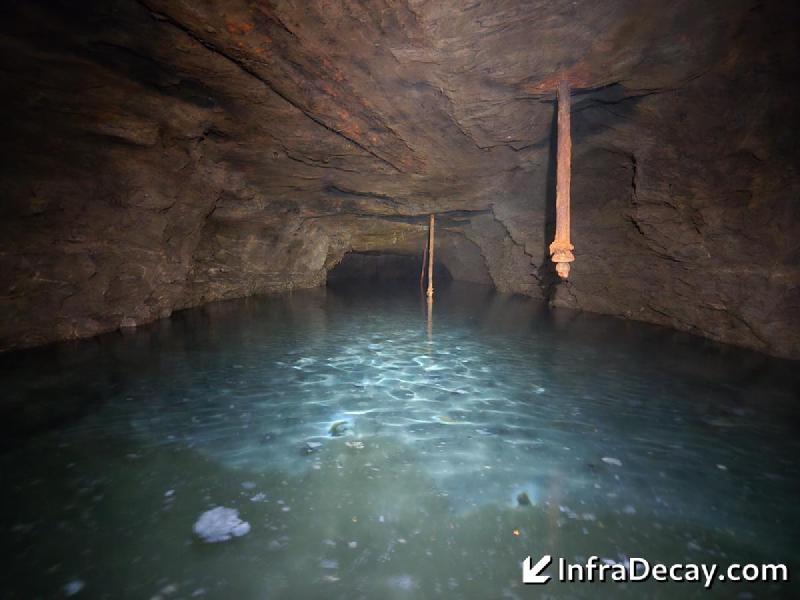
The remaining tunnel passage ends unceremoniously in water. If it were not for the water, you would be able to push these passages to the Cedar Valley No. 6 Tunnel!