
Pages
Recent Articles
Socials
Cross Slope Mine
| By | Infra Decay.com |
|---|---|
| Rating | 4 / 5 |
| Topics | Coal , Mine , Underground |
| Region | Appalachia |
| Last modified | 11 September 2026, 20:08 |
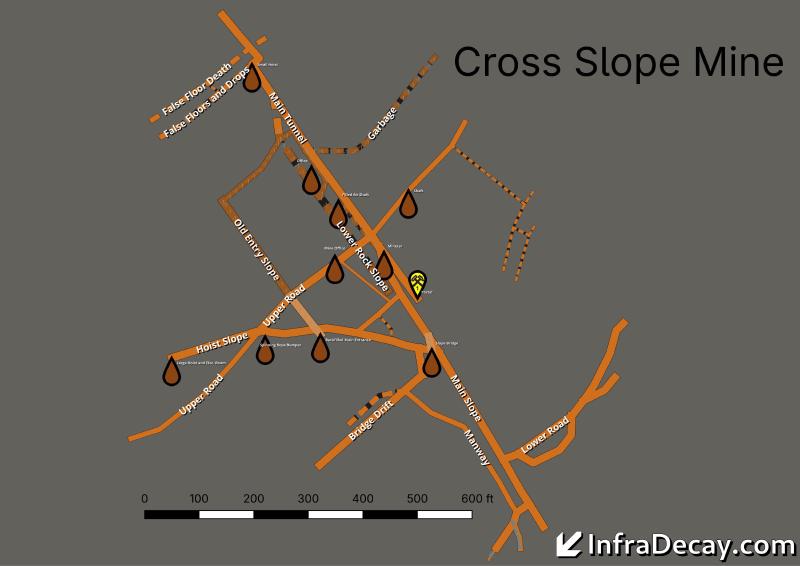
The Cross Slope mine is a medium sized coal mine most notable for its unique construction and passages. This mine features 2 vertical coal veins, uncommon for the area it’s in, as well as multiple interweaving slopes that are quite fun to explore. The vertical coal veins are in the rear of the mine (top of map). The middle and forward portion of the mine (center and bottom of map) follow more common, gentle anthracite slopes.
We suspect this mine has been bootlegged for a period of time after its abandonment, and you will see many subtle signs throughout the photos of that. This mine also used to have 2 entrances for explorers, but the main one was recently backfilled. Throughout the photos, you will see old arrows spray painted pointing to the old, backfilled way out.
I did this mine after running 18 miles so everything felt pretty shitty :)
Map
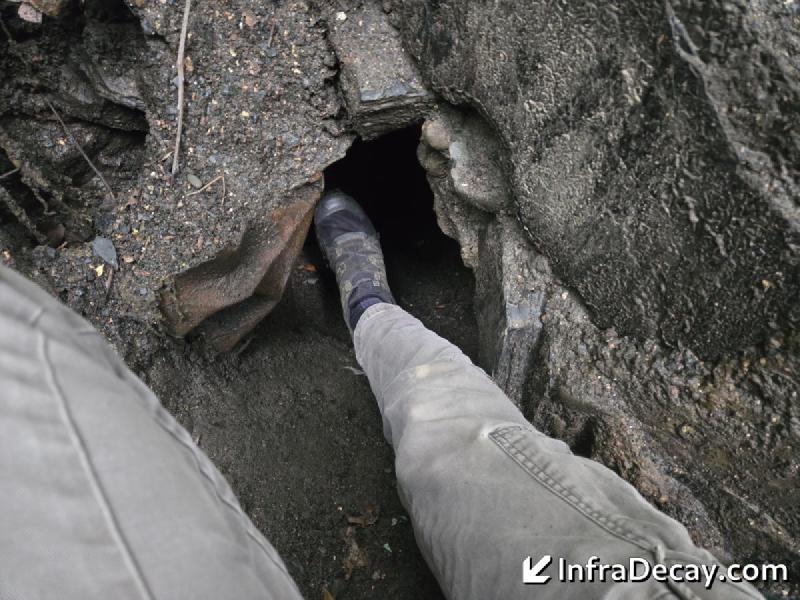
Entrance, Main Tunnel
The entrance to this mine is a tiny hole you have to slide through that drops you right into the main tunnel.

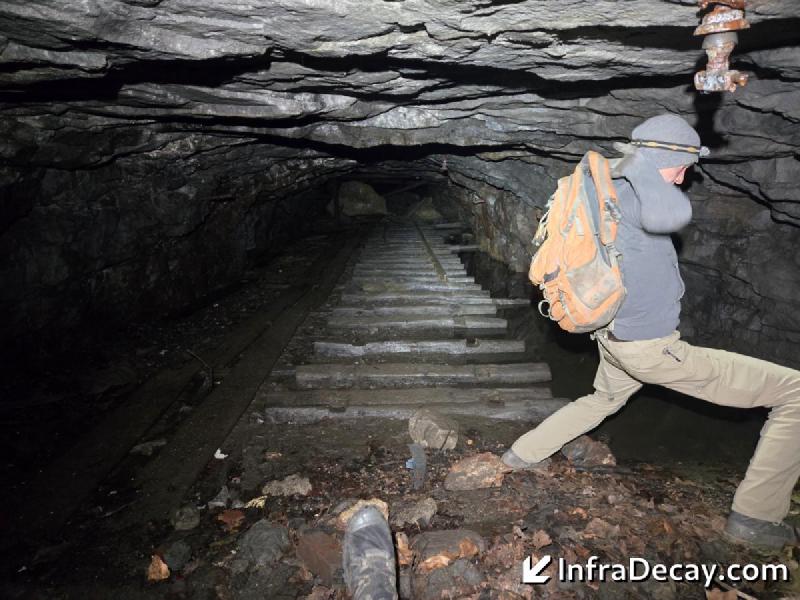
As soon as we get into the tunnel we are greeted by old rail ties and a relative low (~6) foot ceiling.
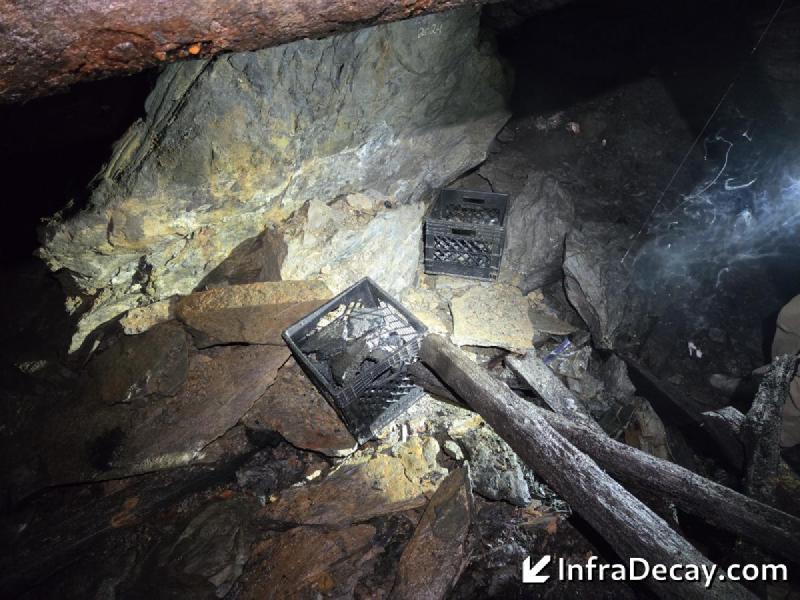
Shortly into the tunnel is a minor collapse. This is where we see one of the first signs of bootlegging: milk crates filled with coal. Milk crates definitely were not used in commercial operations, though these weren’t too new either.
Main 5 Way
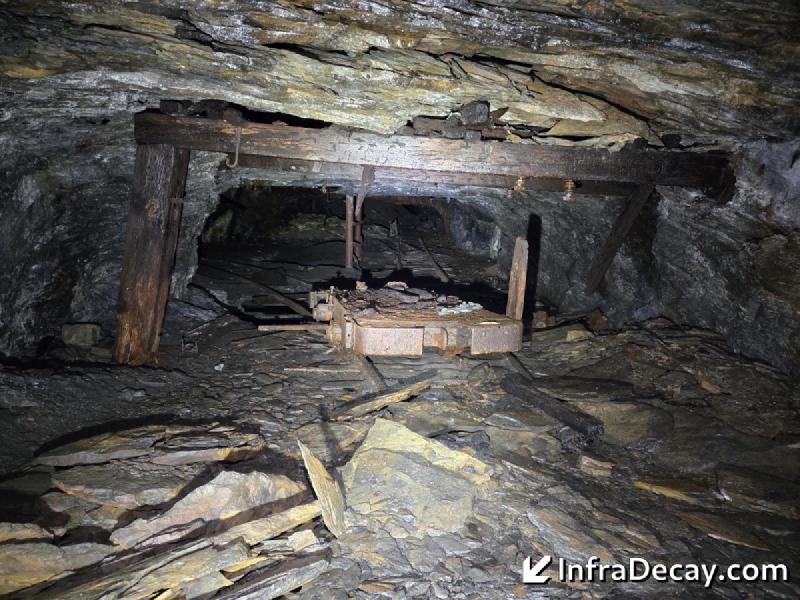
Right after the collapse and bootlegged coal we reach the main 5 way intersection. We have the remains of a coal car displayed front and center under a large wooden timber set. These timber sets will continue down the main tunnel. The main tunnel continues forward. To the left, the upper road. To the right, a working drift. Hidden in this photo is the “main slope” of the mine; it shoots right out of the floor!
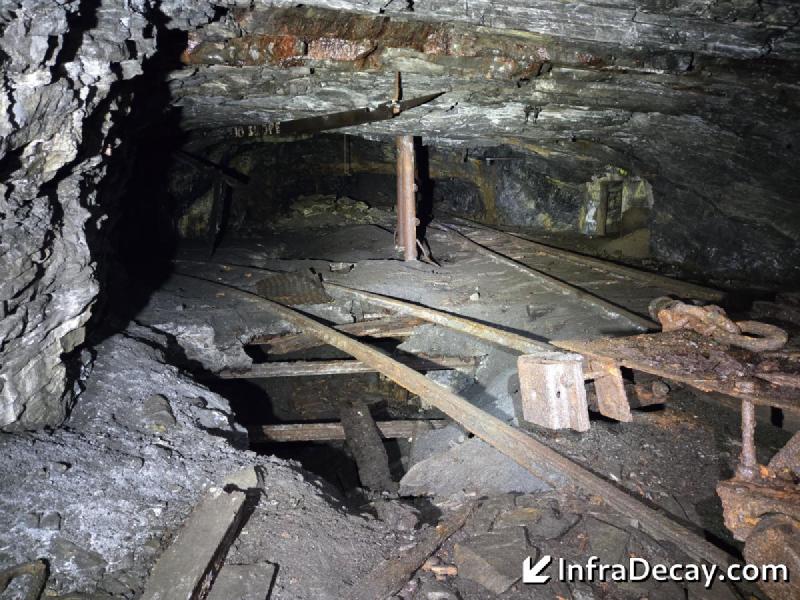
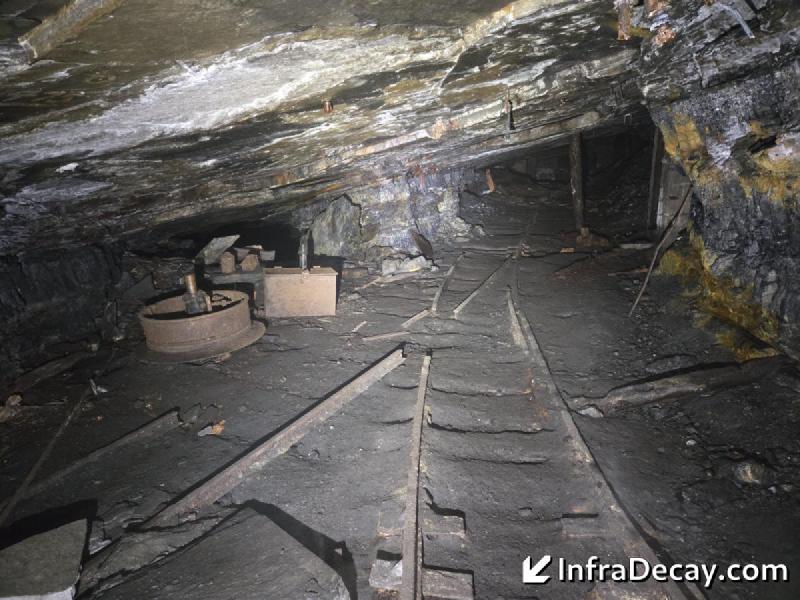
Another view of the 5-way, we have a better angle of the main slope and rails hanging right over it. A pulley lays on the tracks for a hoist cable. We came from past the collapse in the back.
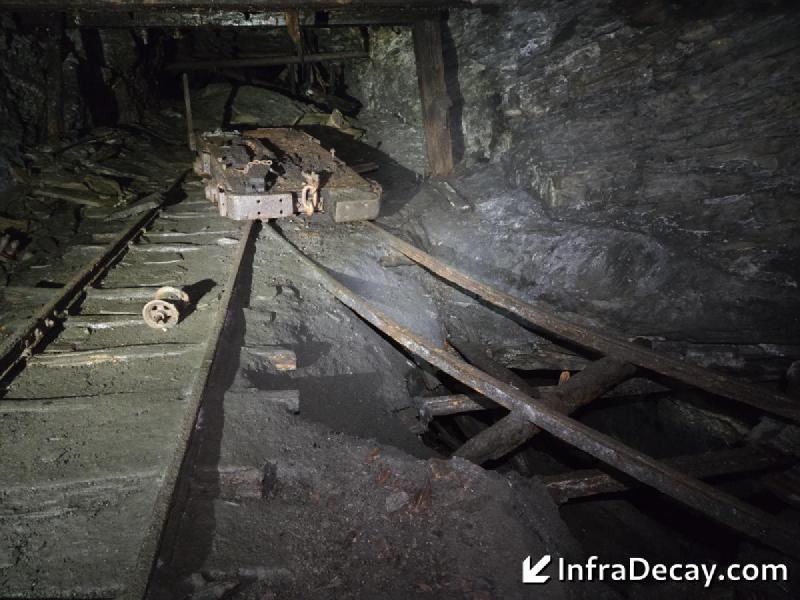
This area had some metal hand-railing as well.
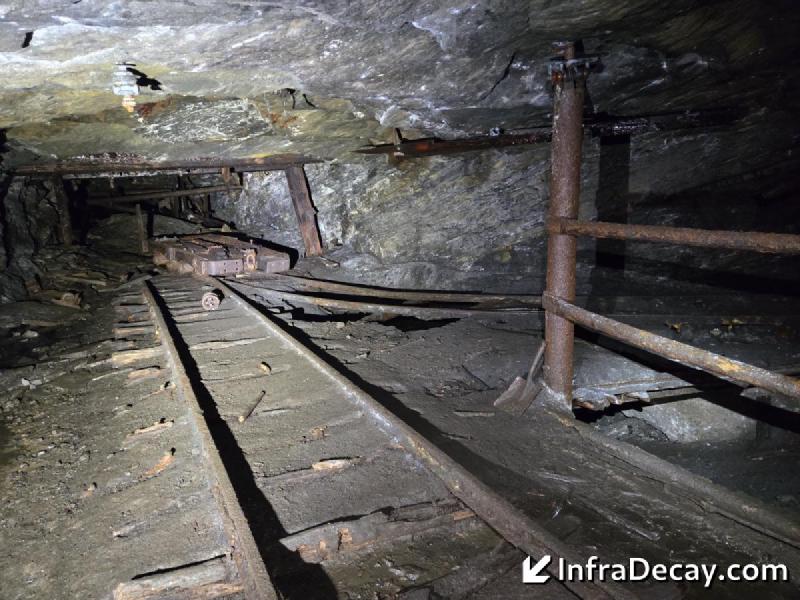
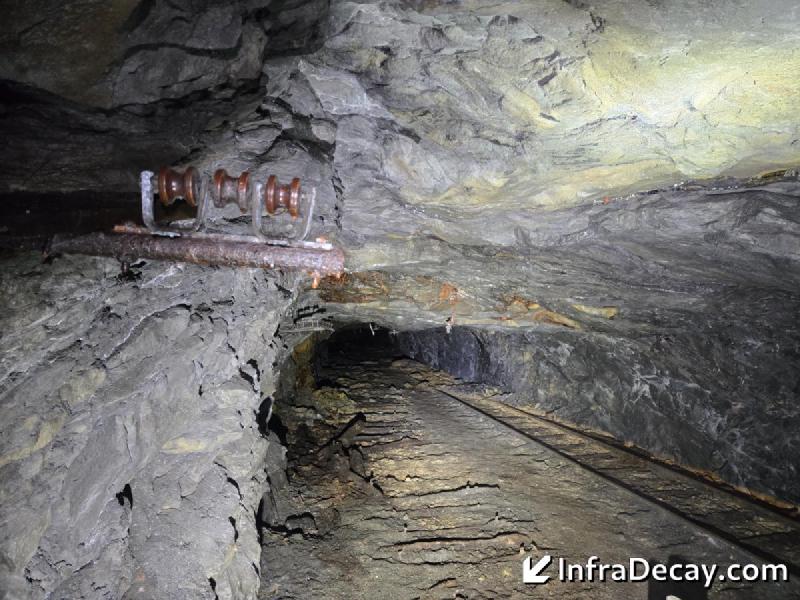
We continue down the main tunnel. Here we intersect a vein of coal. Roof infrastructure for electric locomotives can also be seen.
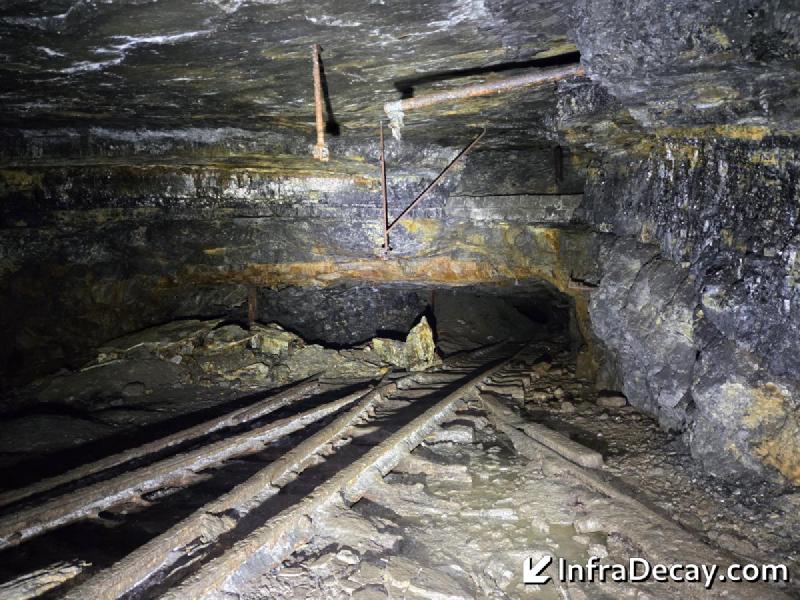
We come across the former site of a shaft into the tunnel; this was backfilled. We are lucky to even be able to get past this… usually backfilling a shaft causes the roof to collapse.
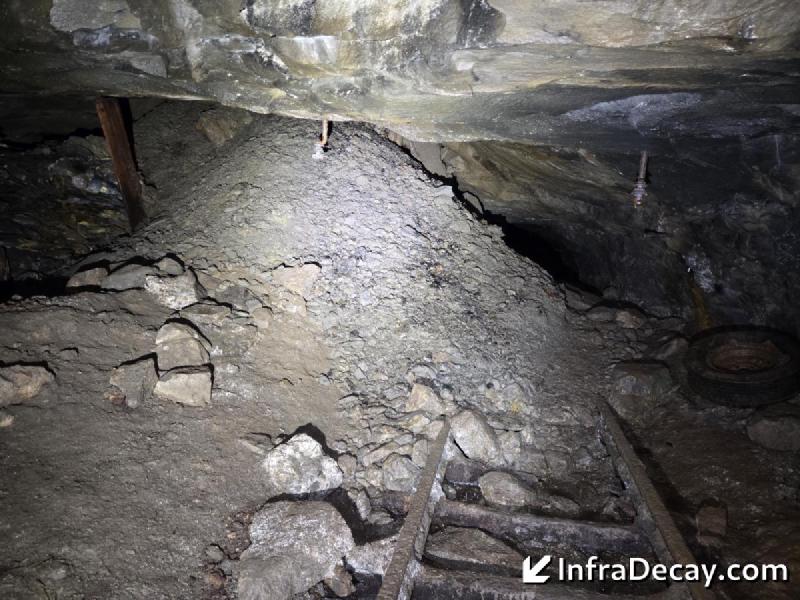
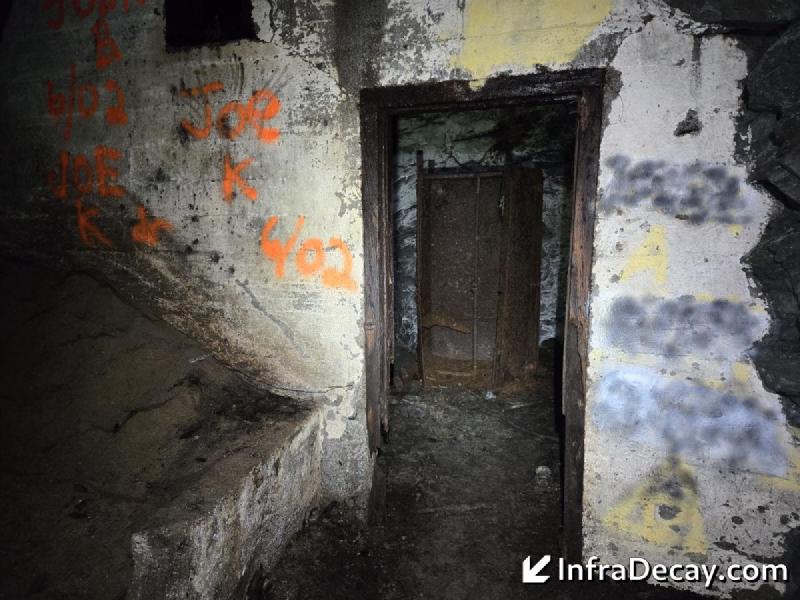
Just past the shaft backfill, we are back down to 1 track. There’s a small “office” in the side of the wall. We don’t actually know what this room was for, but it appears to contain a locker. There’s lots of graffiti from years ago.
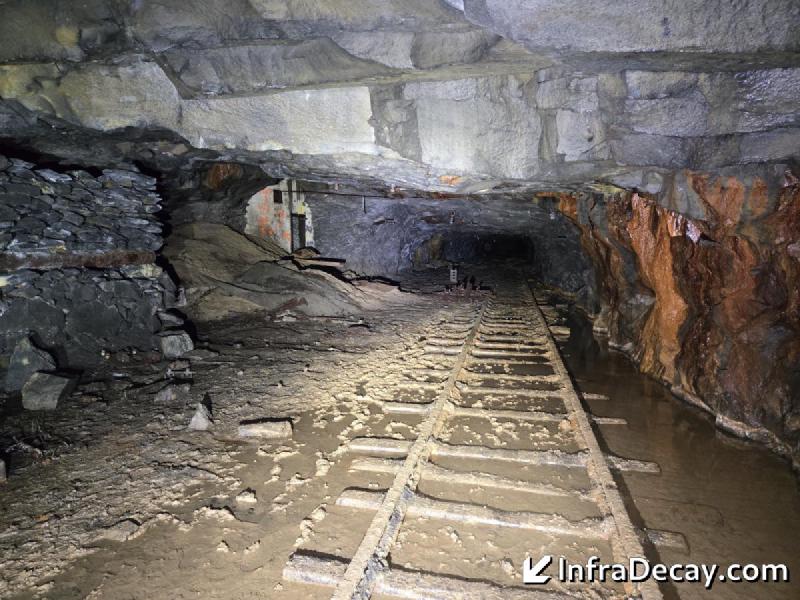
We noticed this strange rail dolly positioned along the rails, but the gauge was improper. What’s going on here?
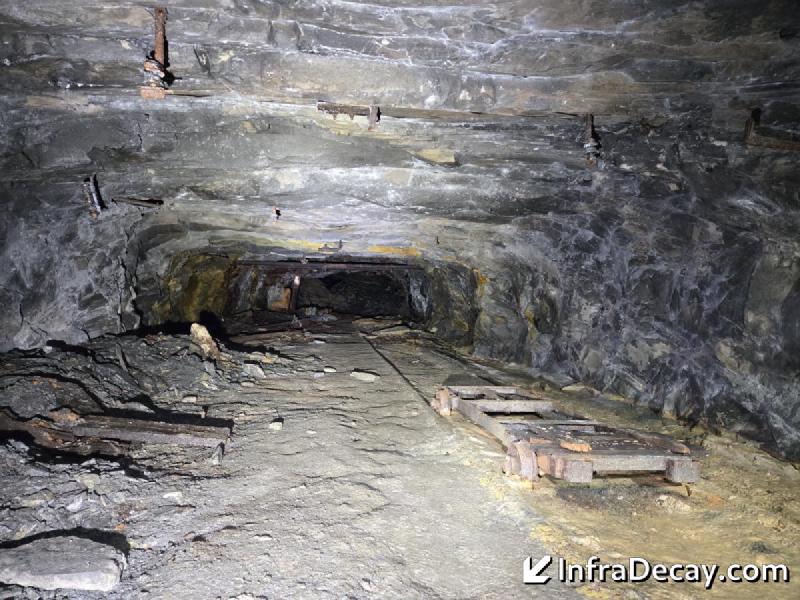
One final timber set before the deep slope.
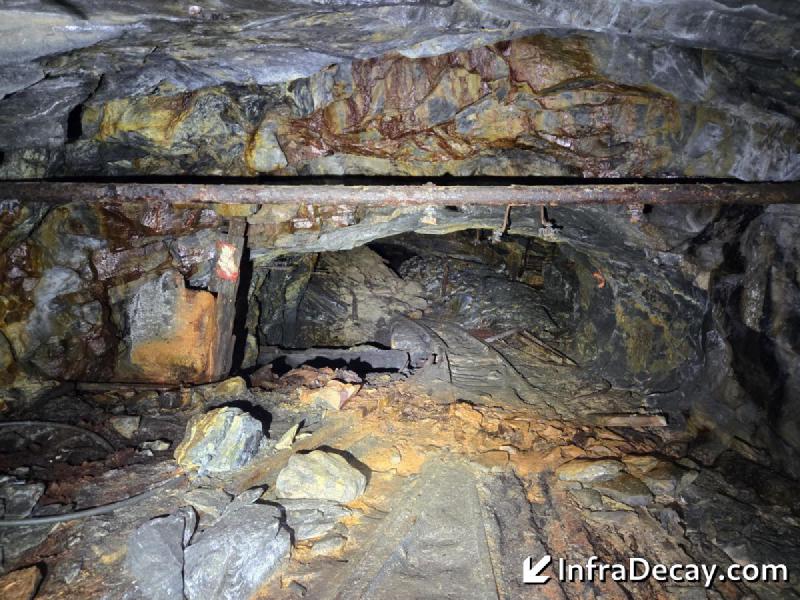
This deep slope connects to the original entrance slope through a deep drift. It’s a really neat image seeing the lower slope go right under the tunnel. On my map, this is offset to the side for clarity.
Vertical Veins and Mini Hoist
About to hit the vertical vein, the rock bends in a crazy U-shape.
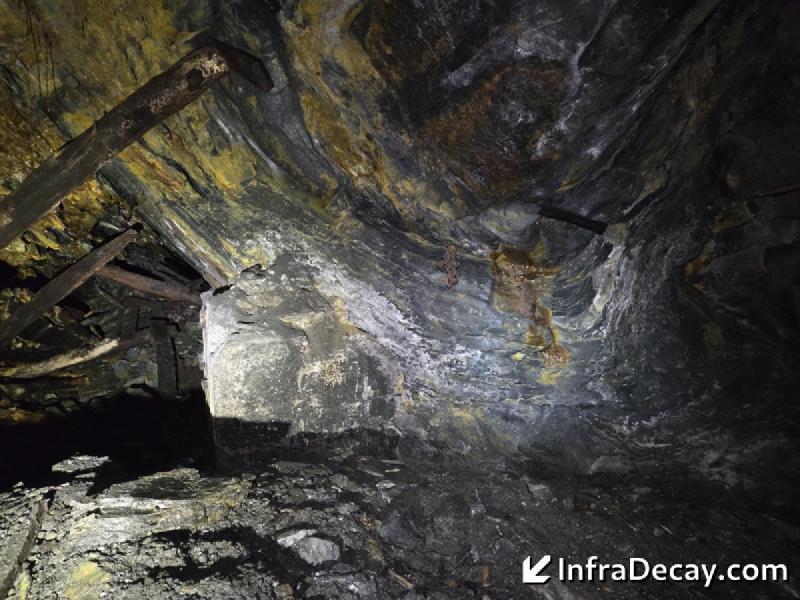
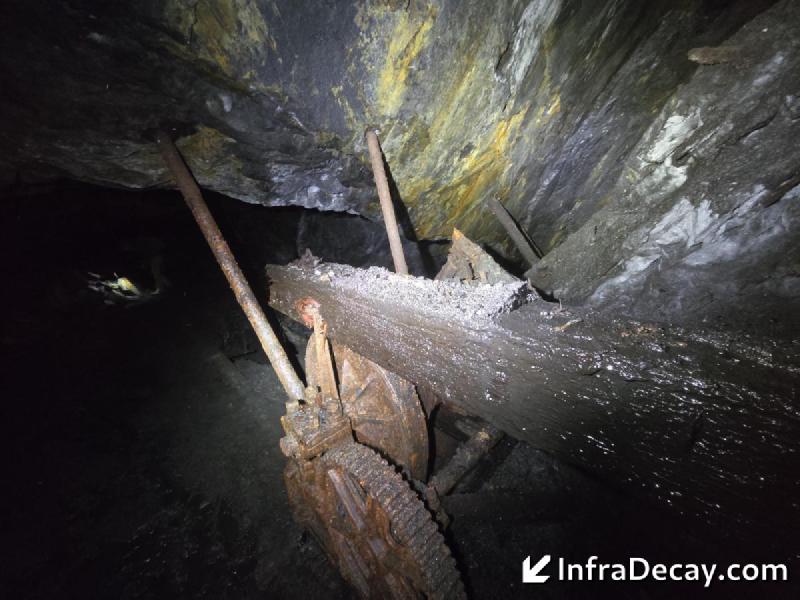
We have reached the mini hoist and vertical veins. This mine has 2 vertical veins that go up and down about 100 feet each way. The hoist appears to have a hand crank on the side, but there’s also a large sheave wheel and borehole to the surface right behind. Perhaps this was powered externally with a hand crank backup option.
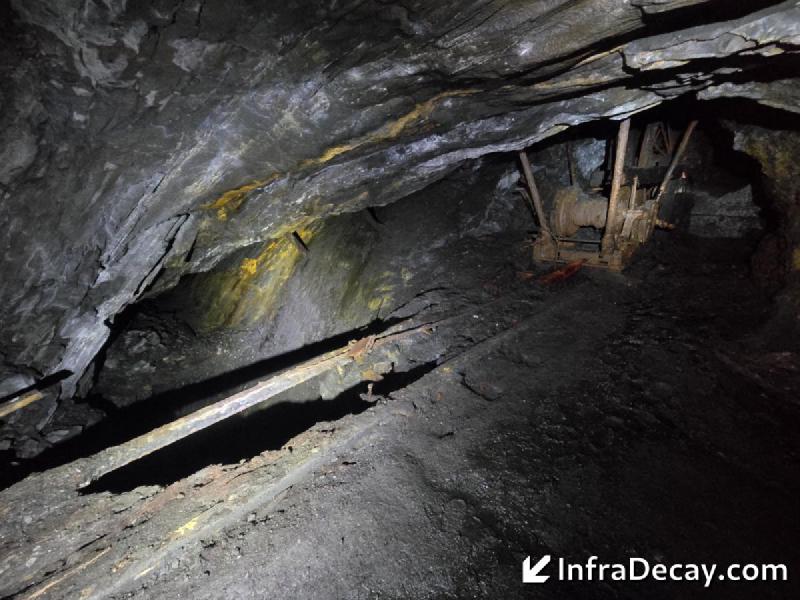
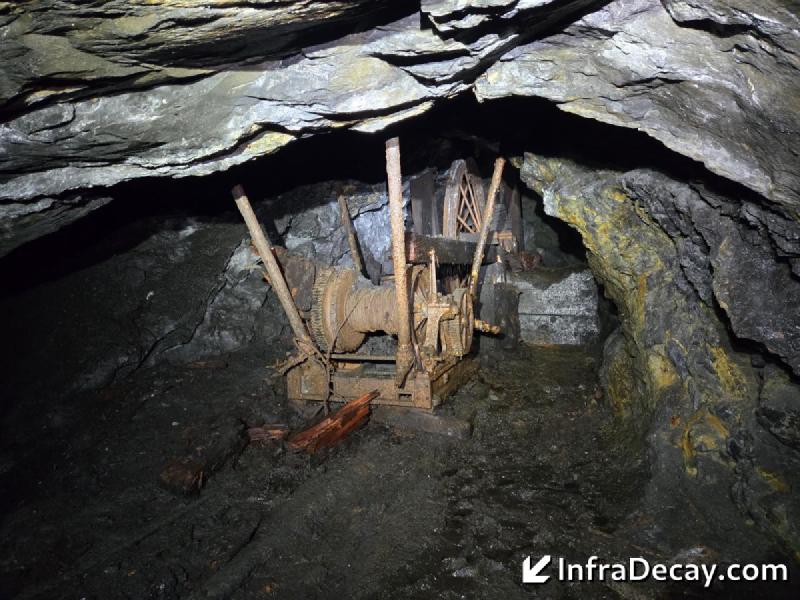
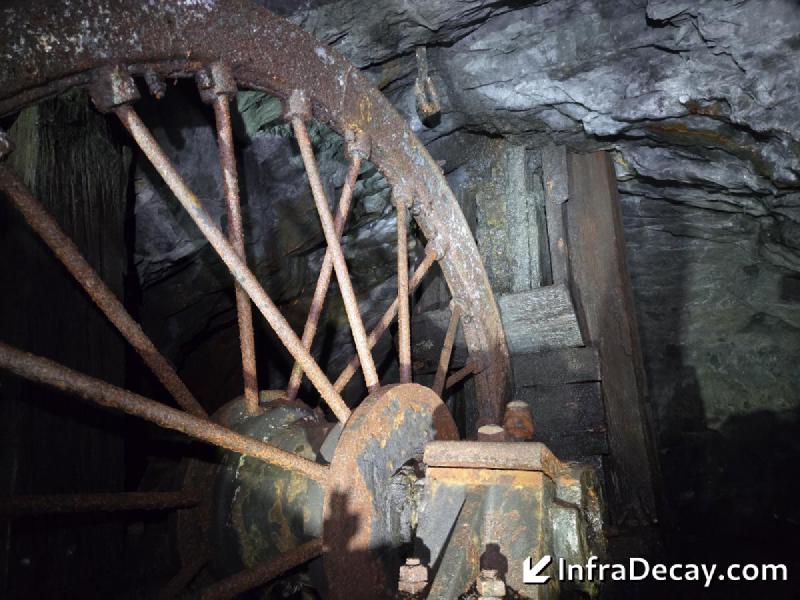
Though it looks like collapse, the main tunnel faces out shortly after the mini hoist. This part of the rock tunnel intersects the second vertical vein.
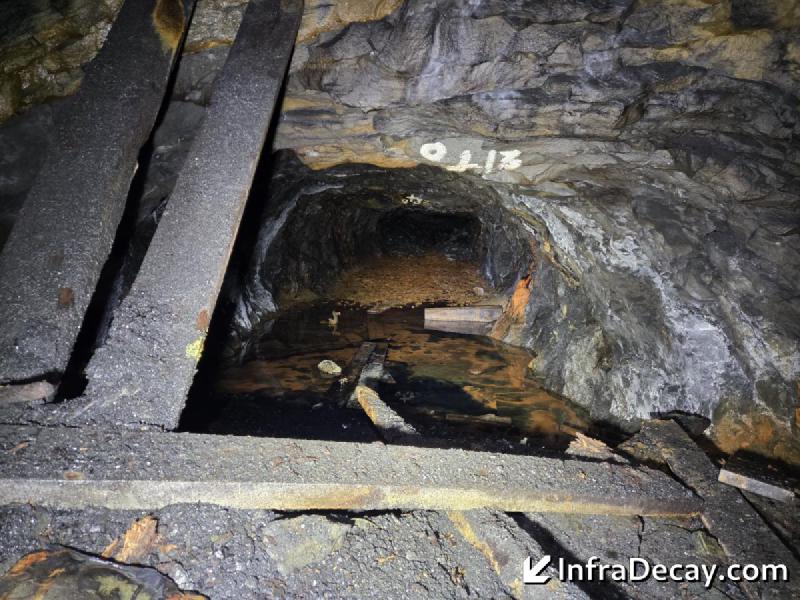
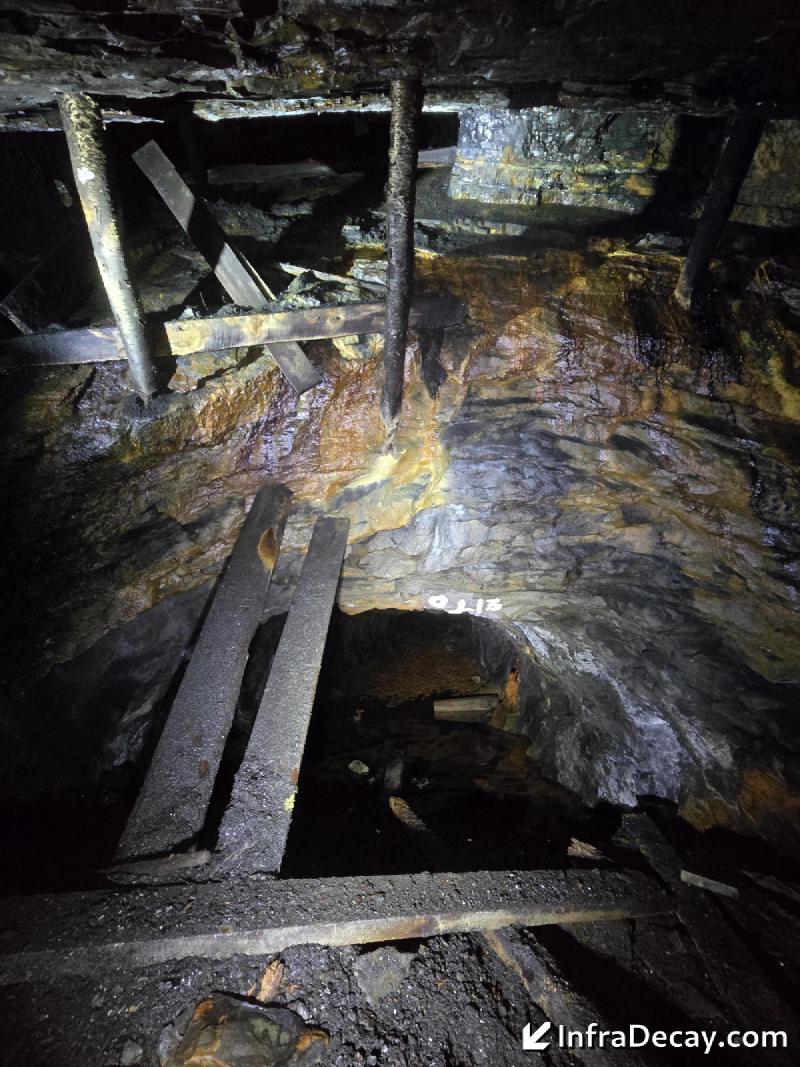
Exploring the Vertical Veins
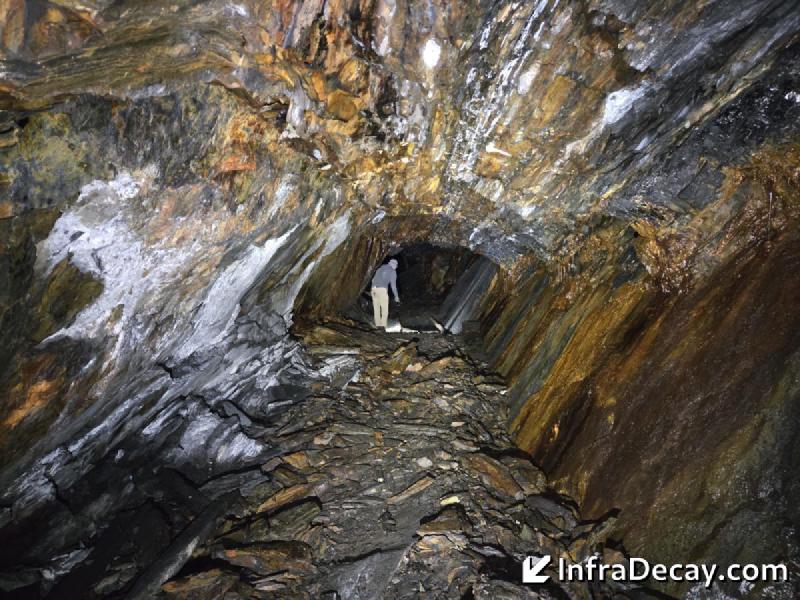
Evidently they ran rails right over the vertical vein!
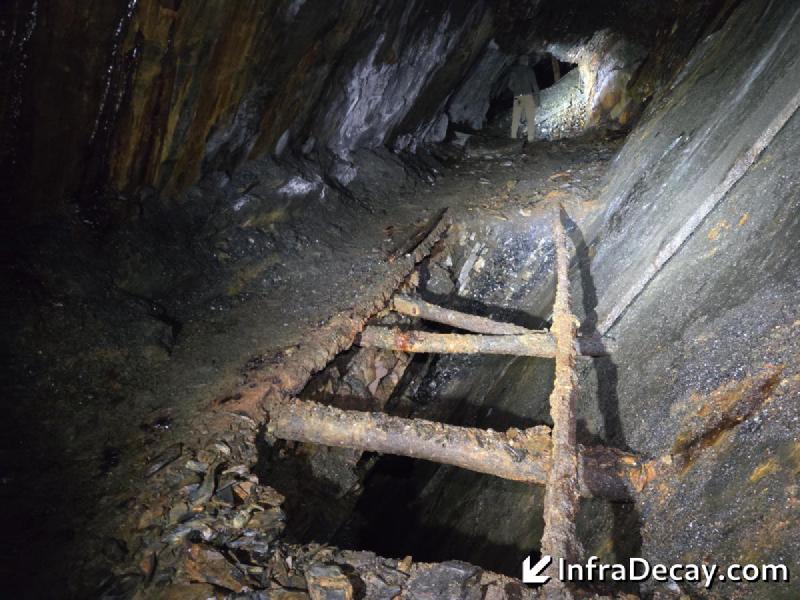
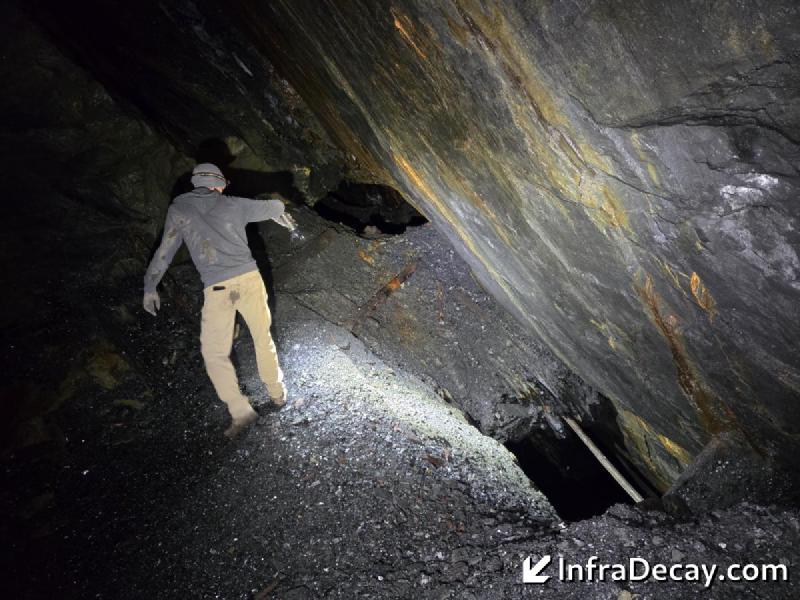
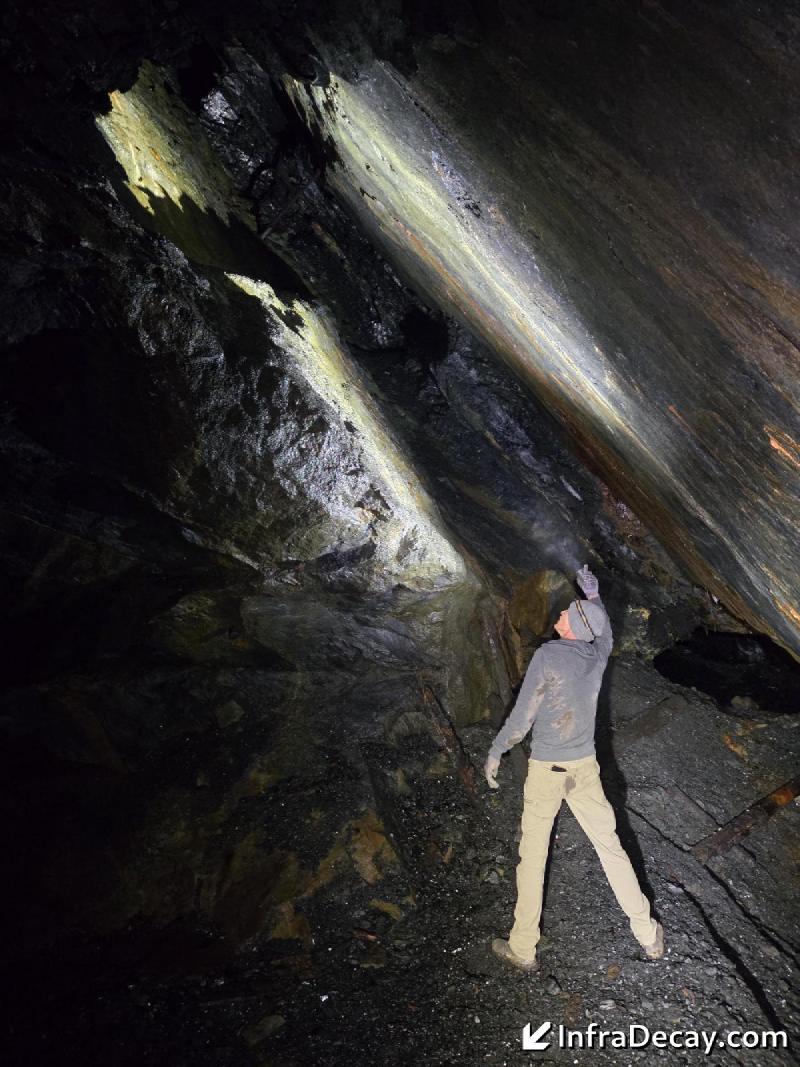
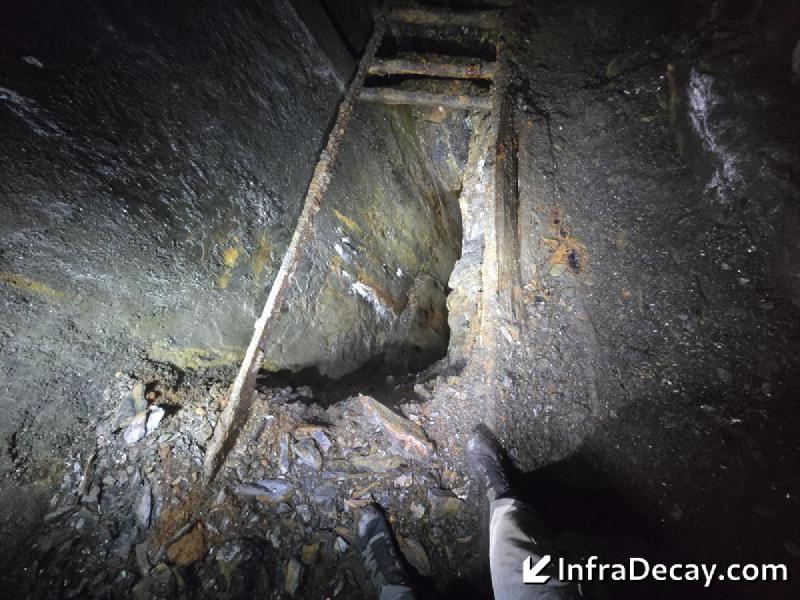
Looking down the working:
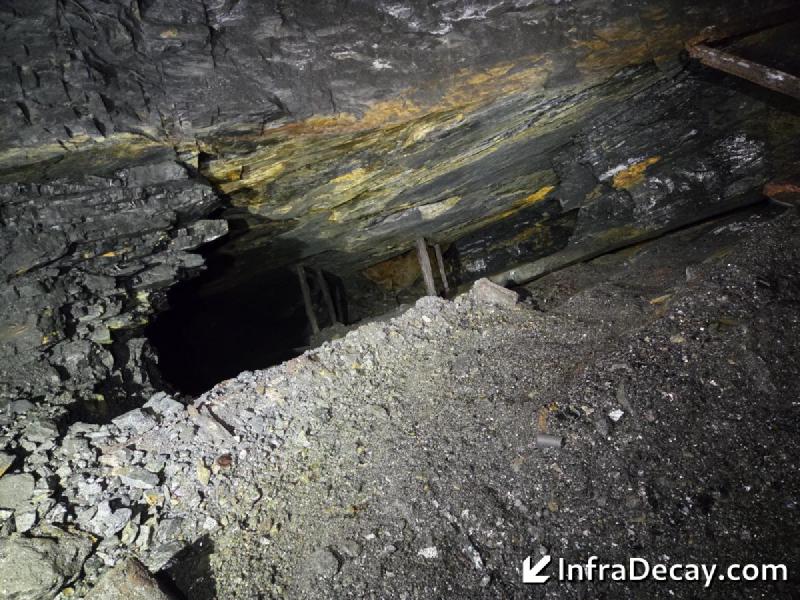
Looking up:
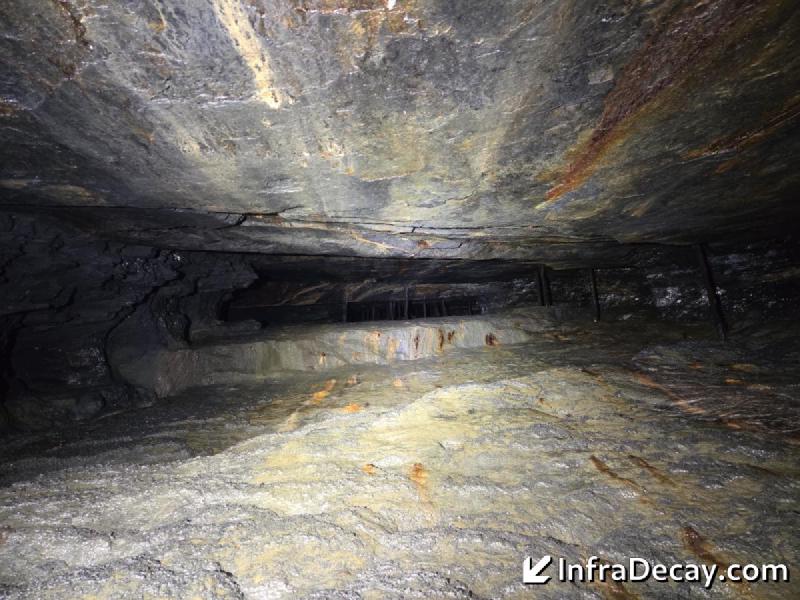
Yes, we threw rocks down here. We estimate the drop to be about 80-100 feet. We are unsure if the working ends or joins a lower drift.
Right Drift
Alllll the way back at the 5-way intersection, we take a right (from the perspective of the entrance again) and enter the northeast workings.
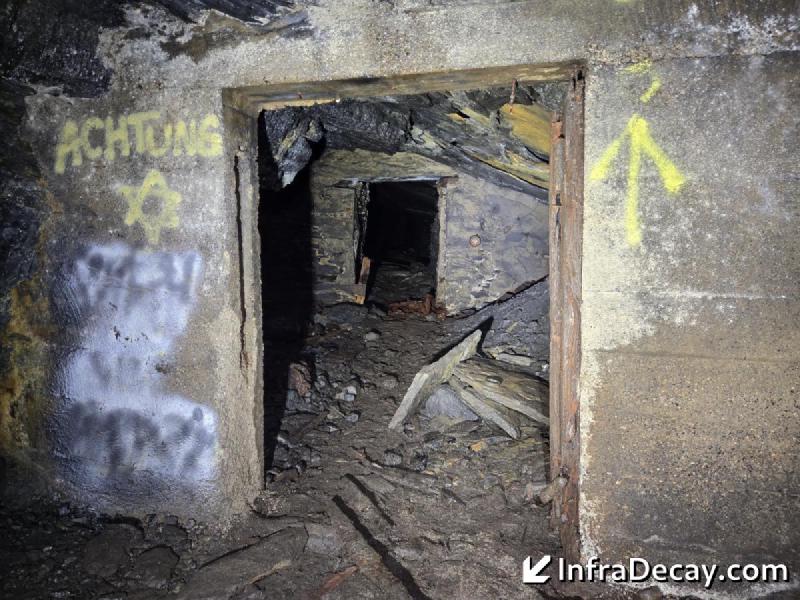
Shortly into these workings we see the timber frame of an old air shaft. This has also been backfilled from the surface.
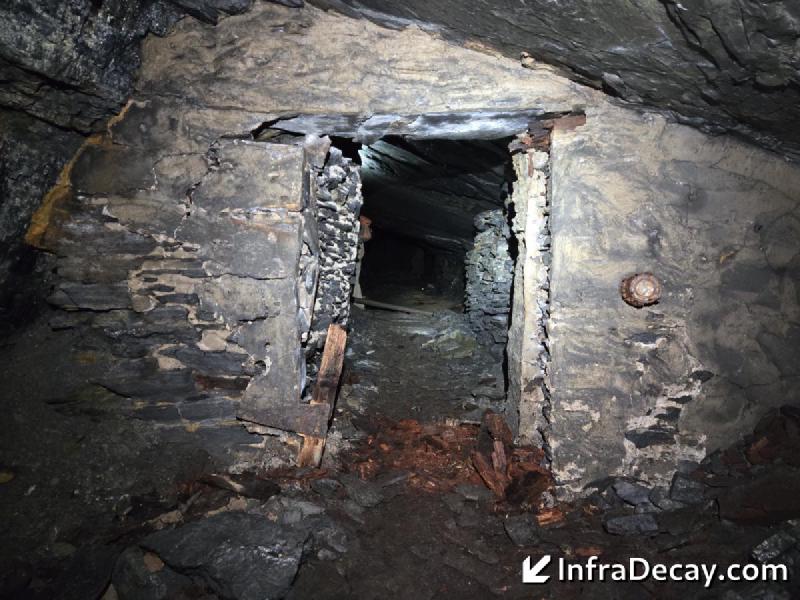
The rest of these workings were pretty shitty.
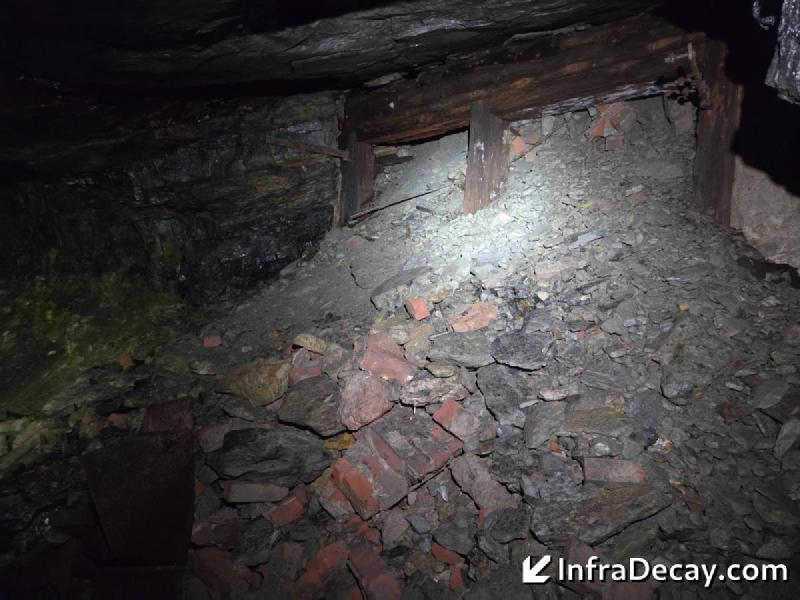
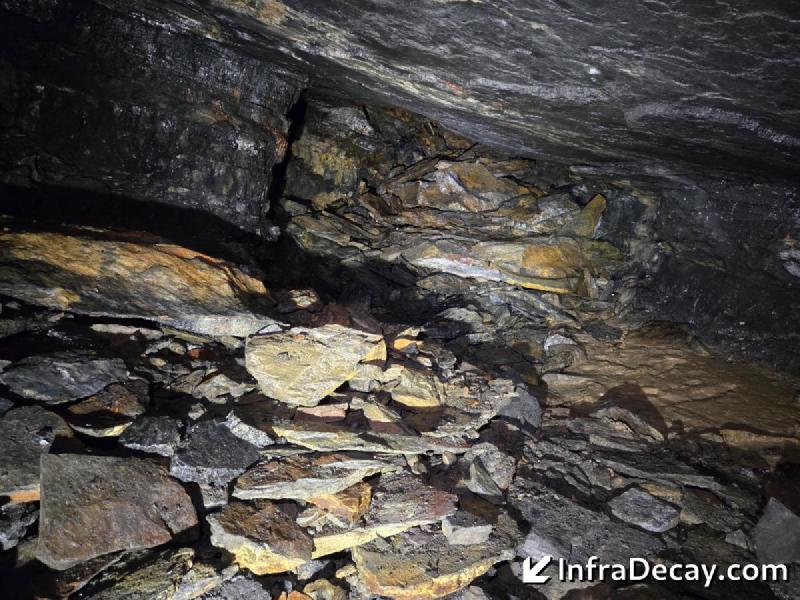
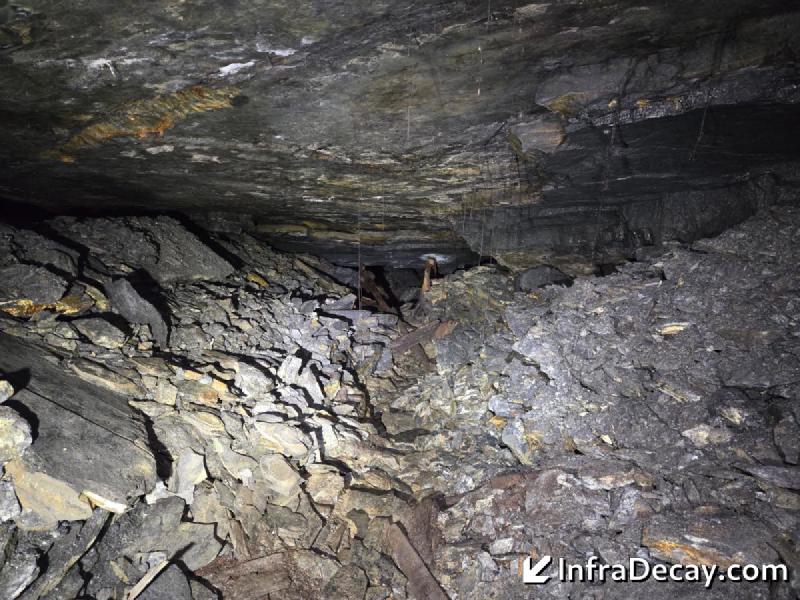
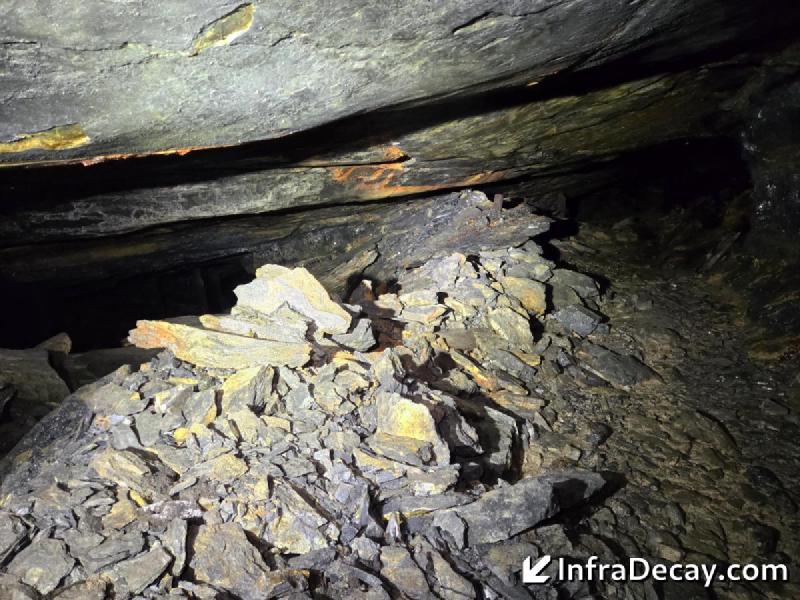
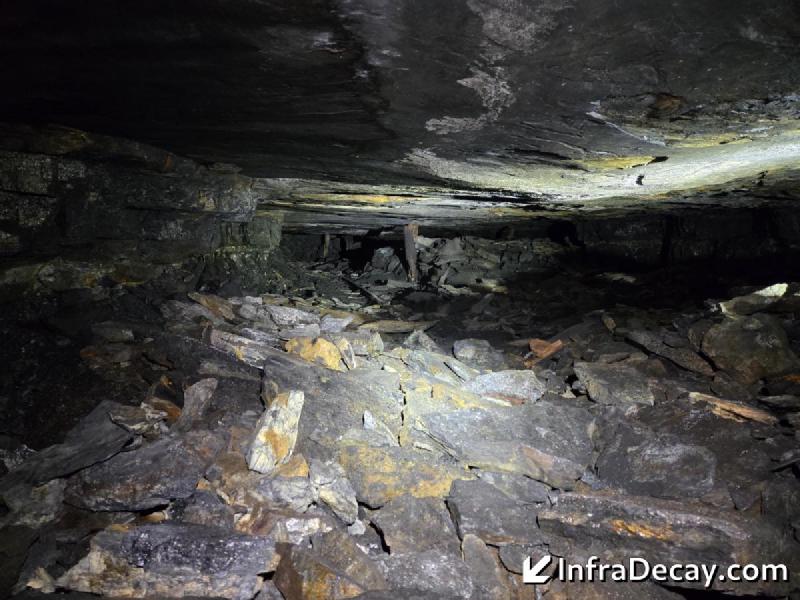
This “working” was technically a drift as can be seen by the rails in the distance, but the place was so robbed and filled with collapse with a creeping roof that it didn’t make much of a difference.
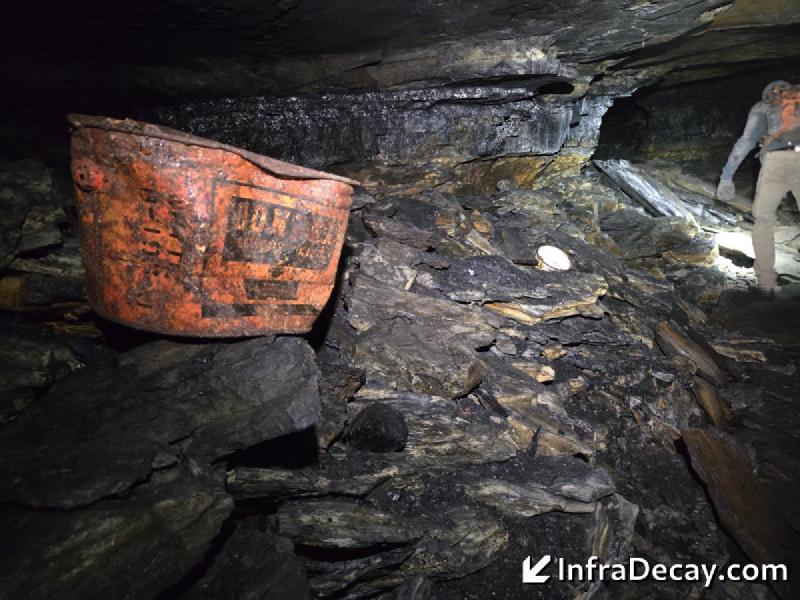
One of the artifacts found in the mine, this pail may have been used to carry bootlegged coal. It is too new for the operation dates of this mine.
Upper Road
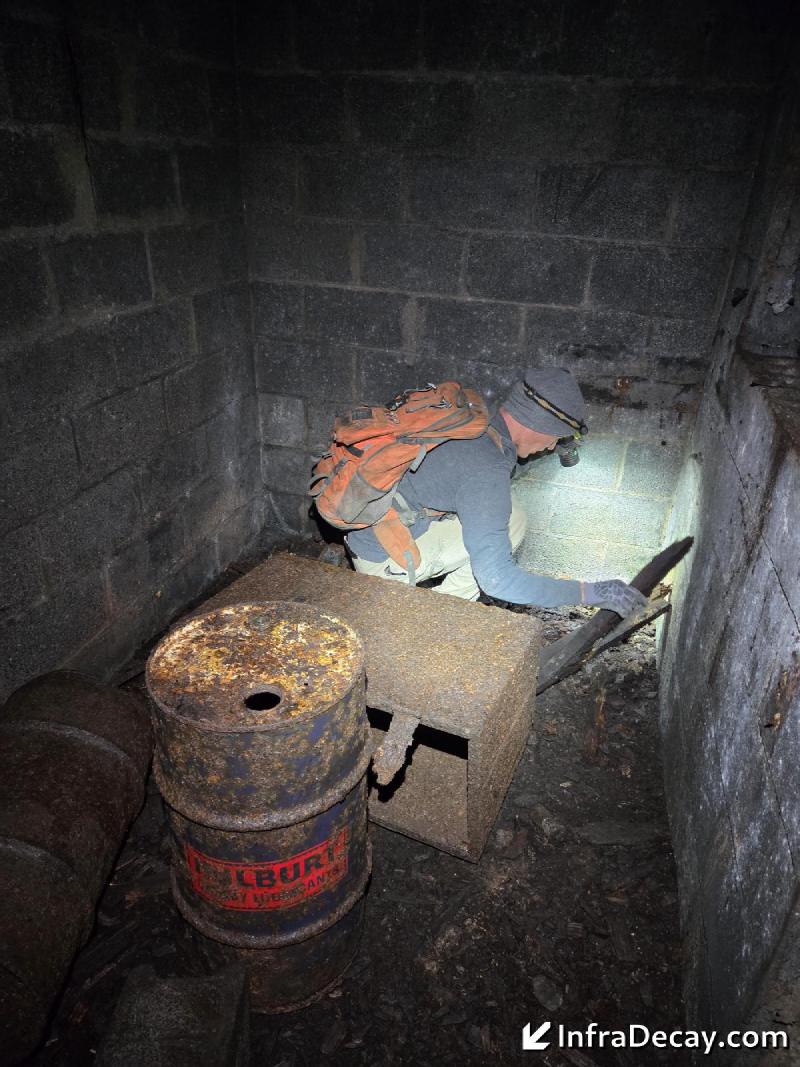
Now we’ll explore the upper road off of the main 5-way intersection. The first thing we encounter is another small office. In this room my friend found a miner’s tag. Notice the piss ditch to the left.
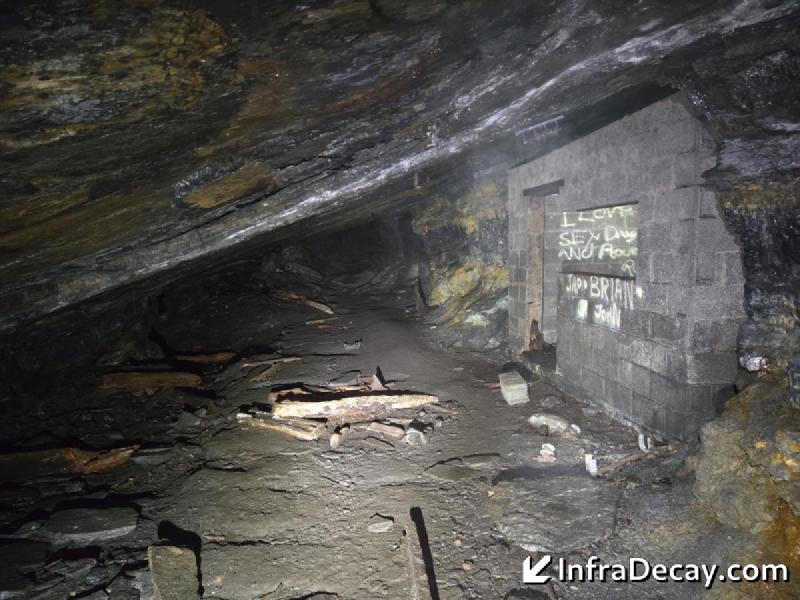
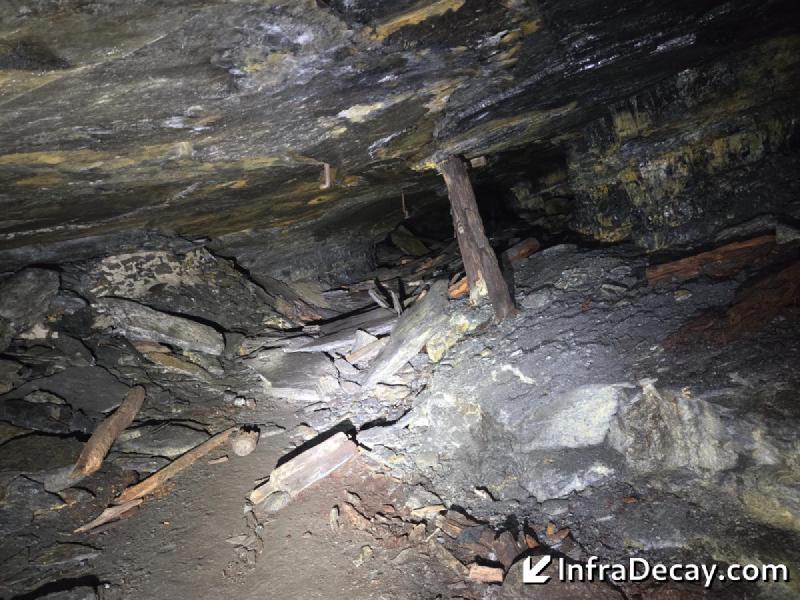
We continue down the upper road. Some light collapse is all around. The old entryway slope intersects this tunnel perpendicular to the coal. It continues down into the earth, and eventually intersects the deep slope from near the small hoist through the deep drift.
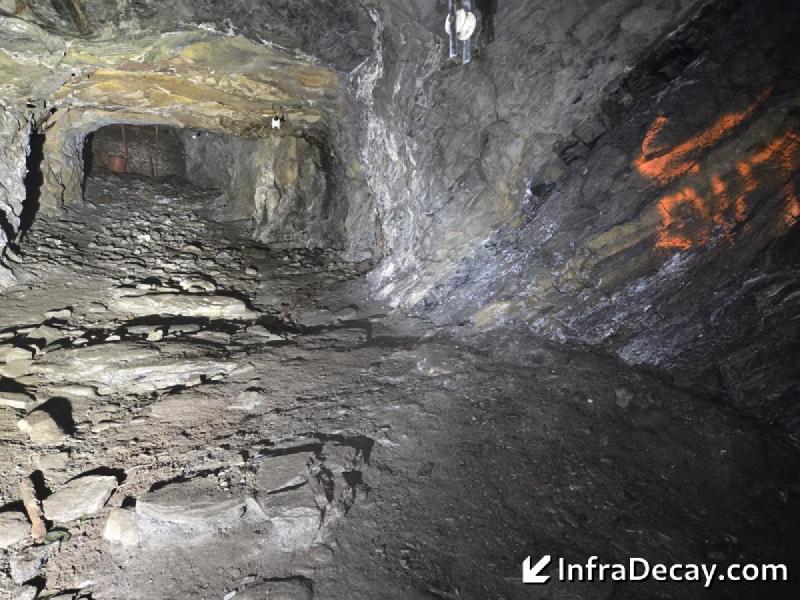
The old entrance was much more grand than the current one; it was concrete reinforced. The red barrel contains more bootleg coal.
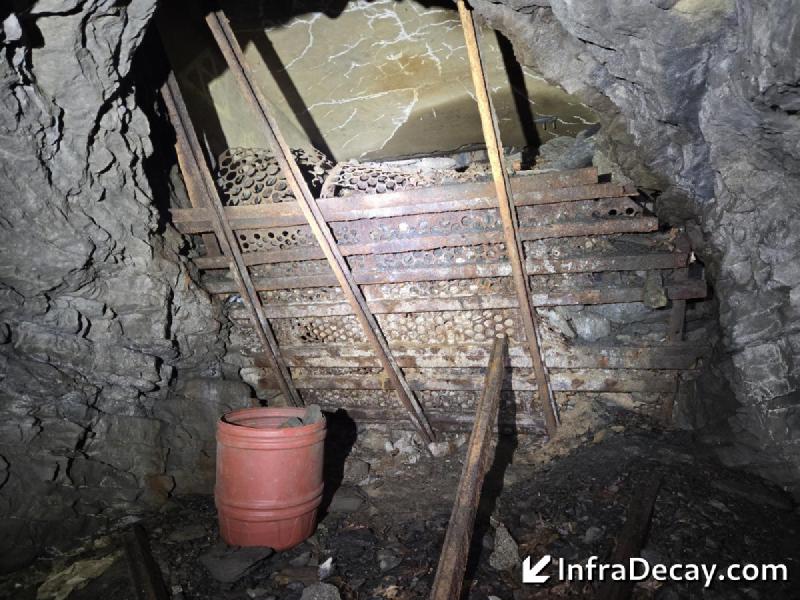
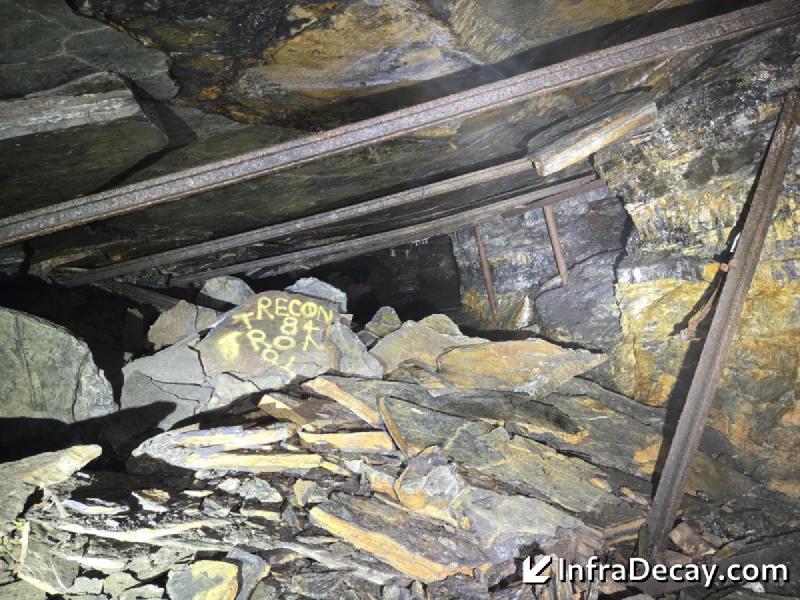
Back in the upper road, this section of rail-reinforced roof collapsed all around the supports. The supports remain intact. Funny if you ask me.
Main Hoist
The upper road “ends” and joins the hoist slope. Left goes up to the large/main hoist. Left is technically a continuation of this road, but it’s much smaller, shittier, and just a working drift. Hard left (out of frame) takes you down the hoist slope.
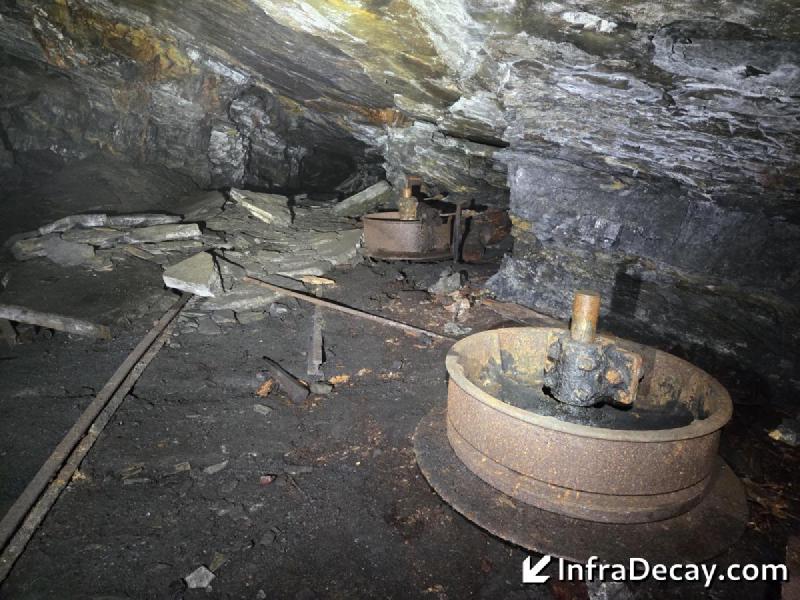
The large, round cable bumpers are another staple of this mine. The one pictured below still turns!
A shot of the hoist slope looking down.
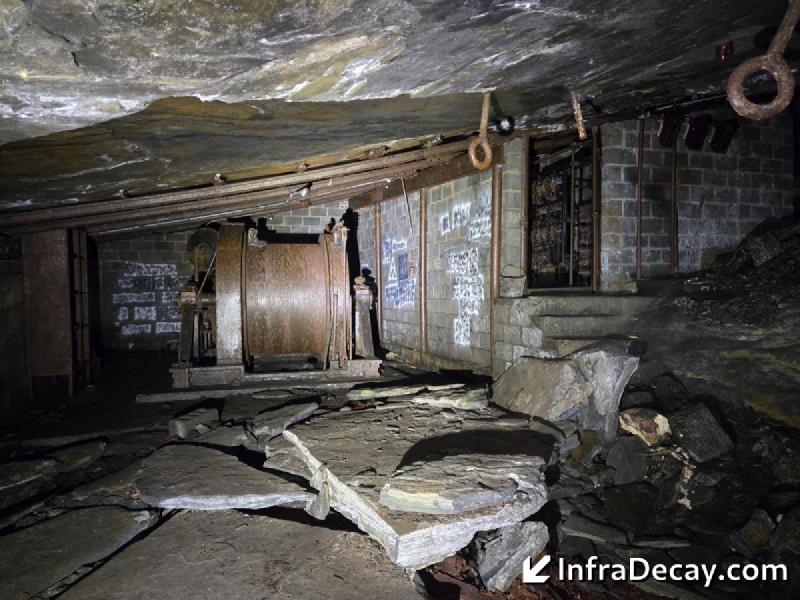
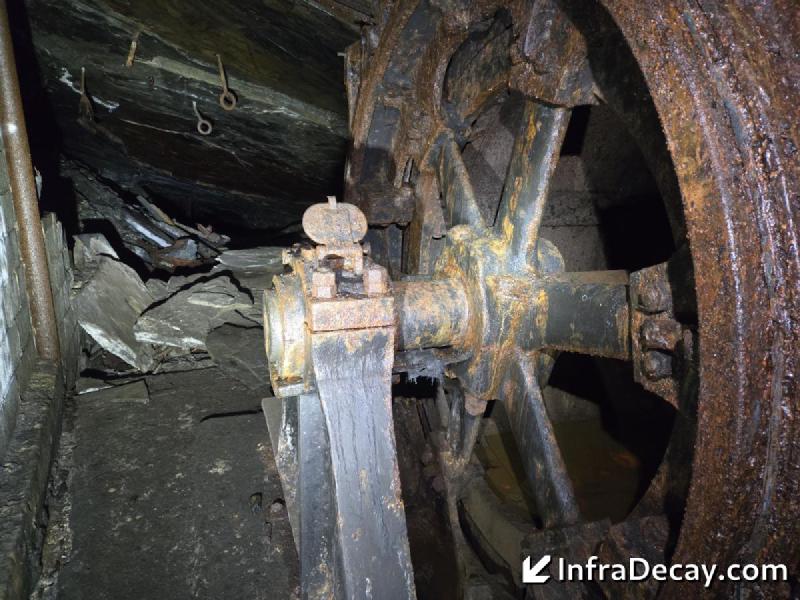
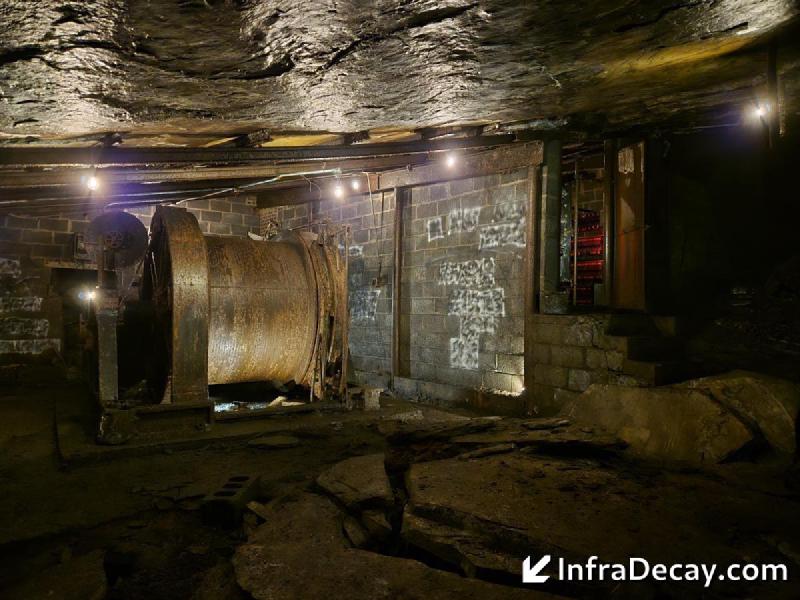
Now we’ve made it to the main hoist. This is on the larger side of mine hoists, a Vulcan, with the drum being about 6 feet in diameter. The adjacent electrical room contains a lot of Westinghouse electrical equipment.
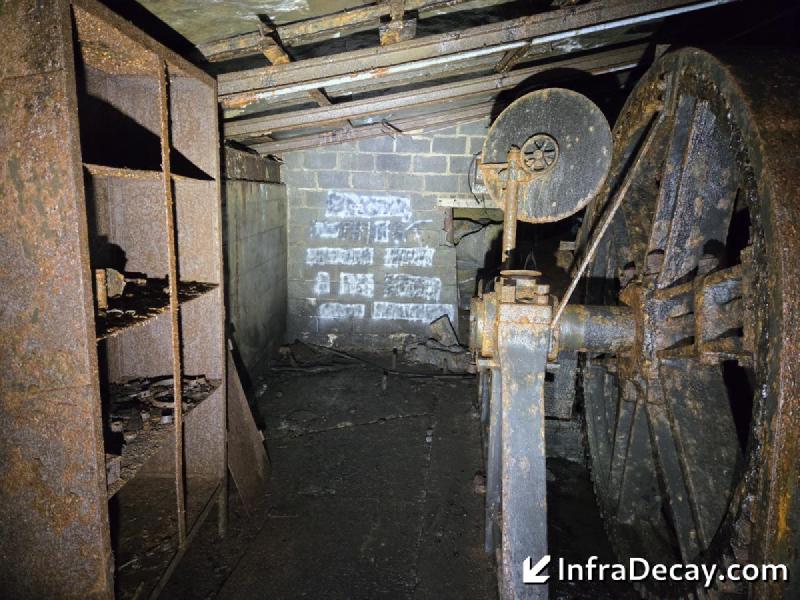
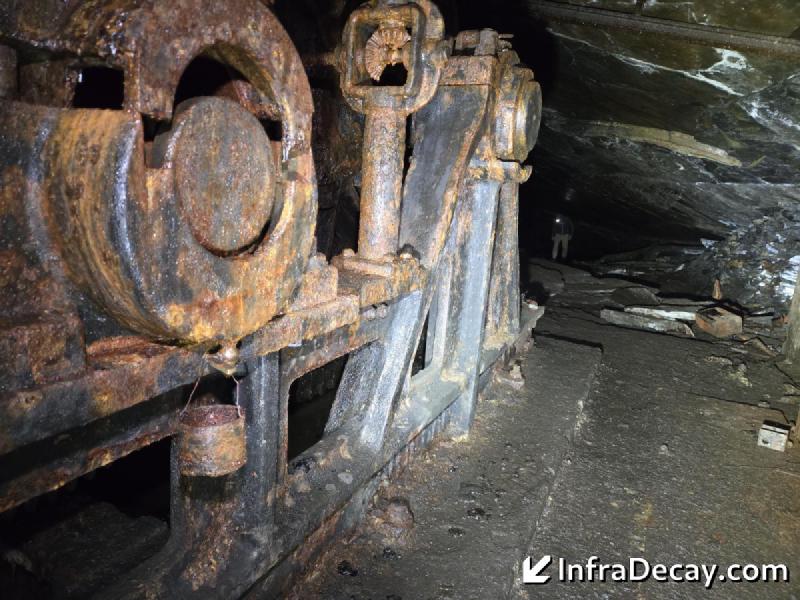
The controls for the hoist. The clock looking thing is a distance gauge to tell the operator exactly where the train is in the slope.
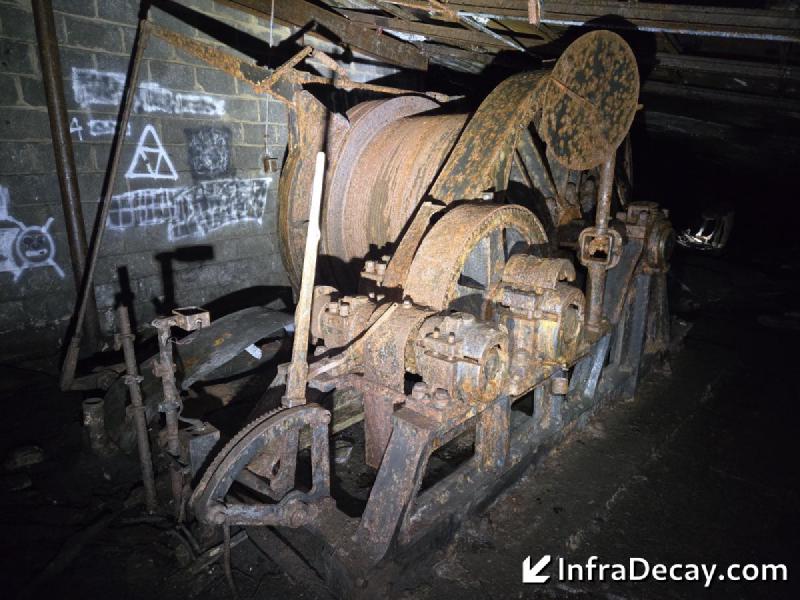
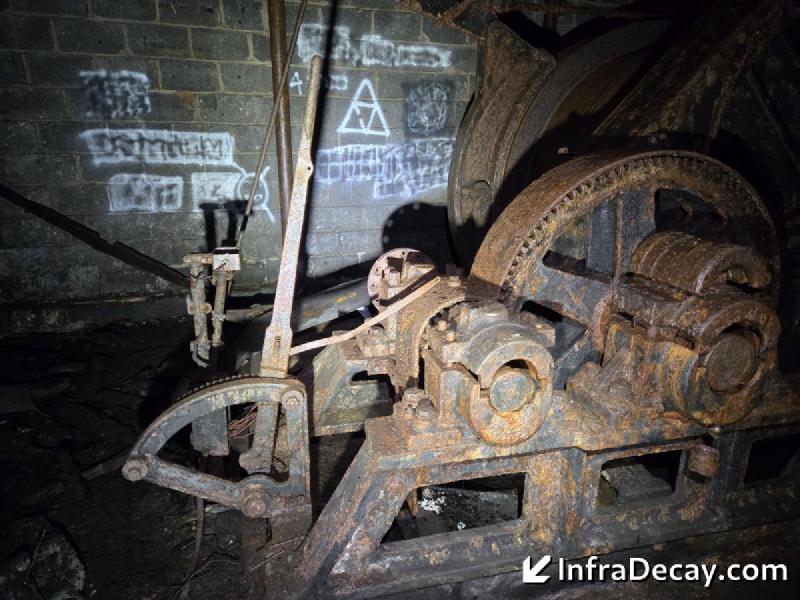
Sadly, the electrical motor (and most of the copper wire) was scrapped from this hoist. The motor would have sat where the silver pice of sheet metal lies, and connected to the metal shaft just to the right.
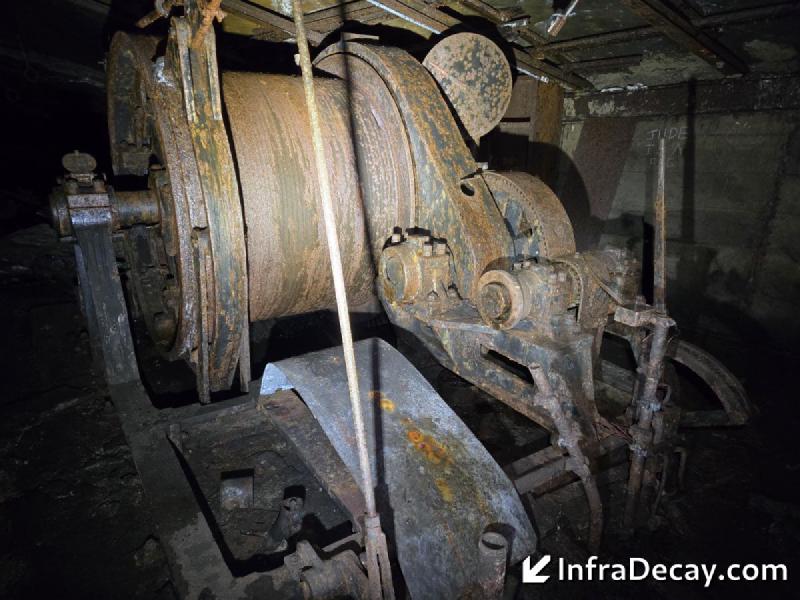
A closer shot of the spool. You can see eyebolts beyond in the roof which were used for hoisting this hoist during the initial installation.
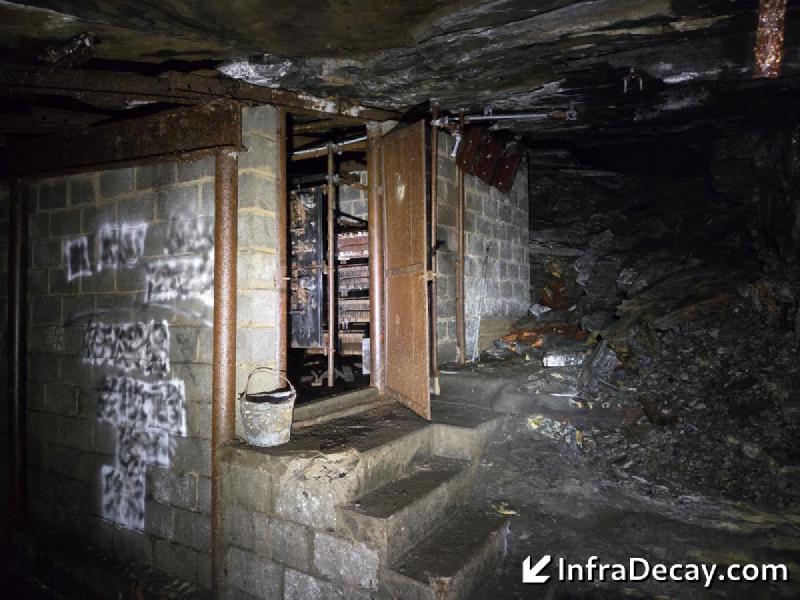
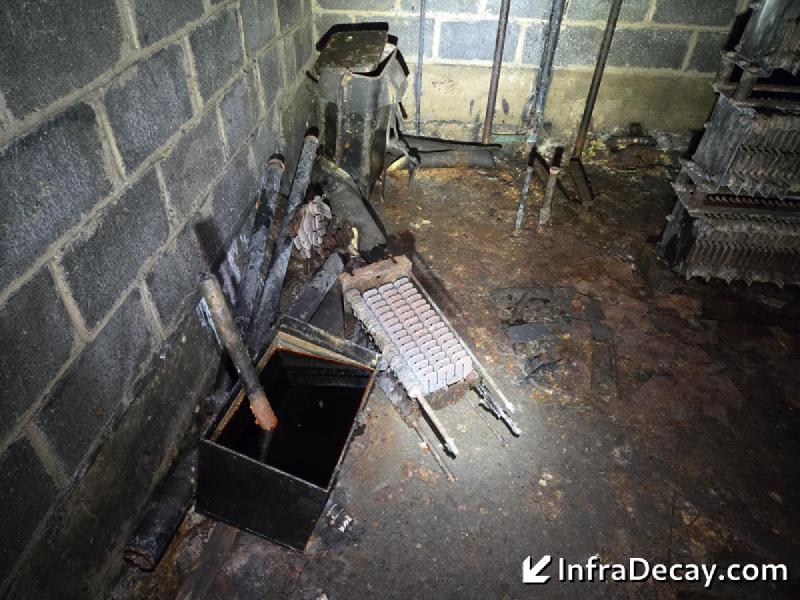
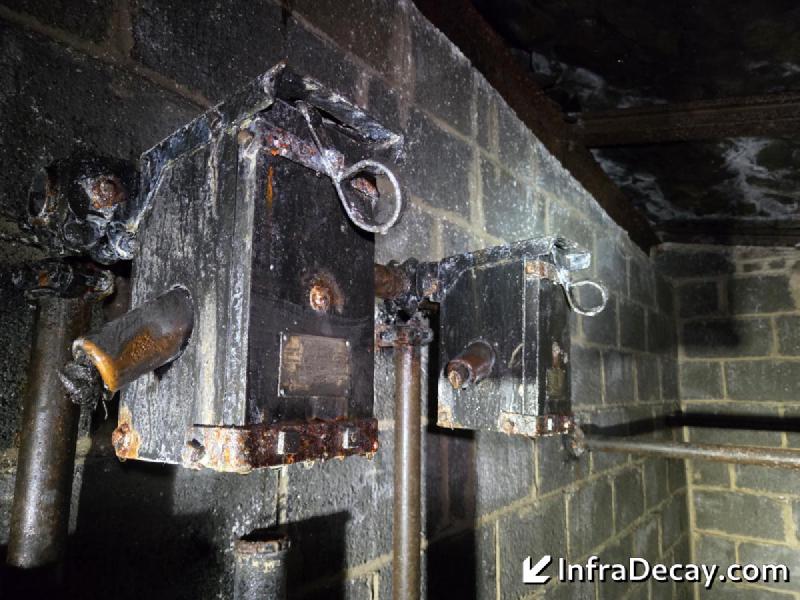
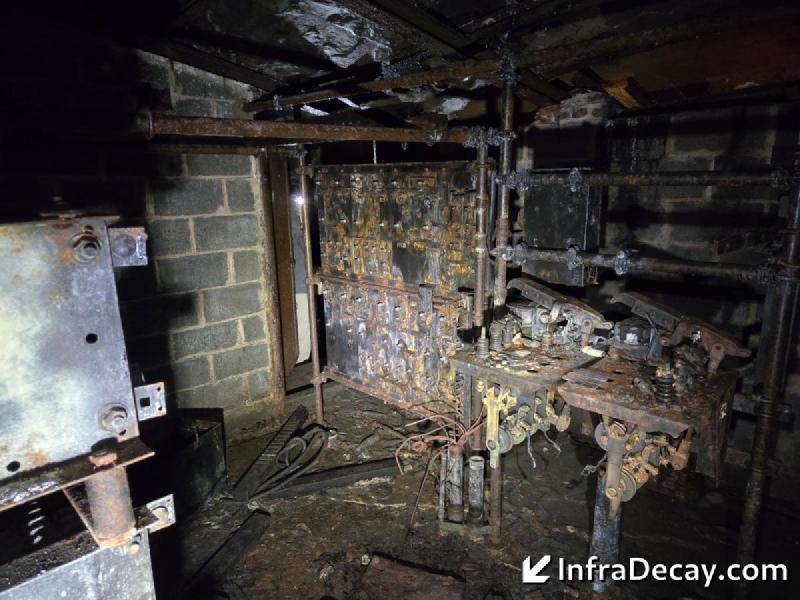
Now we’ll explore the electrical room. This room is pretty standard for a large hoist, with switches, resistor banks, fuses, and transformers. Sadly, much of the copper has been scrapped.
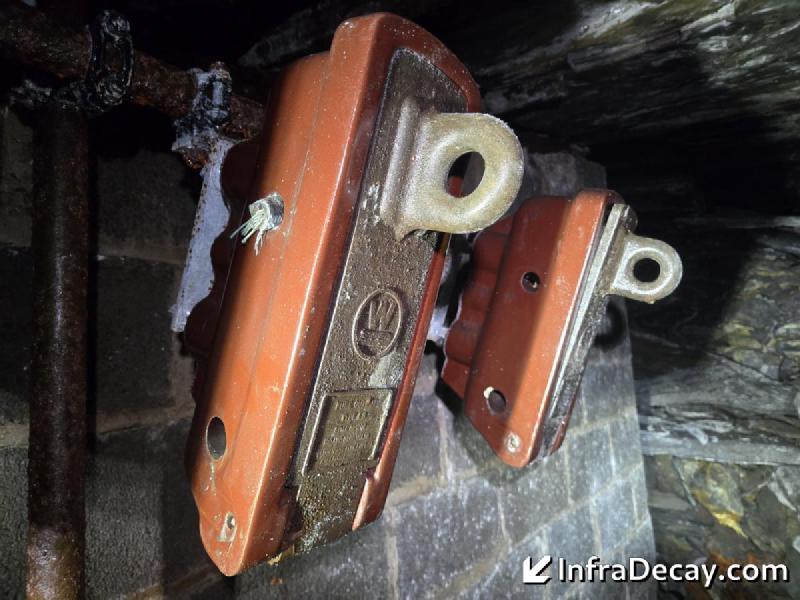
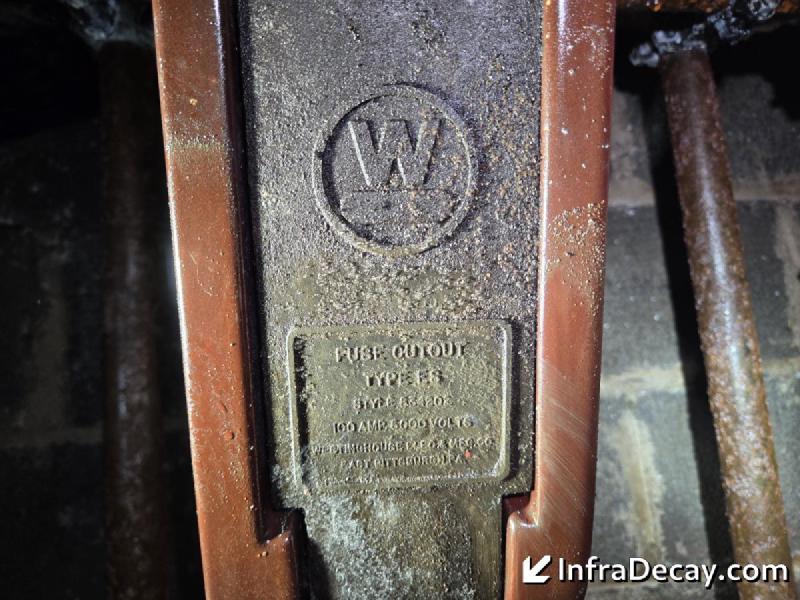
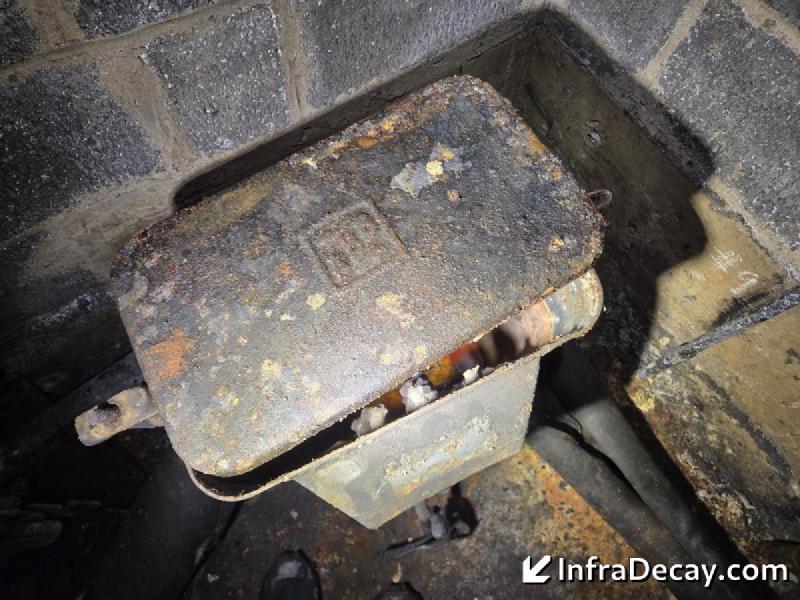
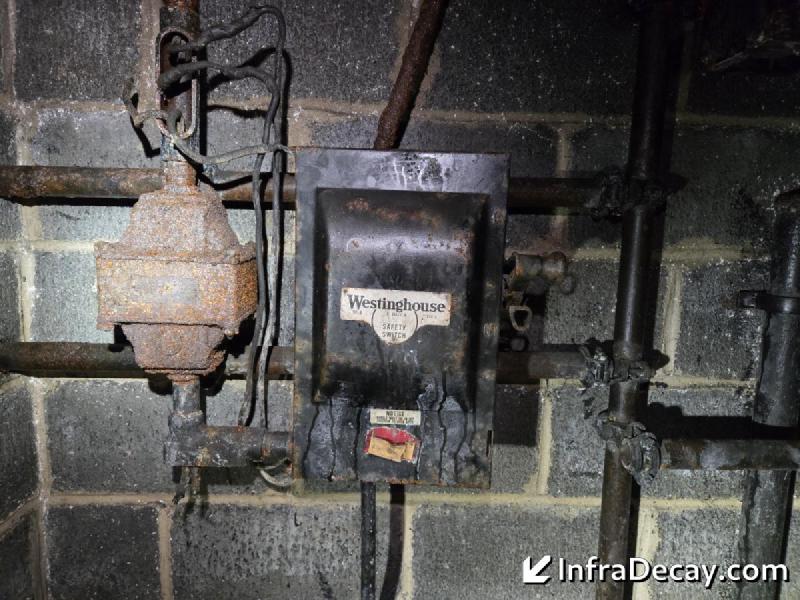
A lot of Westinghouse-brand equipment remains as well as some legit PCB oil transformers. It’s rare to find PCB oil in Anthracite mines; usually it has all been drained and/or spilled everywhere a long time ago.
100A fuses:
The switchboard:
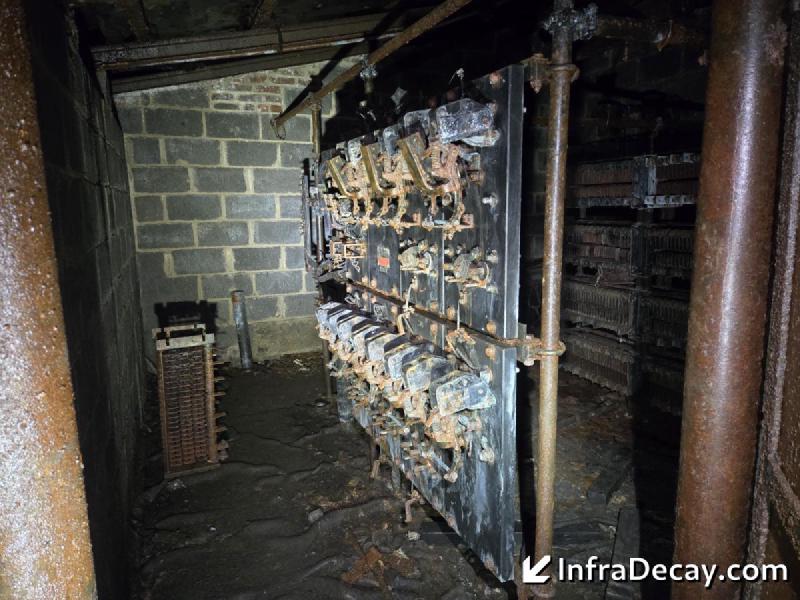
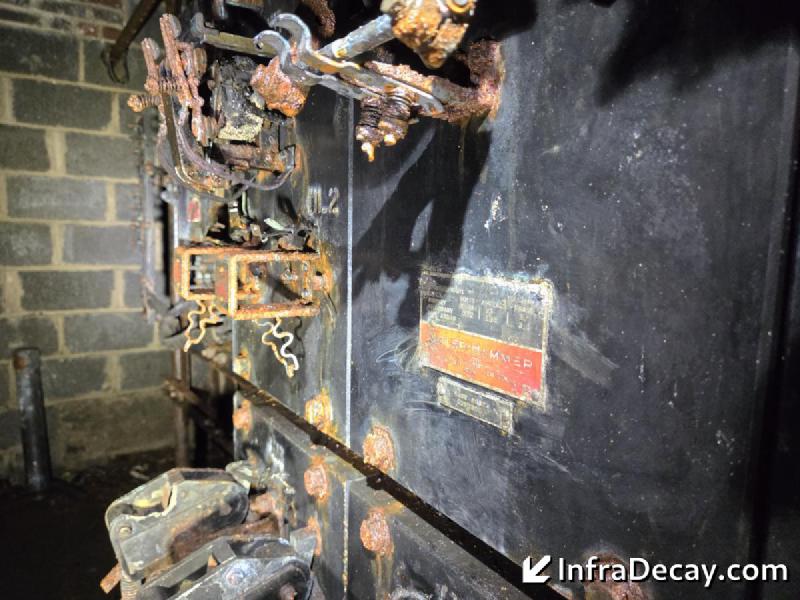
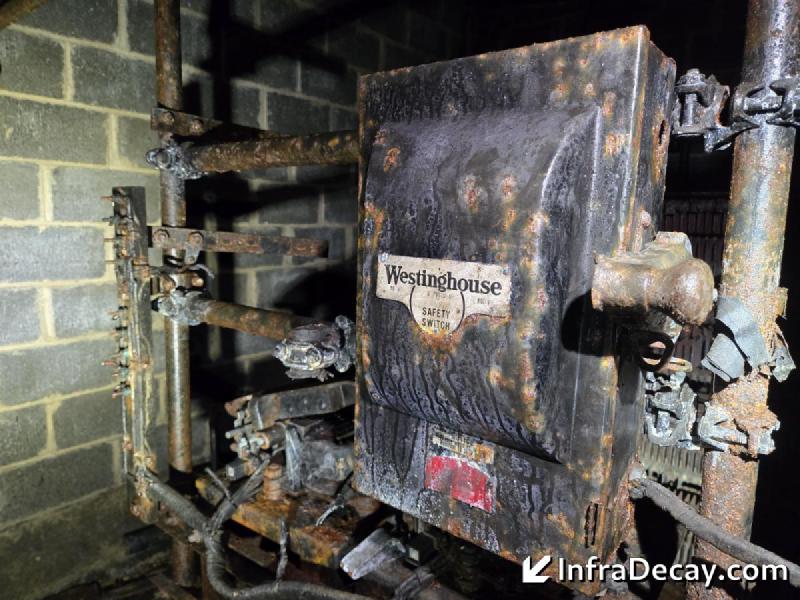
Resistor banks, standard with all large hoists:
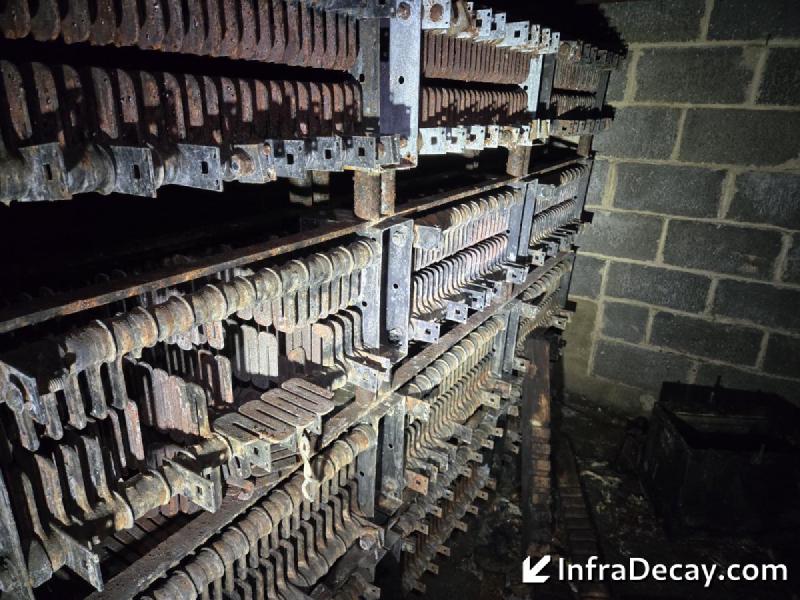
Back wall area with PCB transformers:
The Hoist Photoshoot
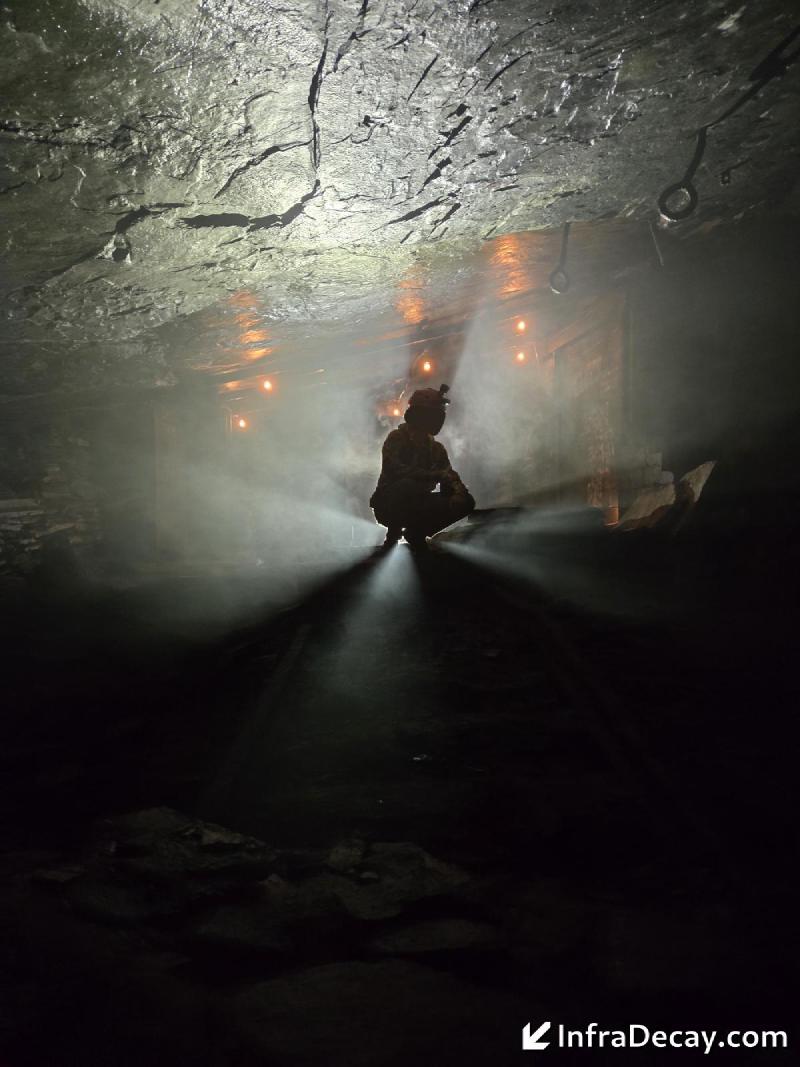
We lit up the hoist area with fancy lights and did a photoshoot. Was quite fun.
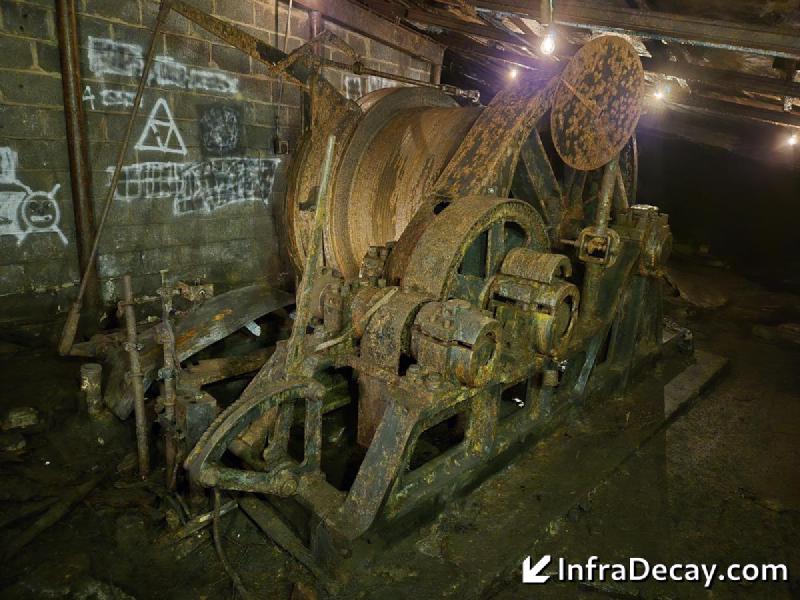
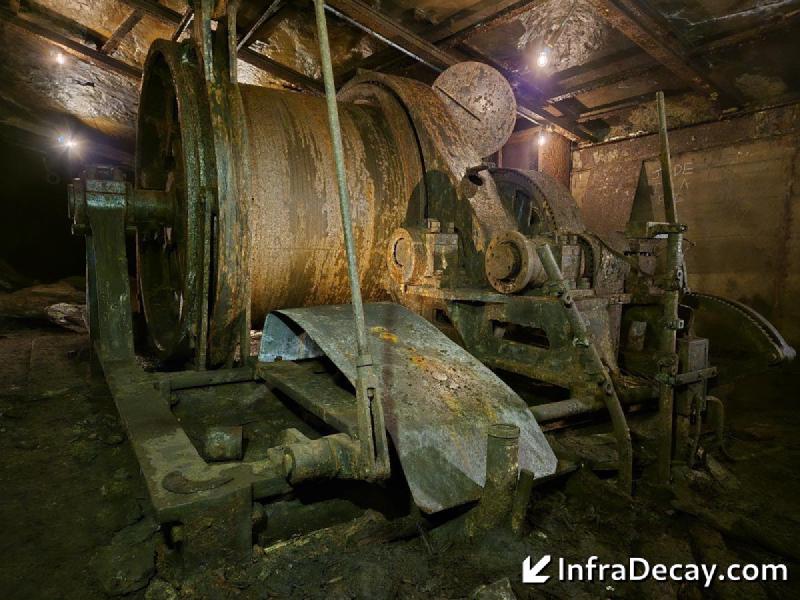
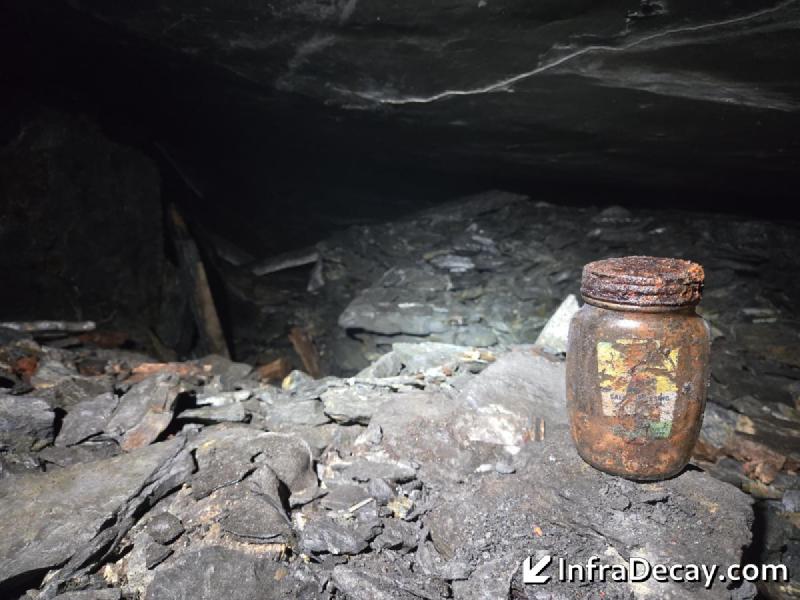
We linger around the hoist area and find a nice antique glass jar.
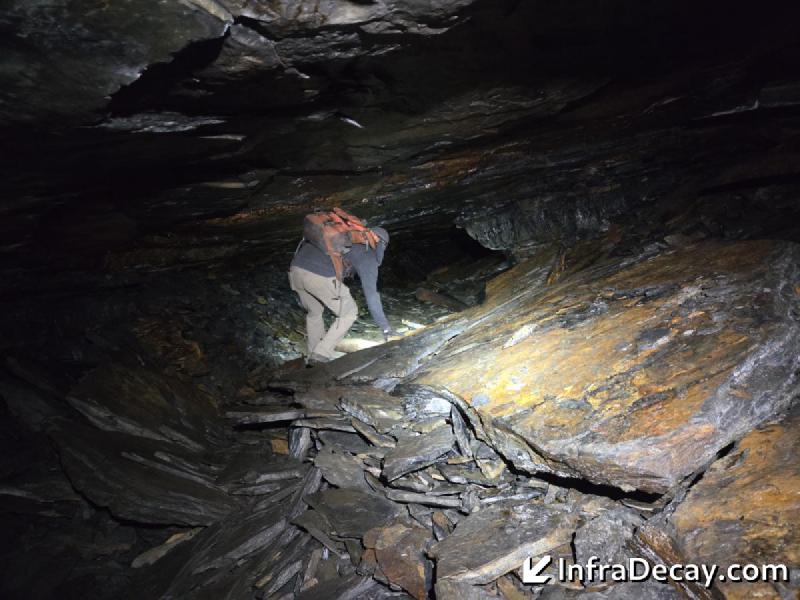
Then, we push the technical remainder of the “upper road”. It was garbage.
Hoist Slope and Bridge
Now we descend down the hoist slope (right).
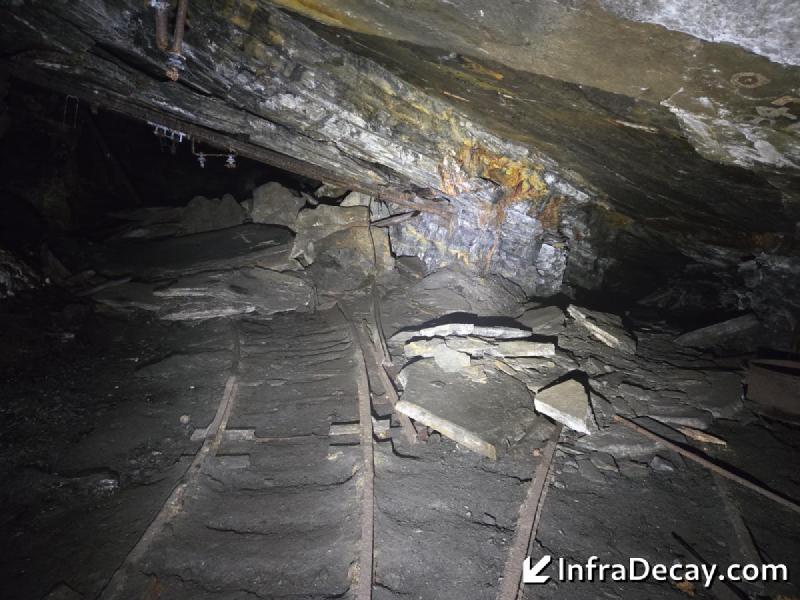
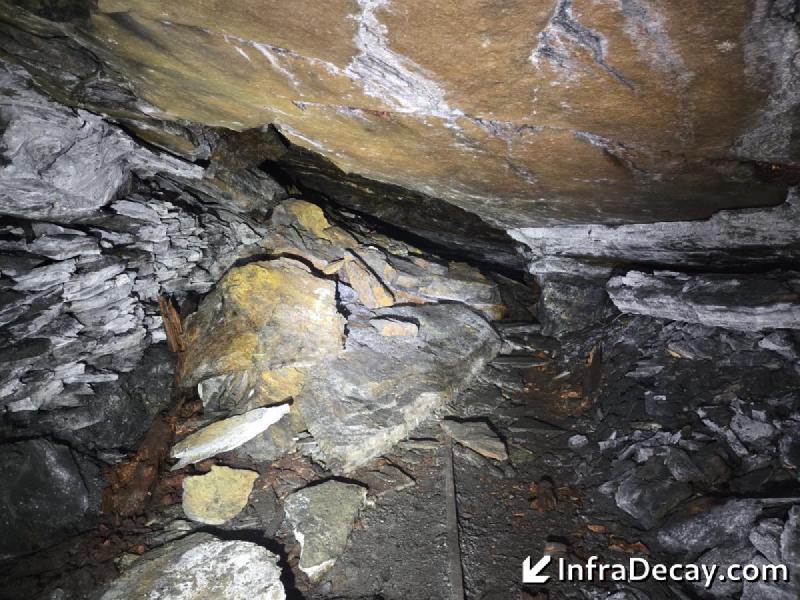
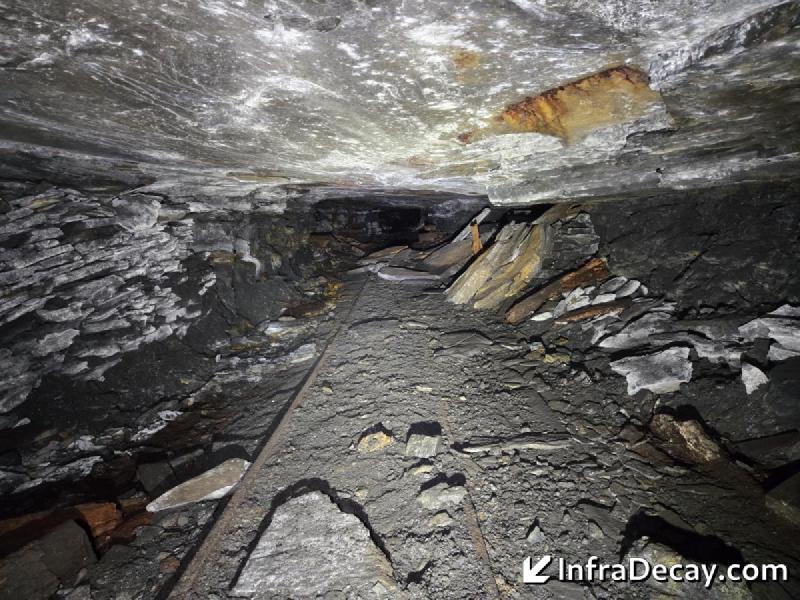
Off the hoist slope, we found a manway with a beautiful gob wall & some old newspaper. The manway had severe collapse after that & we did not chance it.
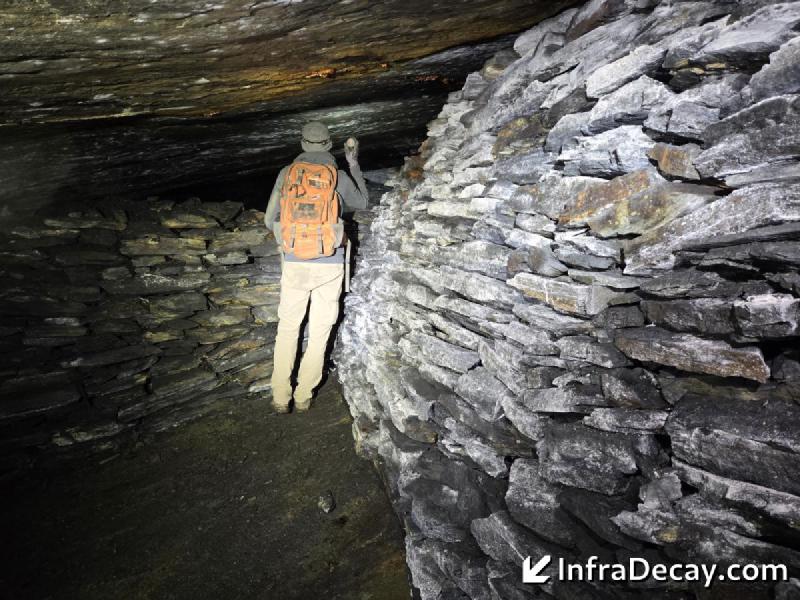
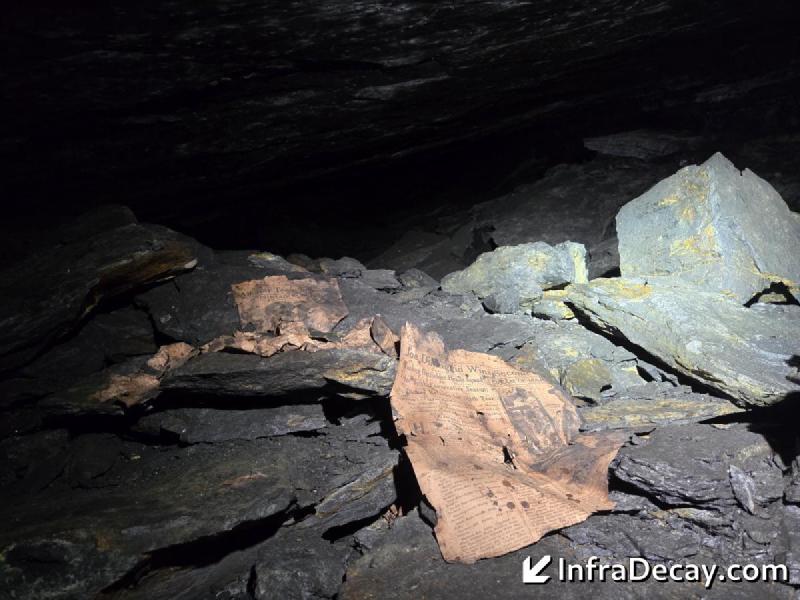
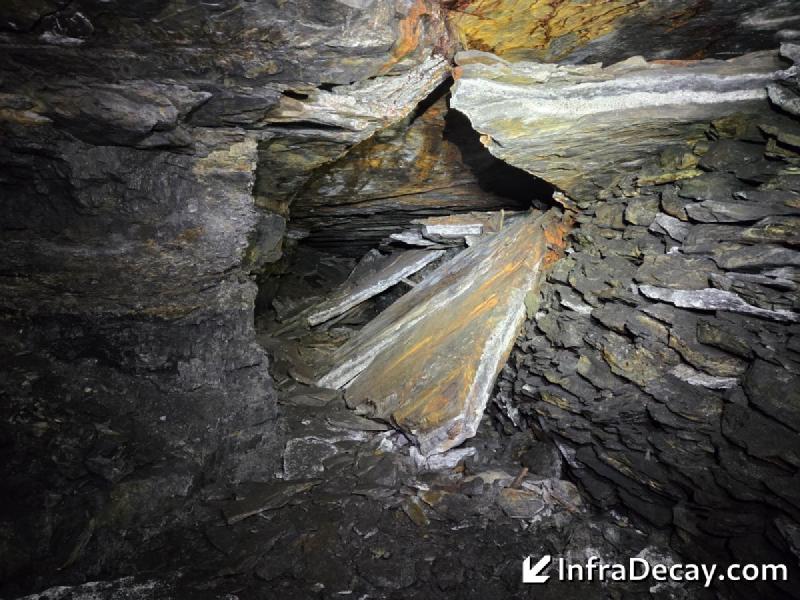
From the hoist slope, we took another manway that links back to the main slope from the main 5-way intersection.
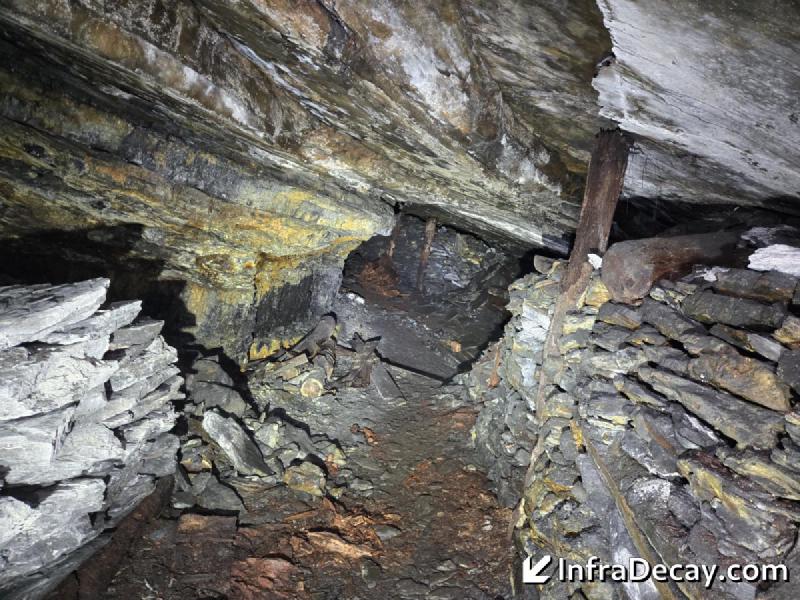
We’re back in the main slope now with the manway bridge visible in the distance.
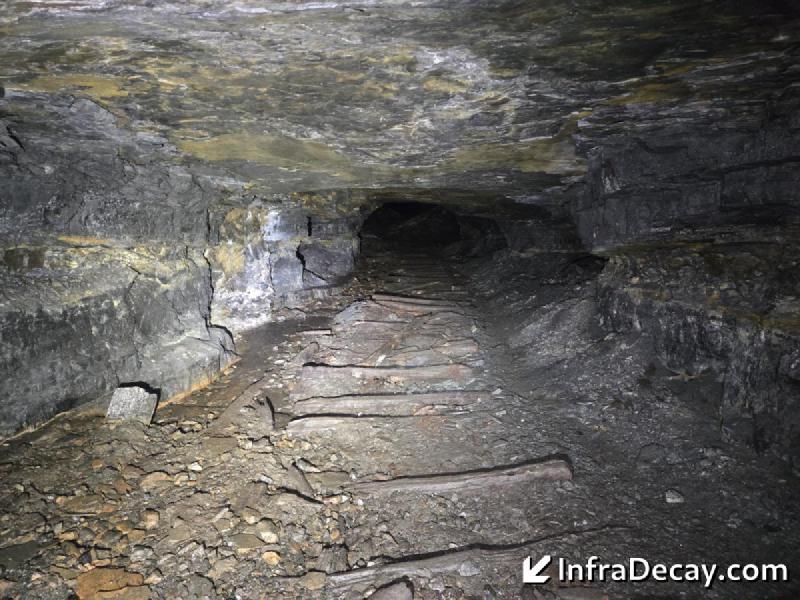
The manway bridge connected the main slope to a working drift just after. The hoist slope goes under this bridge, and the main slope joins the hoist slope just after (left).
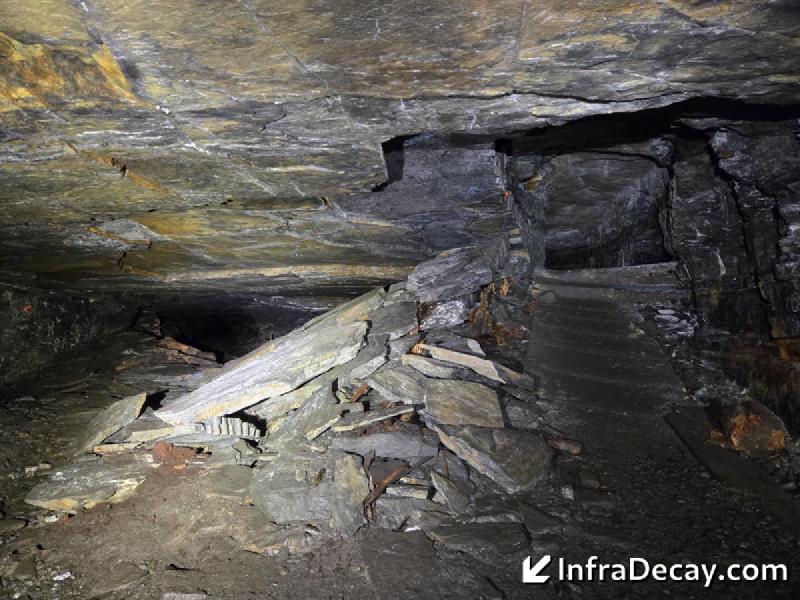
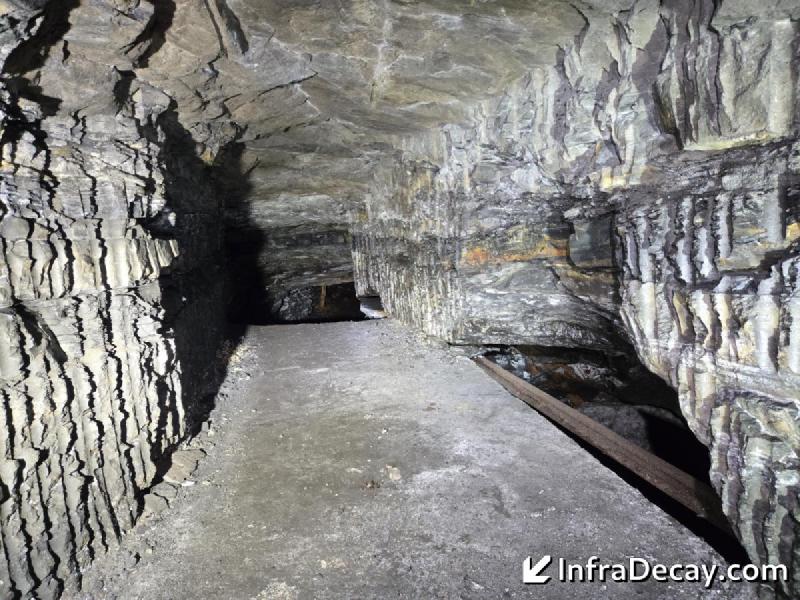
Note how this cavity was created exclusively by drilling rock. This is quite unique; it was very rough to the touch!
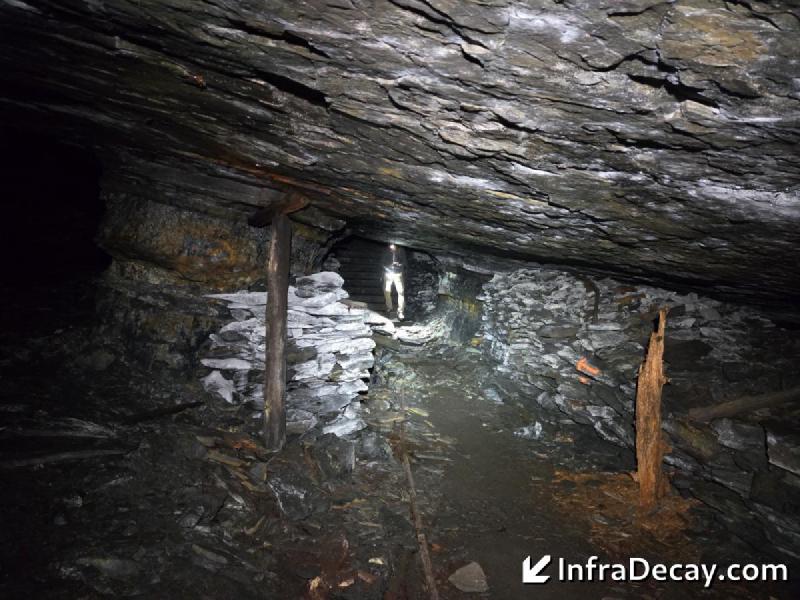
The bridge itself was cast from concrete so the steps were in great shape.
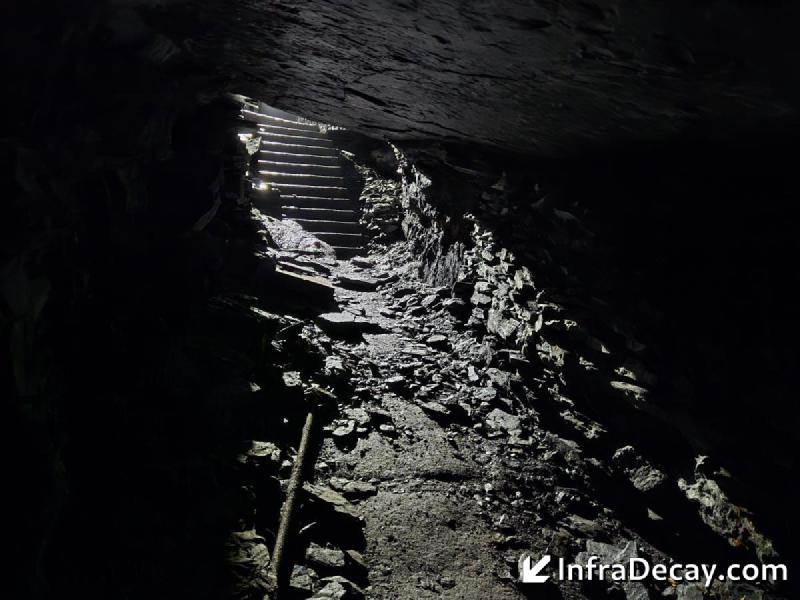
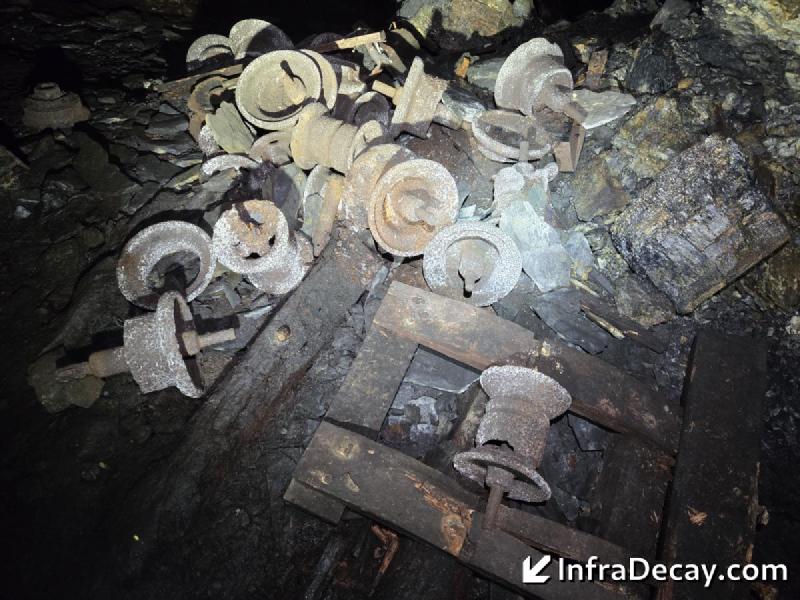
Now in the working drift just after the manway bridge, we see a pile of pulleys on the ground for a hoist cable. This drift didn’t have much to see and collapsed fairly quickly.
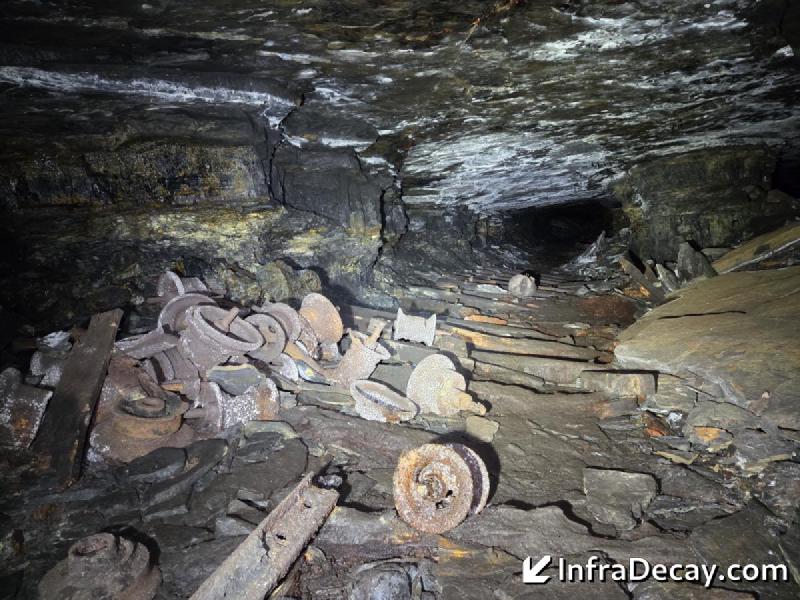
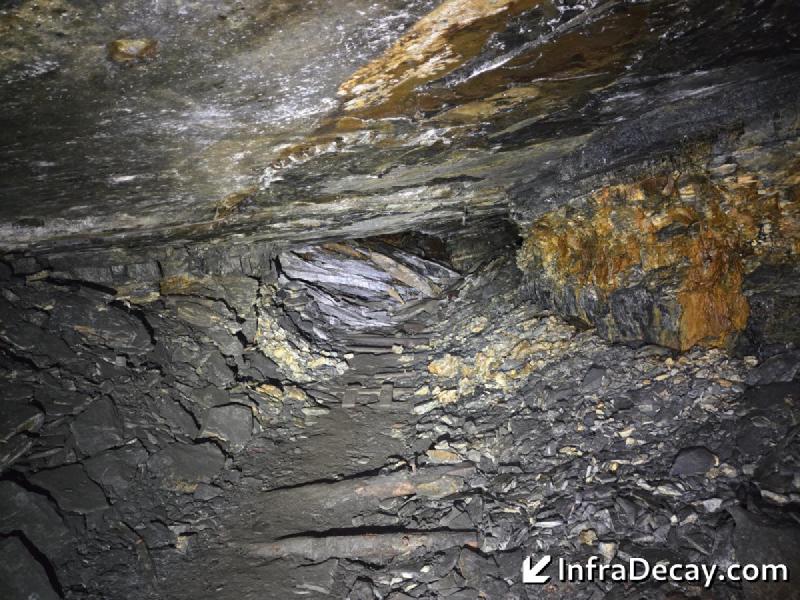
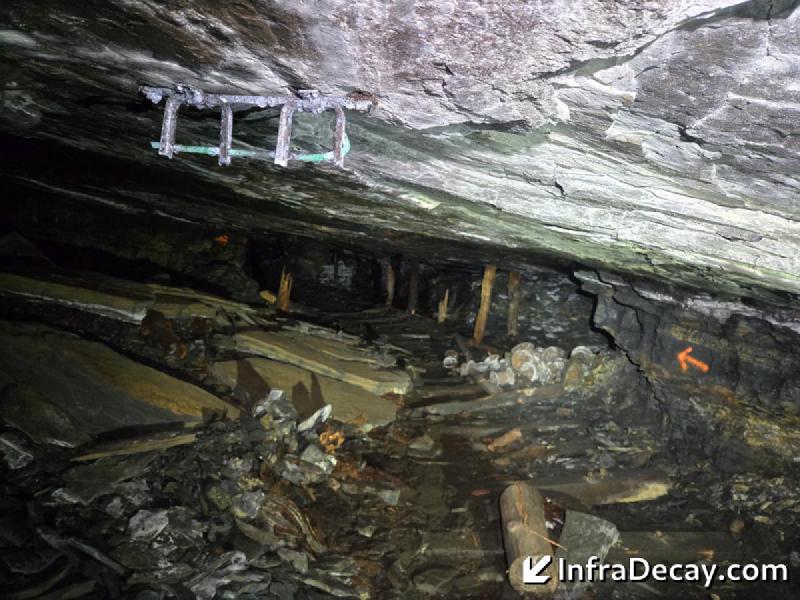
Luckily the drift lead to another manway paralleling the main slope which we followed down.
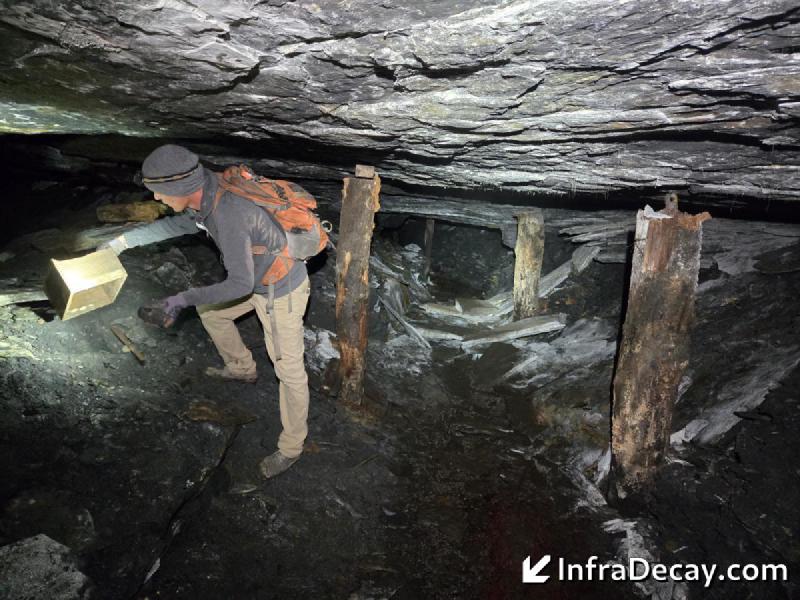
The manway spits us out into another road/branch slope. This ends fairly quickly at the water table.
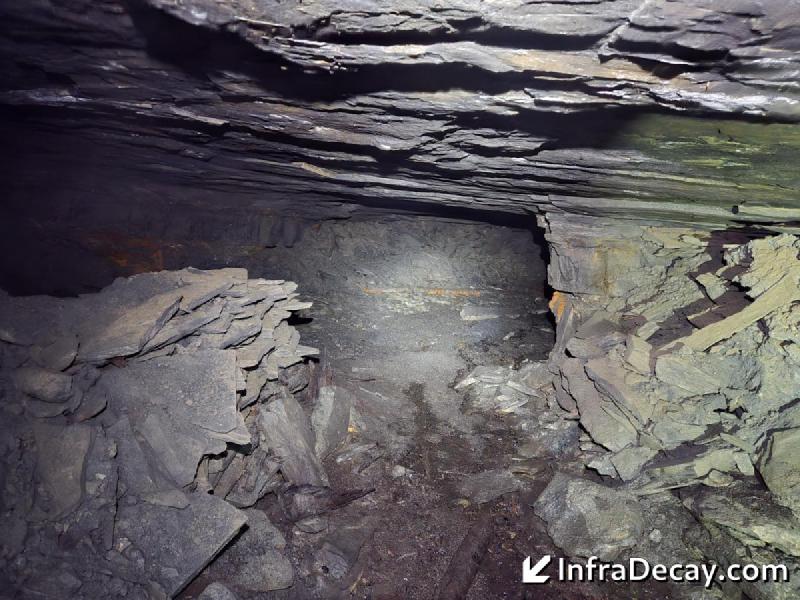
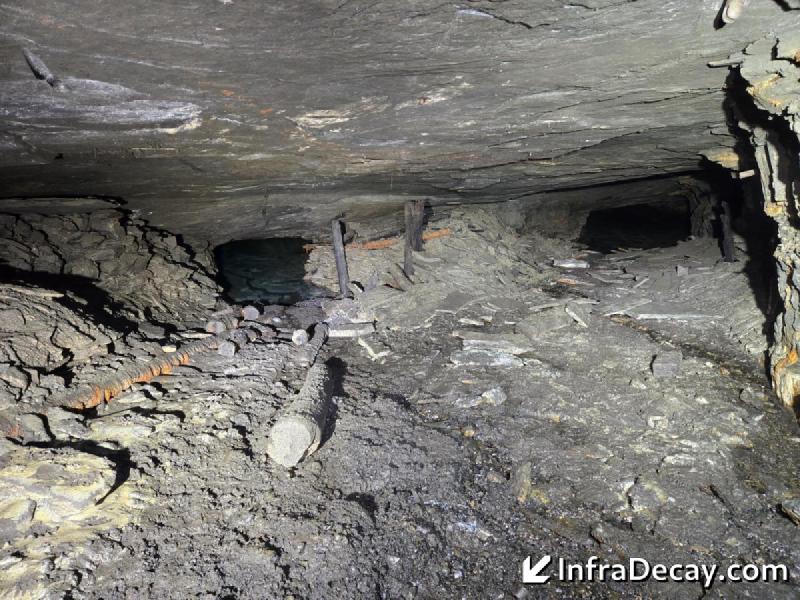
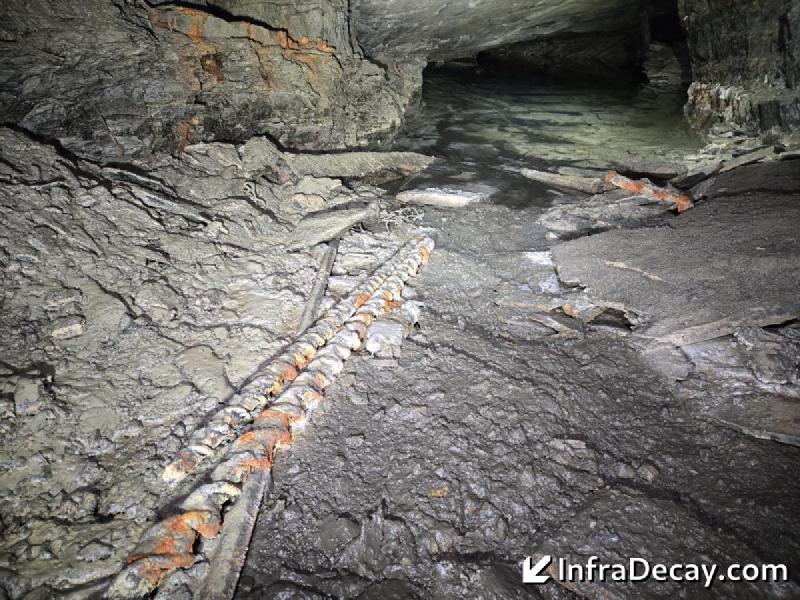
We found some large ~6 foot drill bits on the floor here.
The water table. Blue water may be caused by high aluminum levels. There were a LOT of racoon prints here making us wonder if there was another entrance just beyond the water (assuming its lower at times). There are no entrances on the mine map so it’s confusing.
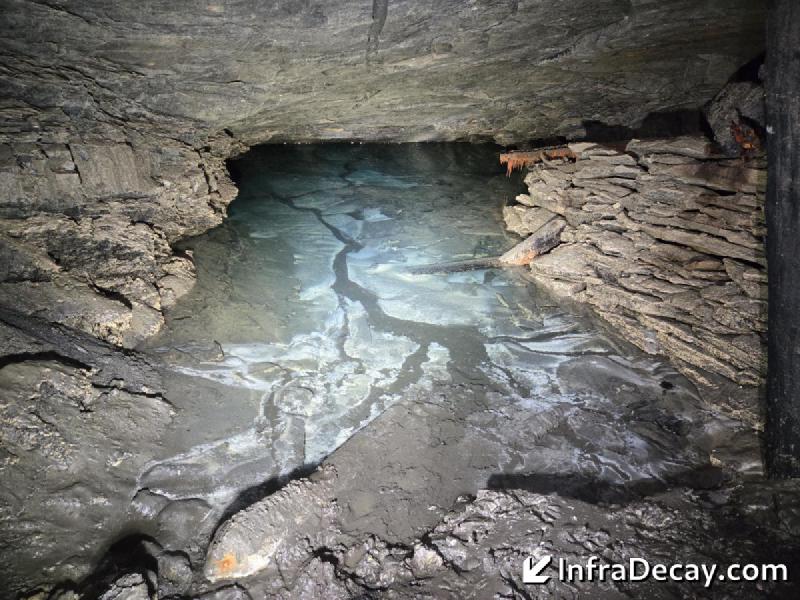
Other termination:
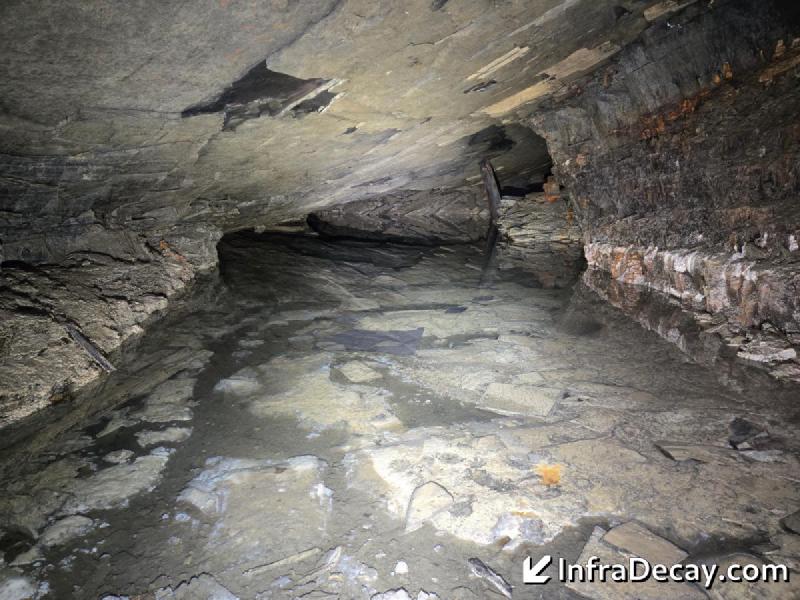
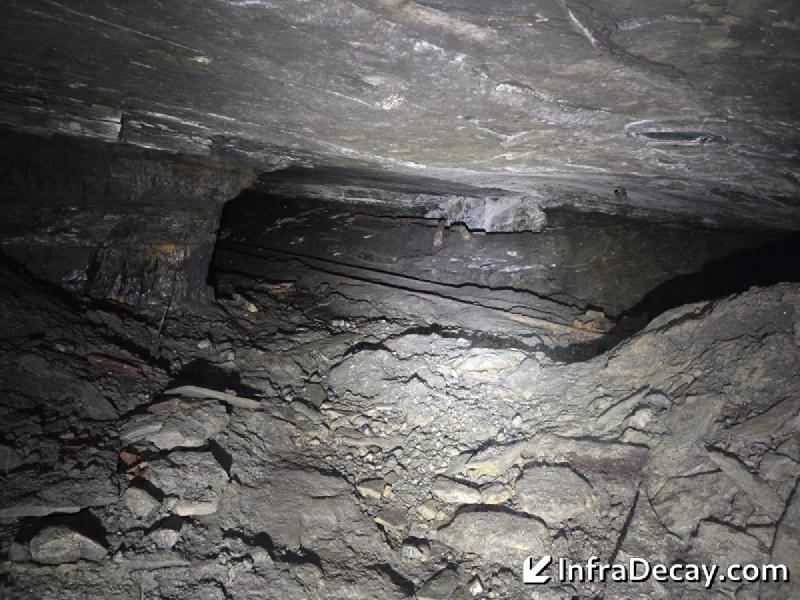
Heading back up to the main slope, we find it ends in the same manner. A hoist pulley wheel is seen on the ground.
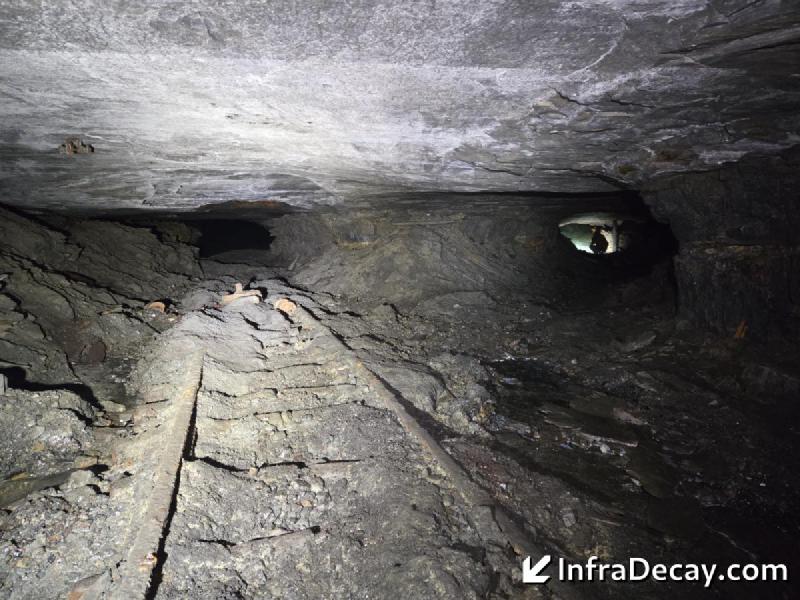
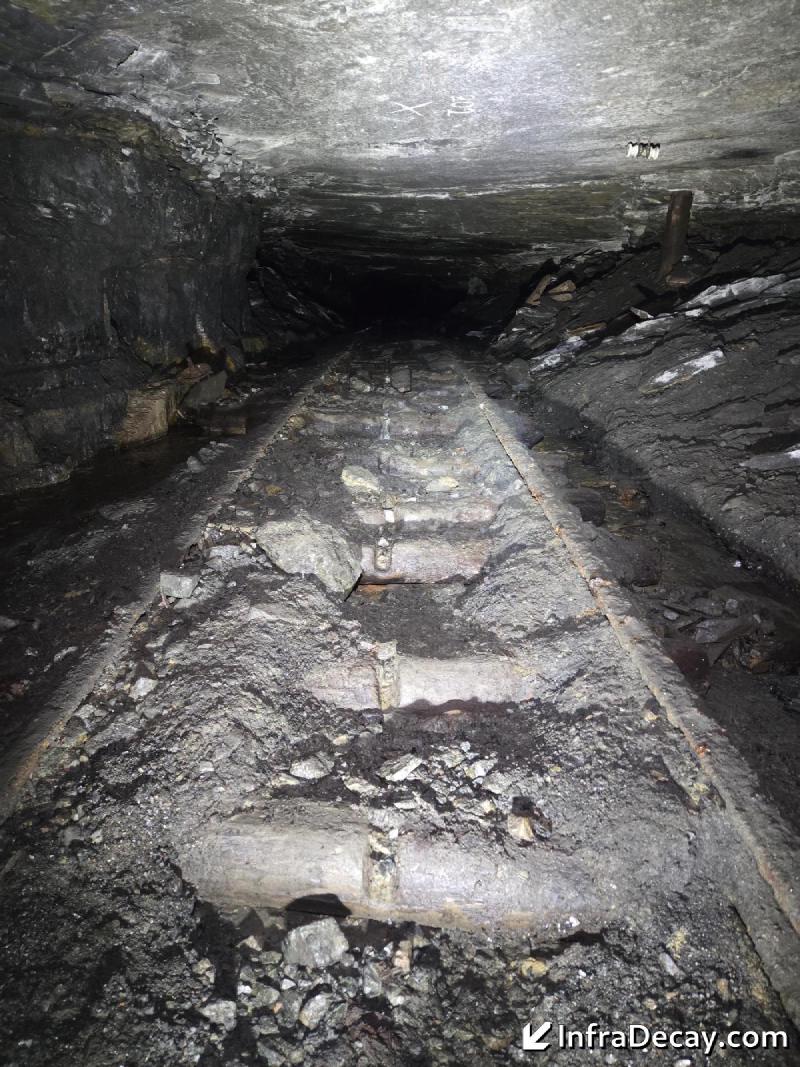
We start going up the combined main/hoist slope. Note the deep hoist cable notch cuts in the ties.
We found Road 428. This is a marked road yet appears to just be a working.
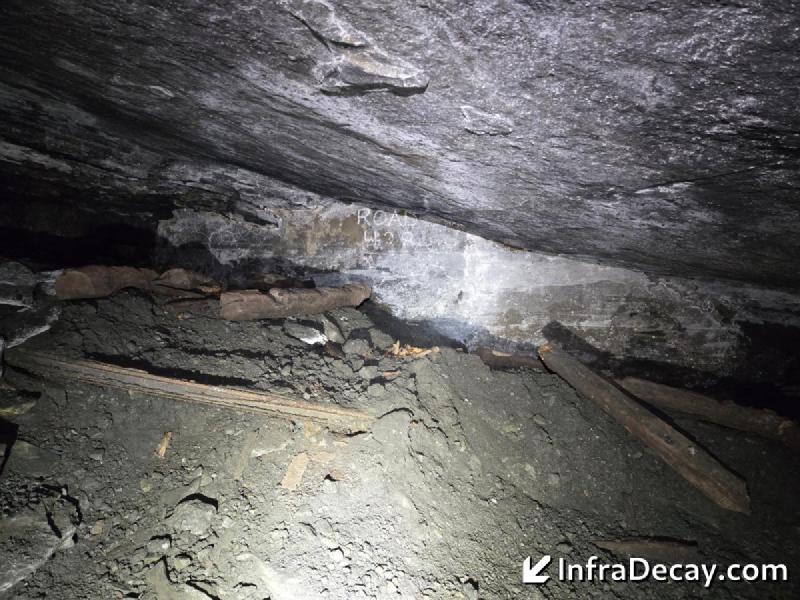
Then we found Road 423. This side drift was a big longer, larger, and grander. It has one side-tunnel that splits and rejoins after 100 or so feet. Then, it ends in collapse.
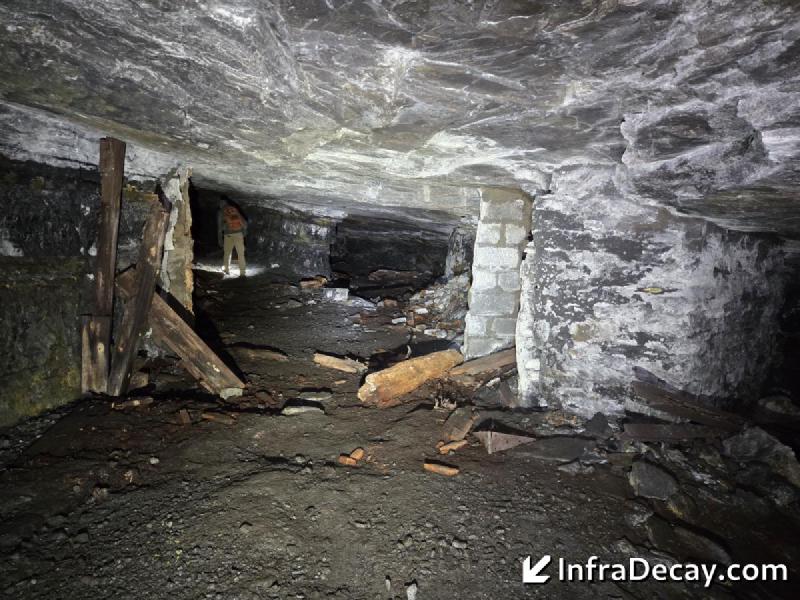
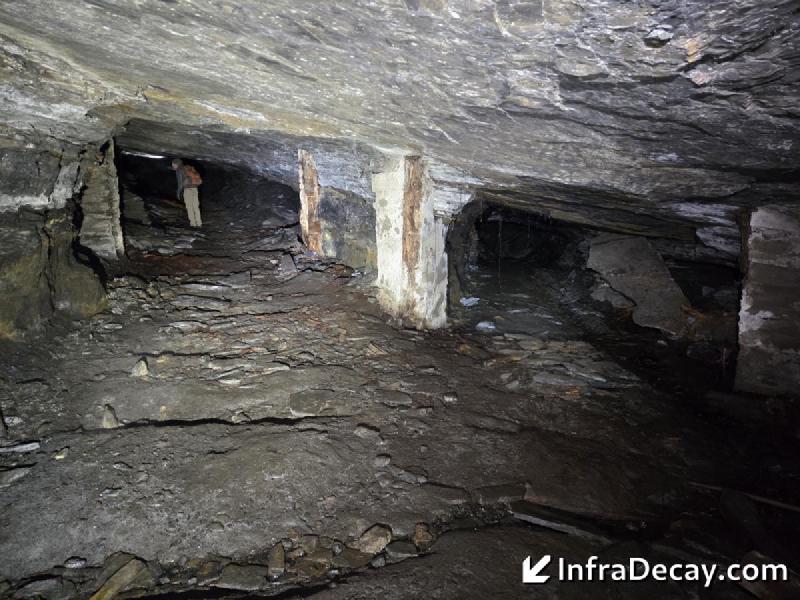
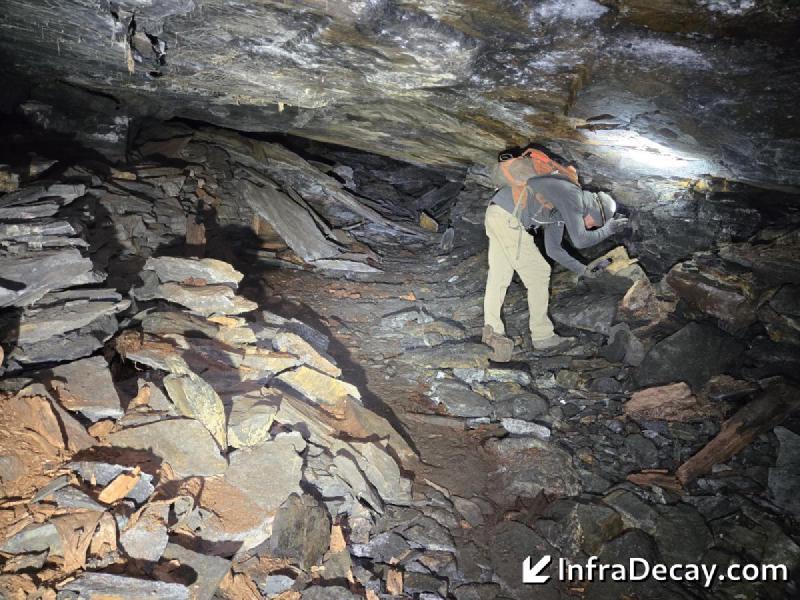
Road 423 features a very long gob wall that’s satisfying to look at.
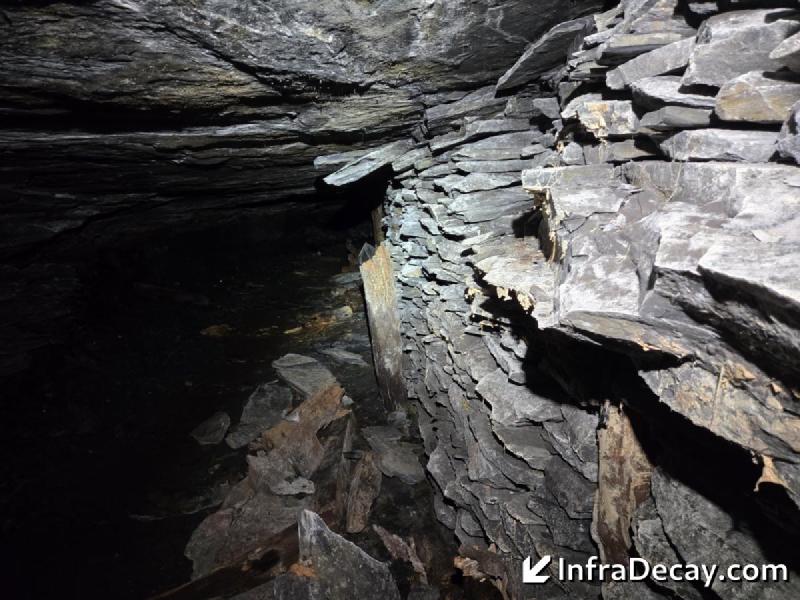
Finally, the underside of the manway bridge from the perspective of the combined hoist/main slope. The main slope separates just to the right.
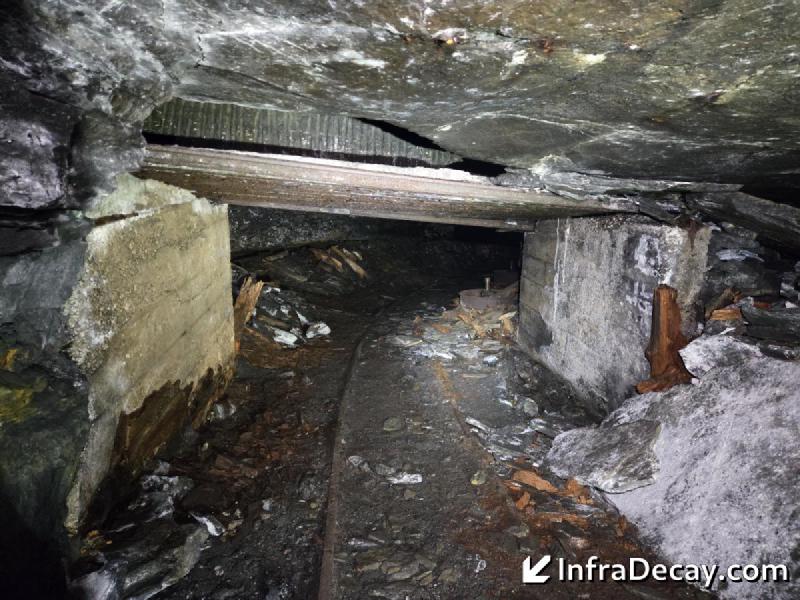
Entryway Slope
Now we are going to descend the entryway slope. This was the earlier slope entrance that was backfilled, and we are going down the opposite side.
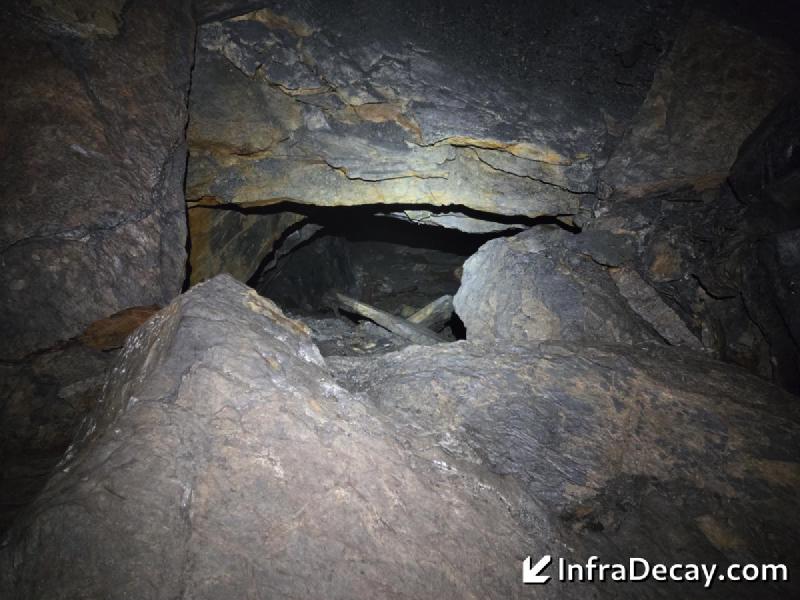
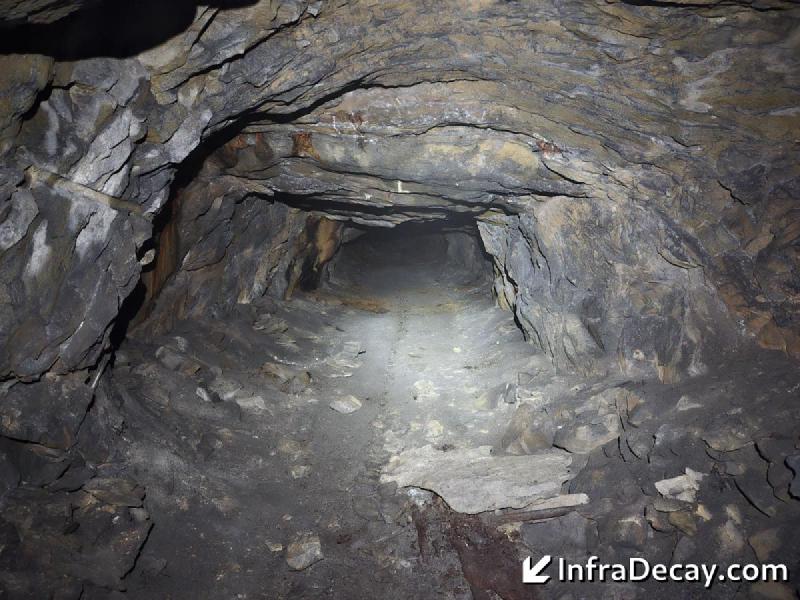
The slope levels and turns right into a deep drift, which eventually connects to the deep slope near the small hoist.
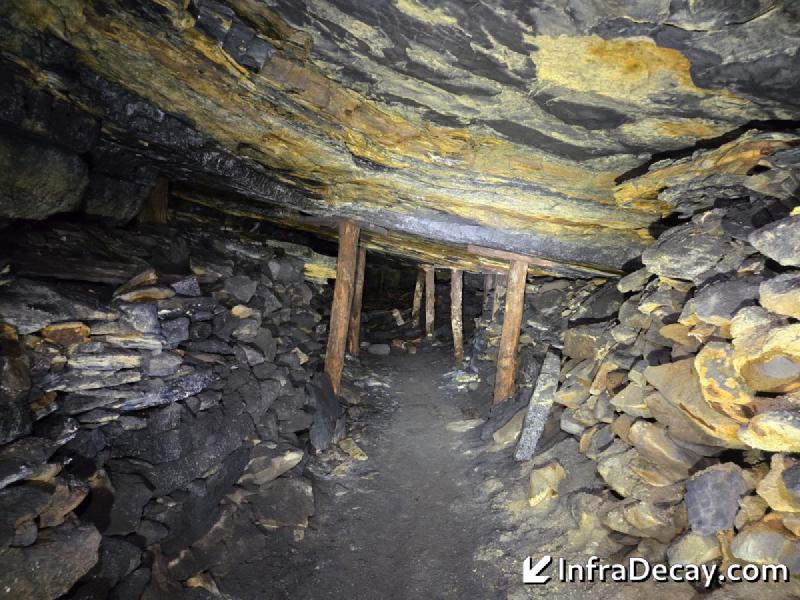
There were some workings that I theorized may connect to the vertical workings, but I have not confirmed it.
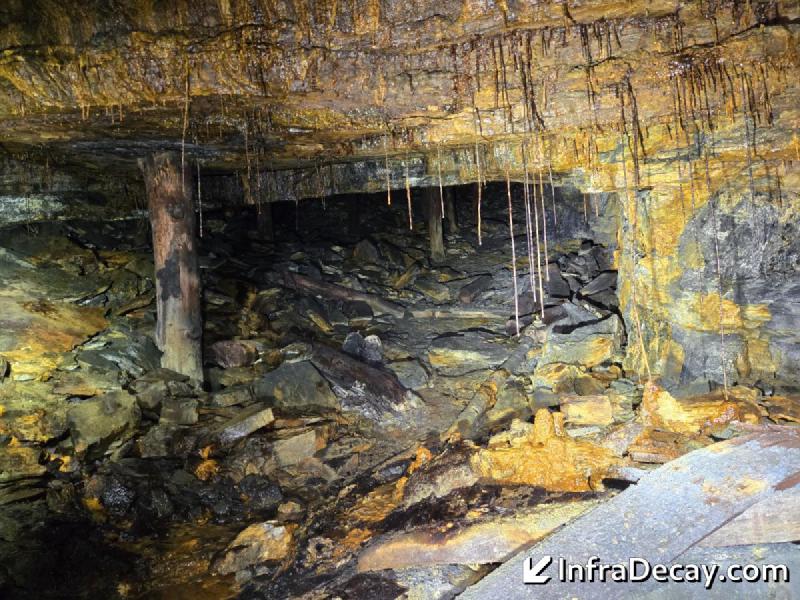
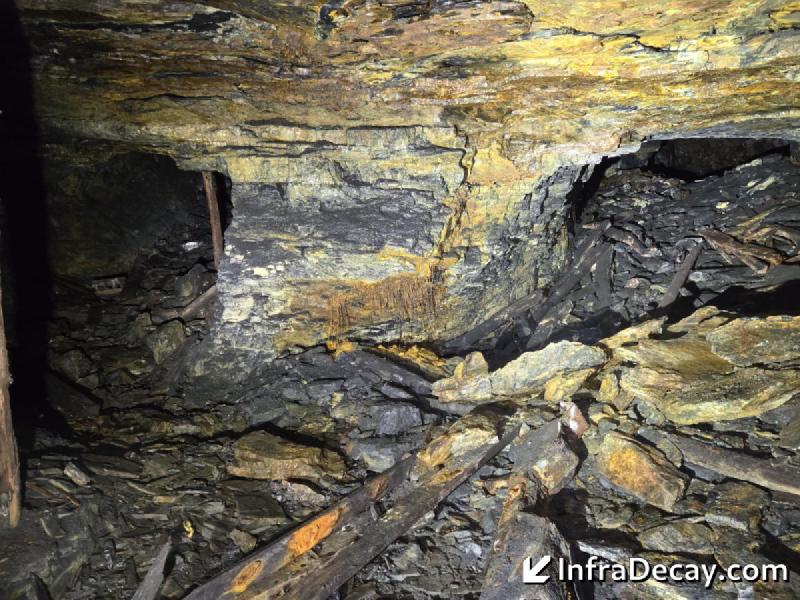
Deep Slope
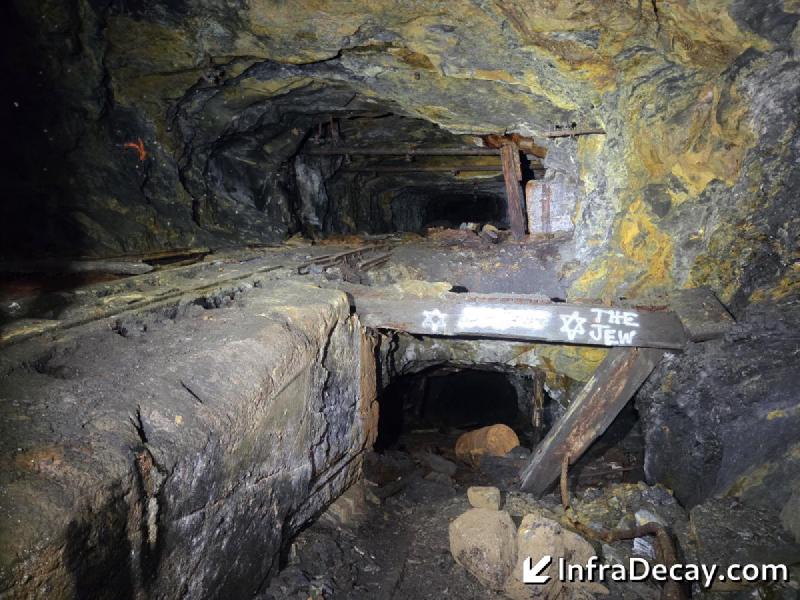
The top of the deep slope, a sheave wheel and old barrel. Right beyond this is “THE JEW” tag and the small hoist.
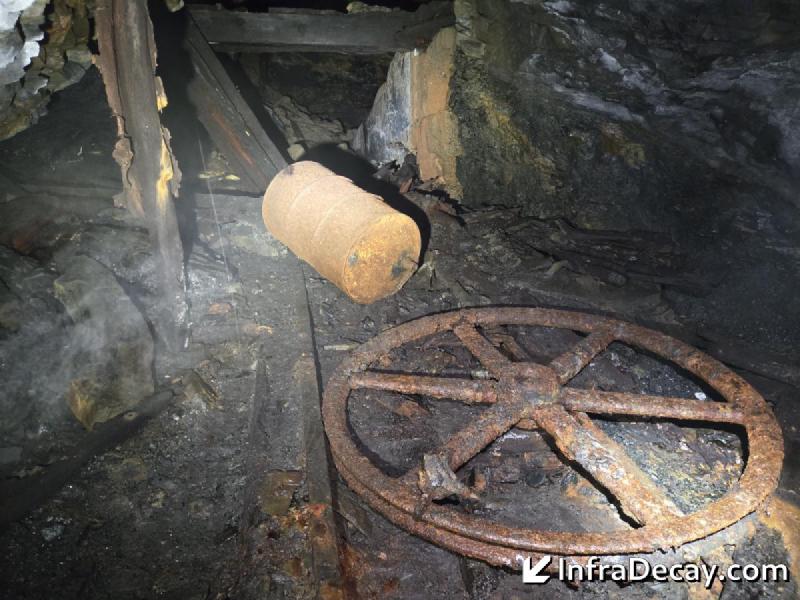
This slope is much cleaner and has less going on than the others. More hoist cable cuts are seen.
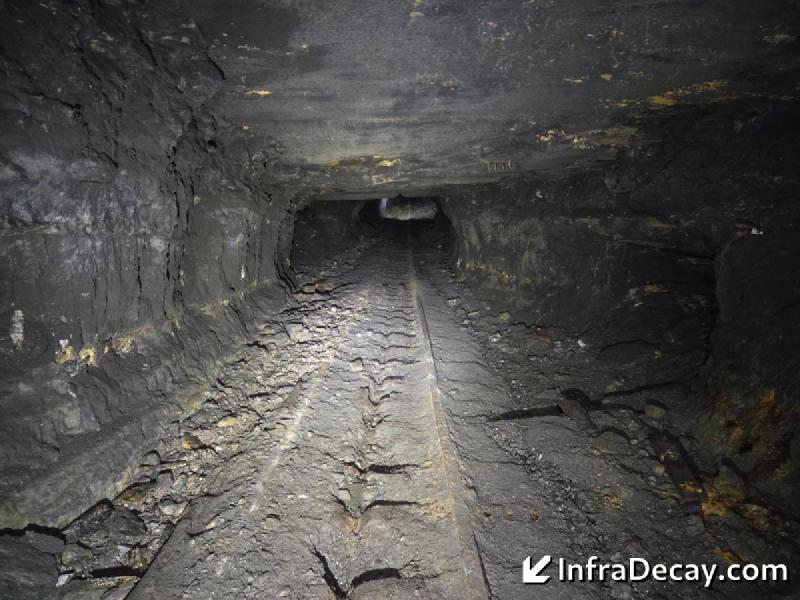
This slope terminates at the water table like many others. Some artifacts are found here. You can see the water level fluctuates quite greatly.
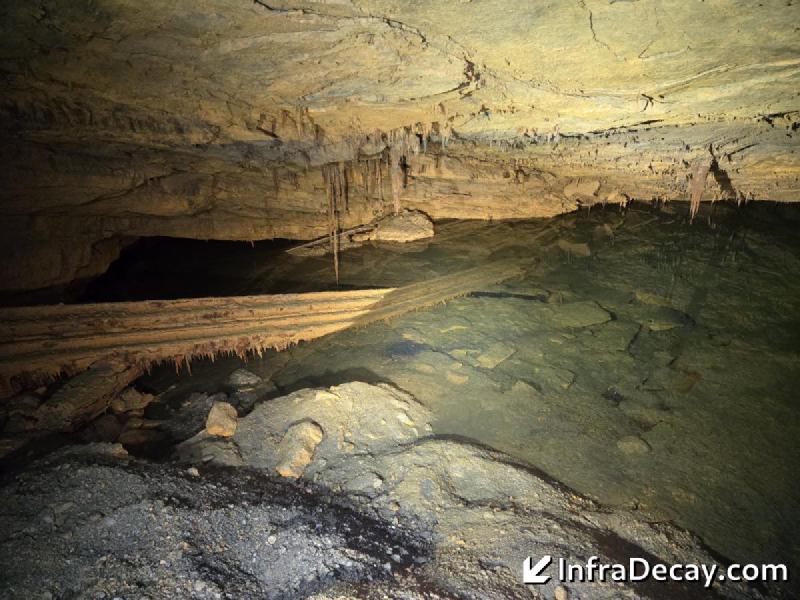
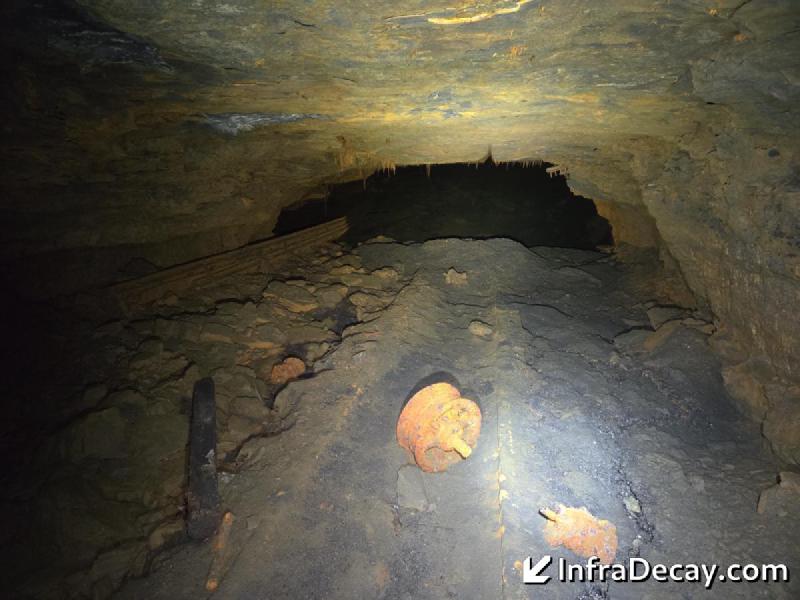
Finally, we pushed some workings on the left side of the deep slope. These are mostly in terrible condition but do go for a while and in various directions. One of these beings you to the same backfilled main shaft from the main tunnel but one level deeper.
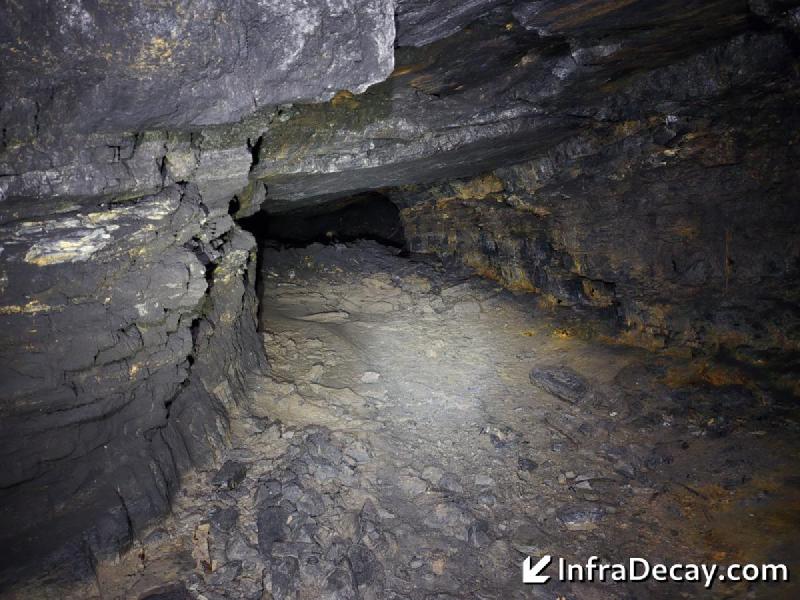
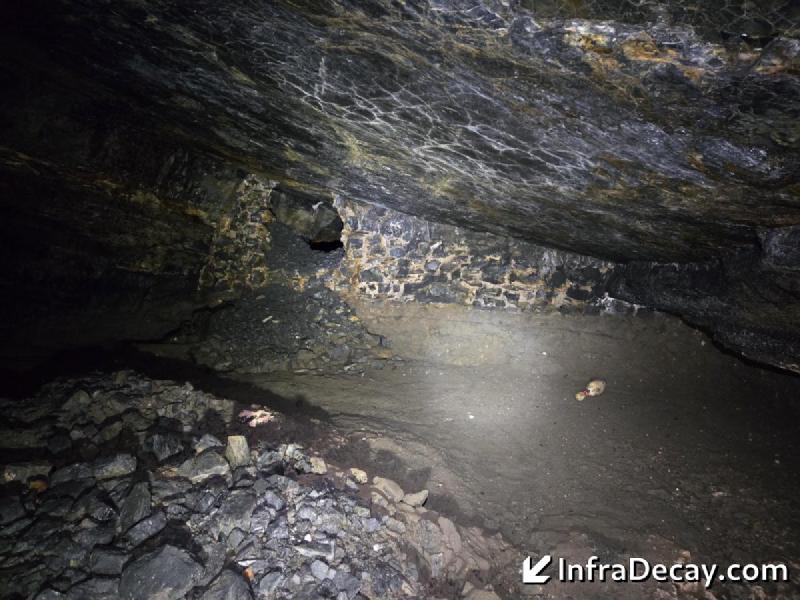
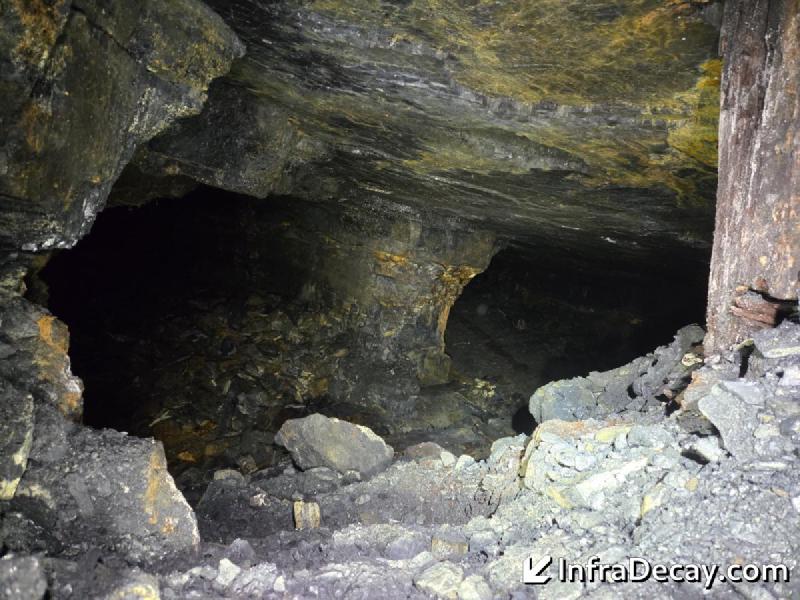
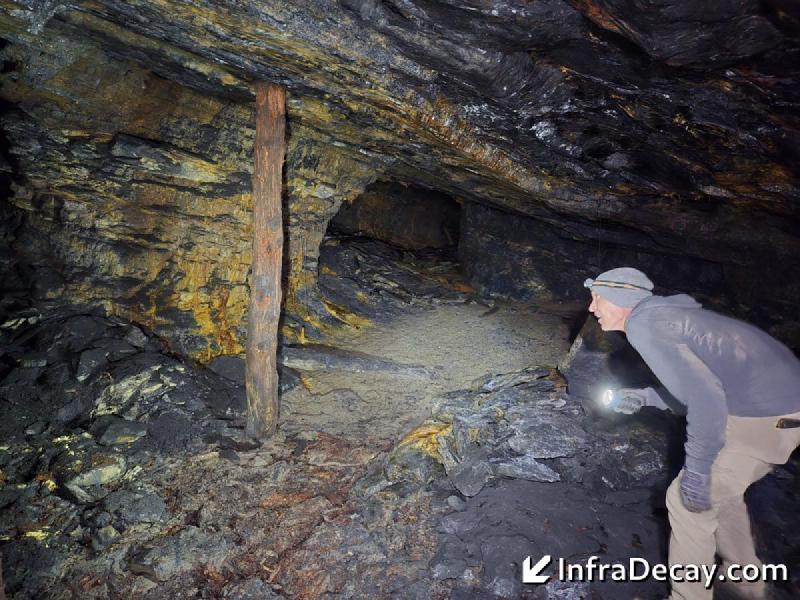
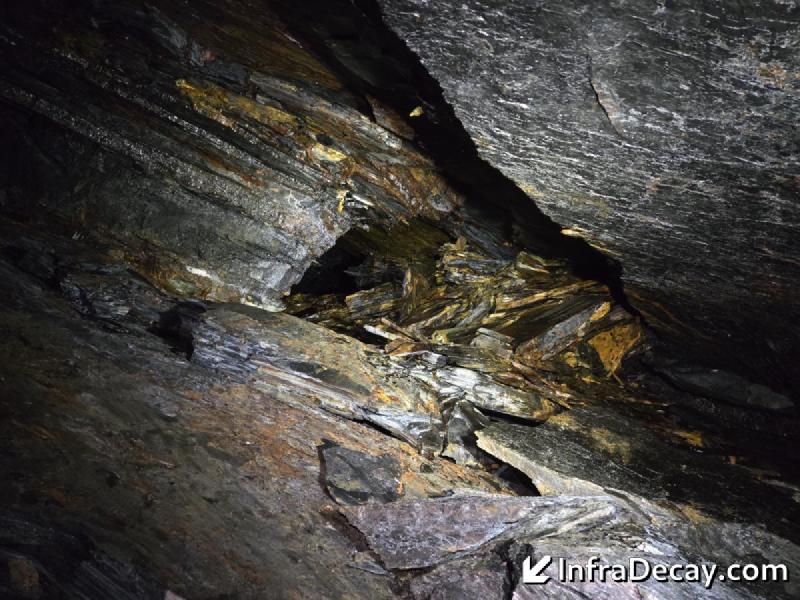
At this point we called it. We were tired and the mine was getting very shitty. Overall, this is an excellent mine especially for its size. Any new ground to push would be in the shitty upper right workings (that always seem to have a way forward despite their condition) or the deep slope workings that we didn’t push too hard.