
Pages
Recent Articles
Socials
Raining Shaft Coal Mine
| By | Infra Decay.com |
|---|---|
| Rating | 5 / 5 |
| Topics | Coal , Mine , Underground |
| Region | Appalachia |
| Last modified | 2 April 2026, 20:12 |
This past weekend we explored a legendary coal mine, one with locomotives, a shaft, multiple hoists, and lots of other cool infrastructure. We heard a rumor that this was going to get backfilled soon (the owner is getting pissed with people going there) so we had to make it out. This mine actually was filled at one point a few years ago, but someone came and dug it out. The rumor is that the next time it’s filled, there will be no possibility of digging it out. With the threat of getting fucking entombed looming overhead, we set out for a late evening/night time trip.
The entrance of this mine used to be larger, but now its a semi-squeeze 15 feet to a water tunnel. I should add that I was borrowing my friends waders which were 3 sizes smaller than my foot. So right at the entrance, my feet were in pain and it would only get worse.
Water Tunnel
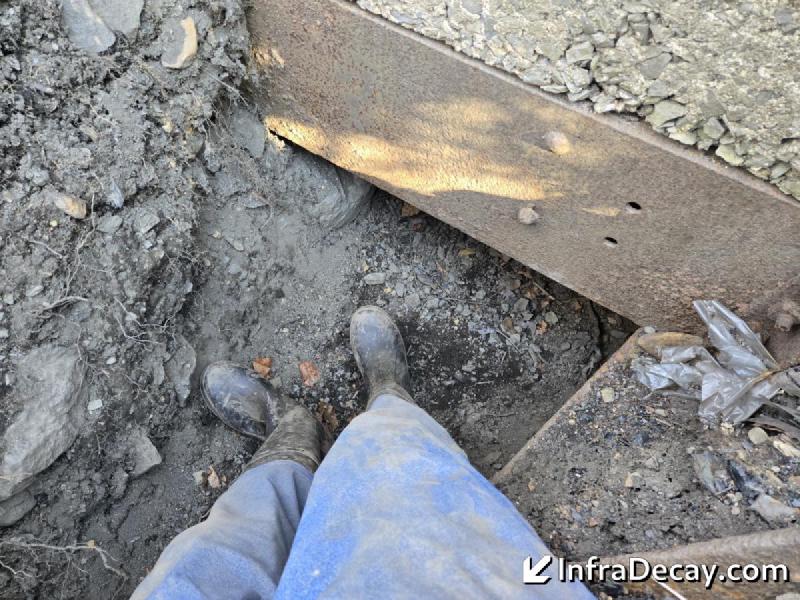

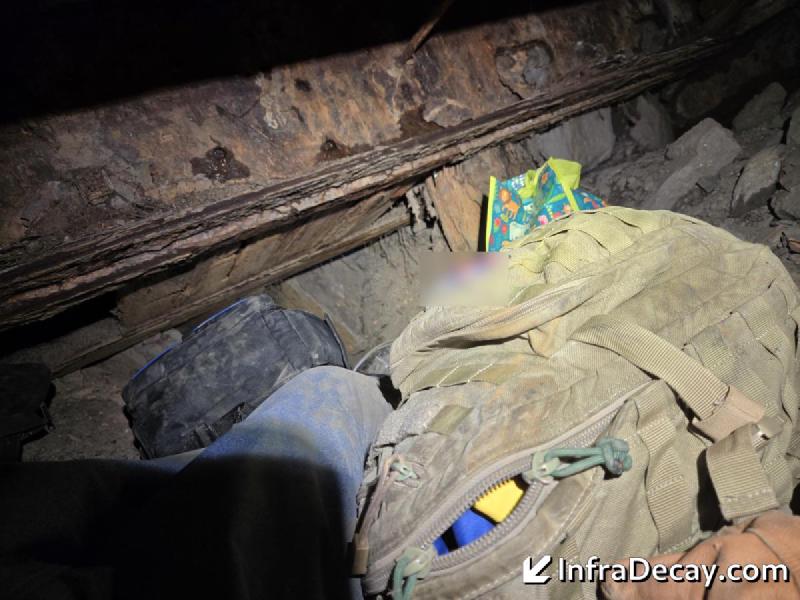
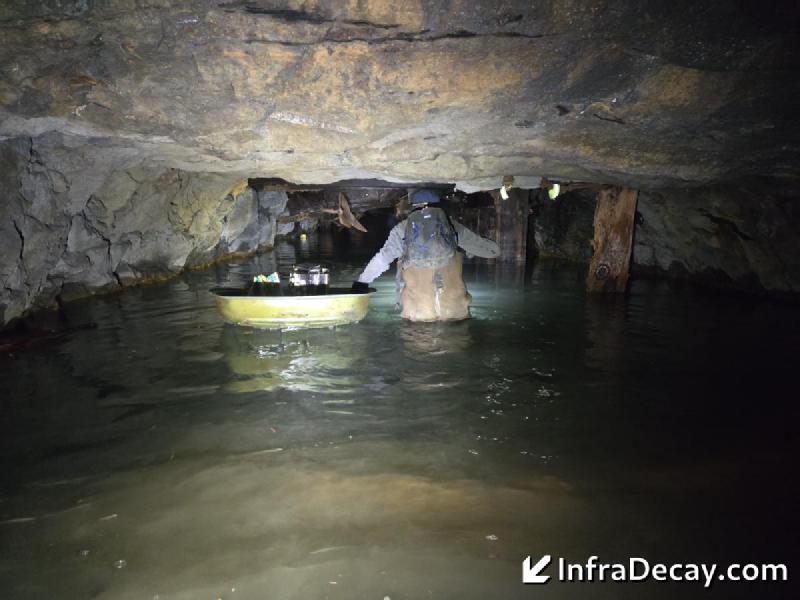
This was my first time pushing a water tunnel and it was quite funny to a third party observer. There was some collapse and timbers across the floor here, which were impossible to see through the sediment when it was my turn to go. Many years ago, someone brought a hard plastic boat into the entrance which we used to float some of our shit through the tunnel.
This leads all the way to a collapse pile.
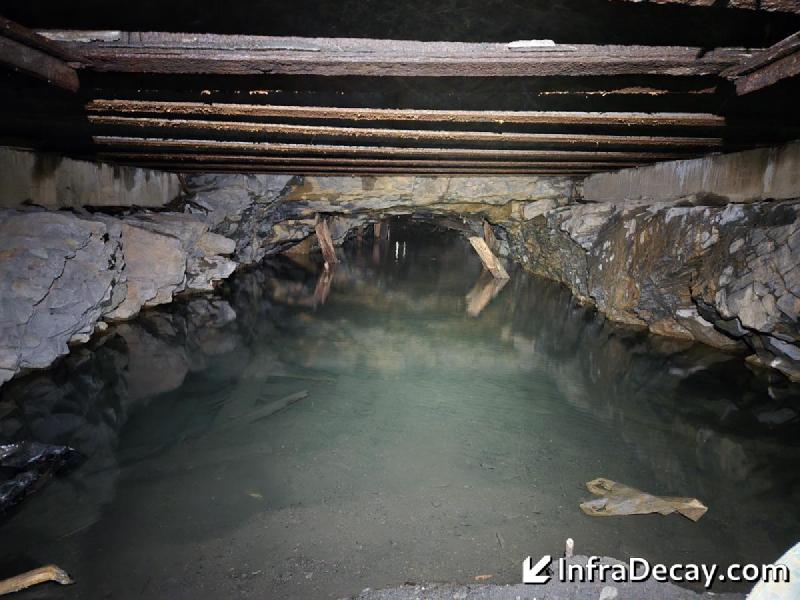
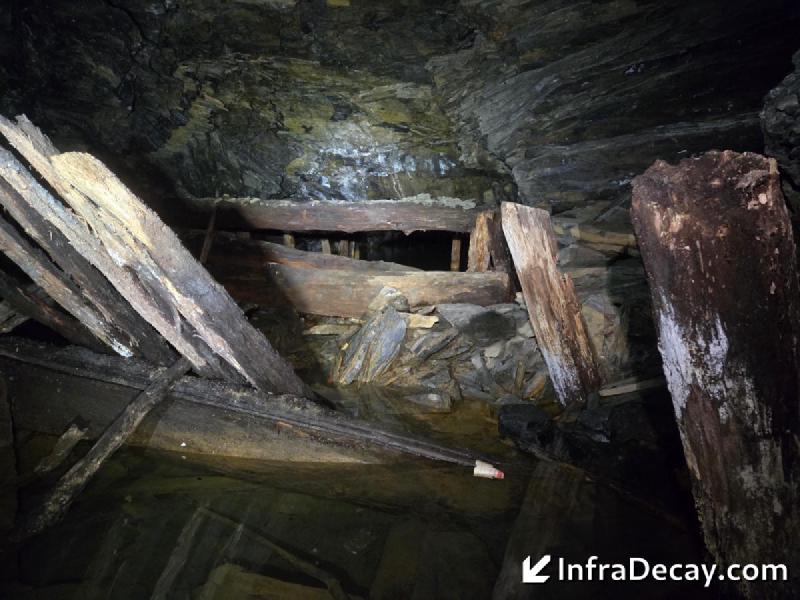
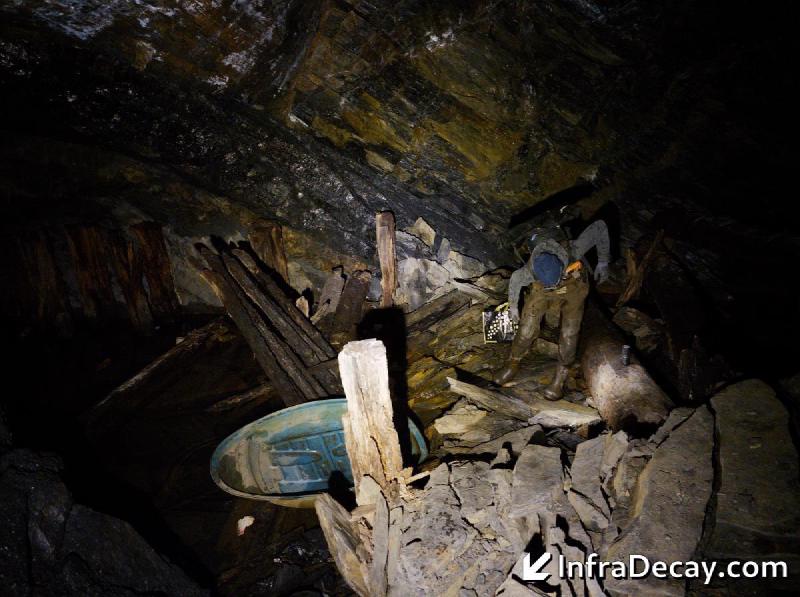
The main attraction was down the manway slope to the right, but the water tunnel also went on for seemingly forever. According to the maps, there is more to explore down there but we didn’t have the time.
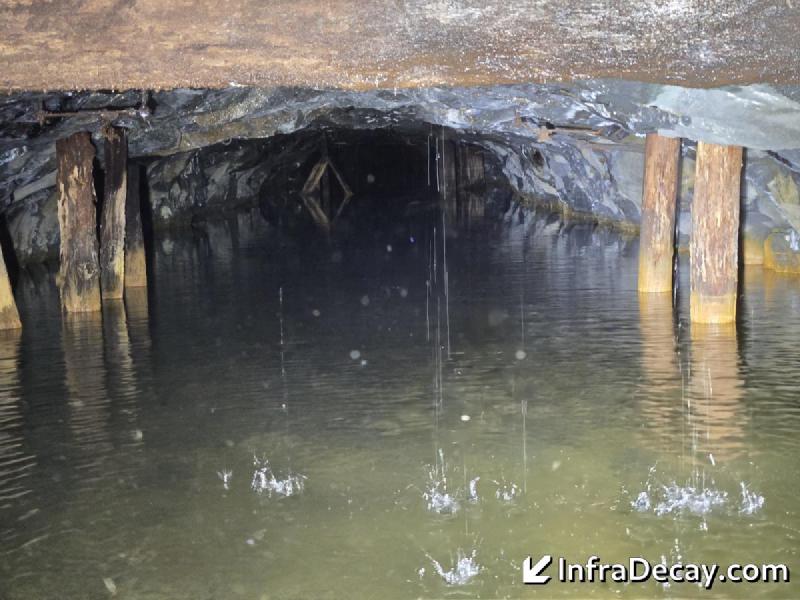
Manway Slope
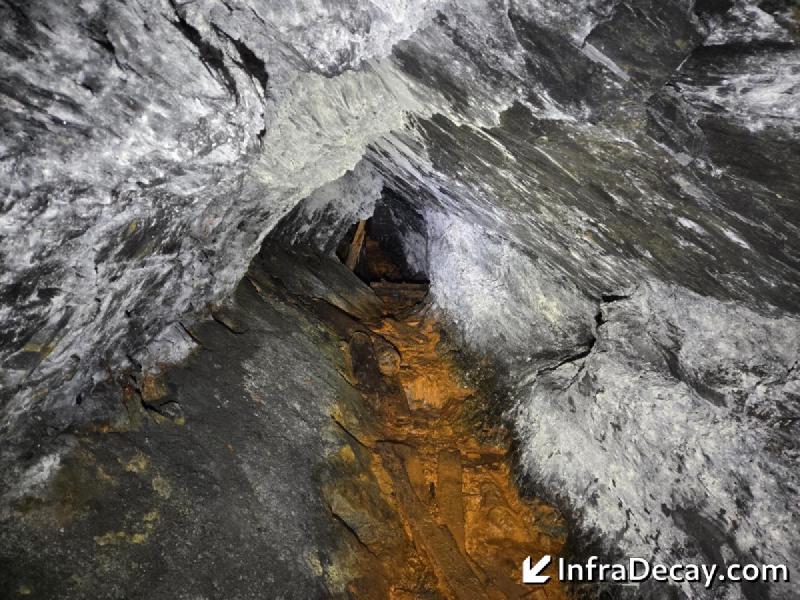
Now we go down the manway slope. This slope is different from any average slope because it runs perpendicular to the coal vein rather than down. Most of the slope appears slanted because of this. This slope had a lot of water running down it, and some interesting timbers. Some of them were recessed in the wall.
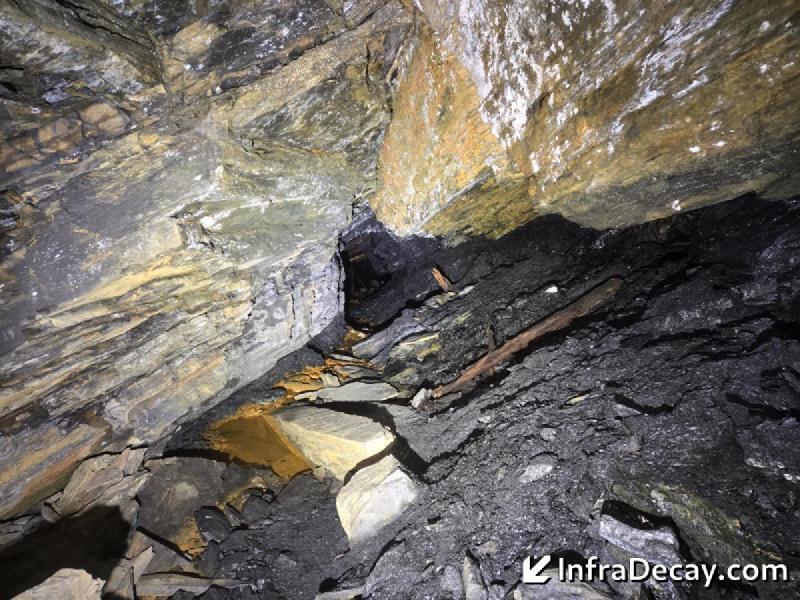
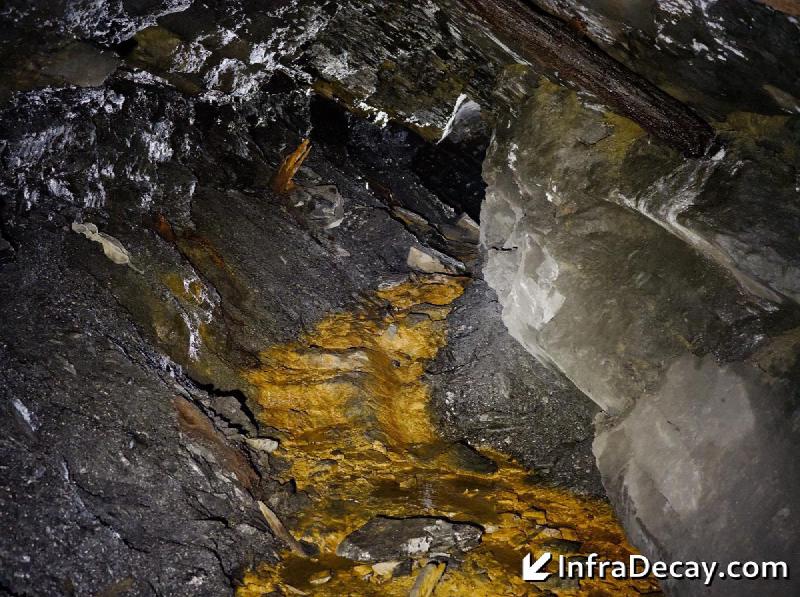
The manway slope ended at the main gangway with an old air-door-frame. This mine was large and sprawling, and the part of it we explored was one of the main infrastructure areas. Meaning, there wasn’t a ton of mining in our direct area but it connected a lot of other parts of the mine. It consisted of two parallel gangways (we are in the first now, most of the stuff is in the second), and other smaller tunnels branching off.
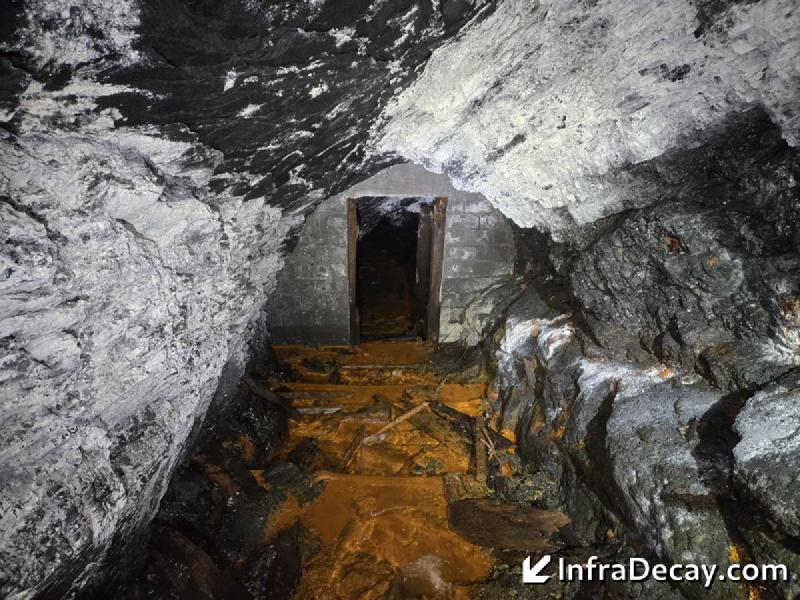
The first main gangway. The slope “continues” for 30 feet to the right, which just takes you to the other main gangway.
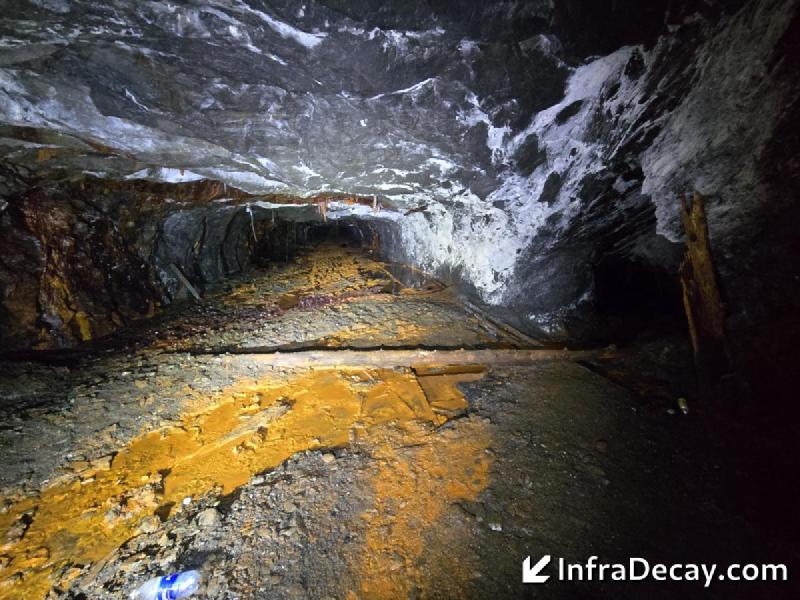
Looking behind, you can see the slope/air door we came from.
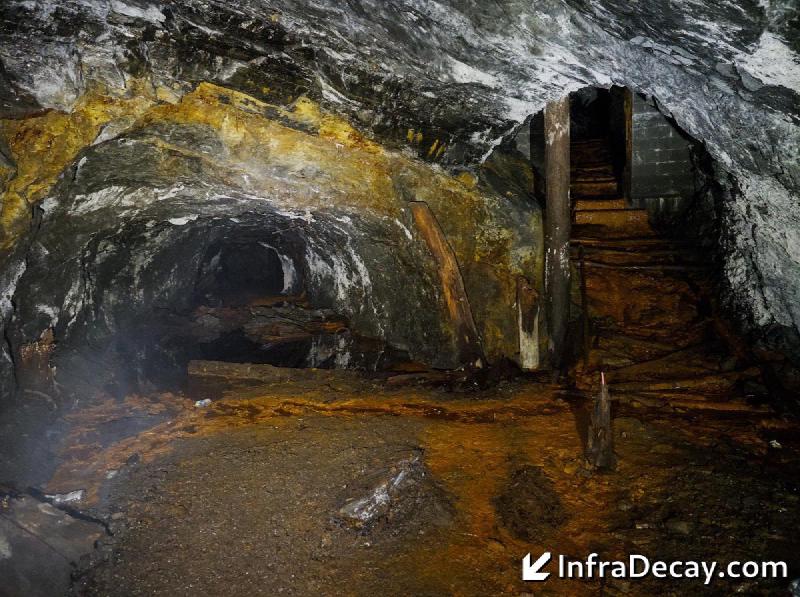
Shaft/Locomotives Area
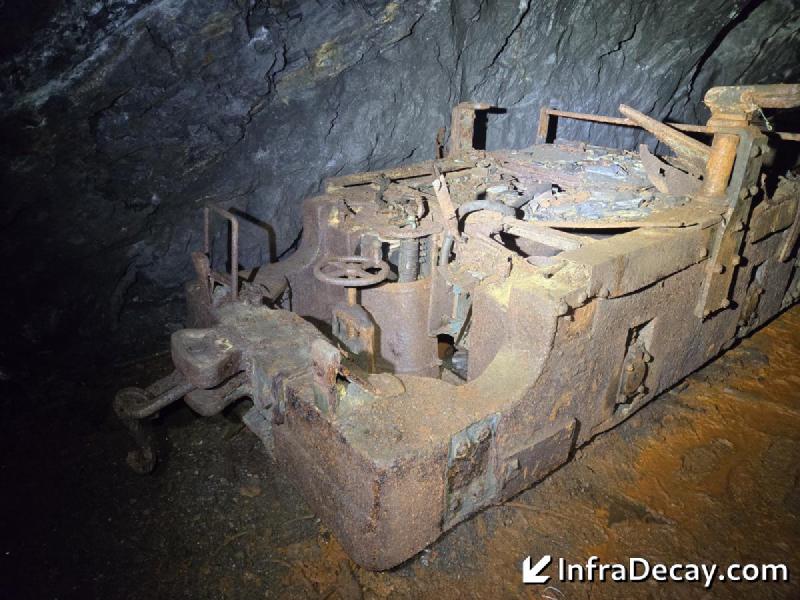
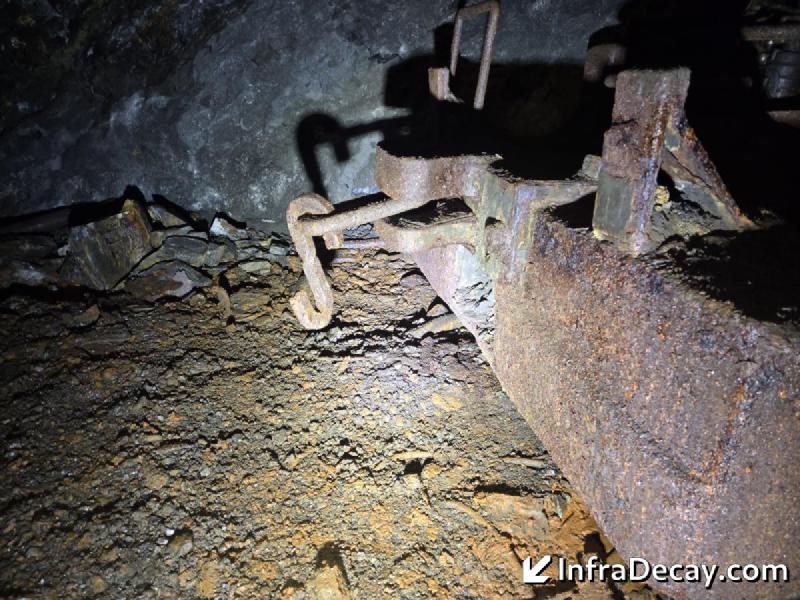
Breaking into the main gangway, the one with all the crap, the first sight is a pair of General Electric mine locomotives. The shaft is not too far behind.
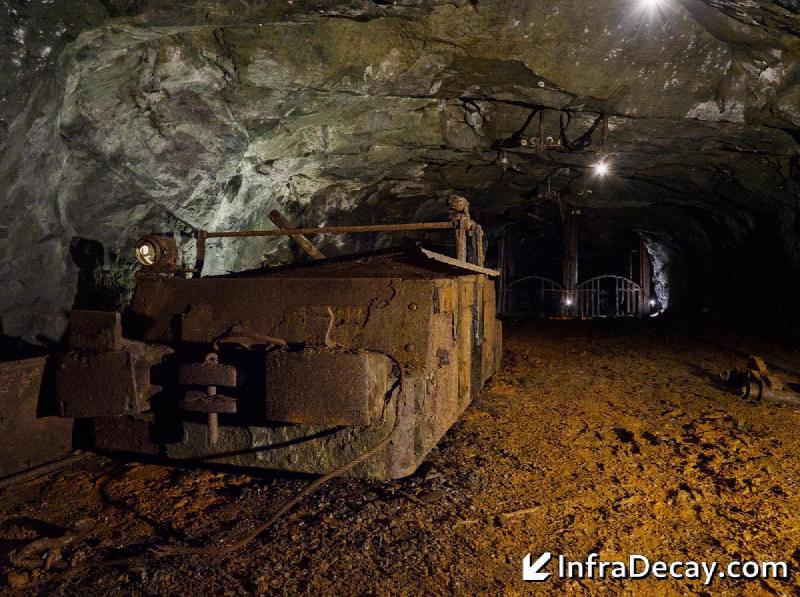
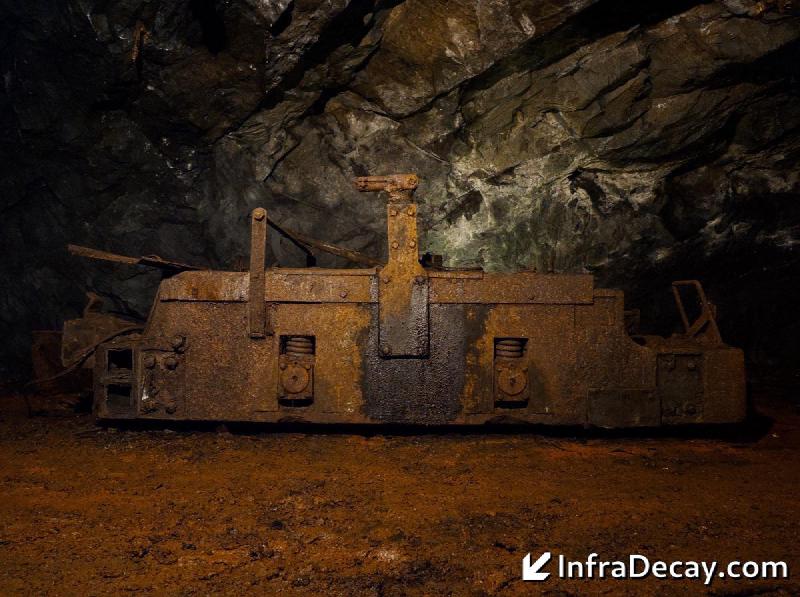
The driver’s “seat” and throttle:
Close-up of the hook style coupler:
Close-up of the throttle:
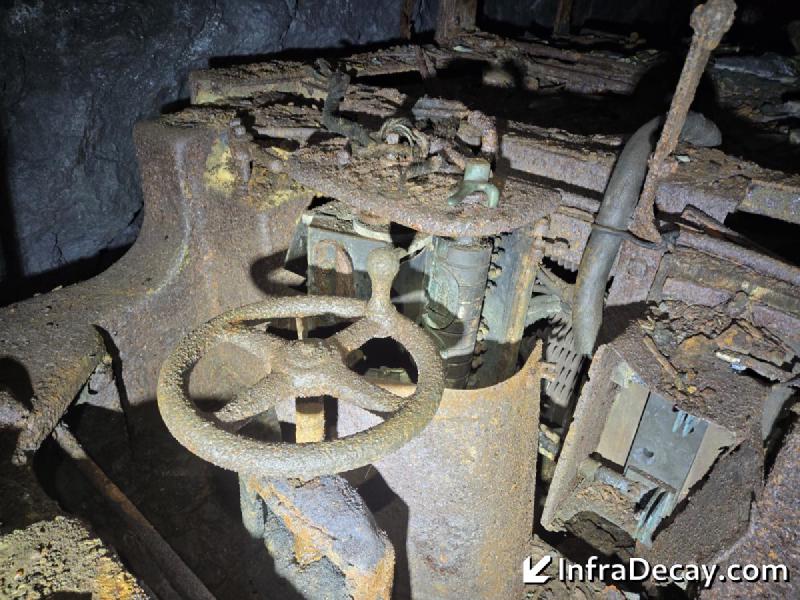
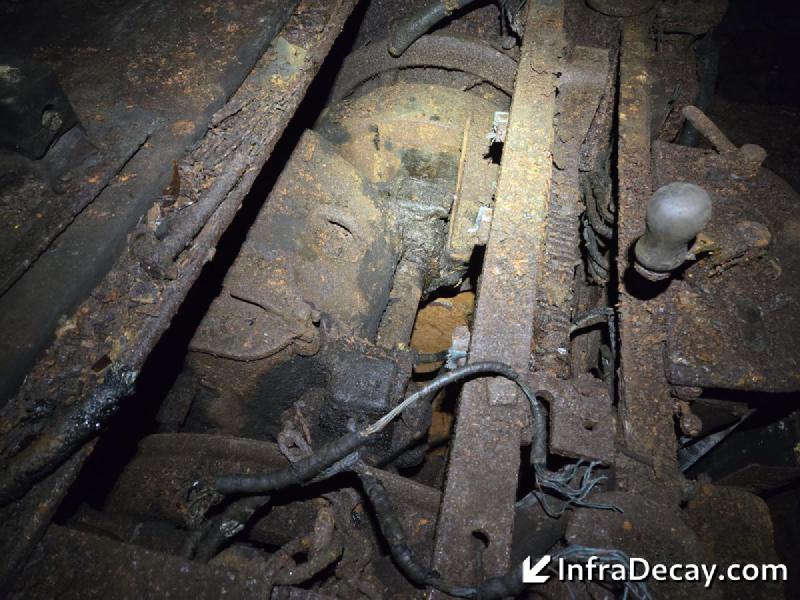
A peak into the traction motor area:
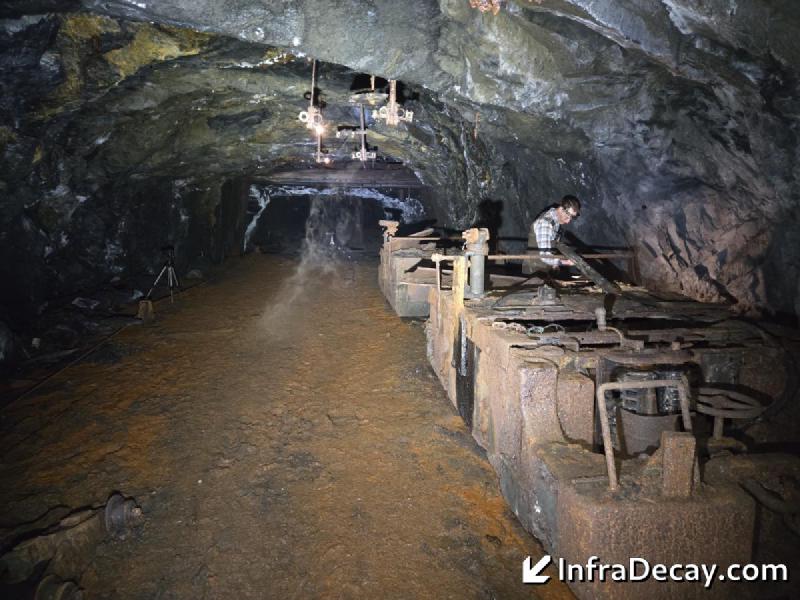
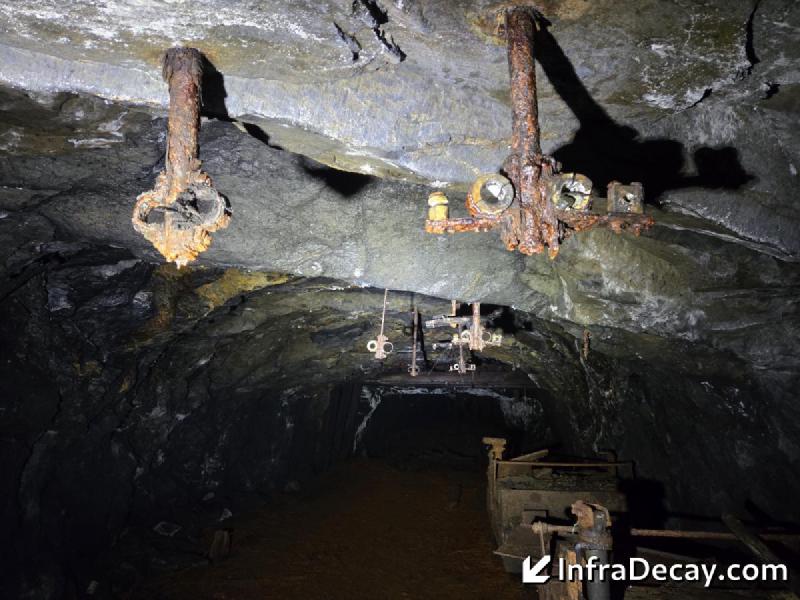
The tunnel itself had a lot of infrastructure compared to other mines. Notably:
- Double overhead catenary.
- A ground based pulley system.
- The overhead wires were still remaining in spots.
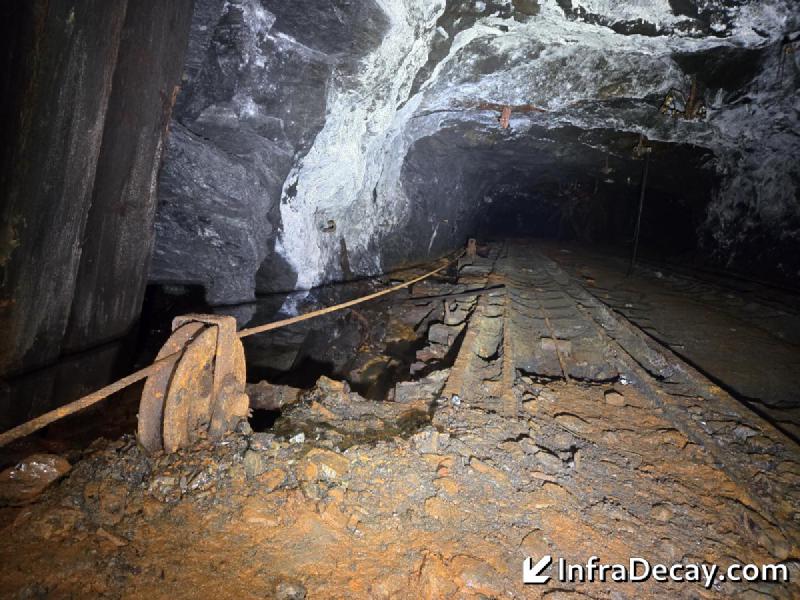
Close to the slope we popped out of, this is the passage to the lower levels of the mine. They are rumored to have quite poor air. Sadly, we did not have time to explore this part.
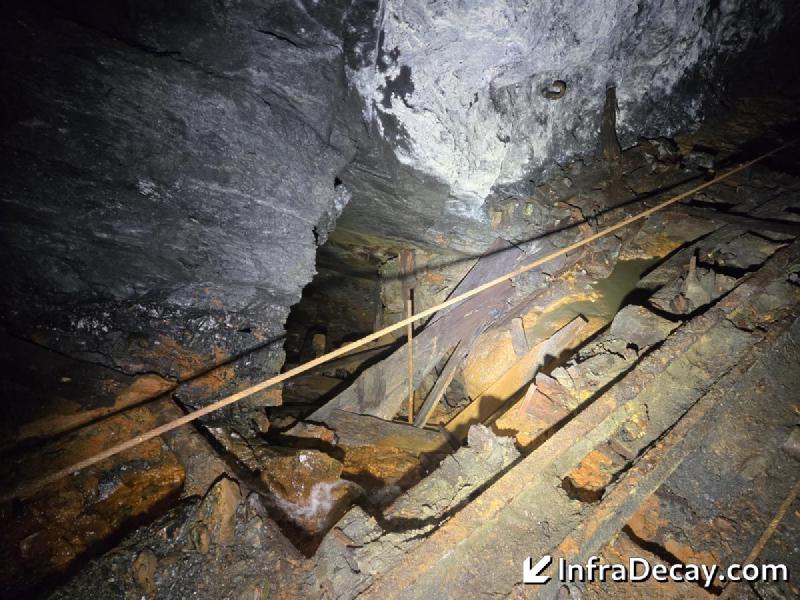
A close-up of the catenary system; it looks like the tunnel had as much as 6 overhead wires/conduits.
Shaft and Hoist
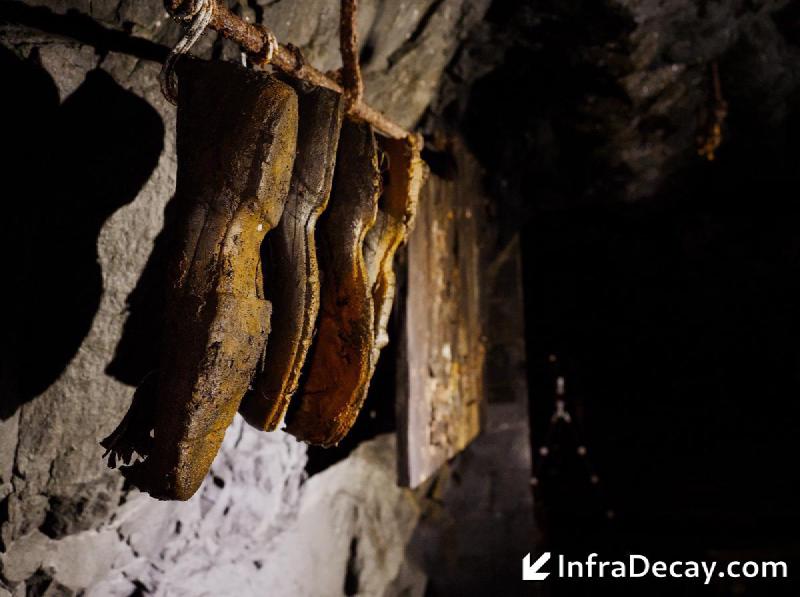
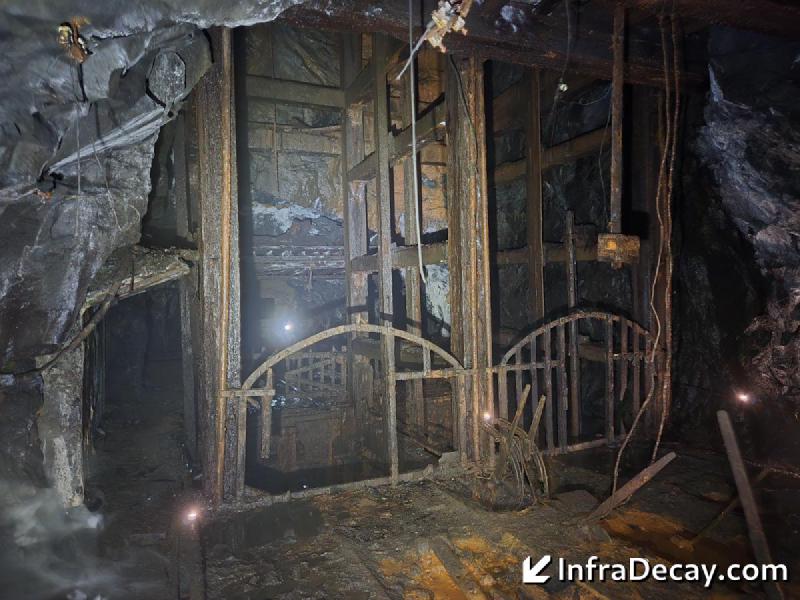
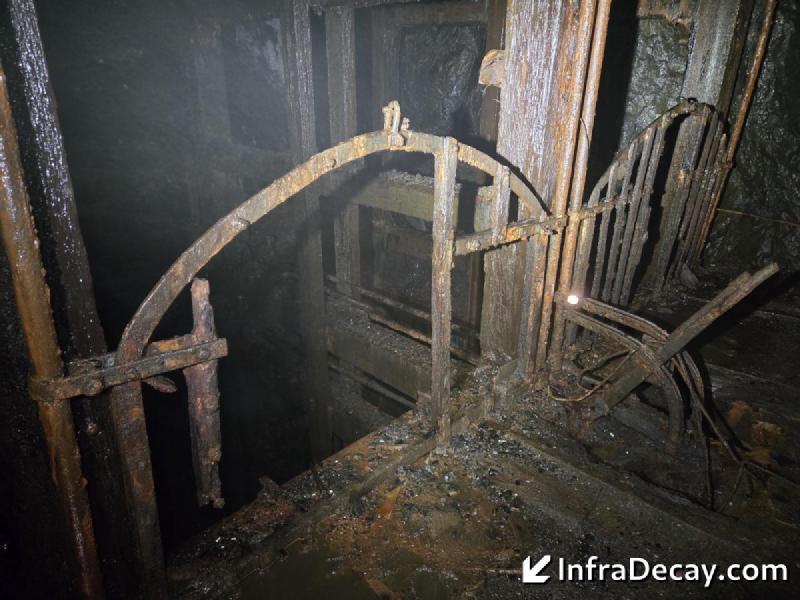
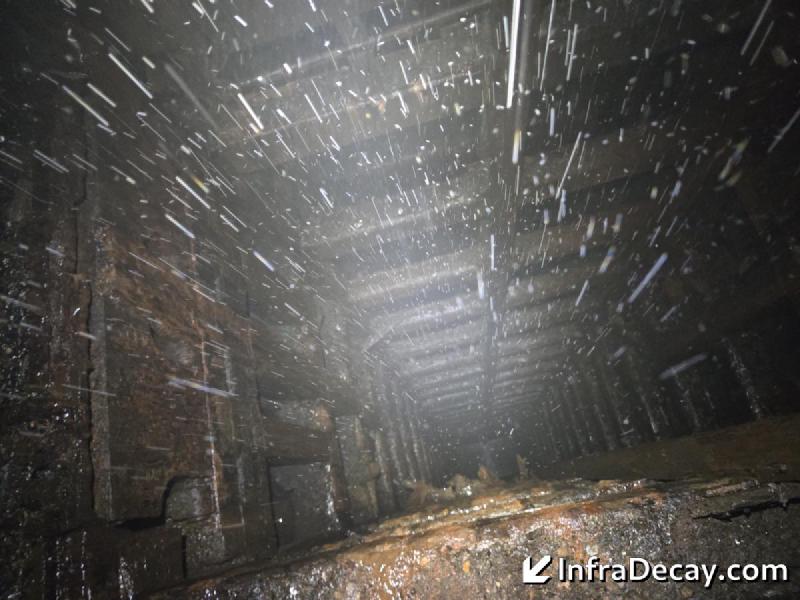
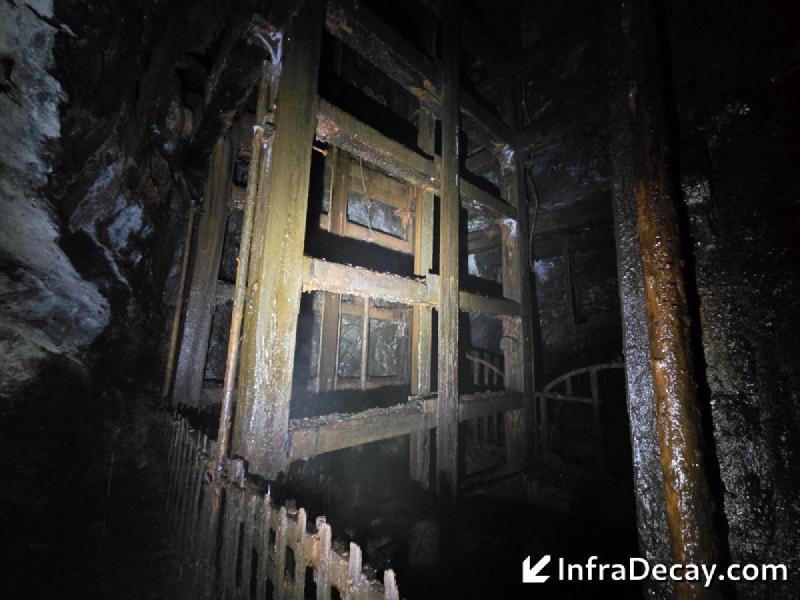
The main attraction of this mine: The shaft. Back in the day, this extended all the way to the surface and downwards over 1000 feet. Now, about 200 feet to water. The whole time it was “raining” in the shaft from groundwater infiltration. Next to it is a large hoist with some artifacts: miners’ shoes and a locker closet.
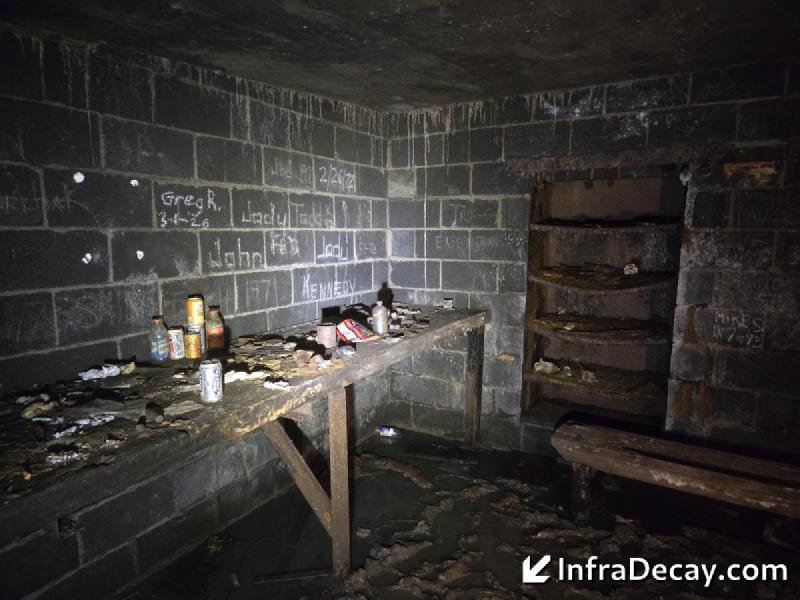
There was also a workbench in the shaft hoist room which we used for staging our crap for the trip.
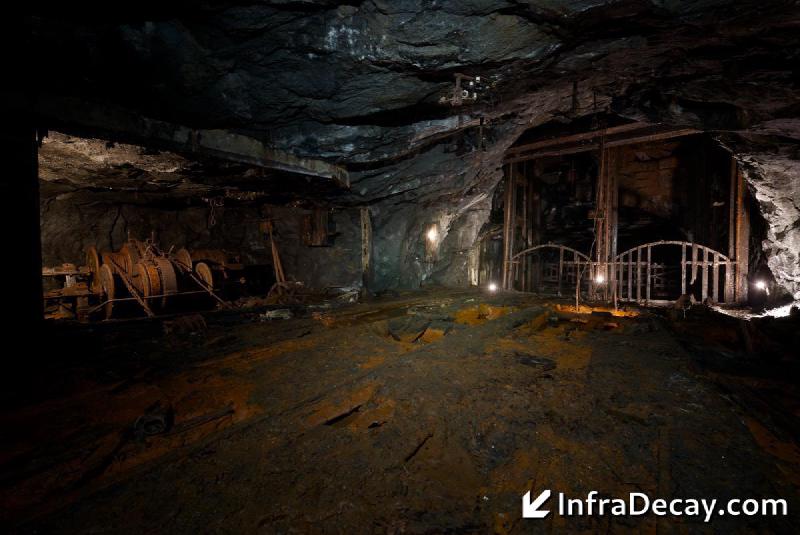
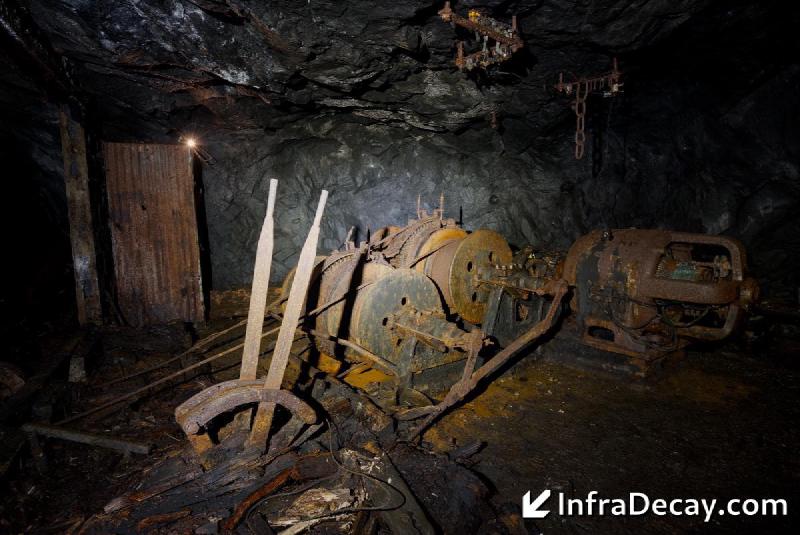
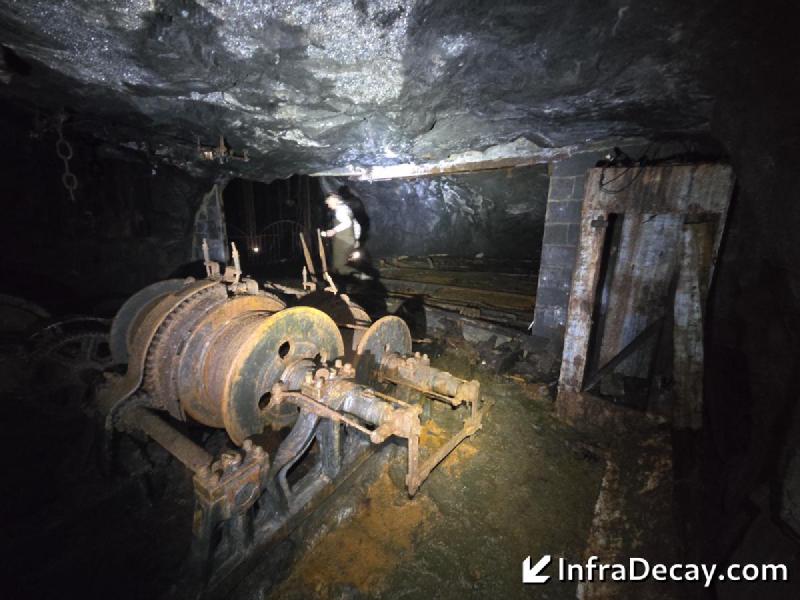
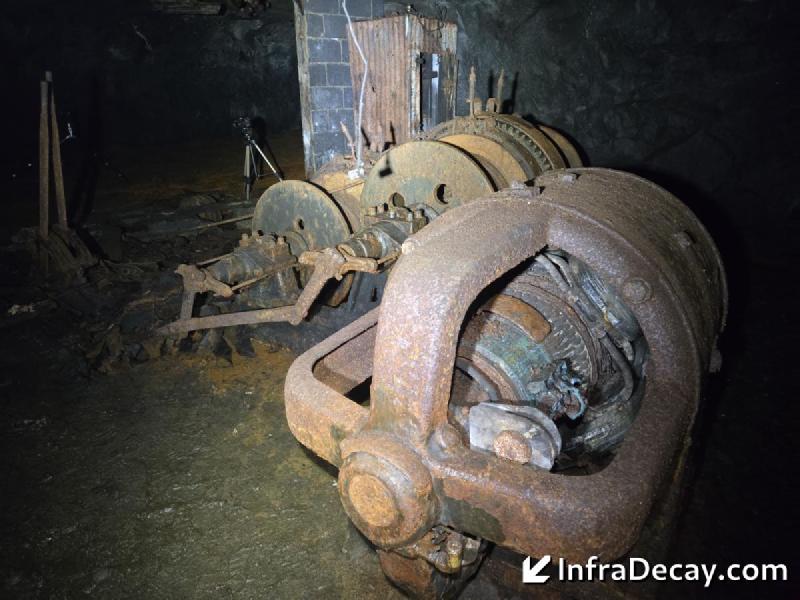
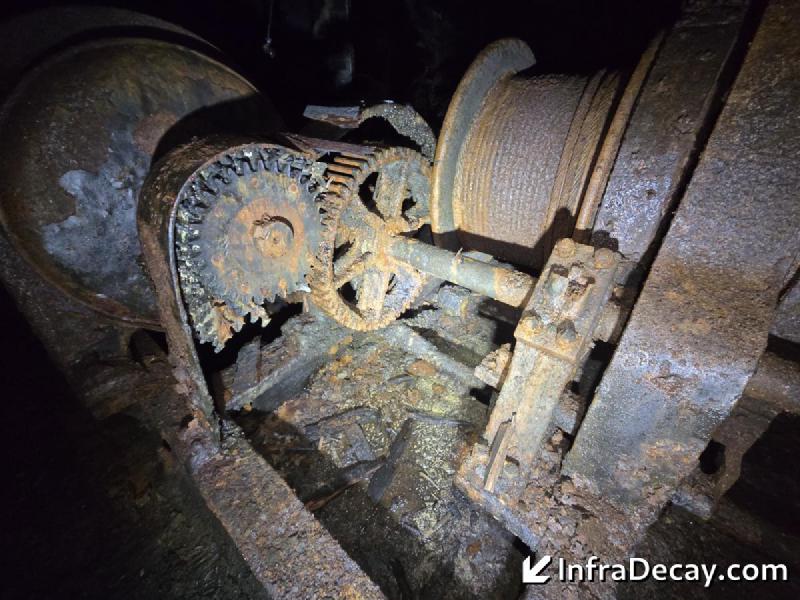
A series of pullies ran from the hoist to the floor around the shaft for moving equipment.
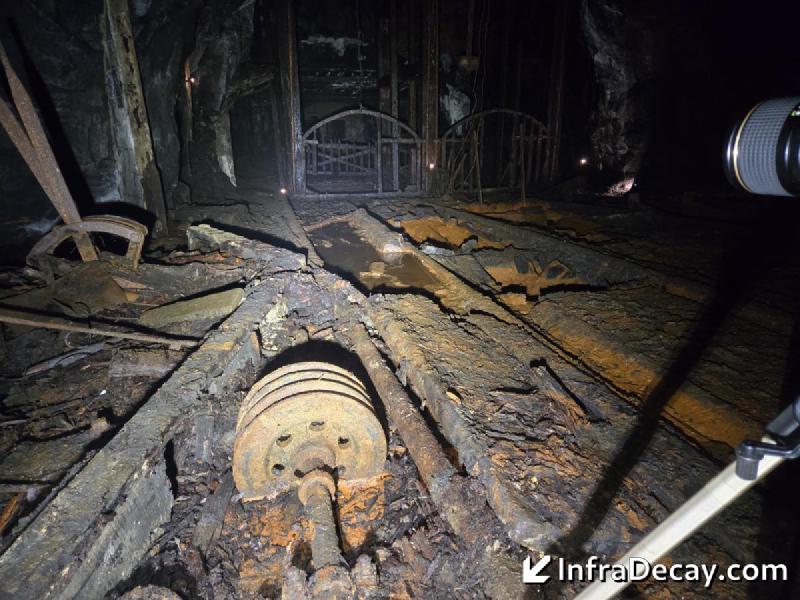
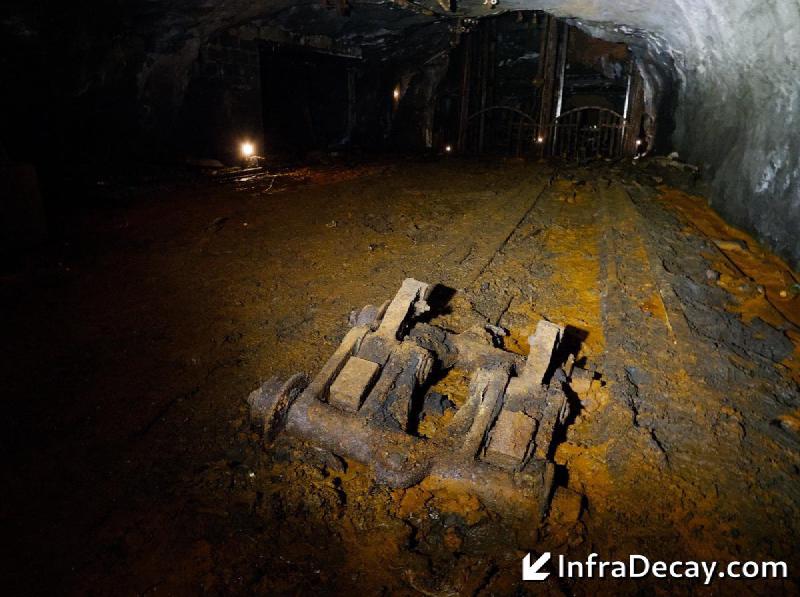
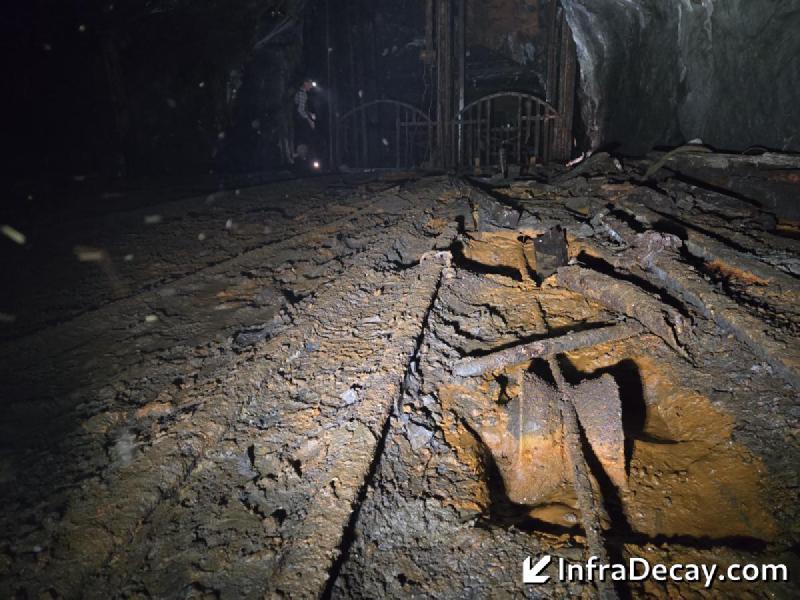
This dolly was used to load coal cars on to the shaft elevator:
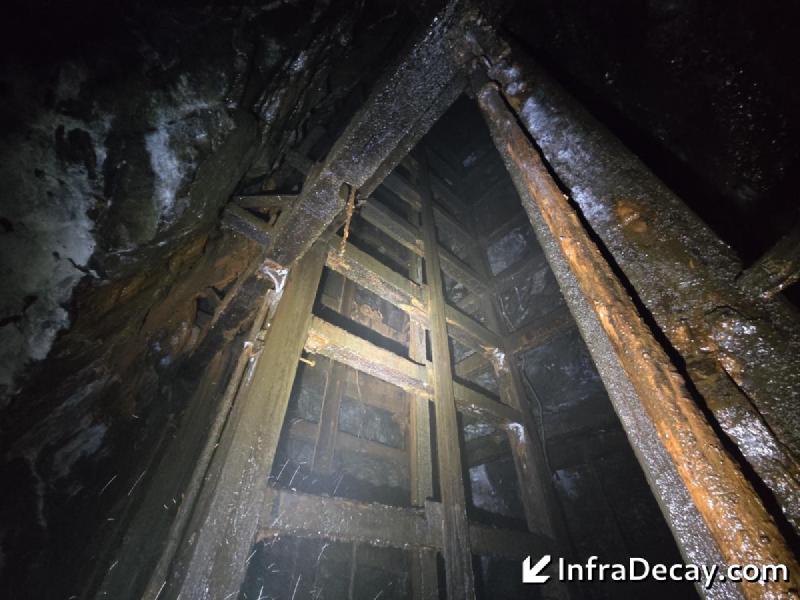
Transfer Station
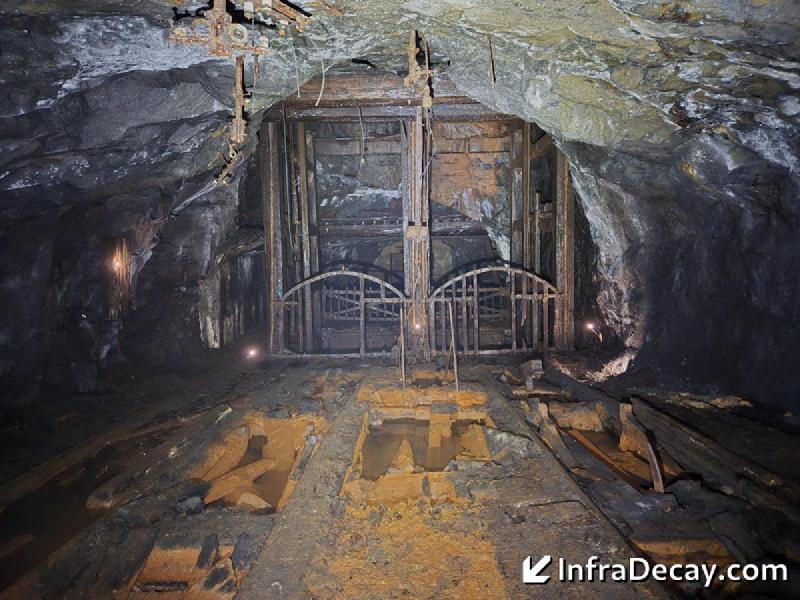
Directly behind the shaft, a transfer station. This transfer station dealt only with empties, and was powered by a hoist (right) at the top of an inclined plane. This moved cars between the shaft and upper main gangway/tunnel.
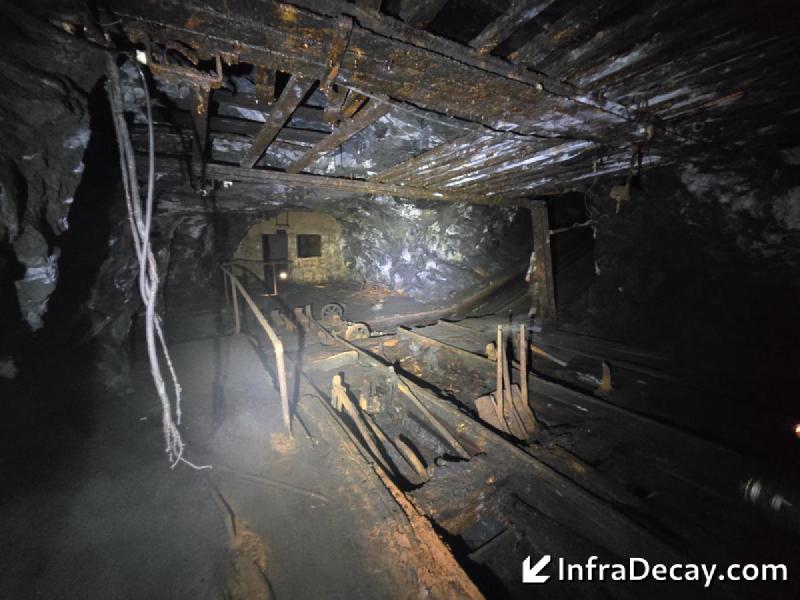
A series of levels, gears, and springs were under the floor to provide functionality.
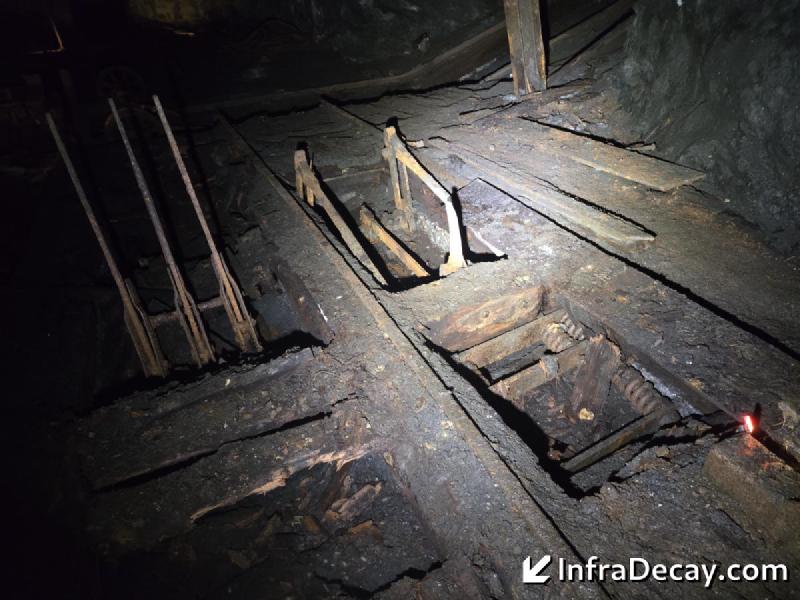
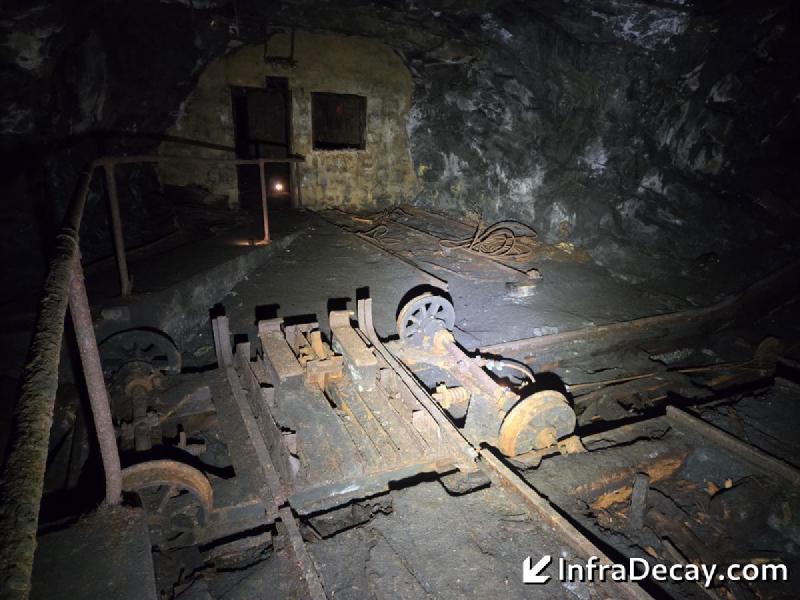
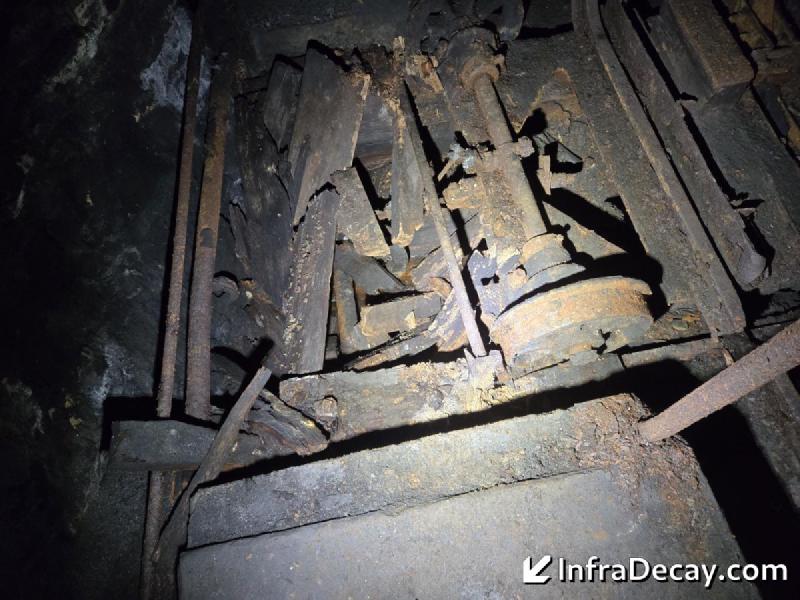
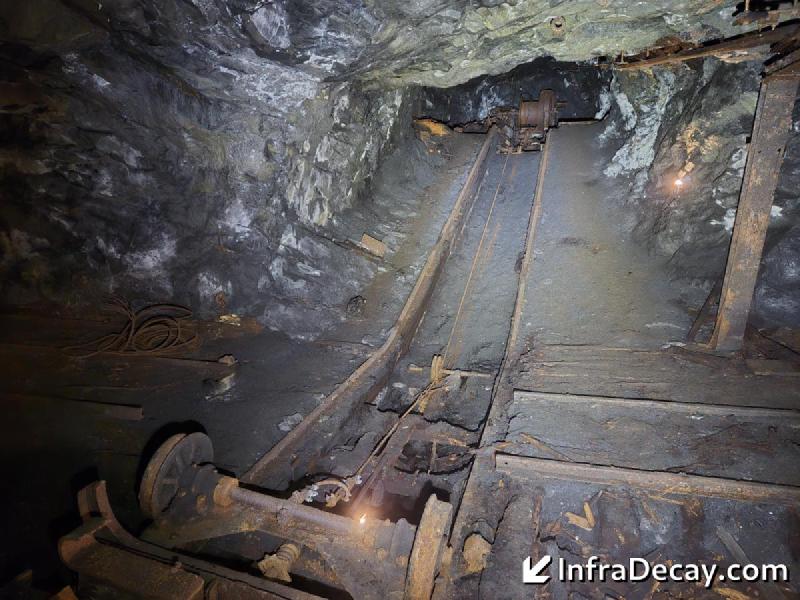
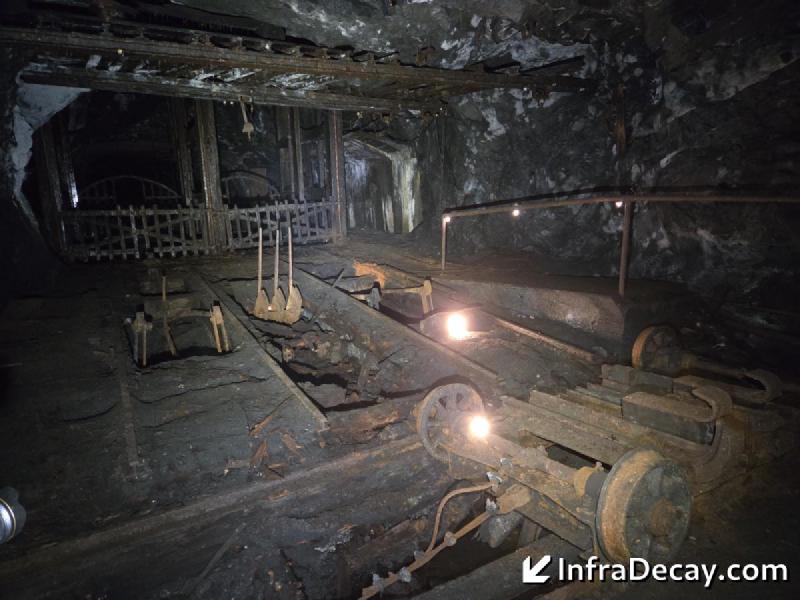
The transfer station platform had curved rail ends to act as natural/gradual stops for the cars.
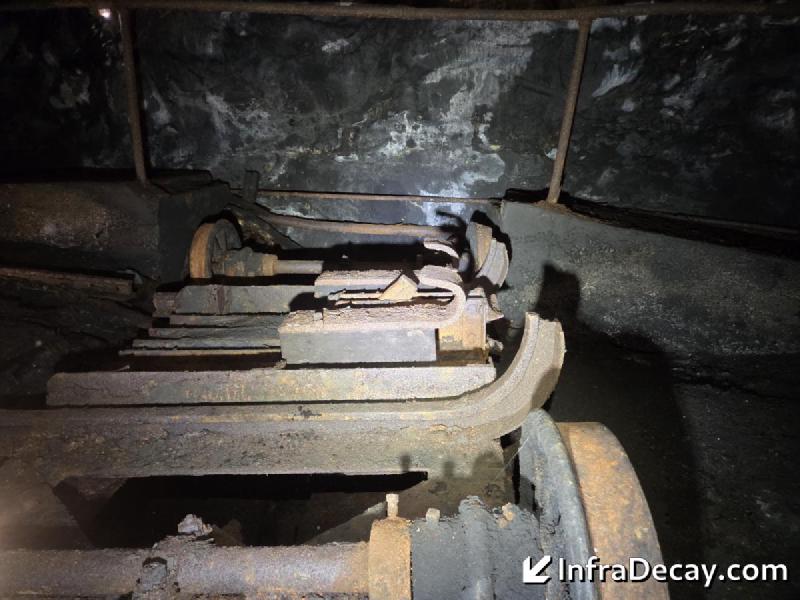
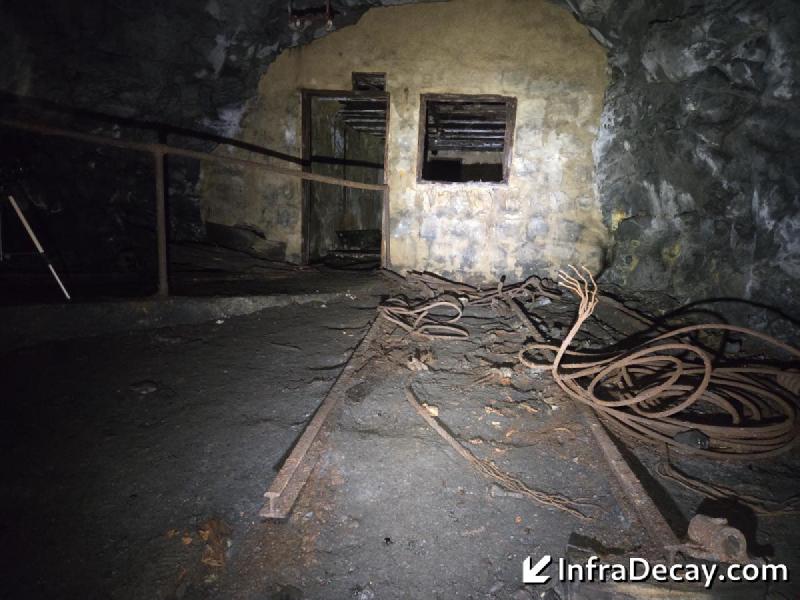
The rail extended a little beyond to this concrete room. This was maybe used for temporary car storage.
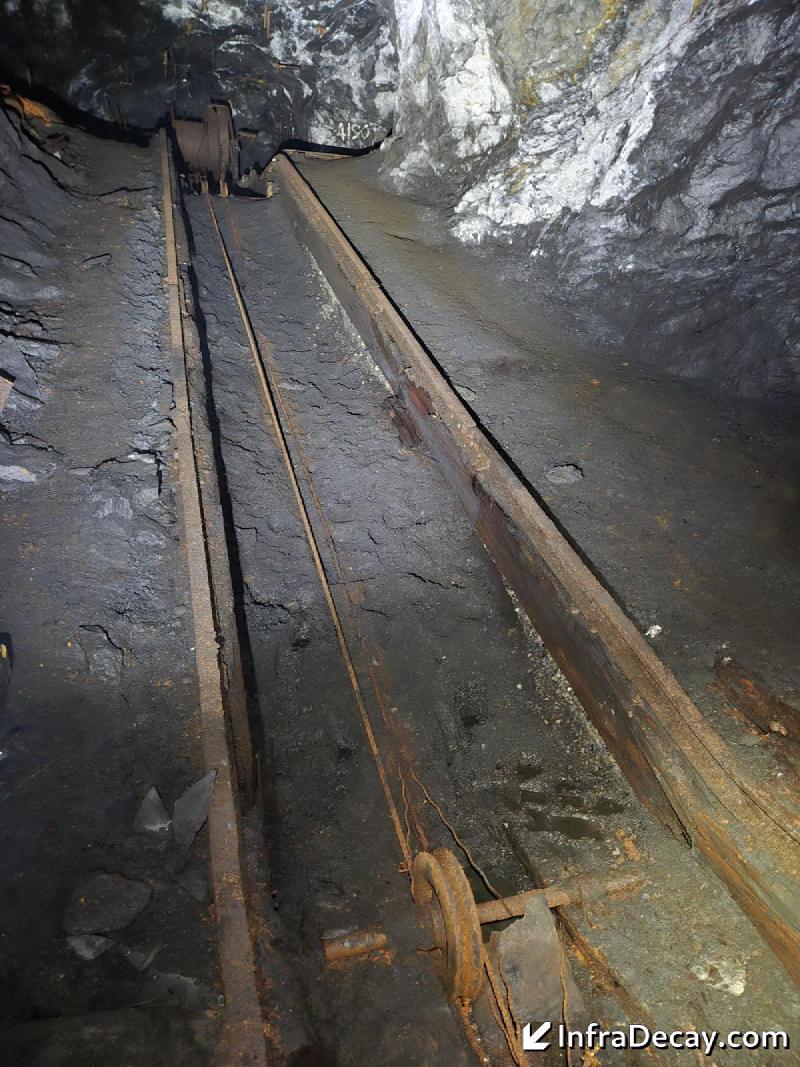
The inclined plane and transfer station hoist. Note the ground pulleys to prevent the steel cable from coming up and slapping the ceiling.
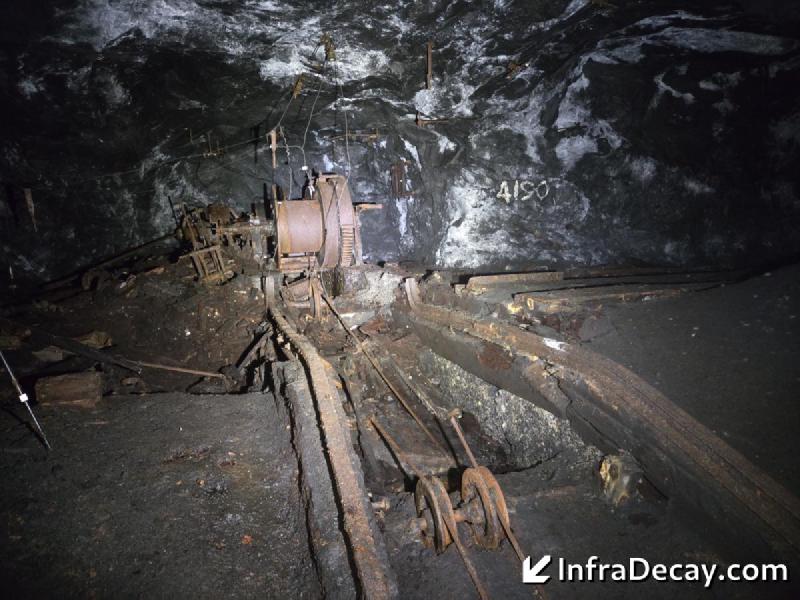
Transfer Station Hoist
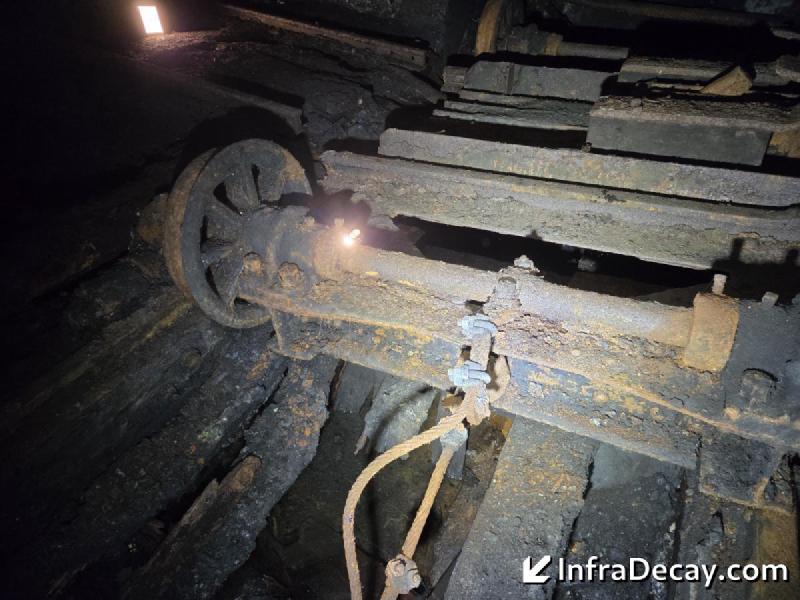
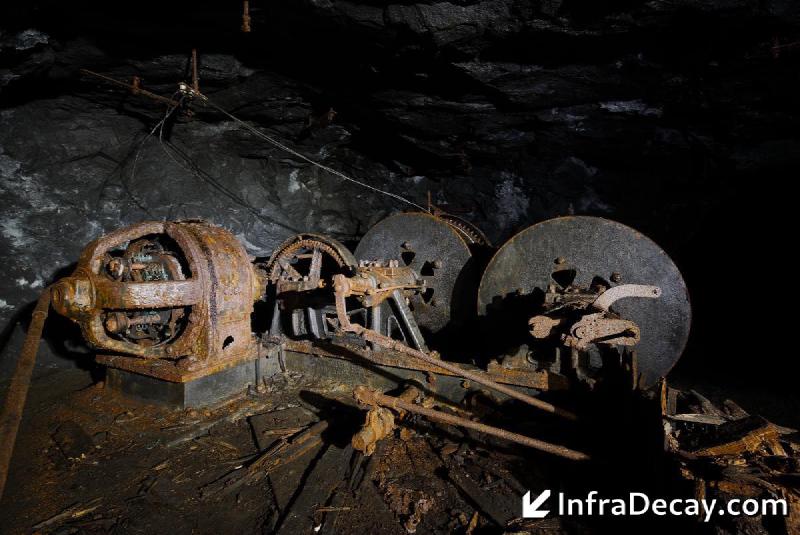
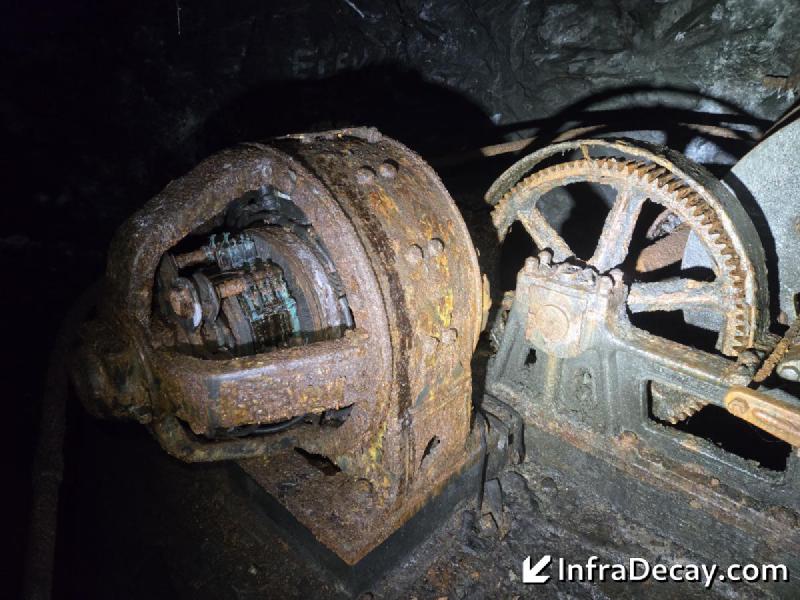
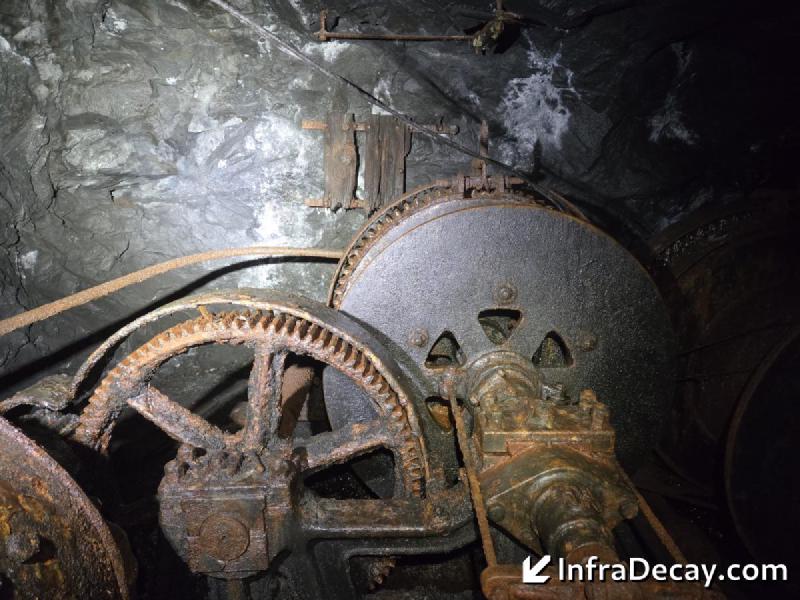
Here is the Florey hoist that powered the transfer station. To the right is the upper main gangway that the slope pops out into. This hoist is unique in that it has a counterweight: a narrow rail car filled with old wheels. There’s still a lot of the supporting infrastructure/wires remaining around this hoist.
If we walked down this tunnel, we would end up back at the slope.
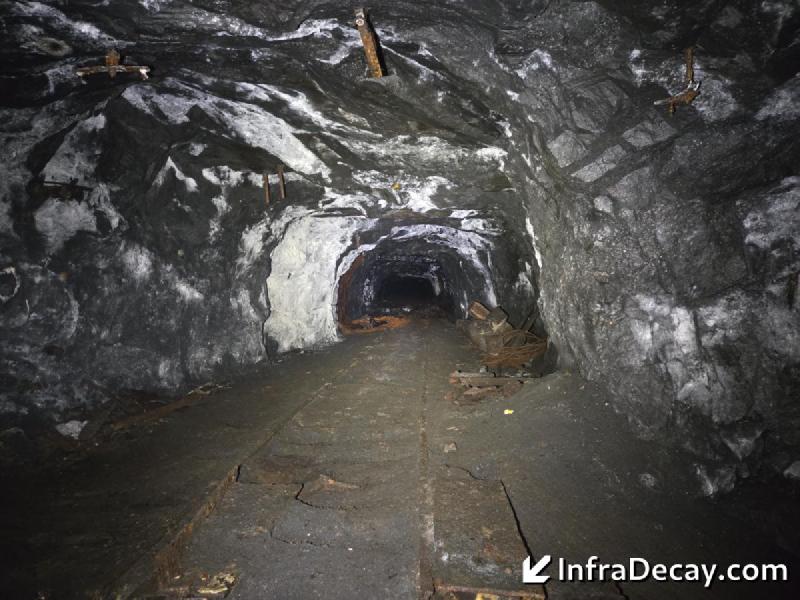
Turning around, we see the transfer station again (left) and the counterweight slope to the right. In some of the previous pictures you may have been able to see the steel cable coming from the side.
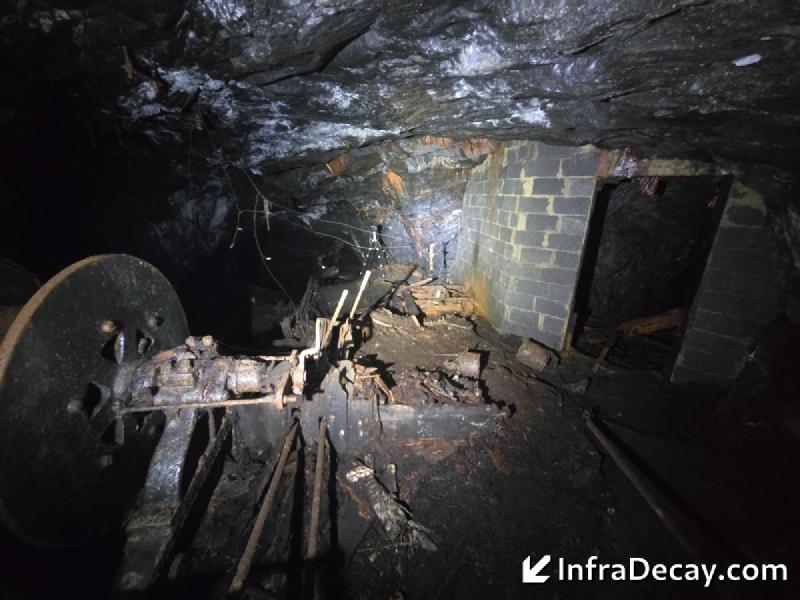
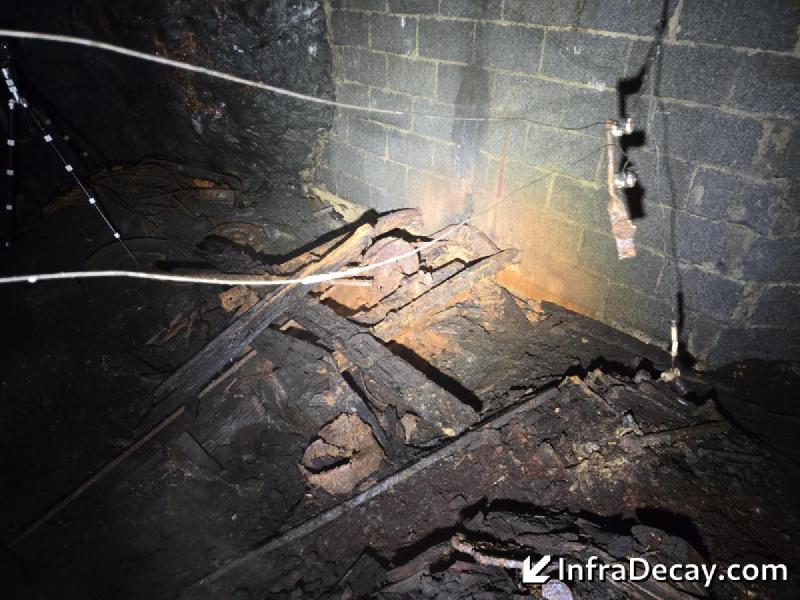
The counterweight was a small rail car filled with metal wheels.
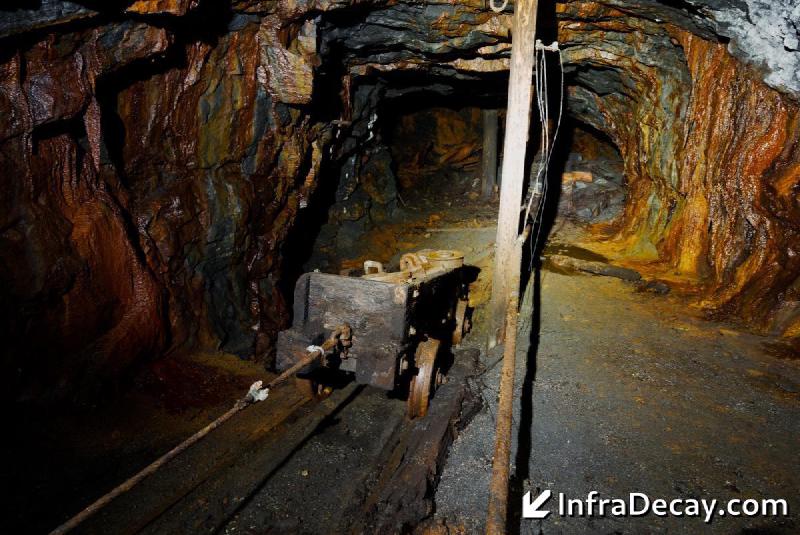
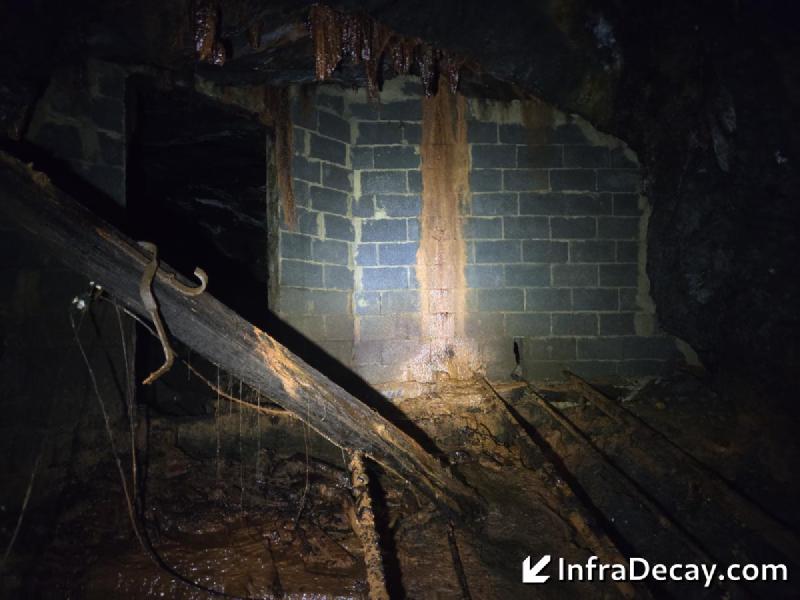
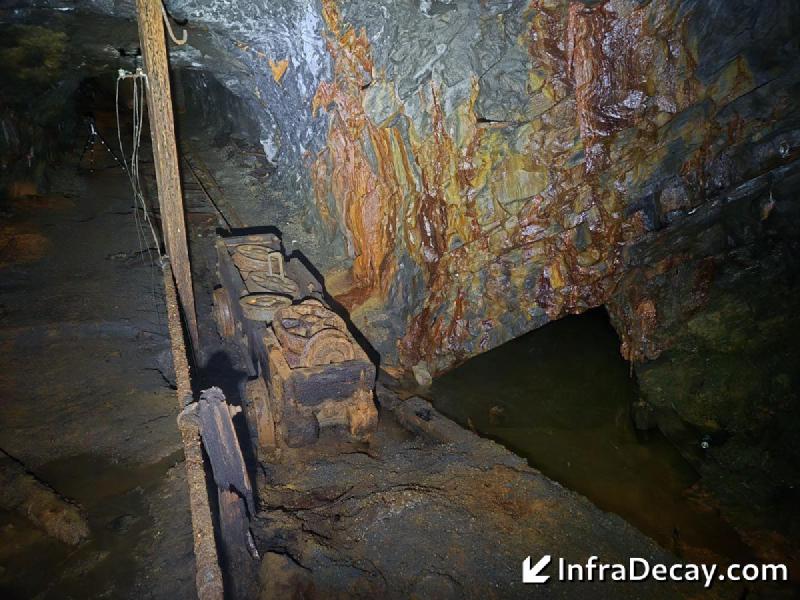
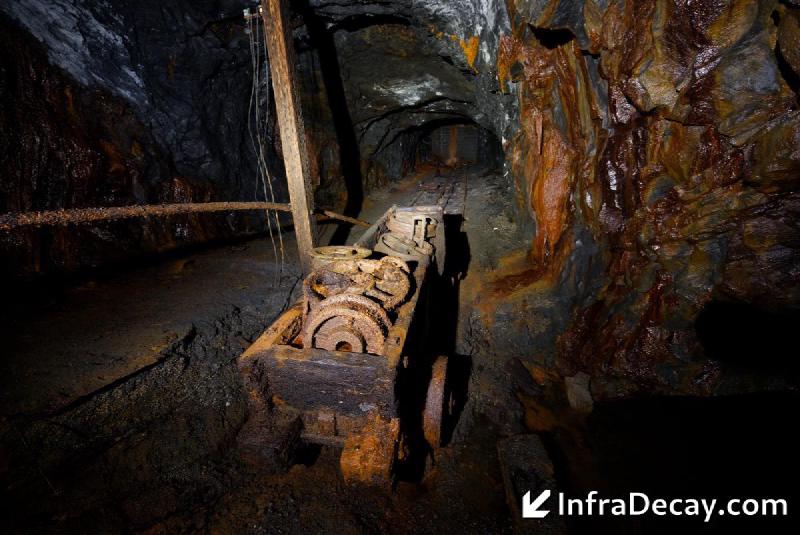
Rail Tunnel Area (Far Back)
Immediately behind the counterweight is a 3-way intersection. Left ends immediately in collapse and right connects back to the concrete building by the transfer station.
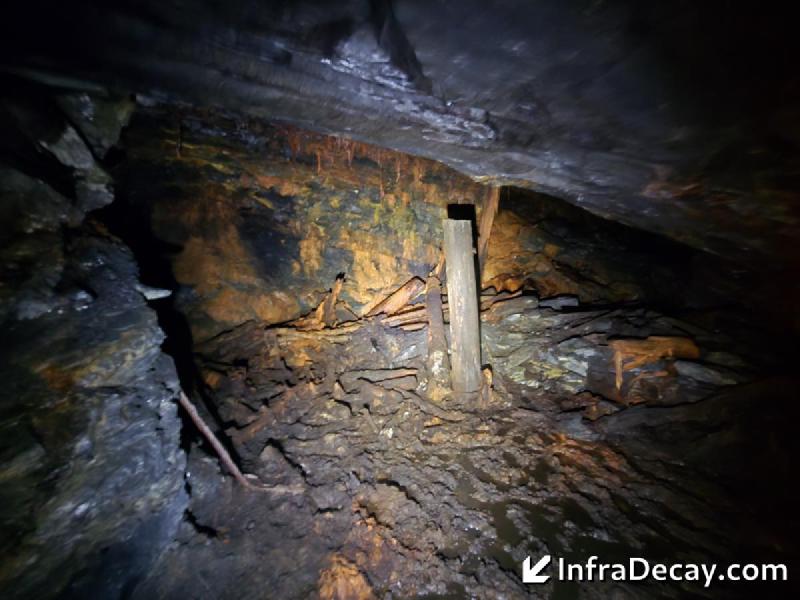
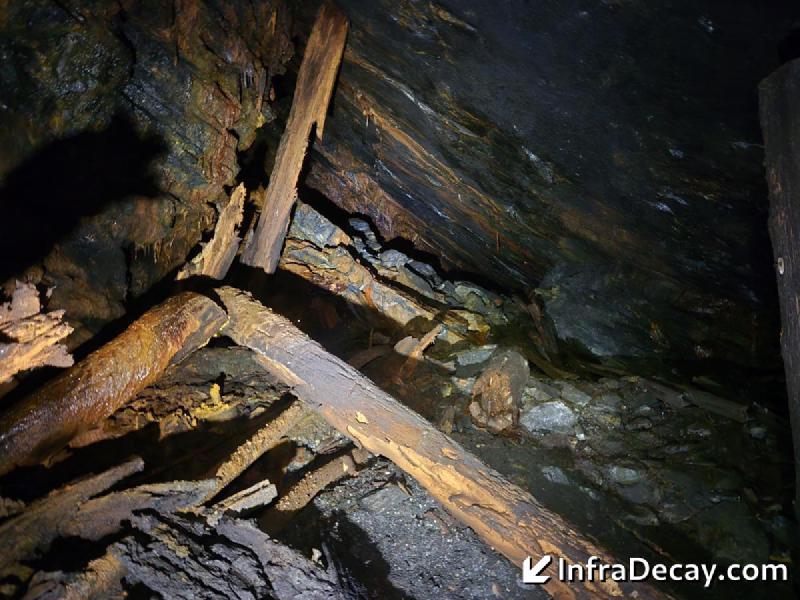
This looks like a little workshop area. There is a wooden bench with a large vise to the center-left.
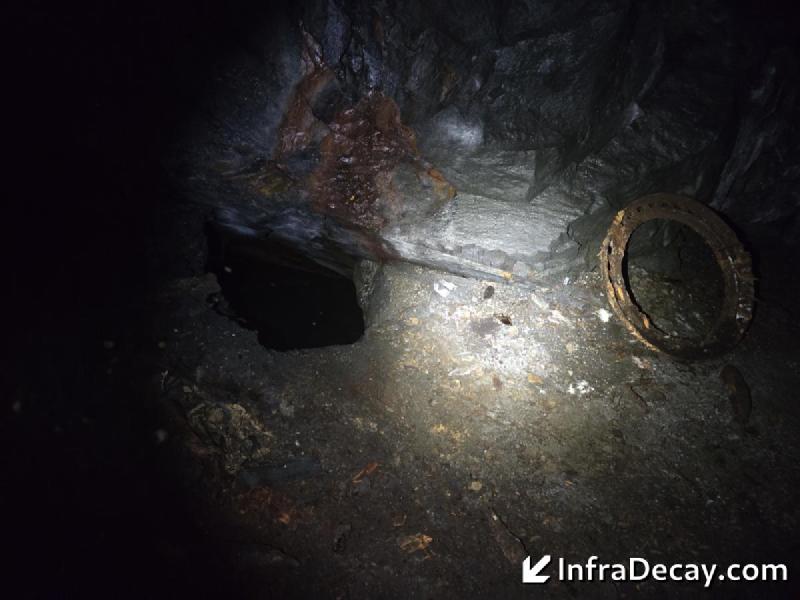
Along the wall here, one of many flooded passages/sumps to the lower levels.
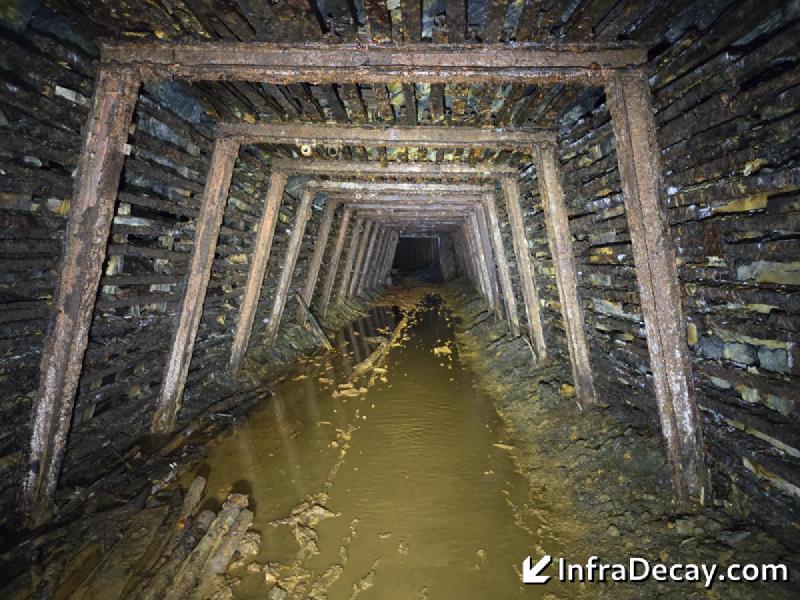
We will continue on to the “rail tunnel”. This was a gangway that was aggressively braced with rails. Every piece of metal you see here is a rail. Some people have encountered black damp in this area, but we were fine.
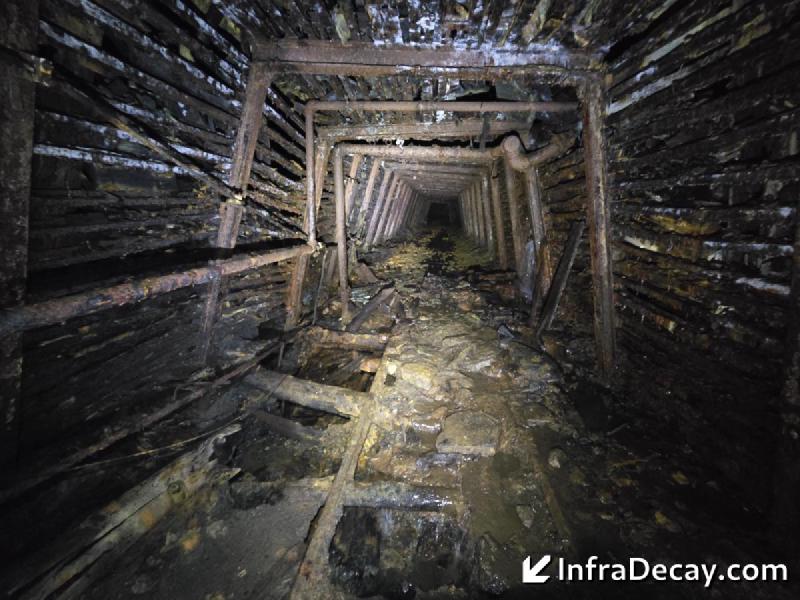
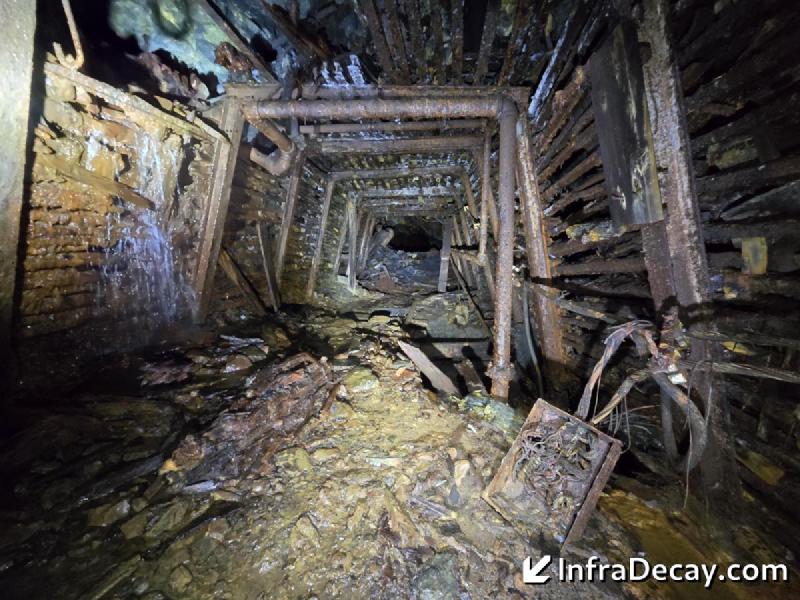
The rail tunnels leads to a heavily reinforced concrete/metal “sump room”. We theorize this was where the pumps were located, and water was designed to pool at. In the foreground, the remains of a rail dolly.
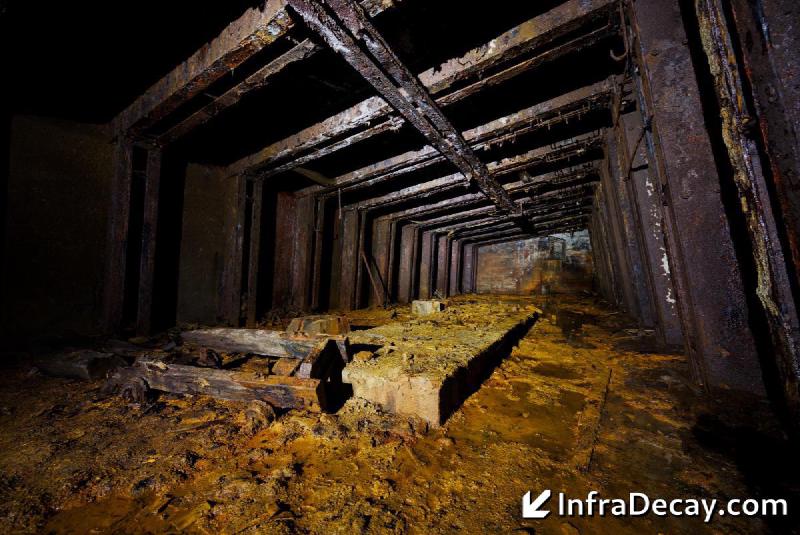
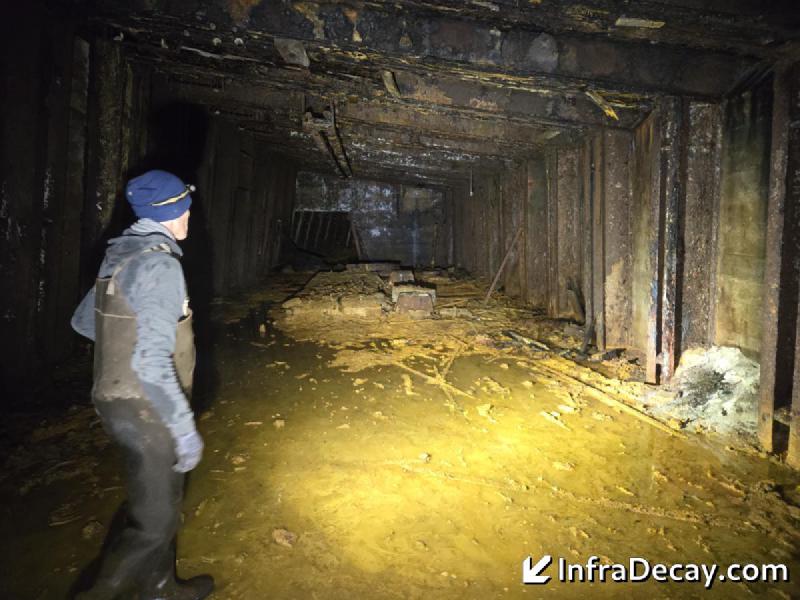
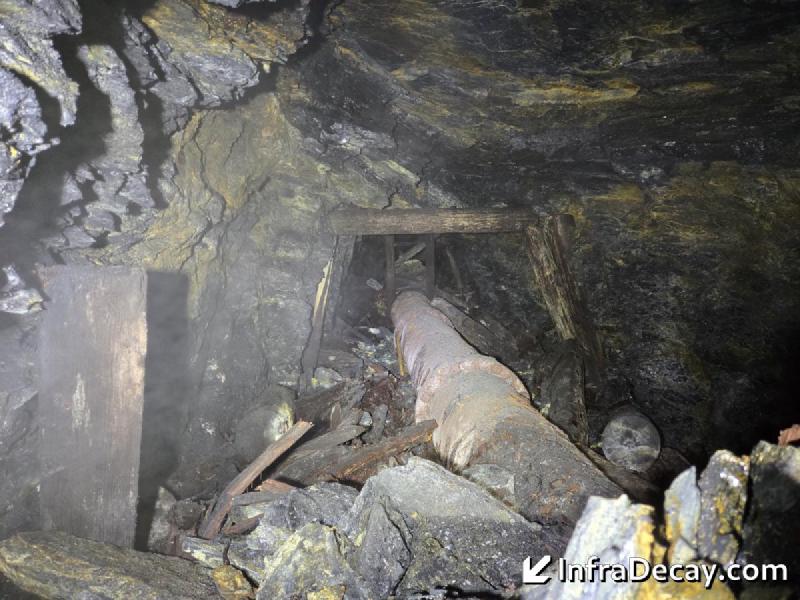
The sump pipe, which would have removed water from the mine and gone all the way to the surface.
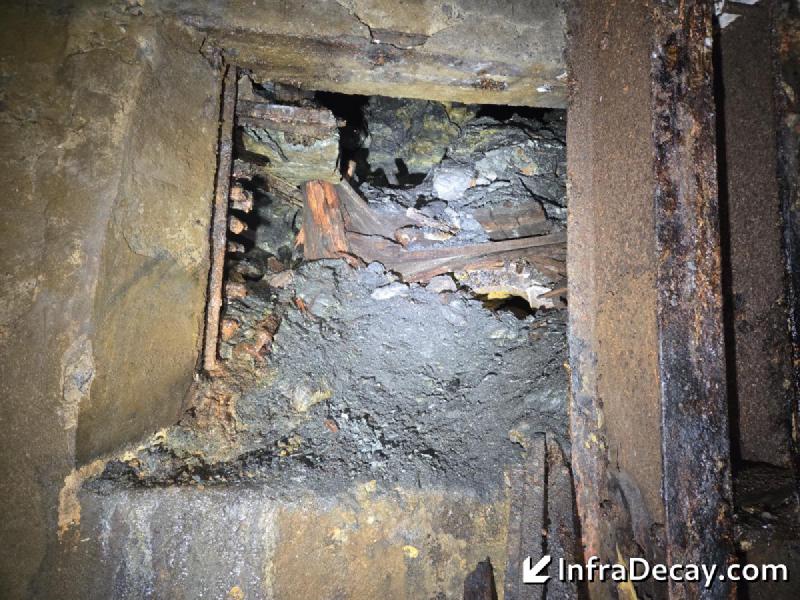
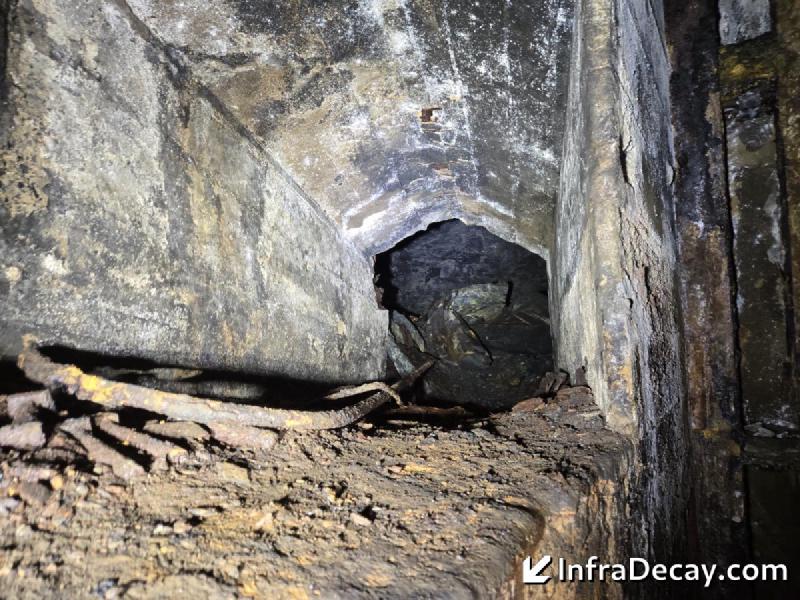
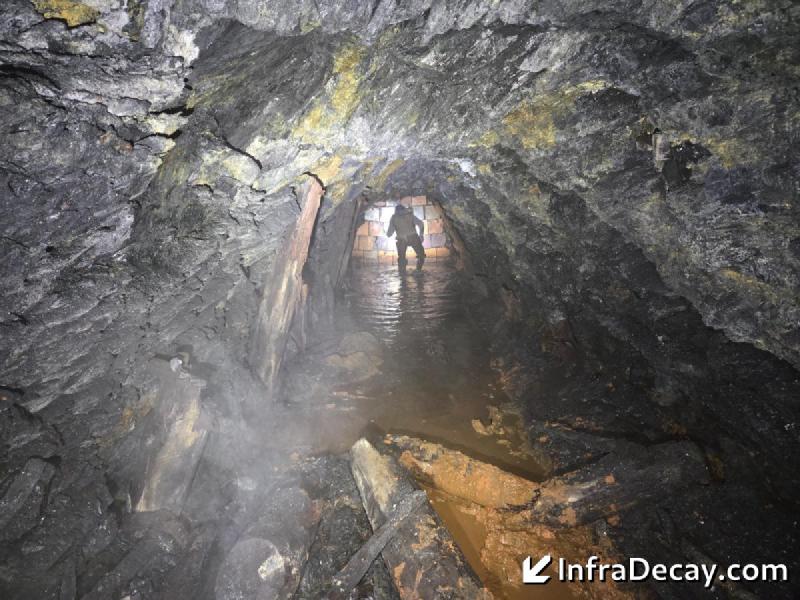
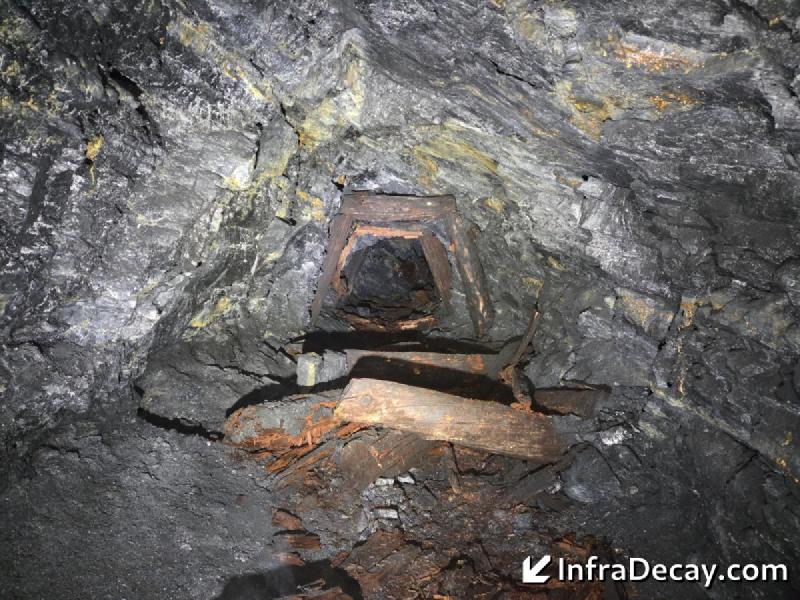
There was a small passage you could crawl through in the wall. We got up and pushed it for a little bit, and ended up back at the sump pipe. We think this was a utility tunnel for servicing the pipe/infrastructure, but not used normally due to its small size.
Main Tunnel Extras
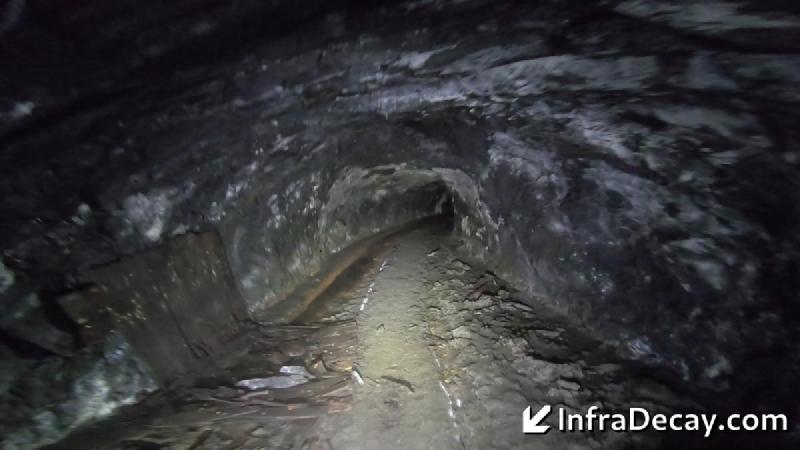
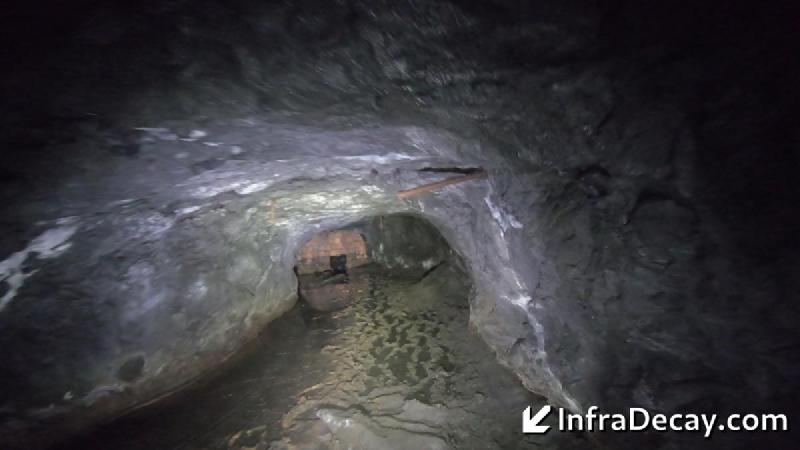
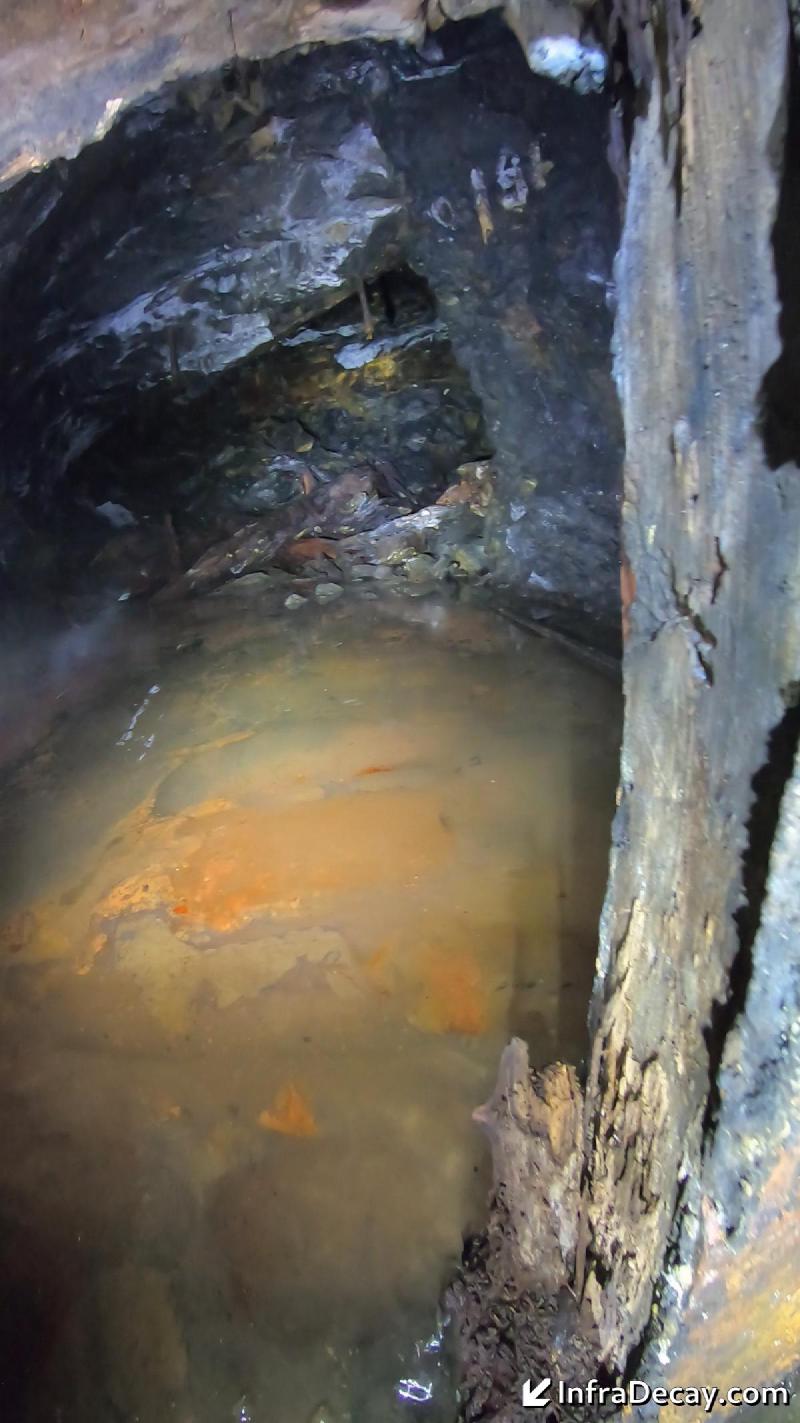
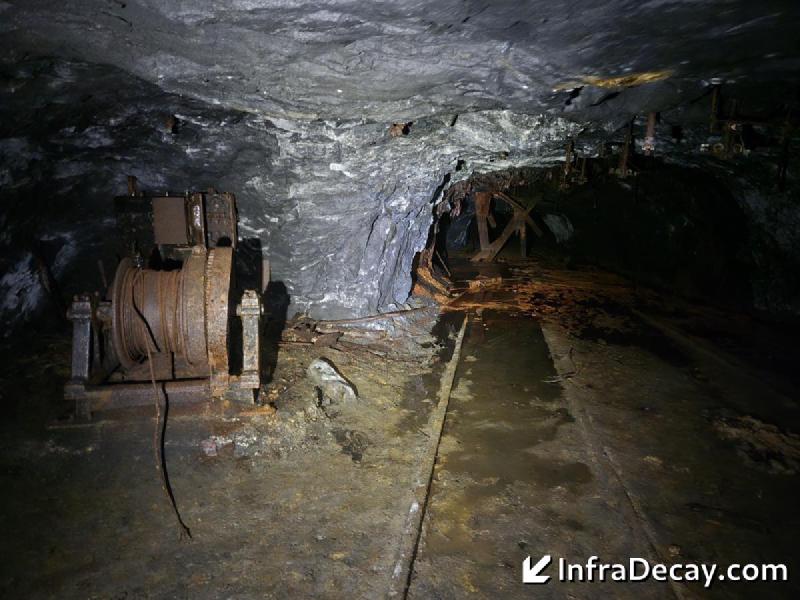
All the way back by the mine locomotives, we now explore the rest of the main tunnel. This is where we find the final and smallest hoist, as well as a small branching tunnel that ultimately ends in collapse.
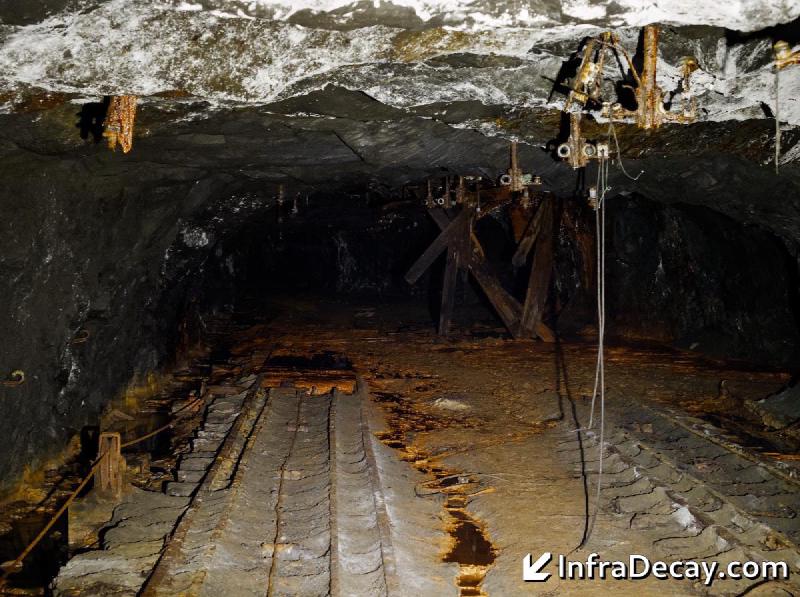
We’ll go down the side tunnel. Note the close proximity to the mine locs (right).
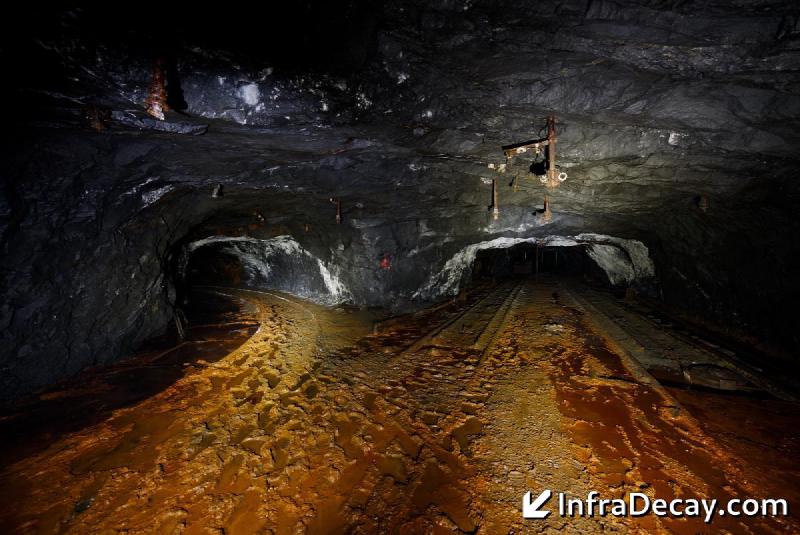
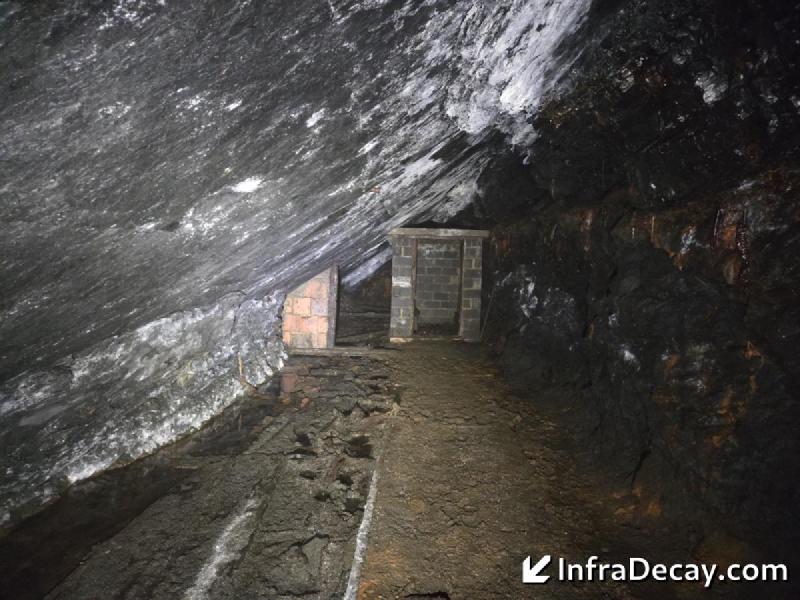
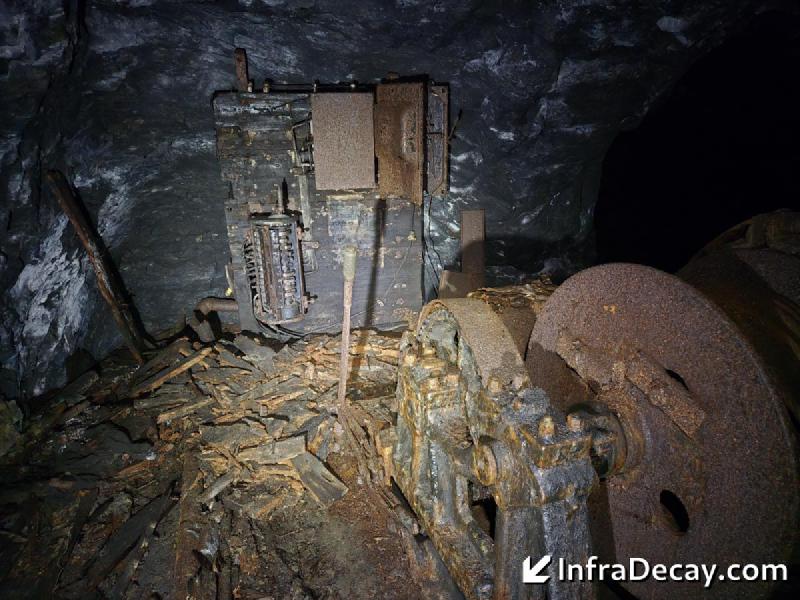
Just beyond that side passage, the third hoist:
Hospital and Buildings
At the end of the main tunnel, collapse and buildings. This area still had the overhead wires mostly in-tact.
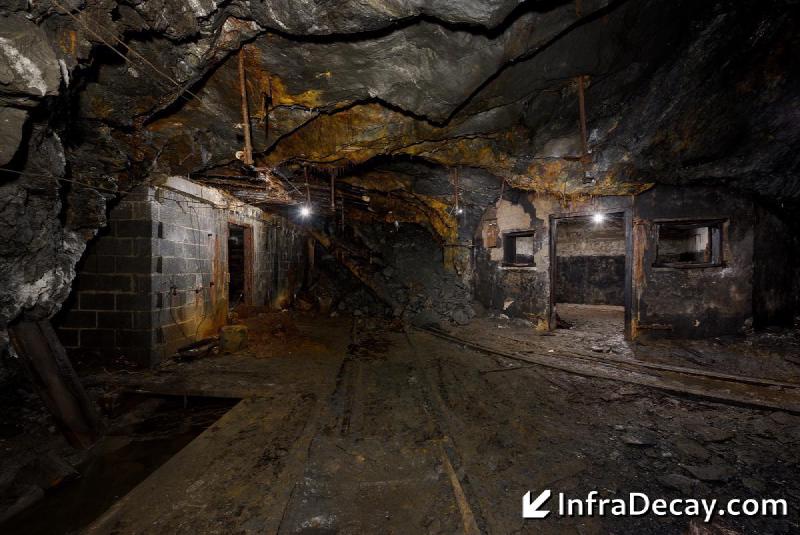
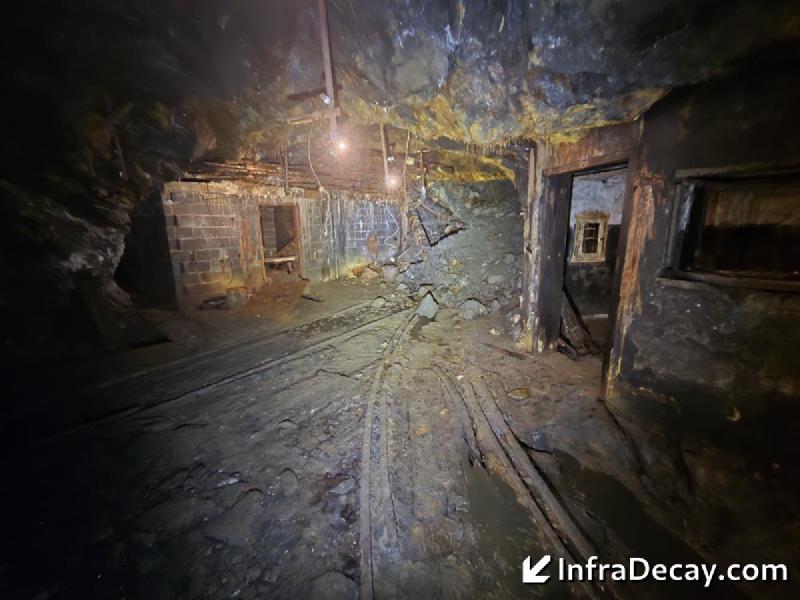
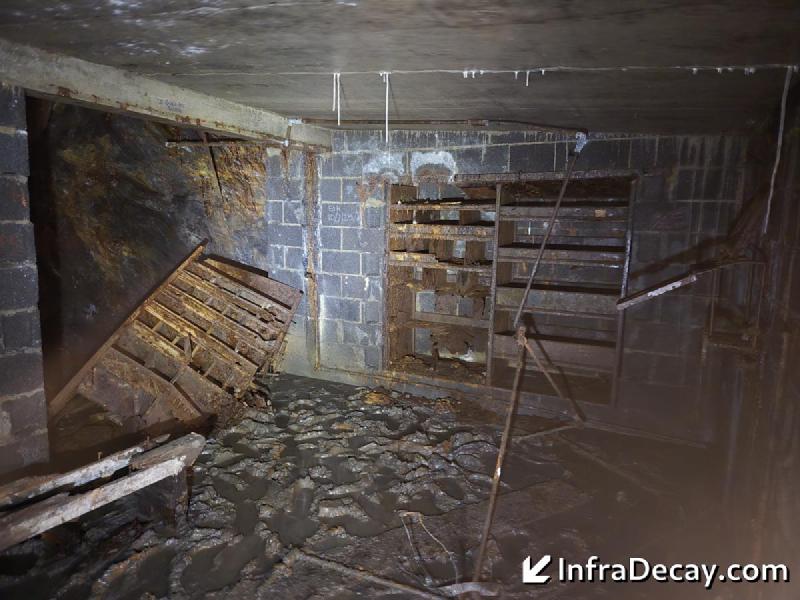
This side room looked like an employee locker room or light workshop area. Note the aggressive, lattice style rail bracing supporting the roof.
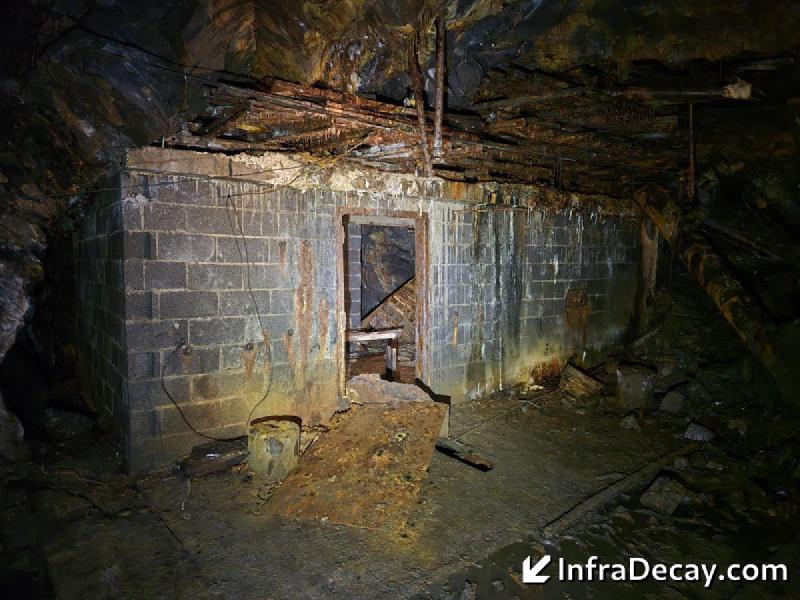
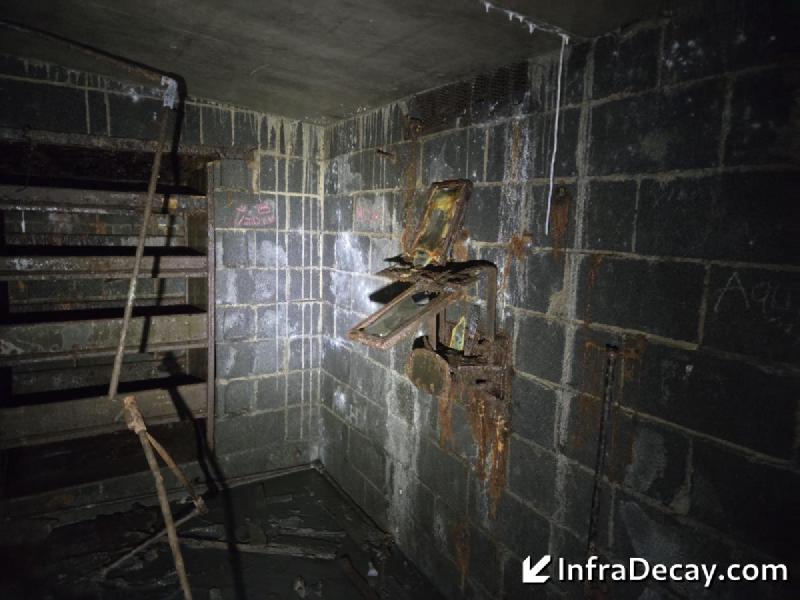
This room had some weird glass instruments. Do you know what they area?
Other building, likely a mine hospital:
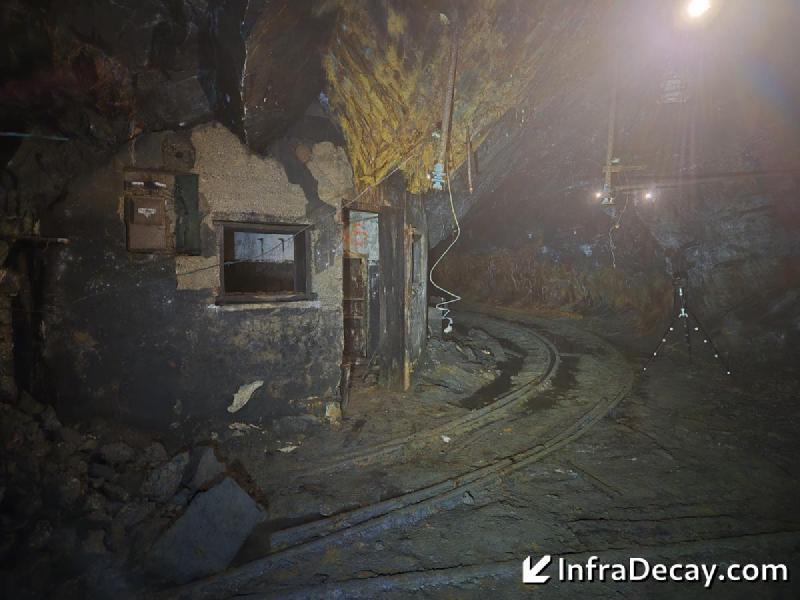
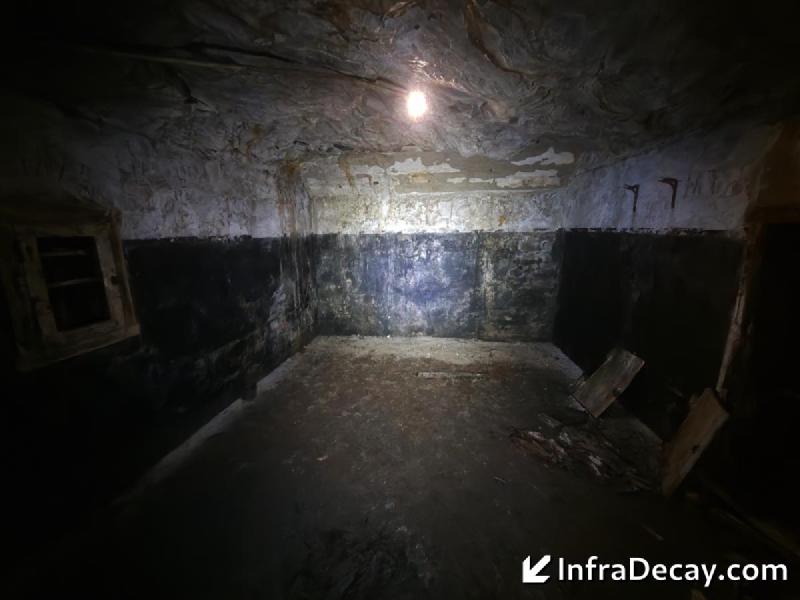
If we continue down the hospital side tunnel, we see some work benches. It ends in wet collapse.
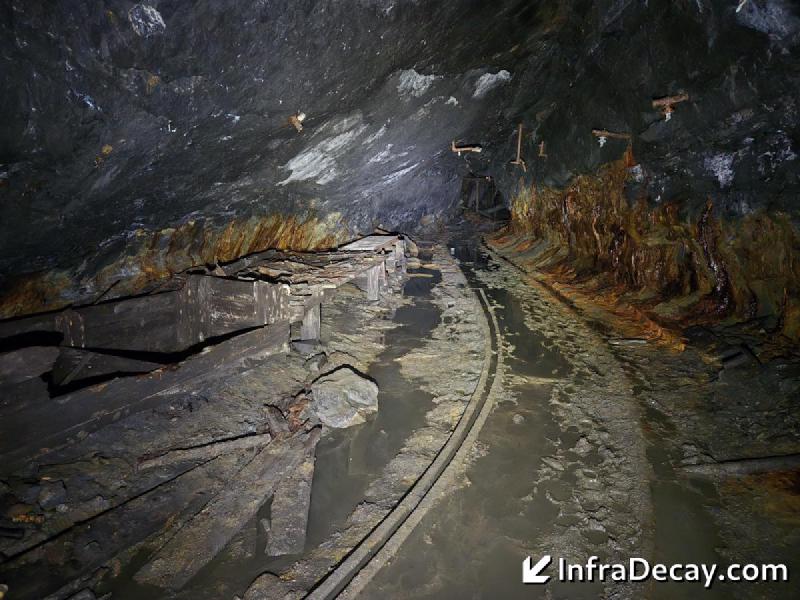
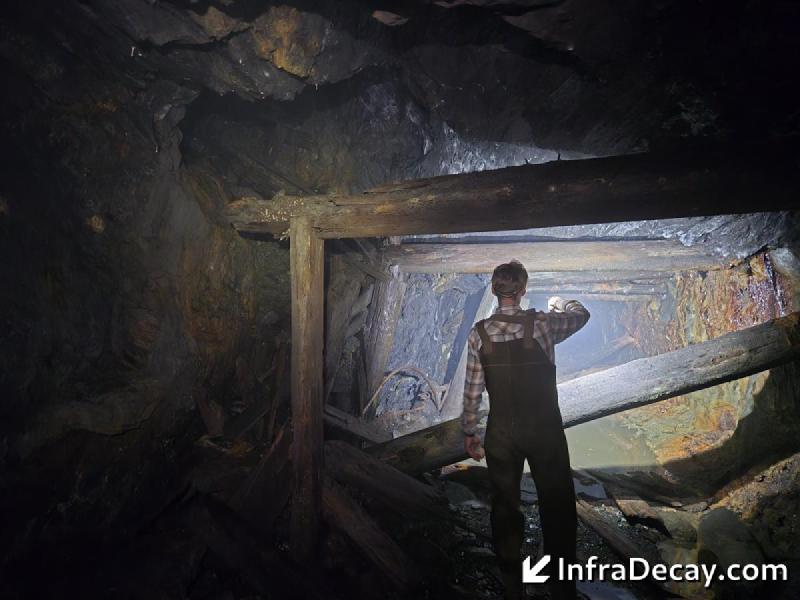
Back at the mine hospital, if you turn around you see the junction of the two main gangways. To the right is a skinny building. Do you know what this was for?
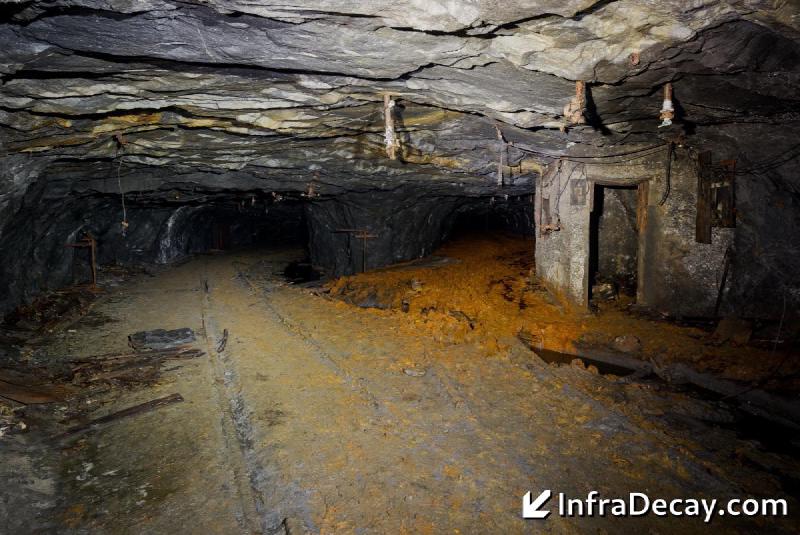
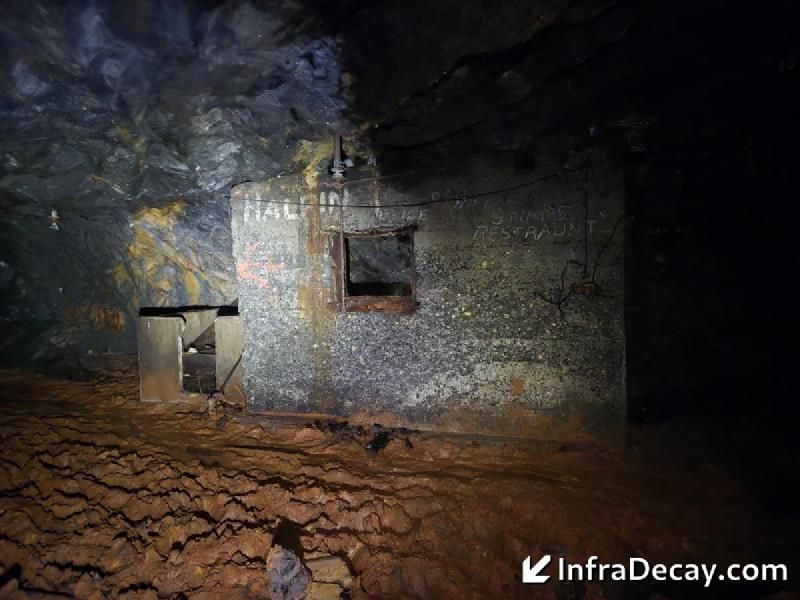
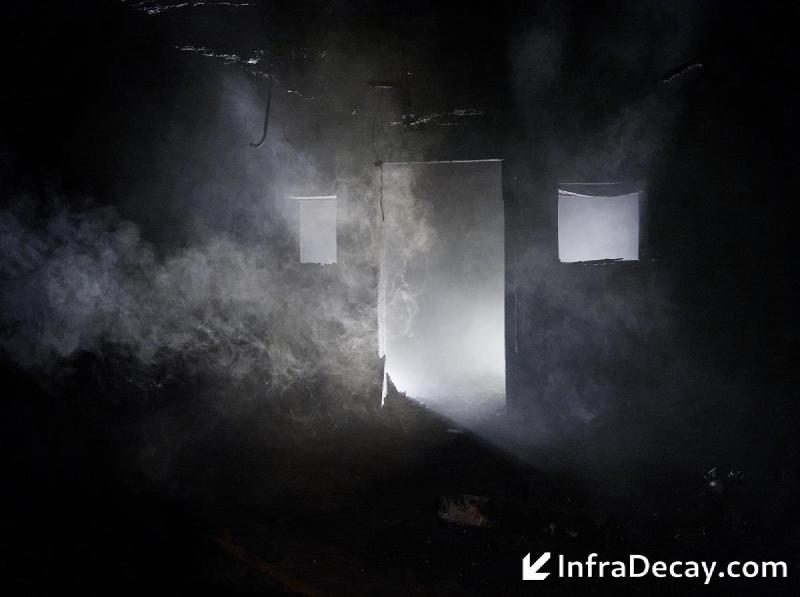
We set up at this end and screwed around taking smoke shots.
We were getting very close to our callout so unfortunately we had to leave. Here’s us floating our shit out of the mine! When exiting, I stubbed my big toe NAIL on a timber underwater and in addition to my waders being 3 sizes too small, I saw stars.
We got out, packed up, and walked back in the moonlight. It was an amazing trip, probably my favorite mine ever, and a damn shame its getting filled soon.