
Pages
Recent Articles
Socials
Southeastern 67 Slope
| By | Infra Decay.com |
|---|---|
| Rating | 3 / 5 |
| Topics | Coal , Underground , Mine |
| Region | Appalachia |
| Last modified | 4 September 2026, 20:35 |
The Southeastern 67 Slope is an often overlooked medium sized mine in the Anthracite region. Its defining features are:
- Extreme wash-in from water ingress
- 2 short shafts to different level workings.
- 2 minor car workshops
- A long rock tunnel at the bottom.
The slope normally has a creek flowing into it and is only safely accessible during times of drought or with rope. Every other time I’ve been here it has been a death trap with the water situation. This is also the explanation behind the extreme amount of wash-in and sediment build-up at the bottom.
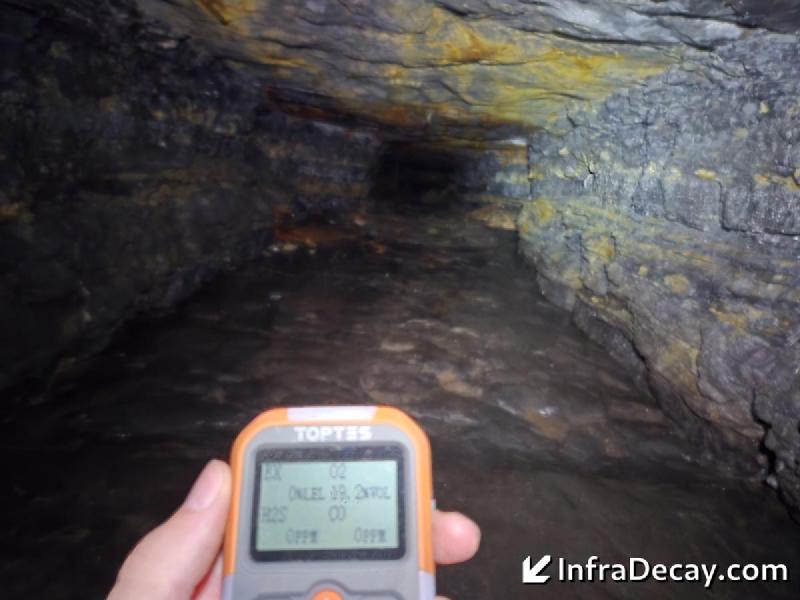
The day we explored this mine the oxygen was 19.2-19.4% from the portal all the way to the end, with zero air movement throughout the entire mine.
While not part of the same colliery, this mine historically connected to the Green Valley Tunnel through a convoluted and likely collapsed/flooded working route.
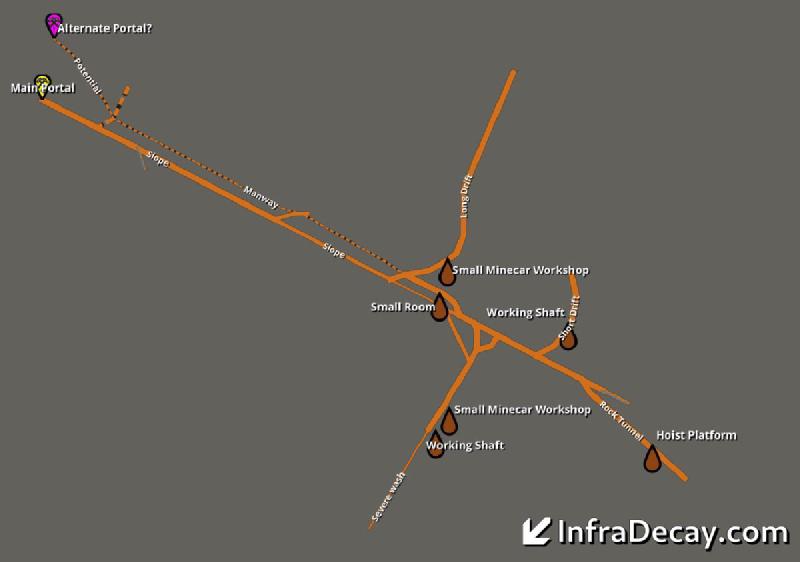
Map
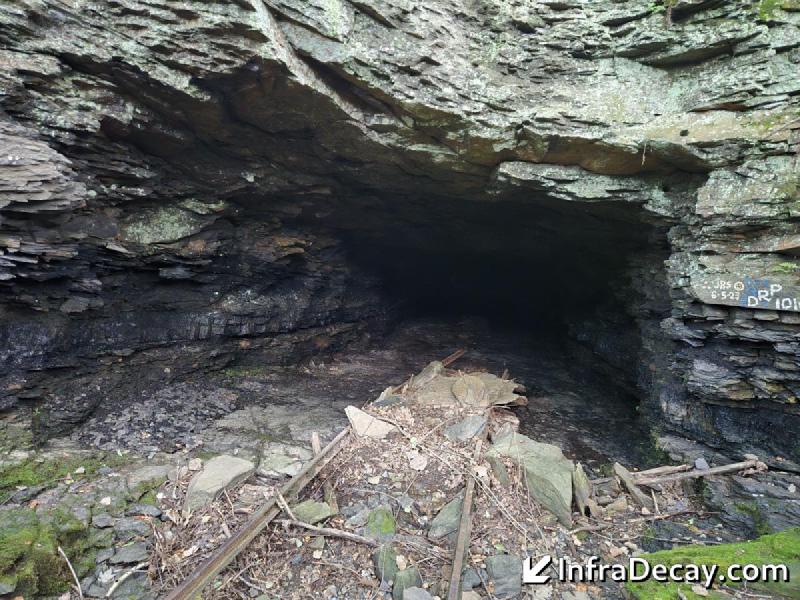
Slope
While only being of average steepness, the slope is slick as shit. Normally there is water pouring down here but we got lucky today. We carefully walked down.

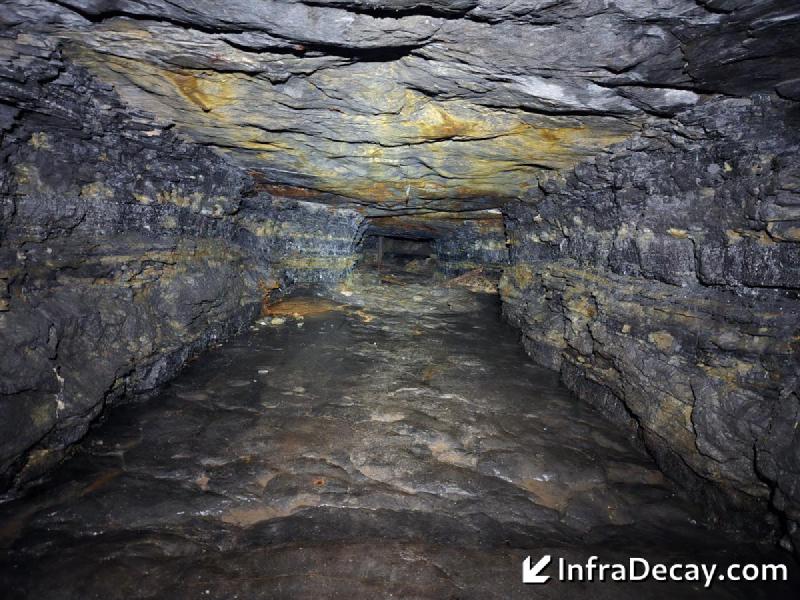
Note the double and sometimes triple coal vein visible here.
Right at the portal our meters were reading 19.2-19.4%, suggesting the presence of black damp. I initially scouted the slope about 200 feet down; once I saw the level didn’t decrease at all we decided to send the rest of the mine.
The first of 3 small left-turnouts along the slope. This one allegedly leads to a second entrance/escapeway, but we’ve scouted it from the surface and don’t believe it to exist anymore.
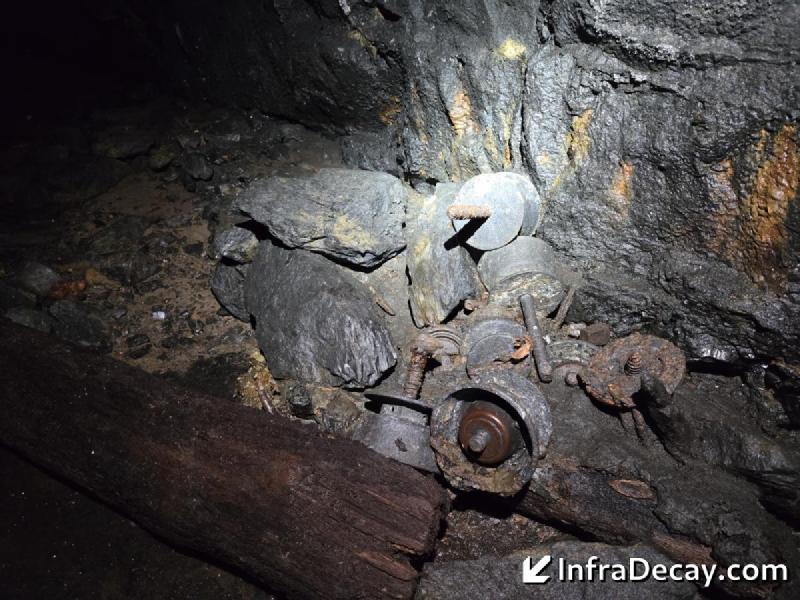
Visible is a hoist pulley for an external hoist and a switch lever for the missing rail switch.
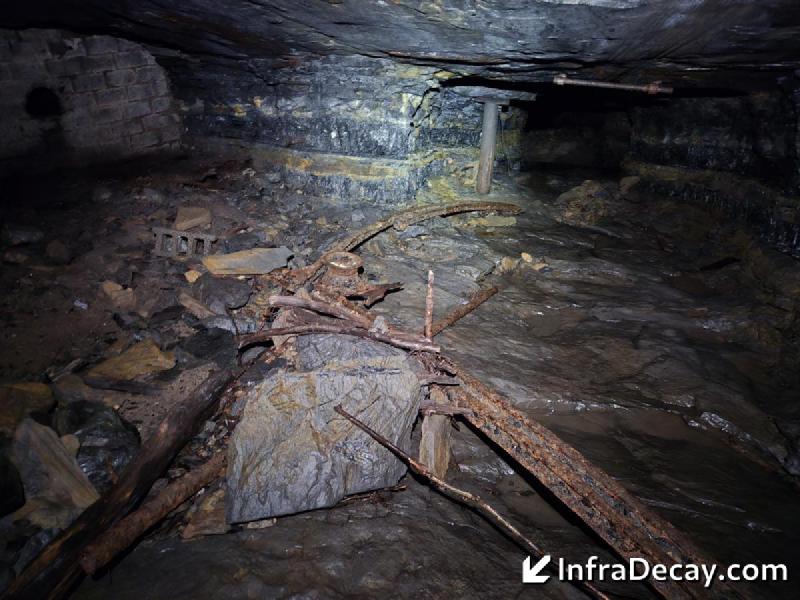
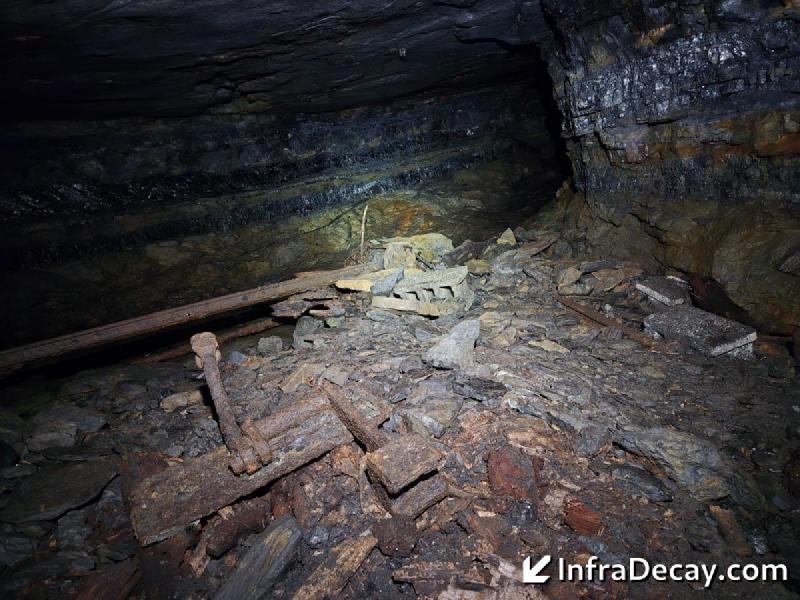
A small flooded siding, mine maps indicate this did not progress any further and was likely just a small storage area.
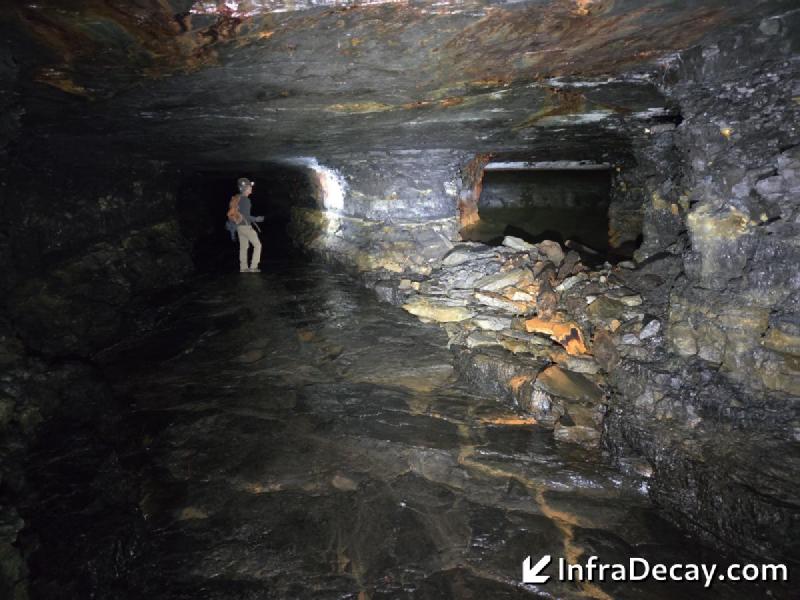
AMD staining on the ground. Even though the entrance was dry, the slope became wet again lower in the mine. Great care was necessary to not slip and die.
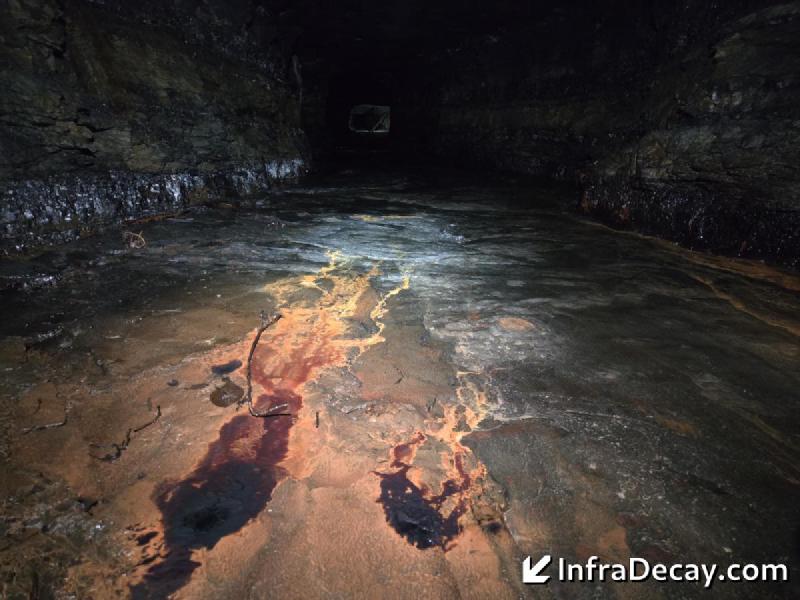
Left-turnout 2. This leads to a manway that parallels the main slope.
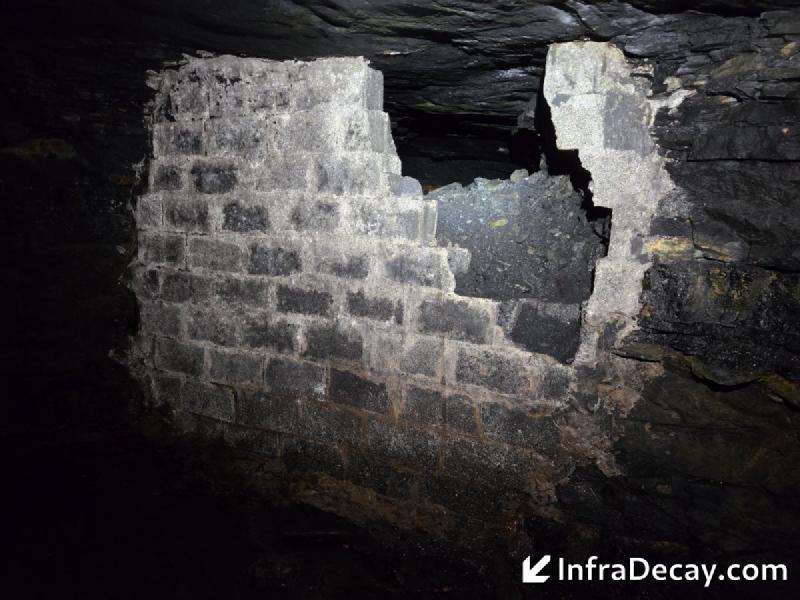
Left-turnout 3, and the final one before the bottom of the slope. This led to a tiny drift/tunnel/manway which parallels the main slope. We didn’t explore the manway; we essentially saw everywhere it connected and determined it could not have let to much of anything else.
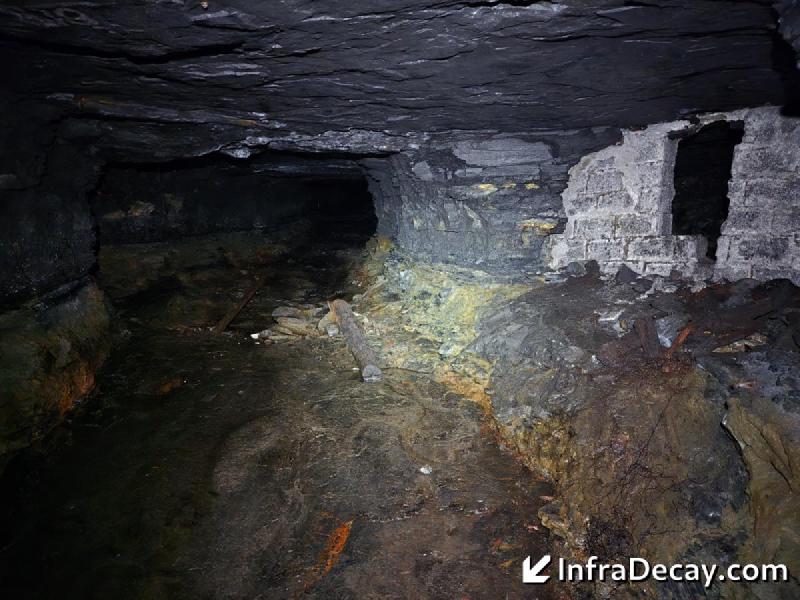
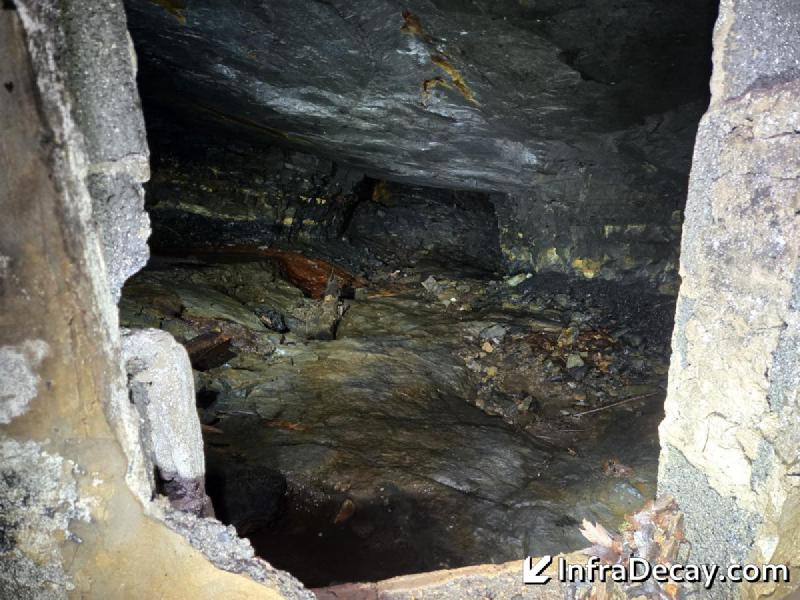
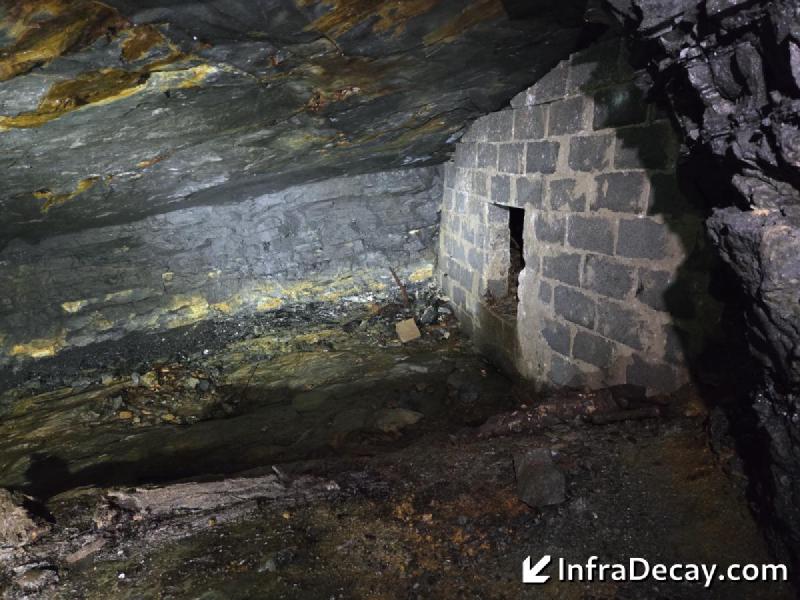
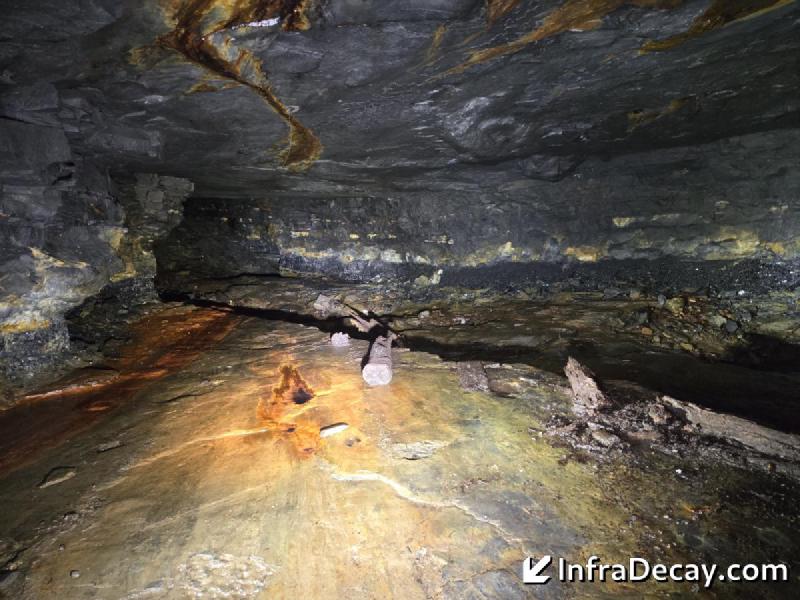
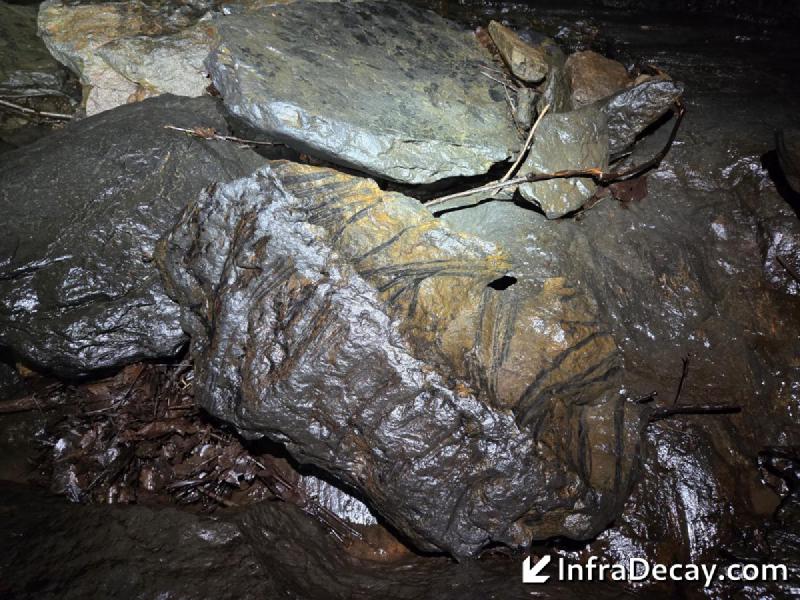
We’ve finally reached the bottom of the slope. This area contains some of the most severe wash-in I’ve ever seen in a mine. You have about 3 feet of space at the tightest and have to crawl to the next part of the mine.
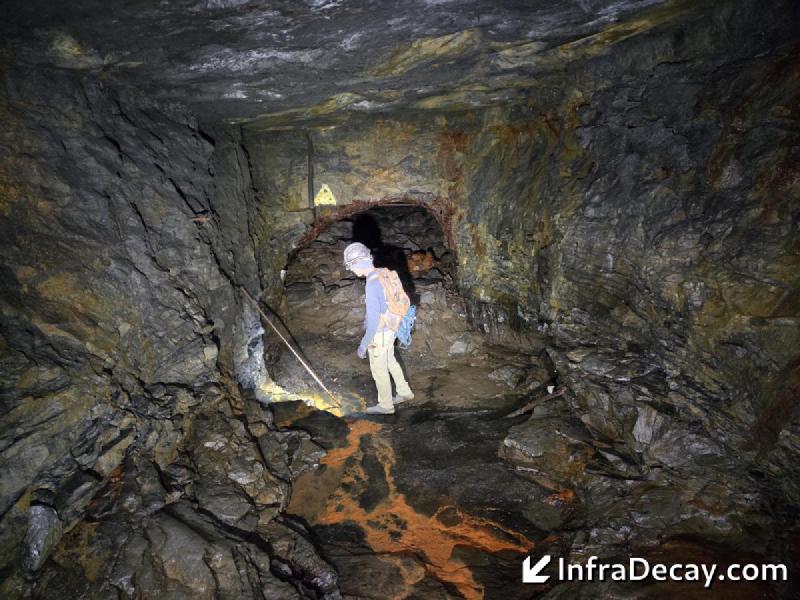
Getting ready to crawl. Note how the ceiling is fully intact; all this crap was washed down by water! The remains of a hoist cable bumper can be seen on the roof. It looks like there’s some cable notches in and around it as well.
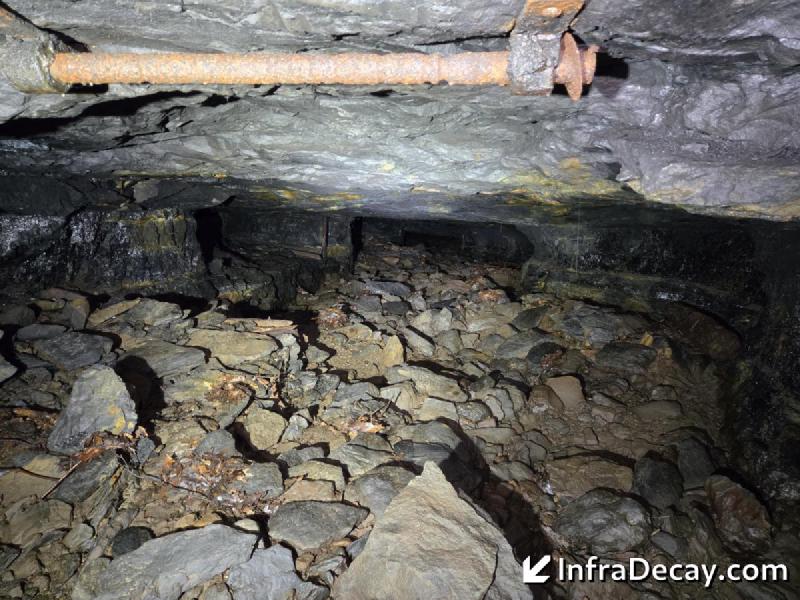
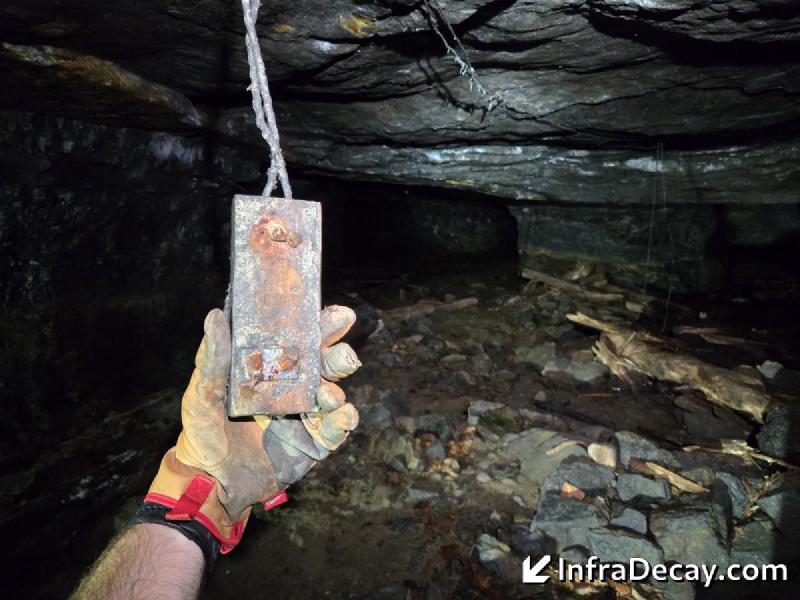
A morse key hangs from the ceiling along a cable run. These were used by hoist operators and miners to signal hoist movements, when the cars were coming down or ready to go up.
Bottom of Slope Tunnels
Pushing past the wash-in, we get to the main workshop area of the mine. This is a secondary tunnel that parallels the bottom of the main slope but doesn’t have the wash-in problem of the main slope. There are several splits in this area, air doors, and some old artifacts.
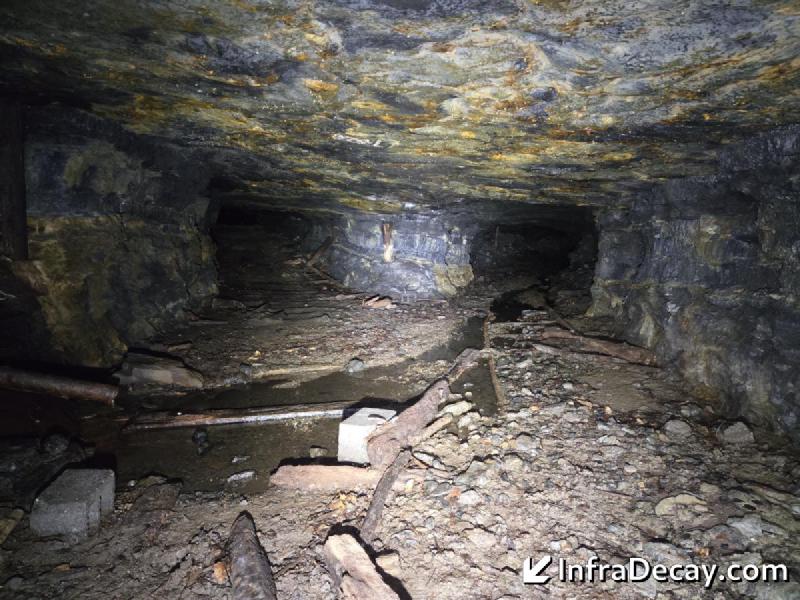
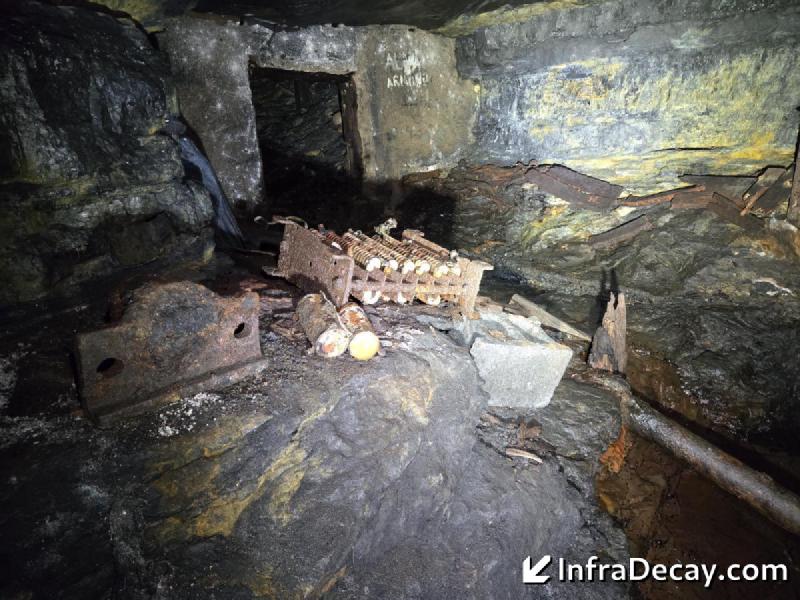
The first workshop. This was little more than a pit for mechanics to work on the rail cars and/or locomotives.
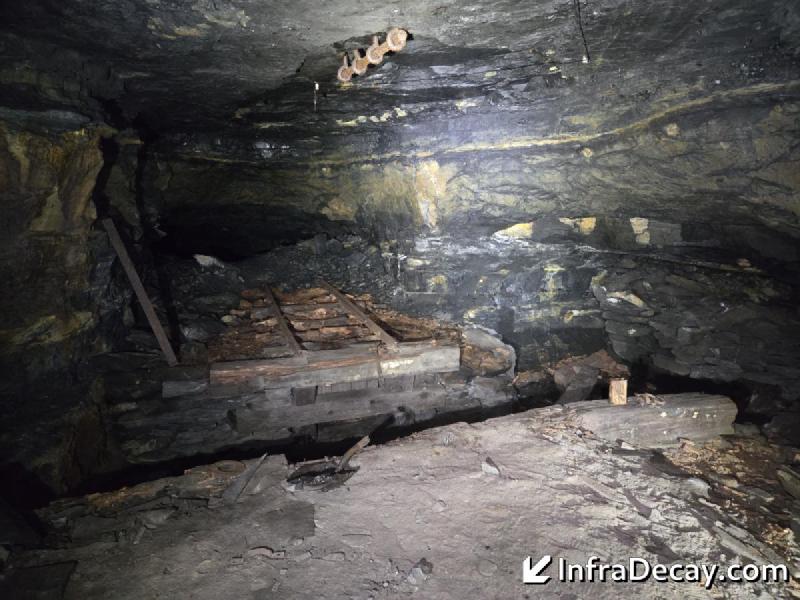
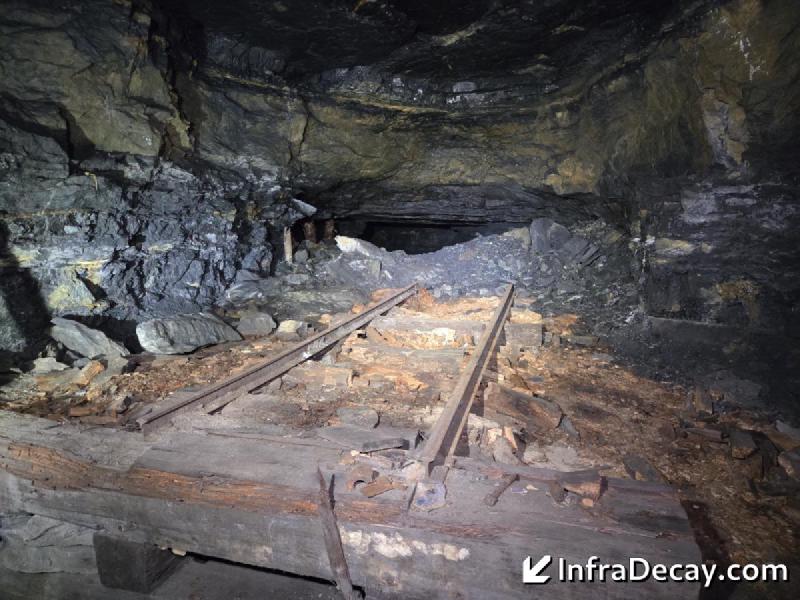
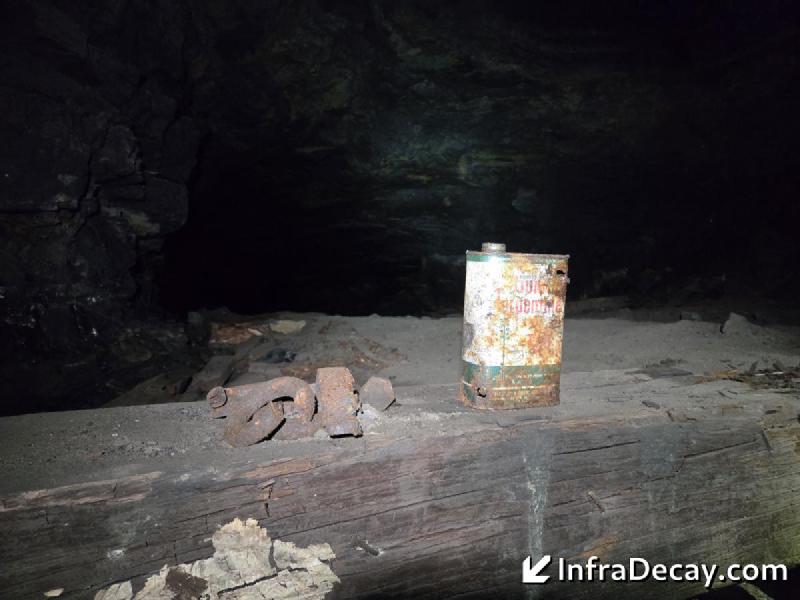
This side drift (“long drift” in the map) continues past the first workshop after an air door.
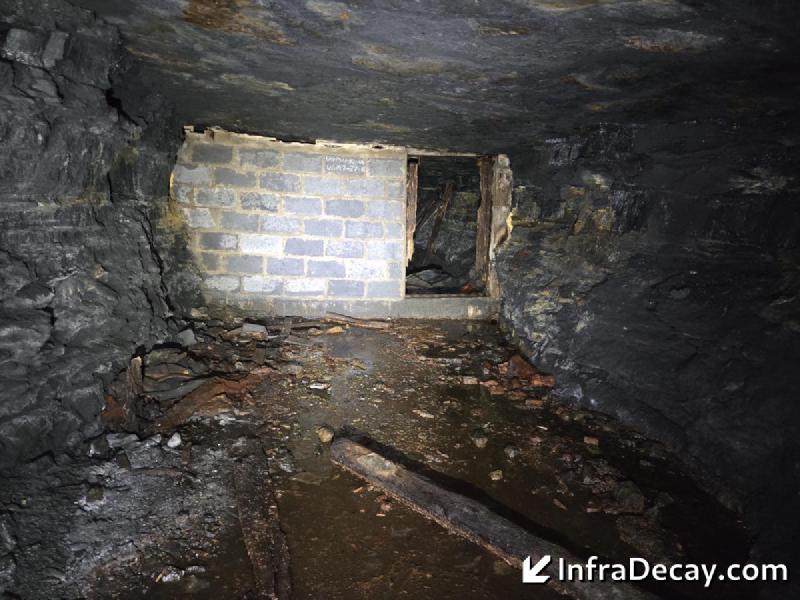
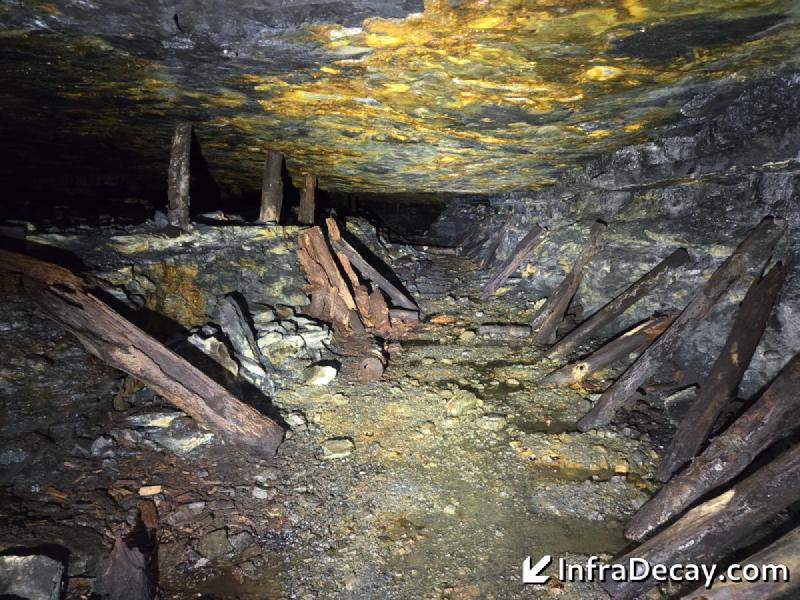
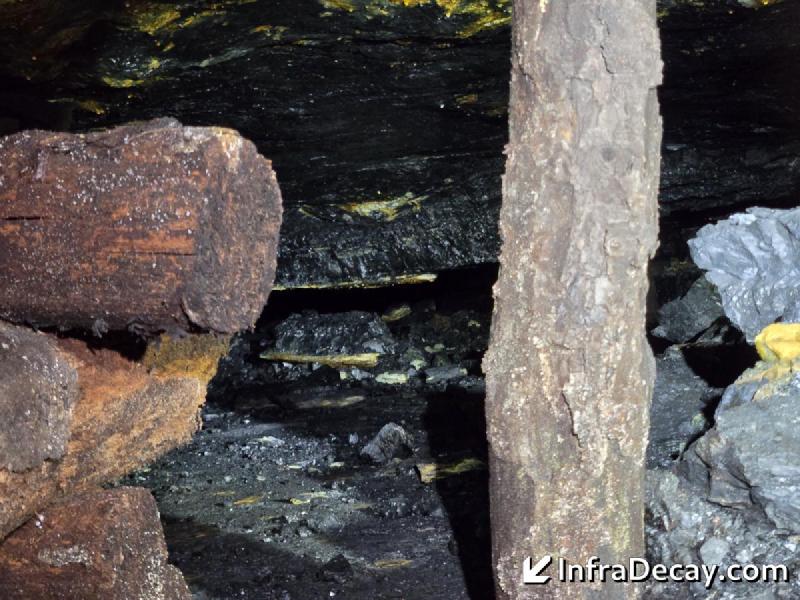
This part of the mine is fully robbed out. We noticed one pillar was mined out only from the bottom. This was common practice actually, pillars are robbed from the bottom first to take advantage of the roof pressure. But I’ve never seen a pillar actually left like that. Quite interesting.
Other explorers have graffiti’d their named in the mine.
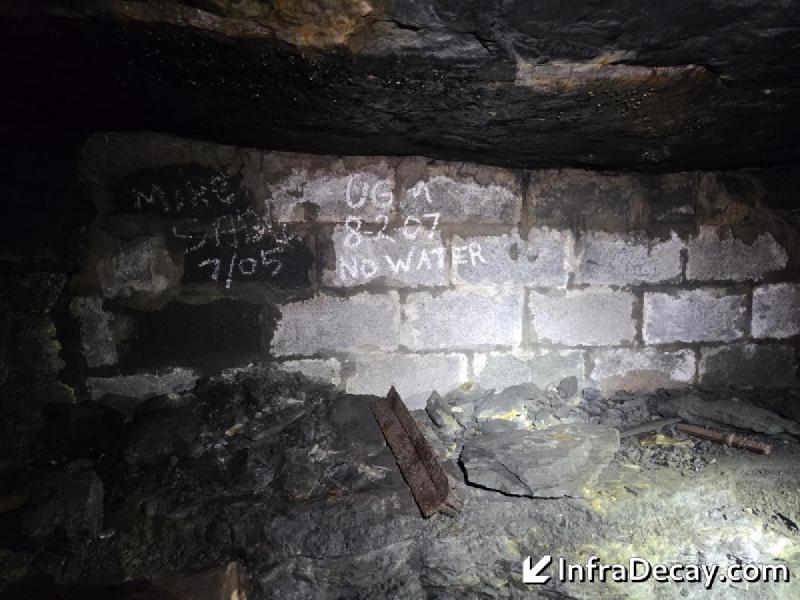
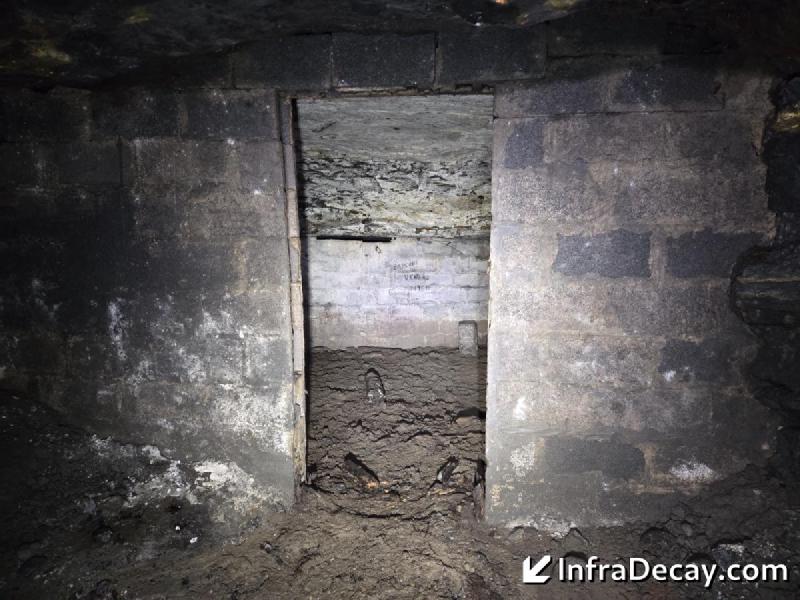
Back in the main workshop/slope parallel area, we continue down the parallel tunnel and find some cinder block structures.
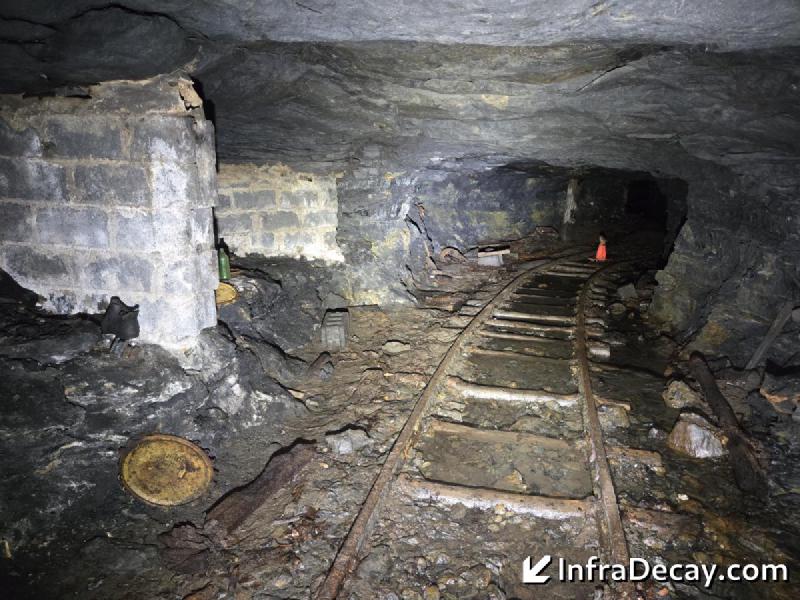
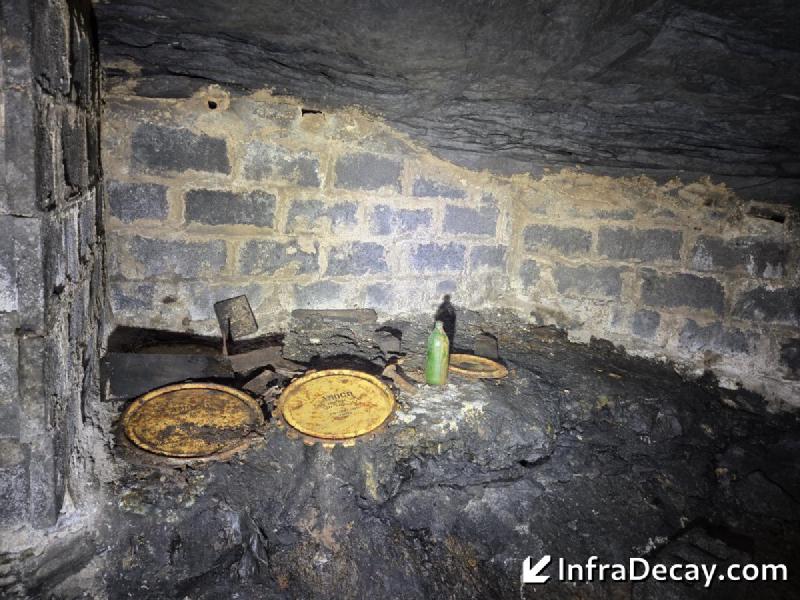
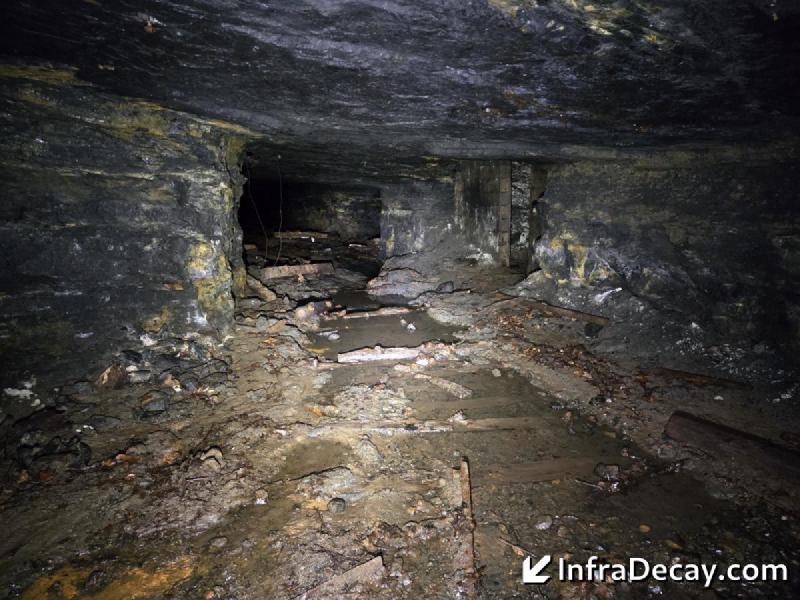
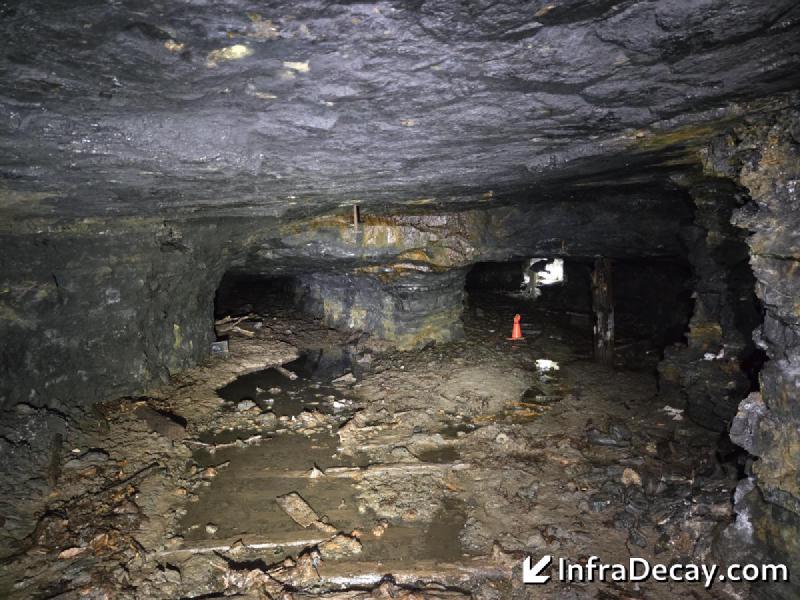
A traffic cone makes an unexpected appearance down here.
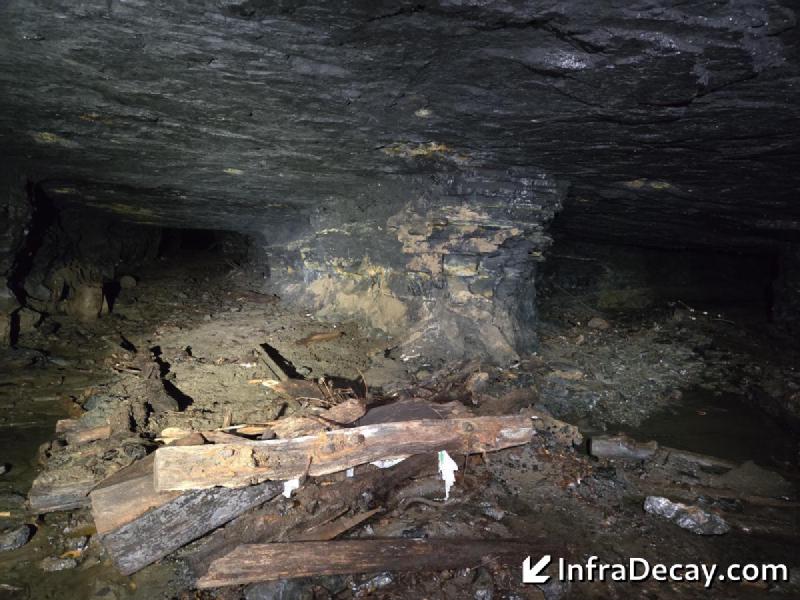
This is a photo looking back after one of the splits. Notice the big chunk missing from the roof. This was likely a historic collapse during the mine’s operation that they cleaned up.
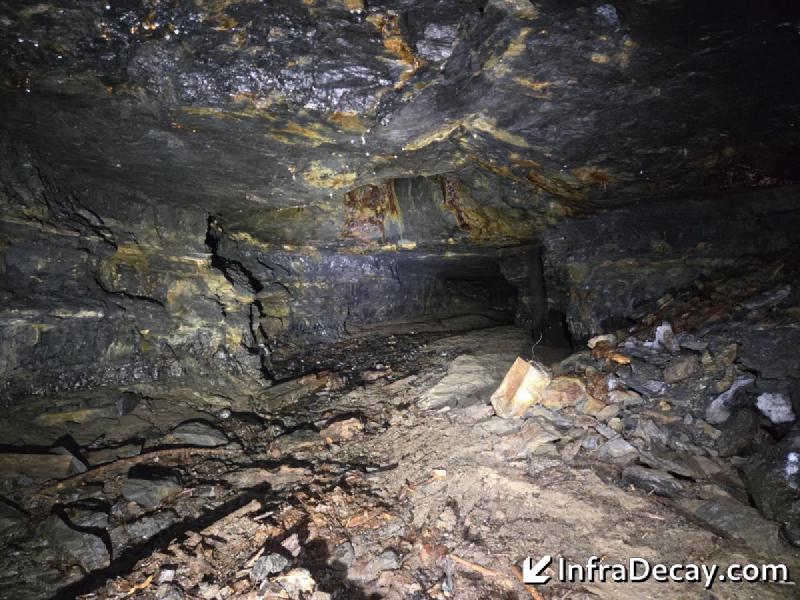
We continue down another small drift. Notice the roof brace and wedge holding up some shale.
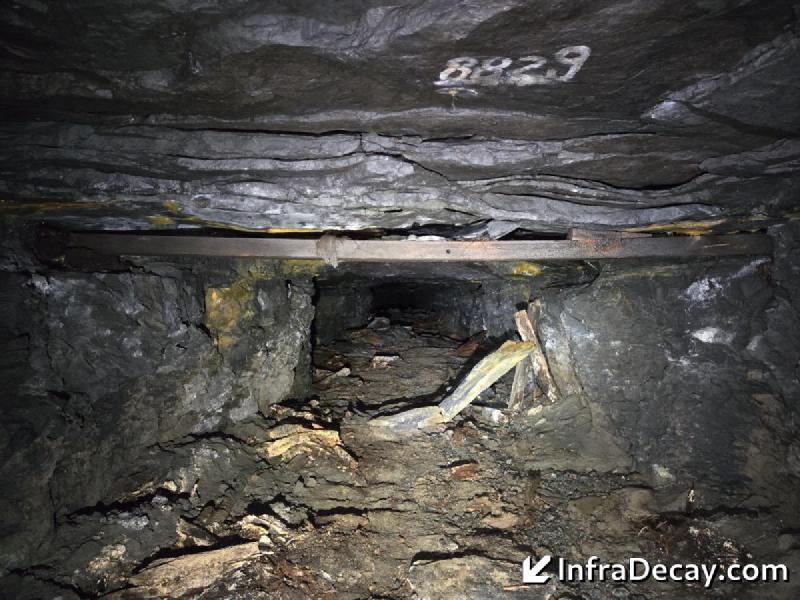
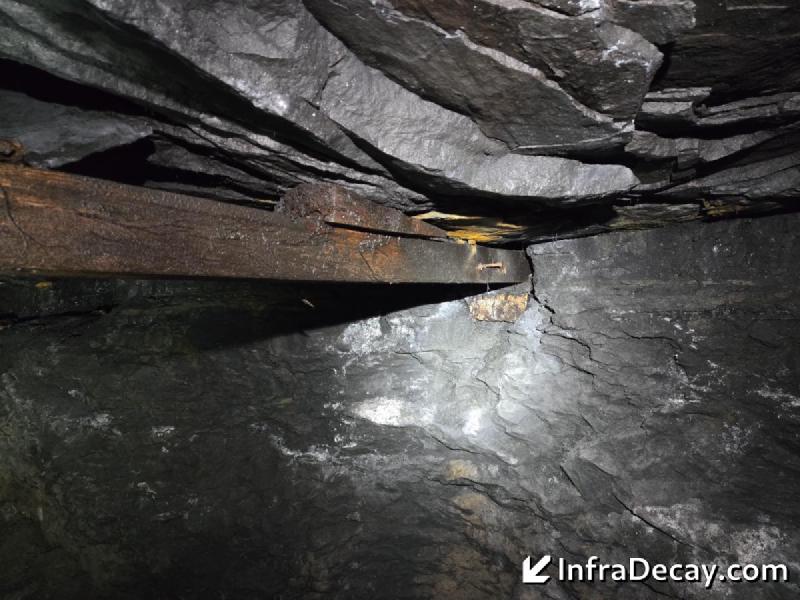
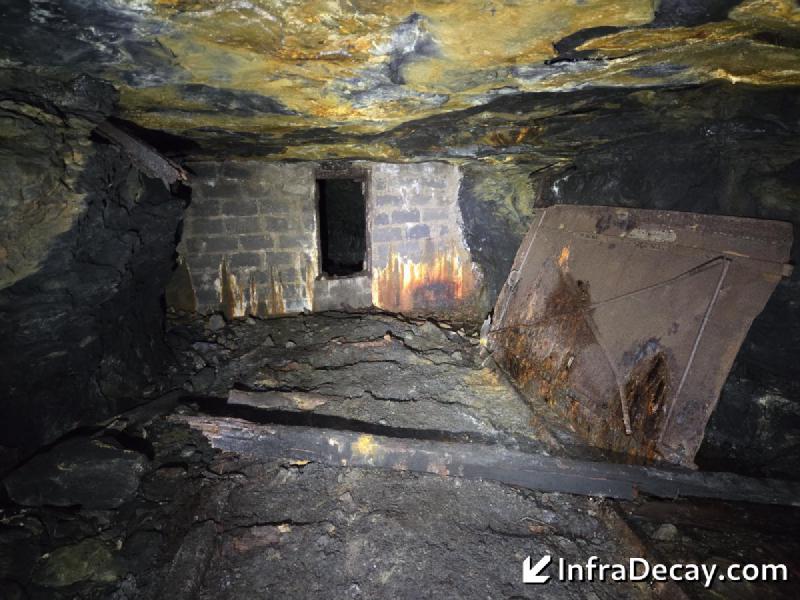
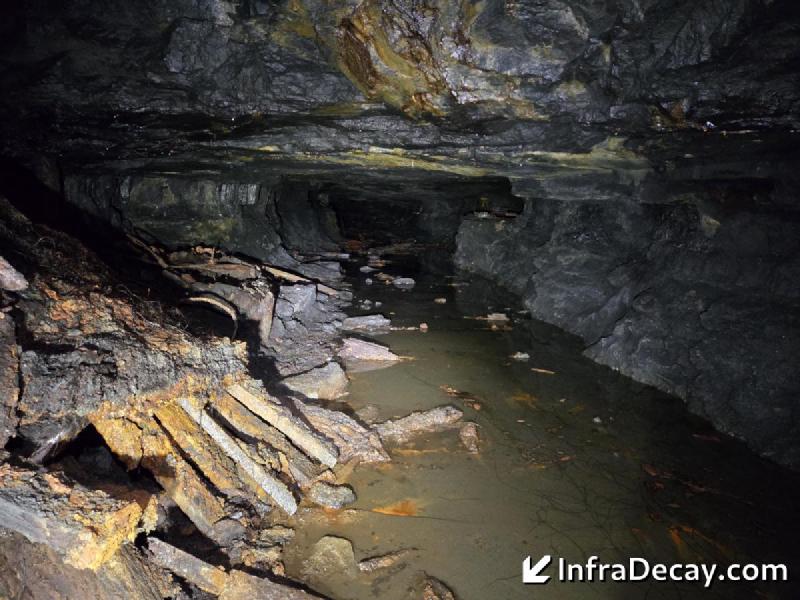
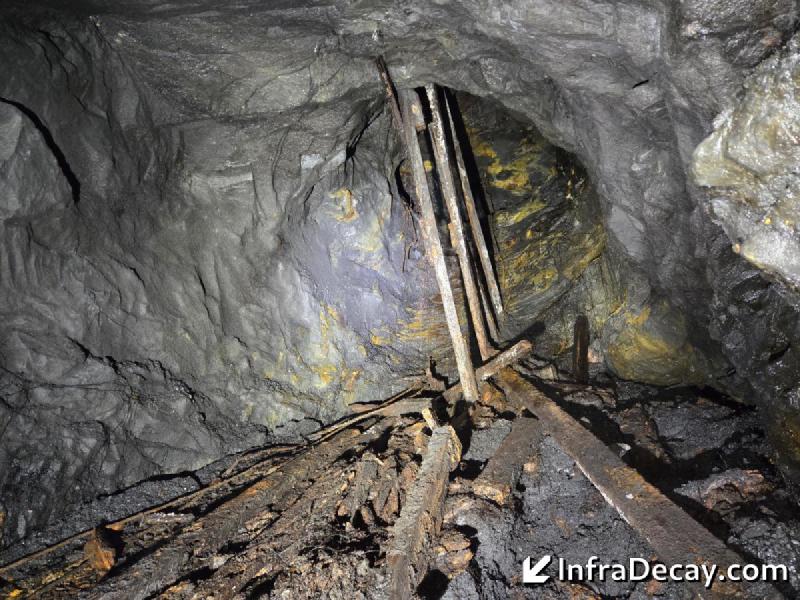
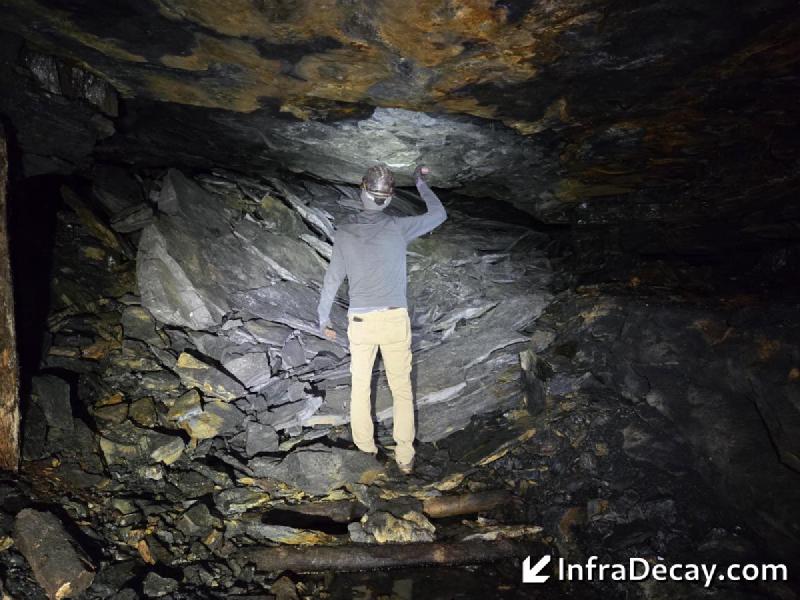
Through an air door, we reach a mildly flooded tunnel. This ends shortly in collapse, but it notably includes a small ~20 foot shaft up to another level of workings!
Some old miner’s kneepads, fashioned from vehicle tires.
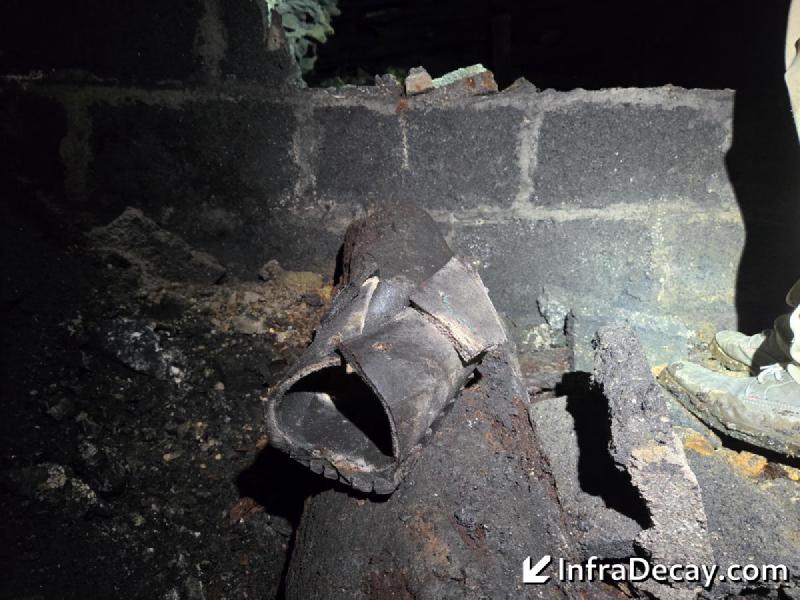
Towards the end of the maintenance area is one more split. Left goes immediately to water and is actually the continuation of the main slope. Right is a rock tunnel that used to go to a different mine.
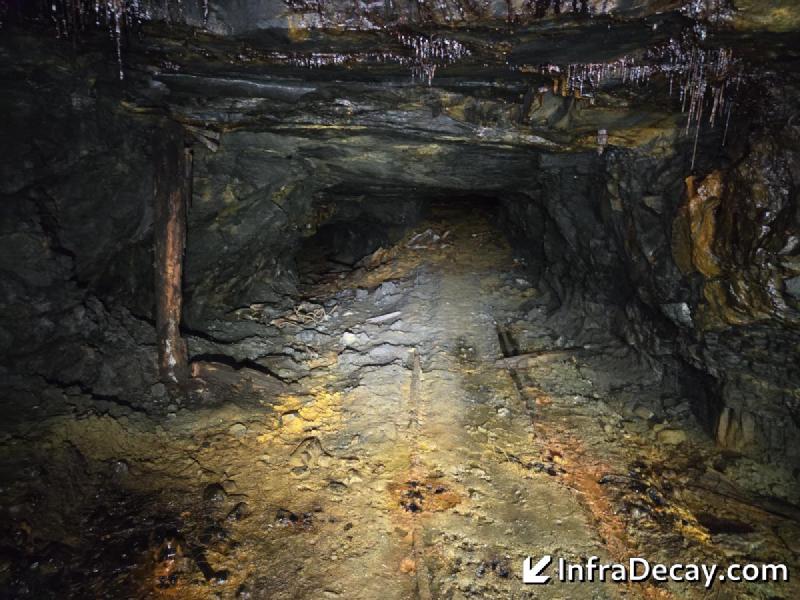
Left:
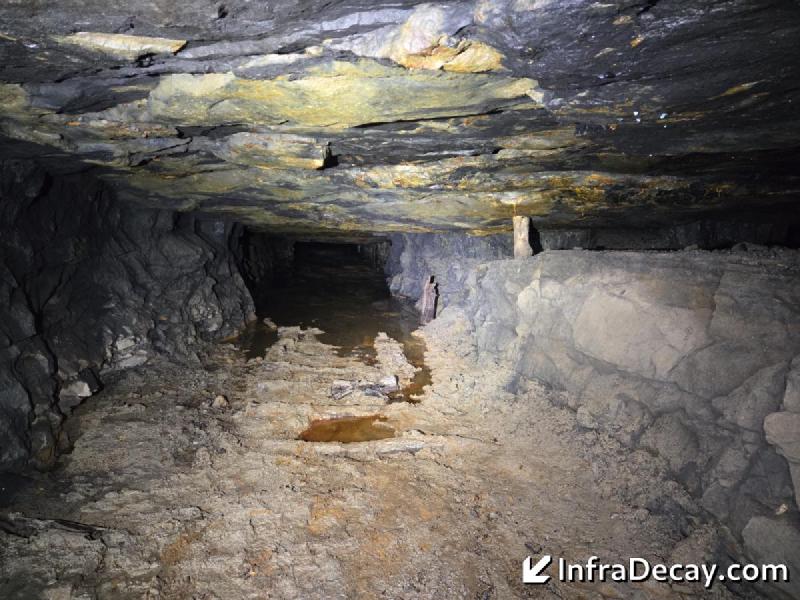
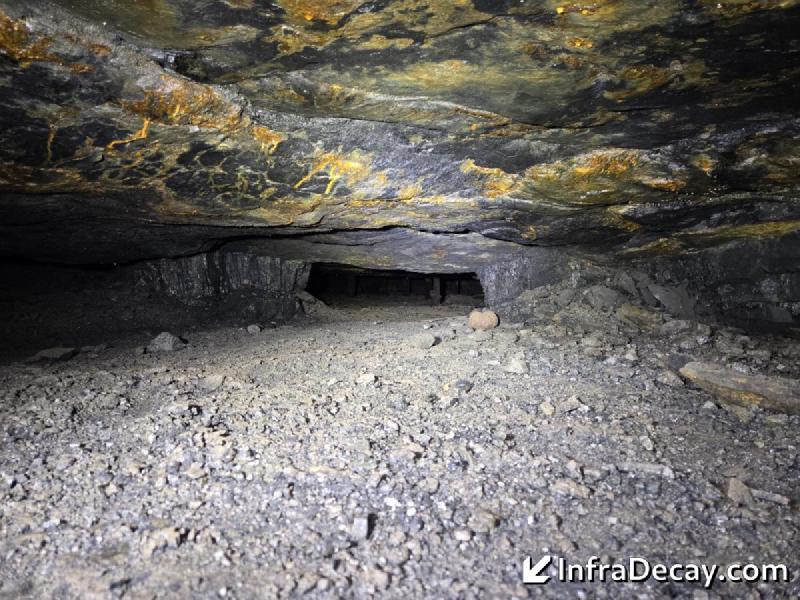
Right:
Deep Rock Tunnel
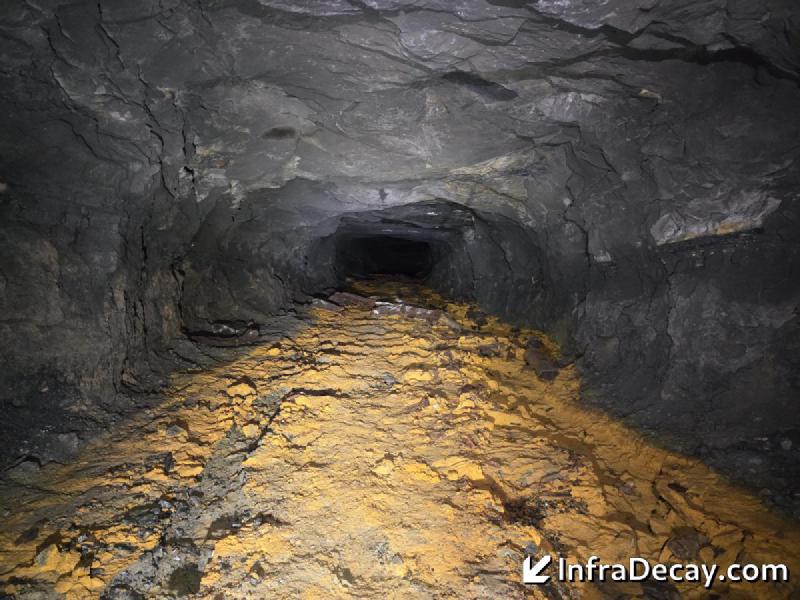
We are confident this rock tunnel used to have a hoist inside. It reeked of hoist oil here; it’s a very distinct smell.
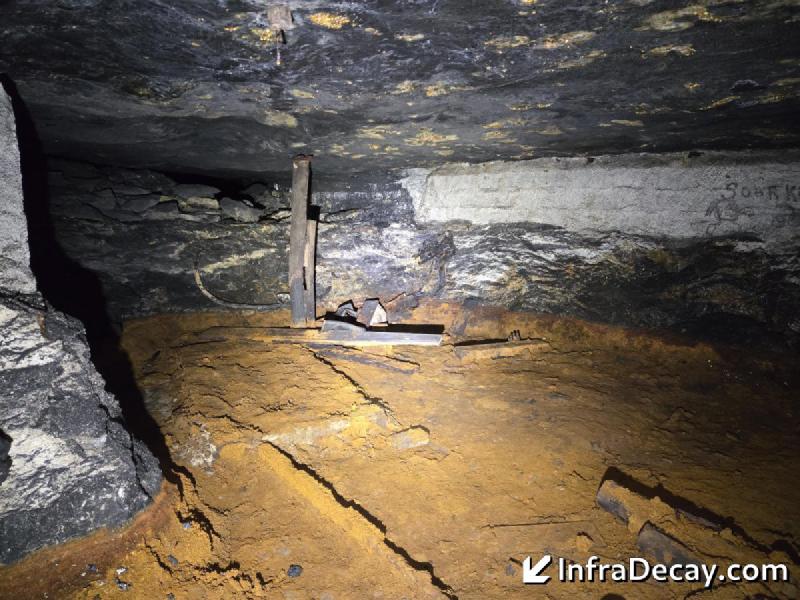
A second storage or equipment area.
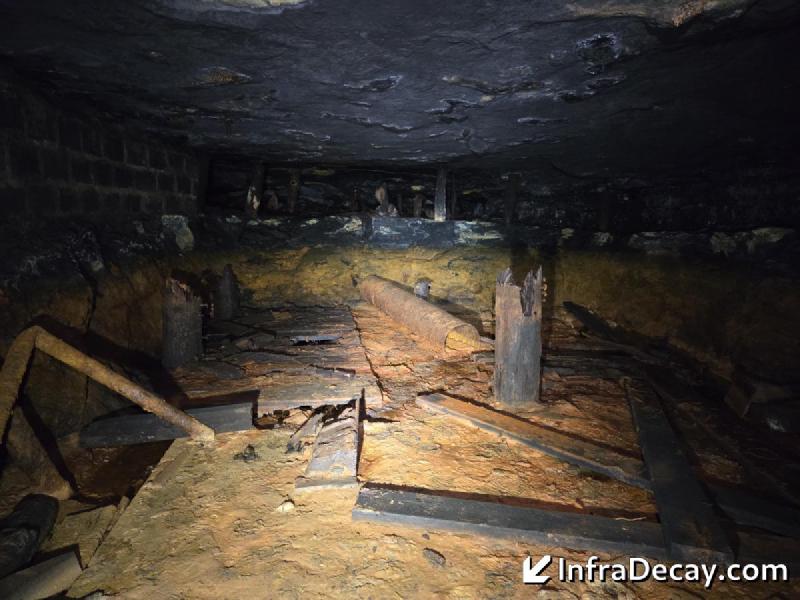
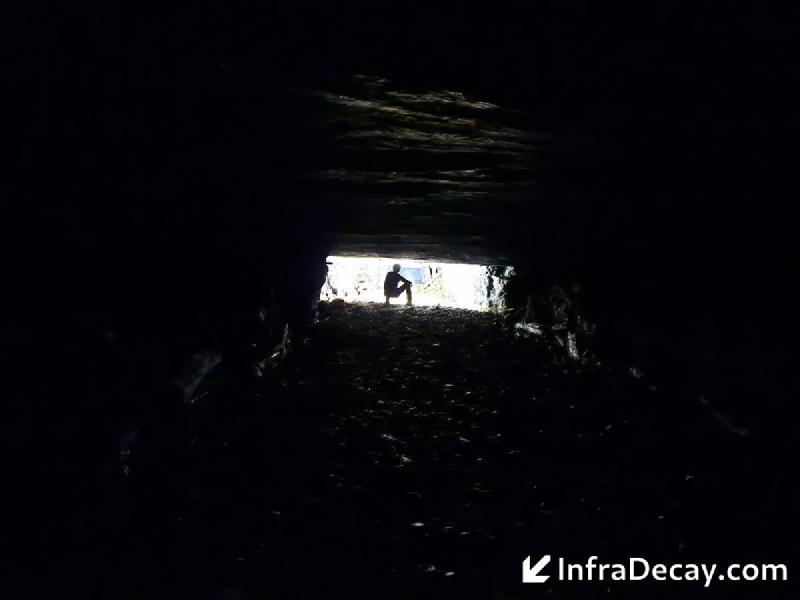
The tunnel ends in collapse but would have led to another mine.
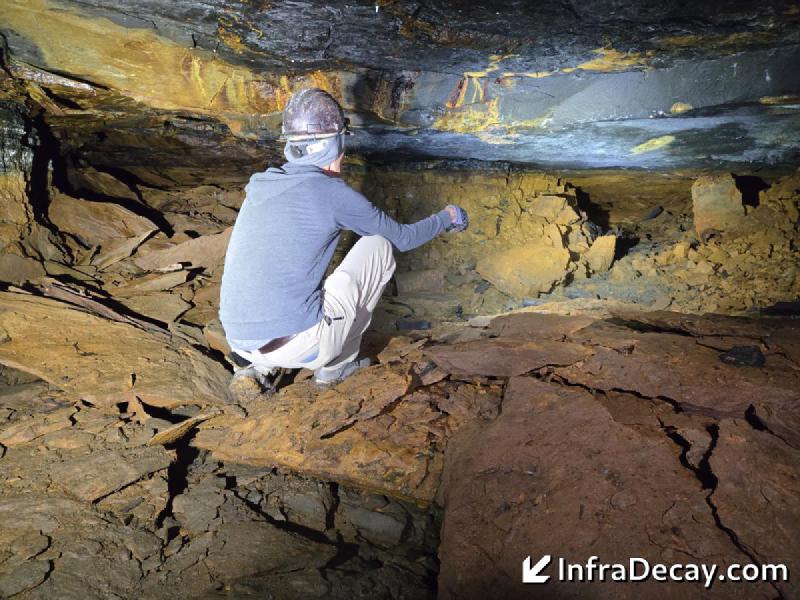
The relatively intact remains of a cable/wire spool.
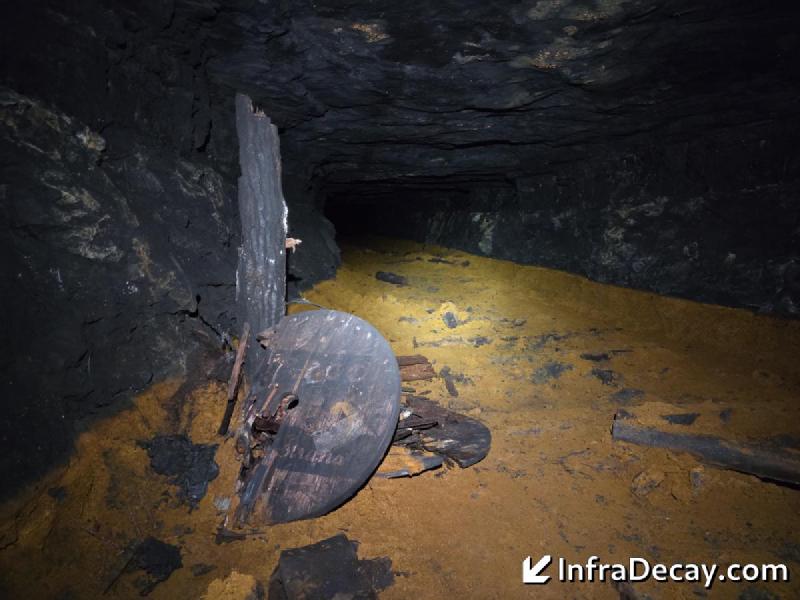
Wash Drift
Returning to the bottom slope area, we take another passage/drainage tunnel to a side drift.
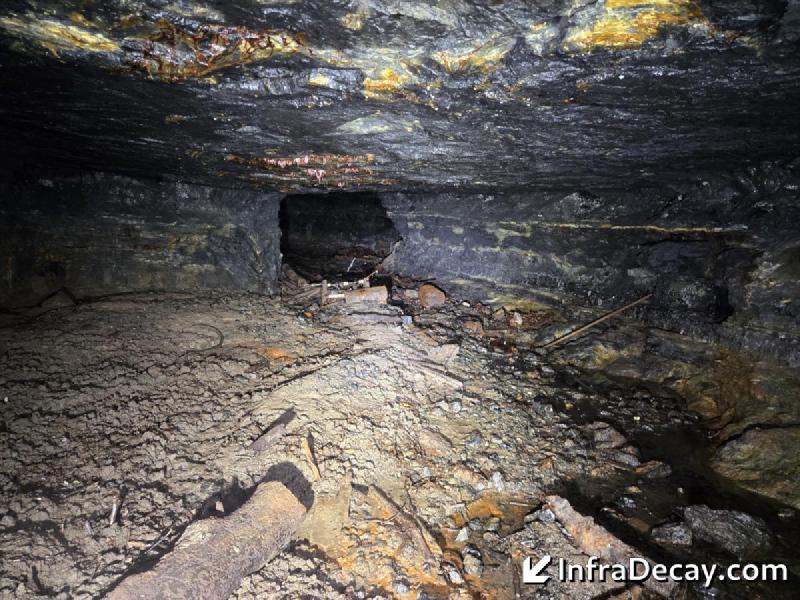
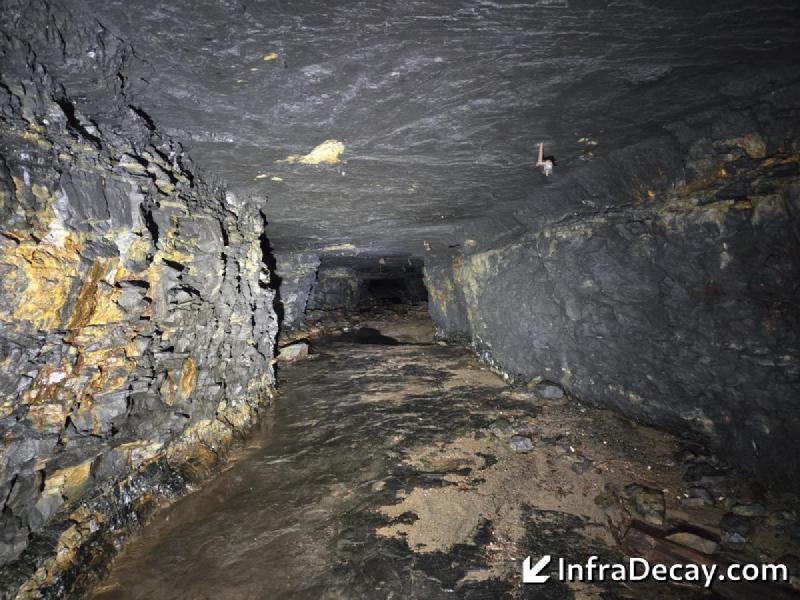
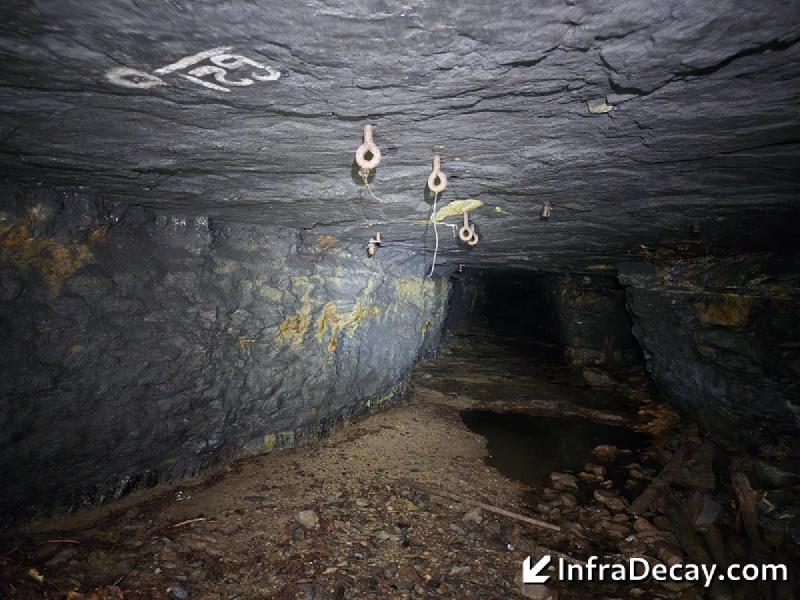
This drift contained another workshop with eyebolts on the roof for hoisting equipment into place.
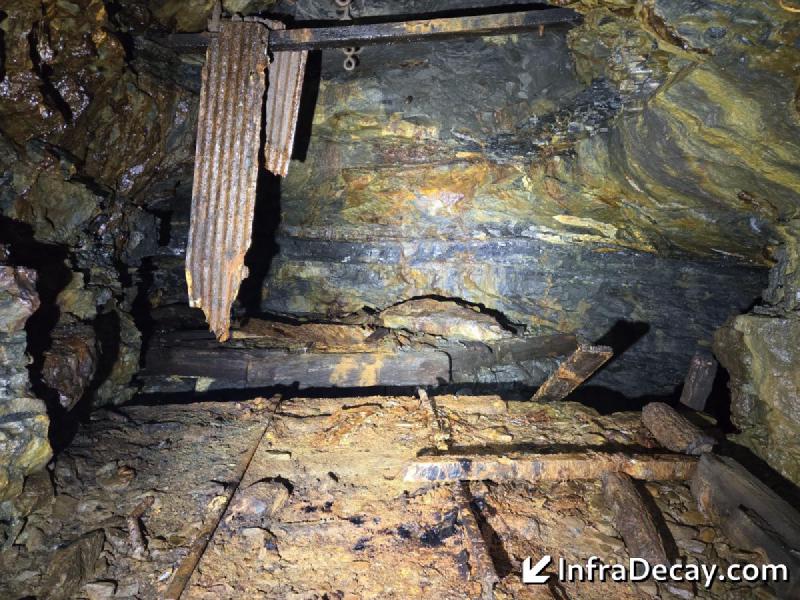
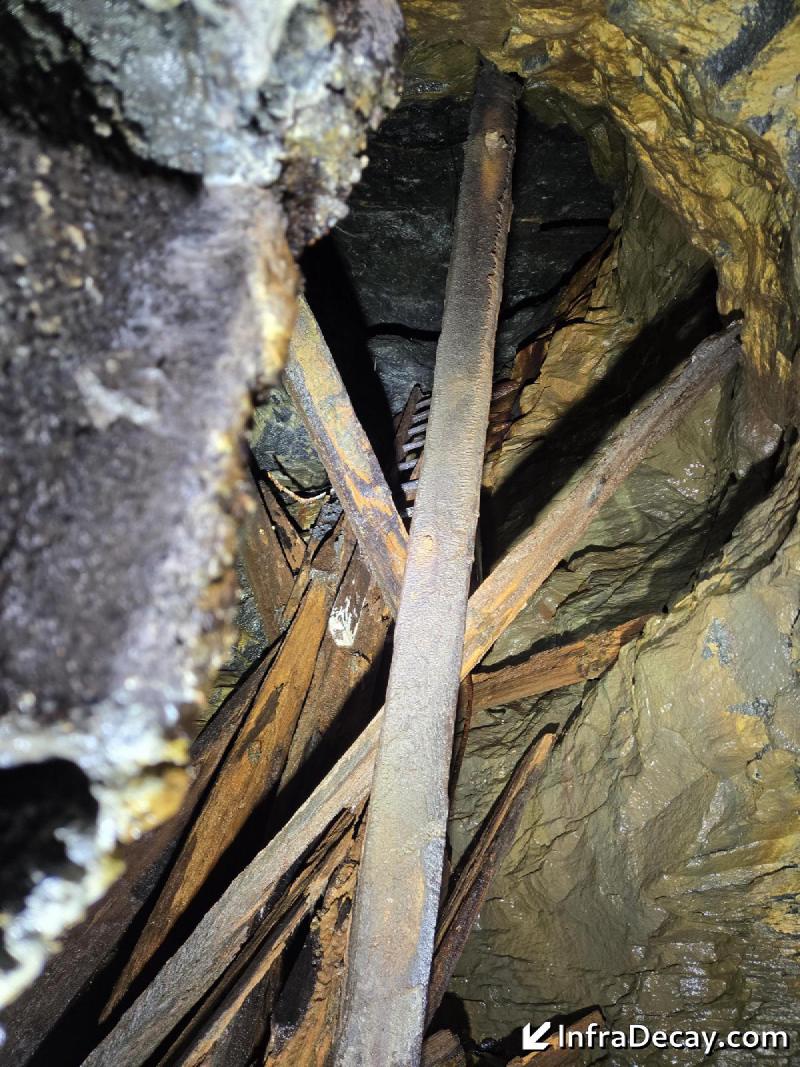
A second small shaft to a working level; this one had a wooden ladder in it!
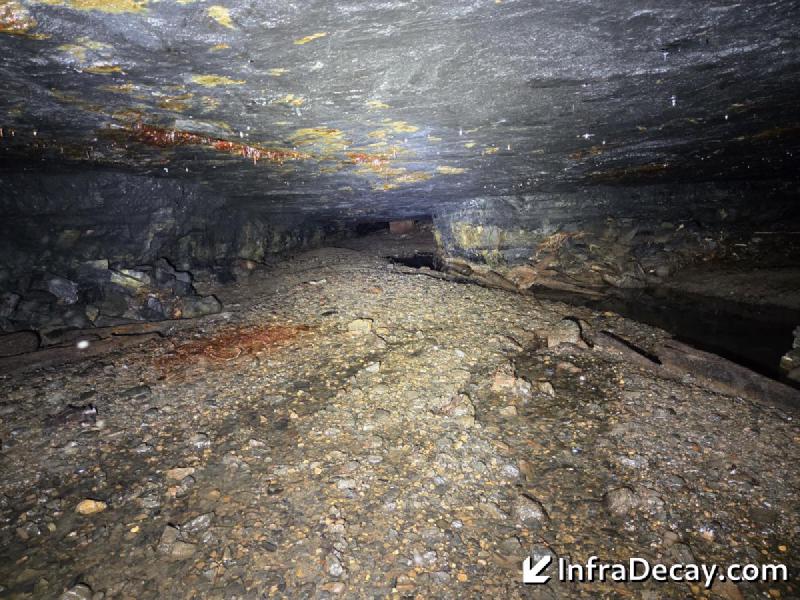
The tunnel continued and turned into a drift with workings. The wash-in got quite severe here, so bad that I was hitting the roof even when crawling. We decided to call it here.
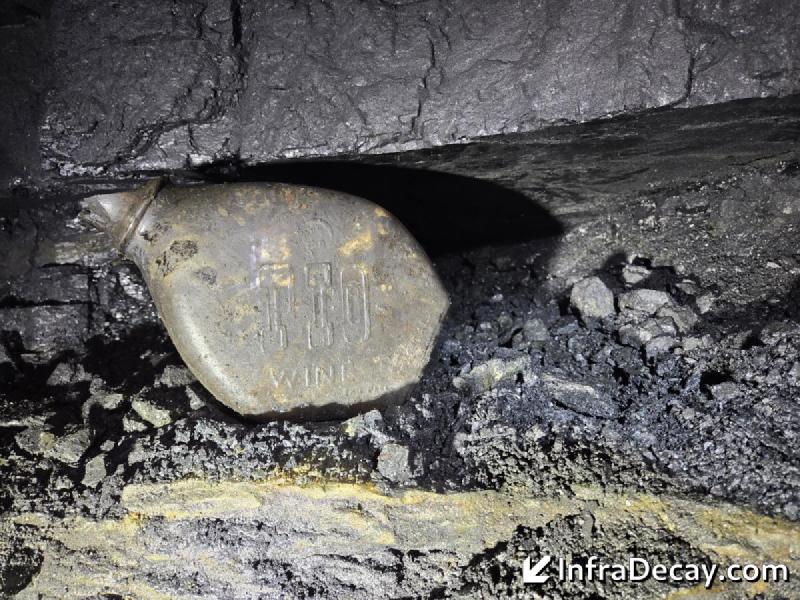
Any future expeditions in this mine would focus on pushing the wash drift; this area shows the most promise for new territory.